
Most opened still wines stay enjoyable for 3–5 days, while sparkling wine usually keeps its bubbles for 1–3 days when properly sealed and refrigerated. These are freshness guidelines, not expiration dates: the wine’s style, exposure to air, and storage conditions determine whether your next glass still tastes good.
- How long does wine last after opening? Most still wines keep for 3–5 days when sealed and refrigerated.
- Sparkling wine usually keeps for 1–3 days; use a sparkling-wine stopper, not an ordinary cork.
- Refrigerate opened red wine too; bring your next pour toward serving temperature in the glass.
- Buywinesonline serves home wine drinkers and gift shoppers; choose bottle sizes you can comfortably finish.
How long does wine last after you open it?
Use the table below as your 2026 opened-wine storage guide. The windows describe drinking quality under suitable storage conditions, not a promise that every bottle tastes unchanged throughout that period. For unopened bottles, see how to store wine without a wine cellar.
Wine Folly’s opened-wine storage guide gives the category windows below. Its guidance distinguishes sparkling wine, lighter whites and rosés, fuller-bodied whites, reds, and fortified wines; those distinctions matter more than the bottle’s purchase date.
| Wine style | Typical freshness window | Best for | Storage requirement | Main limitation |
|---|---|---|---|---|
| Sparkling wine, including Champagne and Prosecco | 1–3 days | Drinking soon after opening | Refrigerate with a sparkling-wine stopper | Bubbles escape after opening |
| Light white and rosé | 5–7 days | Spreading a bottle across several meals | Seal and refrigerate | Fresh fruit aromas fade over time |
| Full-bodied white | 3–5 days | Enjoying richer whites over a few meals | Seal and refrigerate | Oxygen changes aroma and flavor |
| Red wine | 3–5 days | Saving dinner wine for another evening | Seal and refrigerate between pours | Delicate or mature bottles lose freshness sooner |
| Fortified wine | Up to 28 days for some styles | Occasional small pours | Follow the producer’s storage instructions | Vintage Port and other delicate styles need different treatment |
Start checking the wine before the window ends. A bottle that spent an evening open on a warm counter is not equivalent to one you sealed and refrigerated immediately.
These guidelines also assume ordinary storage, not a specialized preservation system. Follow the system’s instructions if you use one; do not apply its claims to a bottle closed with a basic stopper.
Why this matters
Opening a bottle starts a different storage problem. Before opening, the closure limits exposure to air; afterward, every pour leaves more air inside the bottle. Your job is to slow that change, not stop it completely.
For your 2026 wine routine, the useful distinction is freshness versus safety. A wine that has lost its fruit or bubbles is past its best, but a storage window alone does not establish whether a bottle is safe to consume. Discard wine with visible mold or suspected contamination rather than tasting it to investigate.
You also do not need to finish a bottle simply because you opened it. Seal it promptly, keep it cold, and assess it before serving again. That habit matters more than guessing which evening it will suddenly become undrinkable.
Sparkling wine: 1–3 days after opening
Champagne, Prosecco, Cava, and other sparkling wines generally keep for 1–3 days with a proper sparkling-wine stopper in the refrigerator. Their first obvious loss is often carbonation rather than a dramatic change in color or smell.
Best for: drinking while the bubbles are still lively. A sparkling-wine stopper holds the closure securely against pressure. An ordinary still-wine stopper is not a substitute, and a spoon placed in the bottle neck is not a dependable preservation method.
The upside is straightforward: you can save an unfinished bottle for another occasion. The limitation is equally clear: sealing does not restore bubbles already lost during pouring or while the bottle sat open.
Check aroma as well as fizz. Flat sparkling wine and spoiled sparkling wine are different problems; losing carbonation does not, by itself, tell you everything about the wine’s condition. If the aroma remains pleasant, the next decision is whether you still enjoy its texture.
Light white wine and rosé: 5–7 days after opening
Light white wines and rosés generally stay enjoyable for 5–7 days when sealed and refrigerated. Think of this as a checking window, not permission to ignore the bottle until the last day.
Best for: a chilled glass with several different meals. The advantage is a relatively generous storage window under good conditions. The drawback is that citrus, floral, and fresh-fruit aromas change even while the wine remains drinkable.
Pour a little and smell it before filling your glass. A white wine that tastes less bright than it did on opening is showing a quality change; a harsh vinegar smell or visible contamination calls for a different decision.
Rosé follows the same practical routine. Keep it cold, close it between pours, and judge the remaining wine on its own condition rather than its color category alone.
Full-bodied white wine: 3–5 days after opening
Full-bodied whites generally keep for 3–5 days after opening when sealed and refrigerated. Richer Chardonnay belongs in this shorter planning window rather than automatically receiving the longer light-white guideline.
Best for: enjoying richer white wine across a few meals. The benefit is that you can save a substantial part of the bottle without needing to drink it all at once. The limitation is that oxygen changes the balance of fruit, aroma, and texture.
Do not assume a richer taste means better resistance to air. Likewise, a screw cap does not prevent changes after opening; it simply provides a convenient closure when you put it back on tightly.
For 2026 meal planning, open a richer white when you expect to revisit it soon. If the next glass smells tired and tastes flat, an attractive label does not make it fresh again.
Red wine: 3–5 days after opening
Red wine generally keeps for 3–5 days after opening, but the bottle’s condition matters more than its color alone. A mature, delicate red deserves closer attention than a young wine with firm structure.
Best for: keeping dinner wine for another evening. Refrigerate opened red wine. Cold storage slows the reactions that change wine, even though you do not necessarily want to drink the red straight from the refrigerator.
Pour what you plan to drink and let that portion approach your preferred serving temperature. Keep the remaining bottle sealed and cold instead of warming the whole bottle every evening.
Some reds taste better after initial exposure to air. That is not a reason to leave the bottle open overnight: short-term opening up and longer-term oxidation are different stages of change. Once fruit fades and the wine tastes dull, more air will not bring it back.
Fortified wine: up to 28 days for some styles
Some fortified wines keep for up to 28 days after opening, but this category needs the strongest qualification. Fortified wine is not a single storage rule, and Vintage Port does not belong in a casual month-long assumption.
Best for: occasional small pours when the specific style supports longer storage. The advantage is that suitable fortified styles offer a longer drinking window than ordinary still wine. The limitation is that production style and maturity create important exceptions.
Follow the producer’s instructions for the actual bottle. Do not apply the fortified guideline to every sweet wine: a sweet Riesling or Moscato is not fortified merely because it tastes sweet.
If you cannot identify the style, treat the remaining wine cautiously and seek bottle-specific guidance. Refrigeration and a tight closure remain useful, but neither turns a delicate wine into a long-lasting one.
Why opened wine lasts longer or shorter
The storage windows above are useful because they give you a starting point. These factors explain why two bottles opened on the same evening can taste different later:
- Wine style: Sparkling wine loses dissolved carbon dioxide as well as changing through exposure to oxygen. Fortified styles need their own guidance.
- Air space: As the bottle empties, the space above the wine grows. Less remaining wine means more air relative to the liquid.
- Closure: A secure stopper or tightly replaced screw cap limits continued exposure. An uncovered neck leaves the wine exposed.
- Temperature: Warm conditions speed chemical changes. Refrigeration helps preserve opened wine, including red wine.
- Time exposed: A bottle sealed after pouring has a different starting point from one left open through dinner.
- Bottle condition: Mature or fragile wines need closer checking; an existing fault is not fixed by good storage.
Control storage before blaming the grape variety. A useful 2026 habit is to write the opening date on the bottle so you can connect its condition with what actually happened after opening.
How do you keep opened wine fresh?
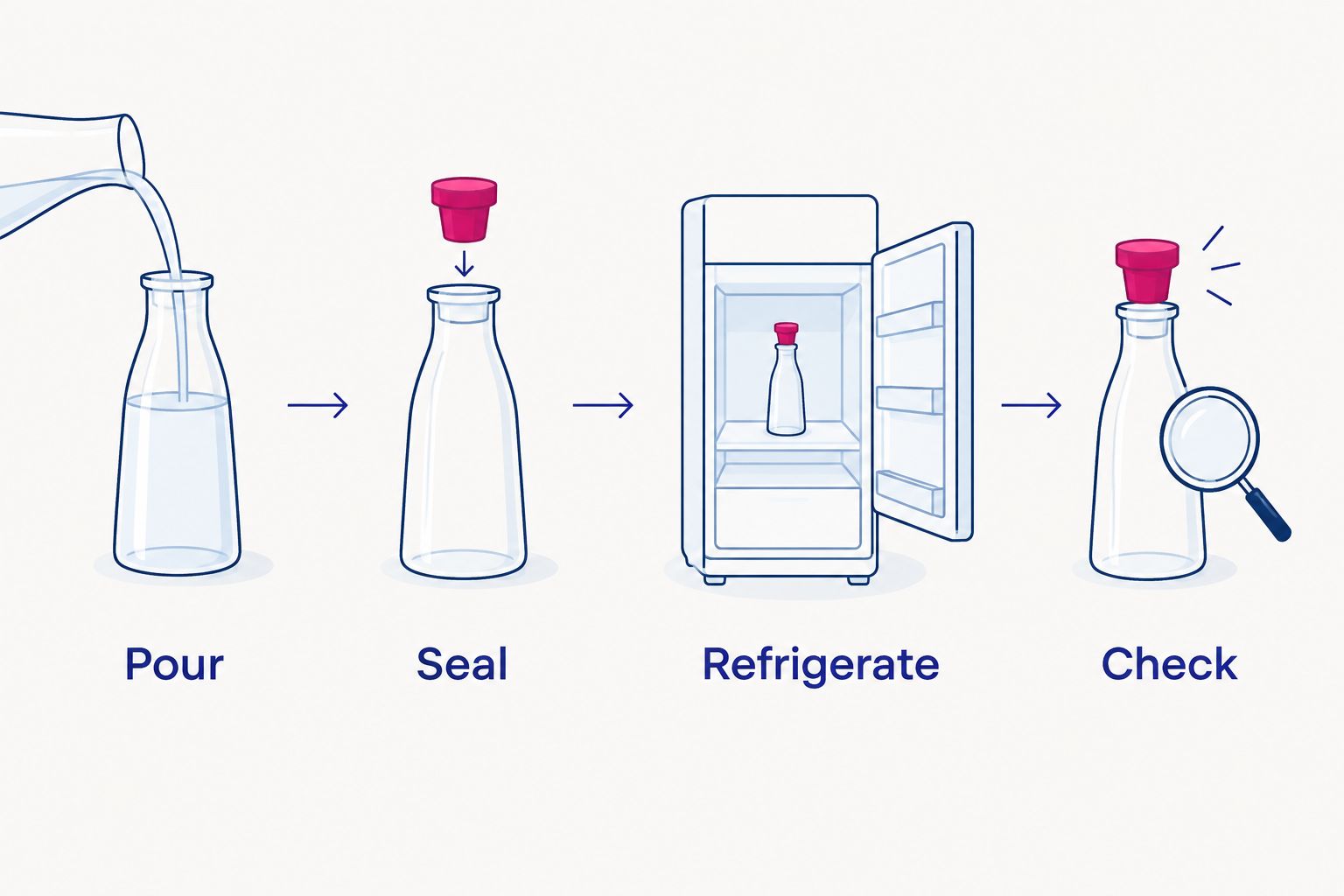
Use this sequence every time you plan to save wine. It works with ordinary household storage and does not require a cellar.
- Pour. Serve what you need without leaving the bottle open longer than necessary. If you are decanting, decant the portion you intend to drink rather than automatically exposing the whole bottle.
- Seal. Replace the screw cap or use a clean, secure stopper. Choose a pressure-rated sparkling-wine stopper for bubbly wine.
- Refrigerate. Put the remaining wine in the refrigerator, including red wine. Keep it upright to reduce the exposed surface compared with lying it on its side.
- Check. Before the next serving, look and smell. Taste a small amount only if there is no sign of contamination and the aroma is acceptable.
The key is completing the storage steps after your first serving, not remembering them the following morning. A closure limits fresh air entering; refrigeration slows change already underway.
Is a vacuum stopper better than replacing the cork?
A vacuum stopper reduces air in the bottle, while a replaced cork mainly closes the opening. Neither reverses oxidation or guarantees that every wine reaches the end of its usual freshness window.
Best for: ordinary still-wine leftovers, a vacuum stopper adds a preservation step without changing your serving routine. Its limitation is that performance depends on the seal and system; use a sparkling-specific closure instead for carbonated wine.
Does transferring wine to a smaller bottle help?
A smaller, clean bottle reduces the air space above leftover wine when filled appropriately. That makes it useful for still wine, but transferring also exposes the wine to air during the pour.
Best for: a substantial leftover portion that leaves the original bottle mostly empty. Use a clean, food-safe container with a tight closure, and refrigerate it. Do not transfer sparkling wine into an ordinary container that is not designed to handle pressure.
How can you tell whether opened wine is past its best?
Look for changes together rather than relying on a single clue. Color depends on wine style and age, while aroma and taste reveal whether you still want to drink it.
- Smell: A sharp vinegar smell or solvent-like aroma is a reason to stop and assess the wine, not disguise it with food.
- Taste: Lost fruit, an unusually sour edge, or a dull finish signals declining drinking quality.
- Appearance: Unexpected browning supports an oxidation diagnosis, but mature wines can naturally show darker shades.
- Condition: Visible mold or suspected contamination means discard the wine without tasting it.
A corked wine has a different problem. A musty, damp-cardboard smell can be present from the first pour; storing that bottle correctly will not remove the fault.
Do not use cooking as a rescue for unpleasant wine. Heat does not turn vinegar-like aromas or a faulty flavor into good ingredients. Save only wine you would still willingly use for its flavor.
What bottle size makes sense if you drink slowly?
Buywinesonline is an online wine retailer for home wine drinkers and gift shoppers. Its selection includes more than 5,000 wines, but buying more wine is not the answer to repeatedly wasting leftovers.
A standard bottle holds 750 ml. A 375 ml bottle contains half that amount, which makes the Caymus California Cabernet Sauvignon 375 ml bottle relevant when you want less wine to manage after opening.
| Bottle format | Best for | Benefit | Limitation |
|---|---|---|---|
| 375 ml | Smaller drinking occasions | Less wine remains to store | A smaller bottle still needs proper closure and refrigeration |
| 750 ml | Sharing or planned repeat servings | More wine for the occasion | More leftovers if you only want a little |
For your 2026 shopping routine, choose the amount you expect to enjoy rather than treating finishing a bottle as a goal. Buywinesonline wine shoppers can apply that rule before choosing a grape, region, or tasting selection.
FAQ
How long does wine last after opening in the fridge?
Most opened still wines keep for 3–5 days when sealed and refrigerated. Light whites and rosés often have a 5–7-day freshness window, while sparkling wine generally keeps for 1–3 days with a suitable stopper.
Should I put opened red wine in the refrigerator?
Yes, refrigerate opened red wine with a secure closure. Pour the next serving and let that portion approach your preferred drinking temperature while keeping the remaining bottle cold.
Can I drink wine a week after opening it?
Some light whites and rosés remain enjoyable for 5–7 days when properly sealed and refrigerated. A week is not a universal rule for reds, fuller-bodied whites, or sparkling wines; inspect the actual bottle before serving.
Does a screw cap make opened wine last longer?
A tightly replaced screw cap closes the bottle, but it does not stop the wine from changing after opening. Refrigeration and limited exposure to air still matter.
How long does Champagne last once opened?
Opened Champagne generally keeps for 1–3 days when refrigerated with a sparkling-wine stopper. Its bubbles diminish after opening, and sealing cannot restore carbonation already lost.
Can I cook with wine that has been open for several days?
Use leftover wine for cooking only if its aroma and flavor are still suitable. Do not use visibly contaminated wine or expect cooking to remove an unpleasant vinegar-like flavor.
Does a wine preservation system reset the storage clock?
No, a preservation system does not reverse changes that already occurred. Follow the system’s instructions and assess the wine rather than assuming every bottle lasts for the same period.
One last thing
The easiest improvement is to warm the serving, not the storage bottle. You can keep opened red wine cold between meals without committing to drinking it refrigerator-cold.
For Buywinesonline wine shoppers, that means planning the next glass before opening another bottle. Date the closure, store the remainder promptly, and judge freshness before you pour a full serving.