
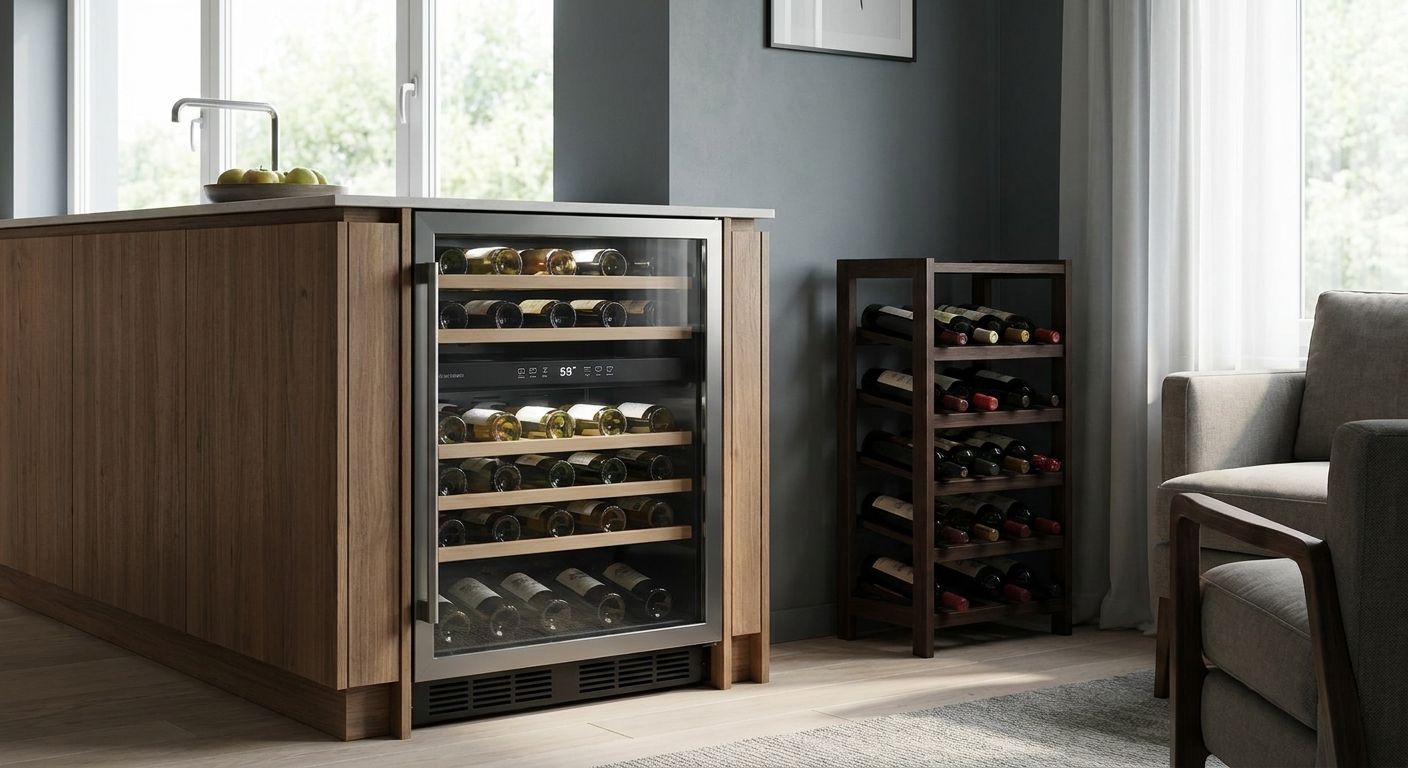
You don't need a cellar to store wine correctly. A dark closet, an interior cabinet, or a small wine fridge held between 55°F and 65°F protects almost any bottle for weeks or months, and that's the real answer to how to store wine without a cellar. What actually ruins wine at home isn't the lack of underground space — it's light exposure and temperature swings, and both are fixable in an apartment or a starter house just as easily as a mansion basement.
- A dark closet or cabinet held at 55-65°F stores wine as well as most home cellars for anything you'll drink within a year.
- Compressor wine fridges hold a steady 45-65°F multi-zone range and cover long-term aging when a closet can't.
- Skip the kitchen counter for more than 1-2 weeks — light and heat swings degrade wine fastest there.
- Ready-to-drink wines and mixed tasting sets need none of this fuss — buy them to open soon, not to age.
Why this matters
Most home wine damage in 2026 has nothing to do with a missing underground cellar and everything to do with three habits: storing bottles near a window, letting a room swing more than 5-10°F between day and night, and forgetting a bottle on the counter for a month. A cellar is just a shortcut to consistency — you can build the same consistency into a closet shelf.
This matters more if you're buying online rather than picking bottles up at a shop, since a shipped bottle sits in a box before it ever reaches your storage spot. Choosing a reliable online wine retailer that ships with temperature protection means you're not fighting heat damage before storage even starts. Browse the full range at BuyWinesOnline and you'll see plenty of bottles built to drink within a year or two — exactly the wines that make a no-cellar setup a non-issue.
How to store wine without a wine cellar
Follow these six steps in order and the storage question mostly solves itself:
- Pick a spot that holds 55°F to 65°F year-round — an interior closet, a cabinet away from appliances, or a dedicated wine fridge.
- Keep it dark. UV light breaks down the compounds in wine within days of direct sun exposure, which is why bottles on open kitchen shelves near windows age worse than ones in a dim hallway closet.
- Hold humidity around 60-70% if the wine is cork-sealed — too dry and the cork shrinks, letting in air.
- Store cork-sealed bottles on their side. Screwcap and synthetic-cork bottles can stand upright without issue.
- Keep bottles away from vibration — not next to a washing machine, a furnace, or a well-used doorway.
- Match the storage plan to the wine. A young red or white built for early drinking is fine on a shelf for 6-12 months; an age-worthy Cabernet needs steadier, longer-term control.
| Storage spot | Realistic temp range | Best for | Verdict |
|---|---|---|---|
| Interior closet/cabinet | 55-65°F, insulated from exterior walls | Bottles you'll drink in 6-12 months | Buy in |
| Wine fridge (compressor) | 45-65°F, multi-zone | Mixed collections, long-term aging | Buy |
| Basement/under-stairs | Naturally 55-60°F in older homes | Larger collections, no equipment cost | Buy if available |
| Kitchen counter | Swings with room temp and light | Bottles opening within 1-2 weeks | Skip for anything longer |
Closet or cabinet storage: hold it at 55-65°F
An interior closet with no exterior wall is the cheapest cellar substitute you have. Rooms with exterior walls swing with the weather outside; interior closets barely move because they're insulated by the rest of the house. A cabinet works the same way as long as it's not above a stove, a dishwasher, or a radiator — heat rises, and 65°F becomes 75°F fast in the wrong cabinet.
This setup handles wines meant for near-term drinking without any real risk. A 15-bottle wine tasting set — reds, whites, or mixed — is exactly the kind of purchase built for a closet shelf rather than a temperature-controlled vault, since most of the bottles in a set like that are meant to open within the year, not age a decade.
Wine fridge storage: 45-65°F multi-zone control
A compressor-cooled wine fridge is the single biggest upgrade over a plain closet, because it holds temperature within a couple of degrees instead of drifting with the season. Multi-zone units let you keep whites cooler and reds warmer in the same unit, which matters if your collection mixes styles.
Serious collectors holding a Napa Cabernet for a decade-plus eventually look past countertop units entirely and toward dedicated wine cellar cooling systems, the same ductless setups used to hold real Napa Valley cellars at a steady temperature year-round. For most home drinkers in 2026, though, a $150-$400 compressor fridge gets you most of that stability without converting a room.
Verdict: a compressor wine fridge is the right buy if you're holding anything meant to age past 2-3 years; skip it if your bottles turn over within a year.
Basement or under-stairs storage: the free cellar alternative
Older homes with unfinished basements often sit at 55-60°F naturally, which is close enough to cellar conditions that you don't need equipment at all. Under-stairs storage in a house with a basement below tends to run cooler than upstairs closets for the same reason. The catch: basements near a furnace or water heater run warmer and more variable, so check the actual spot with a $10 thermometer before trusting it with anything expensive.
Why storage conditions vary
Not every bottle needs the same rigor, and not every home needs the same fix. The factors that decide how strict you need to be:
- Closure type — cork needs humidity control and side storage; screwcap doesn't.
- Drinking window — a wine you'll open in a month tolerates far more than one you're holding for years.
- Home layout — interior rooms and lower floors run cooler and steadier than upper floors and exterior walls.
- Sun exposure — a west-facing window will do more damage in a summer than a decade in a dim closet.
- Appliance proximity — vibration from a fridge, washer, or HVAC unit accelerates sediment disruption in reds.
- Collection size — a handful of bottles is easy in a closet; two dozen or more starts to justify a wine fridge.
Related questions
How long can wine last without a cellar?
Most wine lasts 1-3 years in a properly managed closet or cabinet at 55-65°F, and indefinitely longer in a wine fridge with steady multi-zone control. Bottles left on a warm counter or near a window degrade in months instead, regardless of how good the wine was on release.
Is it OK to store wine in the refrigerator long-term?
A standard kitchen refrigerator runs too cold (usually below 40°F) and too dry for long-term wine storage, drying out corks over months. It's fine for a bottle you're opening within a week or two, but not a replacement for a closet or wine fridge over the long run.
Does wine really need to lie on its side?
Only cork-sealed bottles need to lie on their side, and the reason is simple: a horizontal bottle keeps the cork wet, which keeps it from shrinking and letting in air. Screwcap and synthetic-cork bottles can stand upright without any downside.


If you're buying to fill a closet rather than a cellar, lean toward bottles like these rather than ones marketed for decade-long aging — a proper wine tasting set is designed around exactly this kind of near-term drinking window.
One more practical note if you're ordering online in summer heat: an ice pack added to your shipment protects the bottle on the way to your door, before your closet or fridge ever gets involved. It won't fix a hot apartment, but it stops the worst damage from happening in transit.
FAQ
What's the best way to store wine without a cellar?
The best way to store wine without a cellar is a dark interior closet or cabinet held at 55-65°F, or a compressor wine fridge for longer aging. Both beat an open kitchen shelf or a spot near a window.
Is a wine fridge better than a closet for storage?
A wine fridge holds temperature within a couple of degrees and is better for aging wine past 2-3 years or storing large mixed collections. A closet is fine and free for bottles you'll drink within a year.
How much does temperature swing hurt wine?
Swings of more than 5-10°F per day push air in and out of the bottle through the cork, accelerating oxidation. A steady 55-65°F spot does far less damage than a room that swings widely between day and night.
Can I store wine in the garage?
Garages usually swing too widely with outside temperatures to be reliable, often running well above 65°F in summer and below 55°F in winter. A garage wine fridge fixes this; an uninsulated garage shelf doesn't.
Does light really damage wine that much?
Yes — UV light breaks down flavor compounds within days of direct exposure, which is why wine bottles are traditionally tinted glass. Store bottles in a closet, cabinet, or opaque box rather than an open shelf near a window.
How long can an open bottle sit before it goes bad?
Most opened wine holds its quality for 1-5 days in the refrigerator with the cork back in, depending on the style — sparkling loses character fastest, fortified wine lasts longest. This is separate from unopened bottle storage.
Do all wines need to be stored on their side?
Only cork-sealed bottles need to lie on their side to keep the cork moist and sealed. Screwcap and synthetic-cork bottles can stand upright in 2026 without any storage downside.
What temperature ruins wine the fastest?
Sustained heat above 70°F cooks wine fastest, pushing cork out and oxidizing the contents within weeks rather than months. A 55-65°F spot avoids this entirely, cellar or no cellar.
One last thing
The detail most people miss: the biggest storage risk isn't temperature, it's temperature change. A closet that sits at a steady 68°F beats a basement that swings between 50°F and 65°F every single time, even though the basement's average temperature looks better on paper. Consistency wins over cold in 2026, cellar or not.