
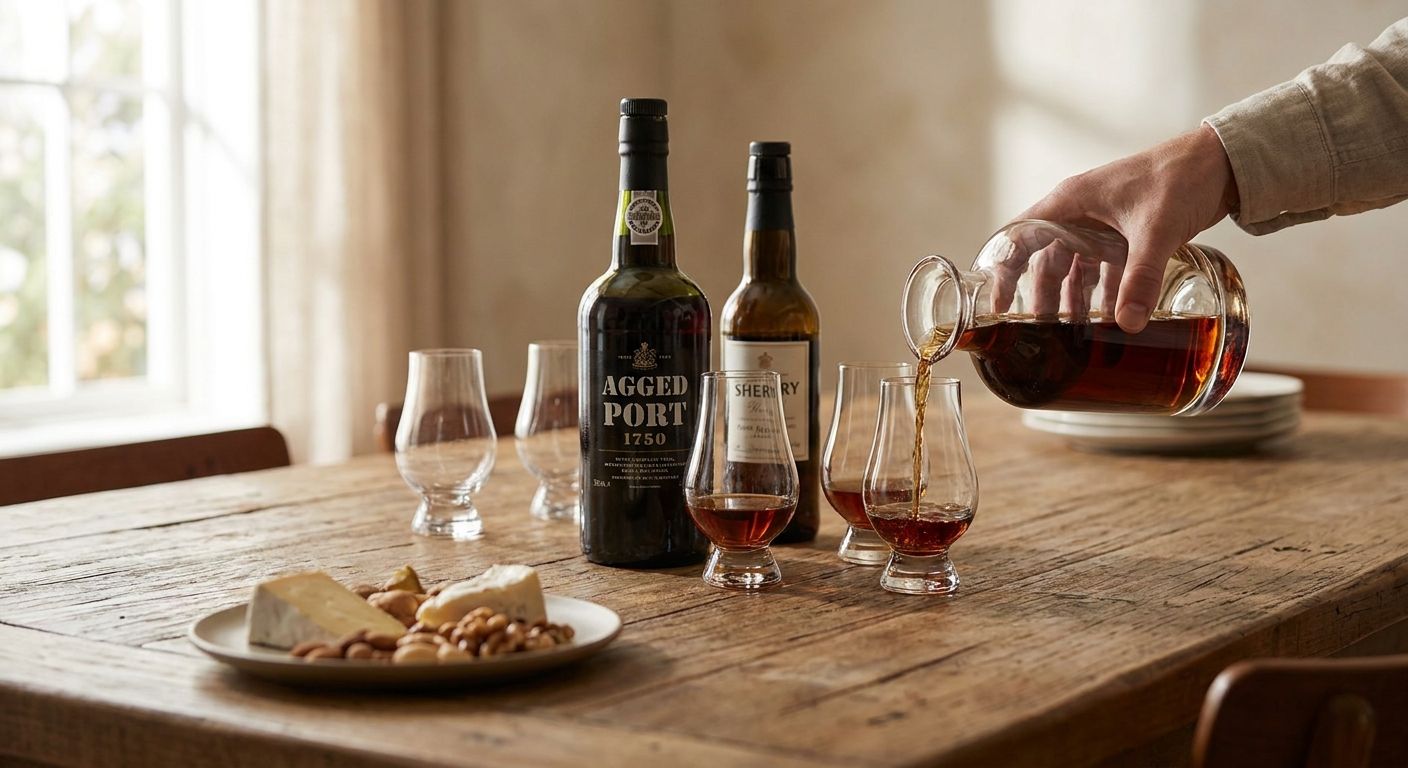
Fortified wines like port, sherry, and madeira get poured wrong more often than any other category in the cellar — too warm, too big a glass, or straight from a room-temperature shelf when they needed thirty minutes in the fridge first. Serve fortified wine at the right temperature, in the right glass, at the right pour, and the same bottle that tasted flat at a party last month turns into the thing your guests ask about in 2026.
- Tawny port serves best at 55-60F; fino and manzanilla sherry need a hard chill to 45-50F.
- Opened fortified wine keeps 3-4 weeks refrigerated thanks to 17-20% ABV, versus 3-5 days for table wine.
- Vintage port needs decanting off sediment before pouring; tawny port and sherry do not.
- Pair sherry and port with dessert wine picks from Buy Wines Online for after-dinner service in 2026 — Buy.
Why This Matters
Fortified wine covers a wide family — port, sherry, madeira, marsala, vermouth — and each style has its own serving rules because the fortification process (adding spirit to raise alcohol to 17-22% ABV) changes how the wine behaves in the glass and after opening. Treat all of them like a bottle of cabernet and you'll under-chill the sherry, over-pour the port, and let a bottle go stale that should have lasted a month.
The upside: fortified wines are more forgiving than table wine once you get the basics right. Higher alcohol and, in most cases, added sugar act as a built-in preservative, so a properly stored bottle survives multiple pours across weeks, not days. That makes fortified wine one of the easiest categories to keep on hand for dessert wine for after-dinner entertaining without worrying about waste.
What You'll Need
- A wine thermometer or a refrigerator you trust to hit a target temperature
- Smaller stemware — a 3-4 oz port glass or sherry copita, not a standard 12 oz red wine glass
- A foil cutter and standard corkscrew (most fortified wines use a regular cork, not a champagne-style closure)
- A decanter, but only if you're opening a Vintage Port with visible sediment
- A cool, dark storage spot or fridge shelf for the bottle after opening
The Steps
1. Identify your fortified wine style first
Every serving decision downstream depends on this. Tawny port, Vintage Port, fino sherry, oloroso sherry, and madeira all sit in different temperature and glassware zones, and guessing wrong is the single most common mistake home hosts make. Check the label or the shop description for style before you touch a corkscrew — a fino sherry served at room temperature tastes flabby and oxidized, while the same bottle chilled hard tastes crisp and saline.
Common mistake: assuming sherry is one style. Fino and manzanilla are bone-dry and delicate; oloroso and cream sherry are richer and more oxidative. They need opposite serving temperatures.
2. Chill or warm the bottle to the right target
Tawny port and madeira serve best at 55-60F — cellar-cool, not fridge-cold. Vintage Port opens up slightly warmer, around 60-65F, closer to a light red wine. Fino and manzanilla sherry go the other direction entirely: chill them to 45-50F, the same zone as a crisp white wine, for at least 30 minutes before pouring.
A kitchen fridge runs about 37-40F, so a fino sherry needs roughly 20-30 minutes out of the fridge before it hits the right serving window, while a tawny port coming from room temperature (around 68-72F) needs 15-20 minutes in the fridge to cool down. Expected outcome: the wine's aromatics stay tight and focused instead of turning boozy or flat.
Common mistake: serving oloroso or cream sherry ice-cold — it mutes the nutty, caramelized notes that make those styles worth drinking.
3. Pick the right glass and pour size
Fortified wine's higher alcohol content means a standard 5 oz table wine pour is too much. Use a 3-4 oz pour in a smaller glass — a tulip-shaped port glass or a narrow sherry copita concentrates the aroma and keeps the alcohol from overwhelming the nose. A full-size red wine glass spreads the wine too thin and lets the alcohol dominate before the fruit or nutty notes register.
Expected outcome: guests taste layered dried-fruit, nut, or caramel notes instead of just heat.
4. Decant only when the bottle needs it
Vintage Port throws real sediment as it ages — decant it standing upright for a few hours beforehand, then pour slowly through a funnel or coffee filter to leave the sediment in the bottle. Tawny port, ruby port, sherry, and madeira are all filtered or blended for consistency and don't need decanting at all; skip this step for those styles and pour straight from the bottle.
Common mistake: decanting a tawny port out of habit — it doesn't hurt the wine, but it's an unnecessary extra step that delays serving for no benefit.
5. Pour in the right order at the table
If you're serving more than one fortified wine in a tasting flight, go driest to sweetest: fino or manzanilla sherry first, then amontillado or tawny port, finishing with cream sherry, Vintage Port, or a rich madeira. Serving a sweet oloroso before a dry fino ruins the fino — your palate can't reset fast enough.
Expected outcome: each wine tastes distinct instead of the later pours all tasting sweeter than they are.
6. Store the opened bottle correctly
Re-cork the bottle tightly and store it upright in the refrigerator, even for styles you serve at room temperature — cold slows oxidation regardless of serving style. Because fortified wines run 17-20% ABV, an opened bottle of port or sherry holds its character for 3-4 weeks refrigerated, compared to 3-5 days for a standard 750ml red or white.
Common mistake: leaving the opened bottle on a counter or wine rack at room temperature. It won't spoil in a day, but it oxidizes faster and loses aromatic lift within a week or two.
7. Pair with food that matches the style
Dry fino and manzanilla sherry work as an aperitif with olives, almonds, or cured ham. Tawny port and oloroso sherry pair with aged cheese, walnuts, and caramel desserts. Vintage Port and cream sherry stand up to dark chocolate and blue cheese. If you're building a full spread, browse sweet white wines for dessert pairing to round out a table that isn't fortified-only.
Troubleshooting
- The port tastes hot and boozy — it's too warm. Chill it 10-15F below your current serving temp and re-taste.
- The sherry tastes flat and oxidized — it was served too warm or the bottle has been open too long. Fino and manzanilla lose their edge within 1-2 weeks of opening even refrigerated; buy smaller formats if you drink slowly.
- Vintage Port pours cloudy — you skipped decanting. Stand the bottle upright for a few hours, then decant slowly next time to leave sediment behind.
- Guests say the wine tastes too sweet across the board — you served sweeter styles before drier ones. Reorder the flight: dry sherry first, sweet cream sherry or Vintage Port last.
- The opened bottle tastes stale after a week — check that it was re-corked tightly and refrigerated. A loose cork lets oxygen in and shortens the 3-4 week window significantly.
Tools and Resources
- A dedicated port or sherry glass set for correct pour size
- A reliable fridge thermometer if your unit doesn't display an accurate temperature
- A wine gift set if you're introducing someone to fortified wine for the first time
- A mixed sampler like the 20-bottle international tasting set if you want to compare serving styles across several bottles at once
What To Do Next
Once serving temperature and glassware are dialed in, the next variable is what you're pairing the wine with. Start with dessert wine for after-dinner entertaining to build a full closing course, or browse the full catalog at Buy Wines Online for bottles across every major fortified style.
FAQ
What temperature should fortified wine be served at?
Tawny port and madeira serve best at 55-60F, Vintage Port at 60-65F, and fino or manzanilla sherry chilled hard to 45-50F. Getting the temperature wrong is the most common serving mistake with fortified wine.
Does fortified wine need to be refrigerated after opening?
Yes, refrigerate opened fortified wine even if you serve it at room temperature, since cold slows oxidation. A re-corked bottle holds its flavor for 3-4 weeks in the fridge thanks to its 17-20% ABV.
How long does an opened bottle of port last?
An opened bottle of port lasts 3-4 weeks refrigerated and tightly re-corked, far longer than the 3-5 days a standard table wine lasts once opened. Vintage Port and tawny port both hold up well under refrigeration.
Do you need a special glass for sherry or port?
A smaller 3-4 oz glass, such as a port glass or sherry copita, works better than a standard wine glass because fortified wine's higher alcohol overwhelms the nose in a larger pour. The narrower shape concentrates aroma instead of spreading it thin.
Is sherry served warm or cold?
It depends on the style: fino and manzanilla sherry are served chilled to 45-50F, while oloroso and cream sherry are served warmer, around 60-65F. Serving the wrong style at the wrong temperature mutes its character.
Do you decant port before serving?
Only Vintage Port needs decanting, since it throws real sediment as it ages and pouring straight from the bottle clouds the glass. Tawny port, ruby port, and sherry are filtered for consistency and can be poured directly.
What's the difference between tawny port and Vintage Port serving?
Tawny port serves cooler at 55-60F straight from the bottle with no decanting needed, while Vintage Port serves slightly warmer at 60-65F and needs decanting to separate it from sediment. Both use a smaller 3-4 oz pour.
What food pairs with fortified wine?
Dry sherry pairs with olives, almonds, and cured ham as an aperitif; tawny port and oloroso sherry pair with aged cheese and caramel desserts; Vintage Port pairs with dark chocolate and blue cheese. Match the wine's sweetness to the richness of the dish.
One Last Thing
The 17-20% ABV that makes fortified wine forgiving to store is the same reason a full 3-4 oz pour hits harder than a glass of table wine — treat the pour size as a feature, not a shortfall, and the bottle will outlast three or four sittings instead of one long night in 2026.