
An unopened bottle of wine lasts as long as its style, condition, and storage allow; there is no single expiration period that applies to every bottle. Most wine is made to drink young, while selected age-worthy wines develop over time under controlled storage. In 2026, the right decision is to check the producer’s drinking guidance and the bottle’s storage history—not add a fixed number of years to its vintage.
- How long does unopened wine last? Wine style, storage conditions, and the producer’s drinking window determine the answer.
- Fresh whites and rosés are generally better drinking priorities than bottles specifically intended for aging.
- An intact seal does not protect unopened wine from heat damage or guarantee good flavor.
- Buywinesonline offers red, white, rosé, Champagne, and dessert wines; check each bottle’s guidance before choosing to cellar it.
Why this matters
Unopened does not mean unchanged. Wine continues to develop inside a sealed bottle, and heat or a compromised closure can damage it before you ever pull the cork. A bottle kept beside the stove deserves a different assessment from the same wine stored in a cool, dark place.
You do not need a cellar to protect wine you plan to drink soon. Start with how to store wine without a wine cellar, then separate bottles for near-term drinking from those with a documented aging recommendation.
How long does an unopened bottle of wine last?
An unopened wine’s useful life is a drinking window, not a universal countdown. That window describes when the wine should taste enjoyable. It is different from an expiration date, and it depends on more than whether the bottle is red or white.
Use this comparison to decide which bottles deserve attention first. These are style-level priorities, not expiration dates or promises about a particular producer.
| Wine style | Best for | Reason to keep it | Reason not to wait blindly |
|---|---|---|---|
| Fresh white wine | Drink-soon plans | Bright fruit and fresh aromas | Those qualities can fade with age |
| Fresh rosé | Near-term meals and gatherings | Freshness and lively fruit | Extra age does not automatically improve it |
| Everyday red wine | Regular dinner drinking | Enjoying the intended fruit-forward style | Red color alone does not establish aging potential |
| Age-worthy red wine | Planned cellaring | Development of more mature aromas and texture | Poor storage can undermine the intended development |
| Sparkling wine | A planned celebration | Enjoying its intended freshness and bubbles | Aging suitability varies by wine and production style |
| Dessert or fortified wine | Bottle-specific storage plans | Some styles have substantial aging potential | Sweetness or added alcohol does not create one universal lifespan |
A standard 750 ml bottle size tells you how much wine you have, not how long it will taste good. Grape variety, winemaking, closure, and storage all matter. Check the exact wine rather than borrowing a timeline from another bottle in the same category.
Fresh white and rosé wines: prioritize freshness
Fresh white wines and rosés are usually chosen for bright fruit, refreshing acidity, and lively aromas. If those are the qualities you enjoy, waiting for a more mature flavor is not necessarily an improvement.
For your 2026 drinking plans, give these bottles a clear occasion rather than leaving them indefinitely on a rack. A producer’s recommendation takes priority over the assumption that every white or pink wine follows the same schedule.
There are age-worthy white wines and rosés, so color is not an expiration test. The practical distinction is whether the specific bottle was made for early enjoyment or longer development. Without a documented reason to wait, prioritize drinking rather than speculative aging.
Red wines: distinguish dinner bottles from cellar bottles
Some red wines gain complexity as their tannins soften and their aromas develop. Others are made to deliver enjoyable fruit and texture when released. Cabernet Sauvignon on a label is not, by itself, a promise of long life.
The benefit of cellaring is a different drinking experience, not guaranteed improvement. Mature flavors also suit some drinkers better than others. If you prefer fresh fruit, holding a wine until it tastes more earthy or savory can work against your preference.
Before setting aside a red wine, find a recommendation for the exact producer and vintage. Then confirm that you can provide suitable storage. A suggested drinking window assumes conditions that a warm kitchen shelf cannot reproduce.
Sparkling wines: follow the bottle’s intended style
Sparkling wine needs the same protection from heat and light as still wine. Its bubbles do not make it immune to aging, and an unopened bottle does not guarantee that its original freshness remains intact.
Some sparkling wines are intended for early drinking; others are deliberately made for longer development. Champagne, Prosecco, and other sparkling categories do not share a single storage deadline. Use the producer’s guidance for the exact bottle.
For a celebration in 2026, choose a bottle with a known storage history rather than relying on one that has spent an unknown period in a warm cupboard. A planned occasion is a better reason to open sparkling wine than waiting for an arbitrary anniversary.
Dessert and fortified wines: check the subtype
Dessert wine and fortified wine are not interchangeable storage categories. Sweetness, acidity, alcohol, and production method affect how a wine develops, and those characteristics differ across styles.
Some bottles reward extended aging; others are released ready to enjoy. Even within Port, different styles call for different handling and drinking decisions. Do not apply the reputation of a long-lived style to every sweet bottle.
The advantage is genuine aging potential in selected wines. The limitation is that the category name alone gives you too little information. Read the producer’s instructions before making a long-term storage plan.
Why unopened wine longevity varies
The bottle’s calendar age is only part of the decision. These factors explain why matching wines can arrive at very different drinking conditions:
- Wine style: A wine built around youthful fruit has a different purpose from one intended to develop mature aromas.
- Wine structure: Acidity, tannins, sugar, and alcohol influence development, but no single characteristic guarantees longevity.
- Temperature: Warm storage accelerates aging; excessive heat can damage wine.
- Light exposure: Direct sunlight and strong light are poor conditions for wine storage, particularly for sensitive styles.
- Closure condition: Leakage or a failed seal undermines the protection an unopened bottle should provide.
- Storage history: A suitable location today does not undo earlier exposure to heat or poor handling.
You cannot inspect all of these factors through the glass. That is why bottle condition, producer guidance, and a credible storage history are more useful together than a generic shelf-life chart.
How should you store unopened wine in 2026?
For longer-term storage, a common cellar target is about 55°F, or 13°C. Treat that as a storage target, not a serving temperature or a guarantee of a particular lifespan. Consistency, darkness, and protection from excessive heat matter.
Choose a location deliberately. A decorative rack beside an oven or sunny window is a display space, not a good long-term storage space.
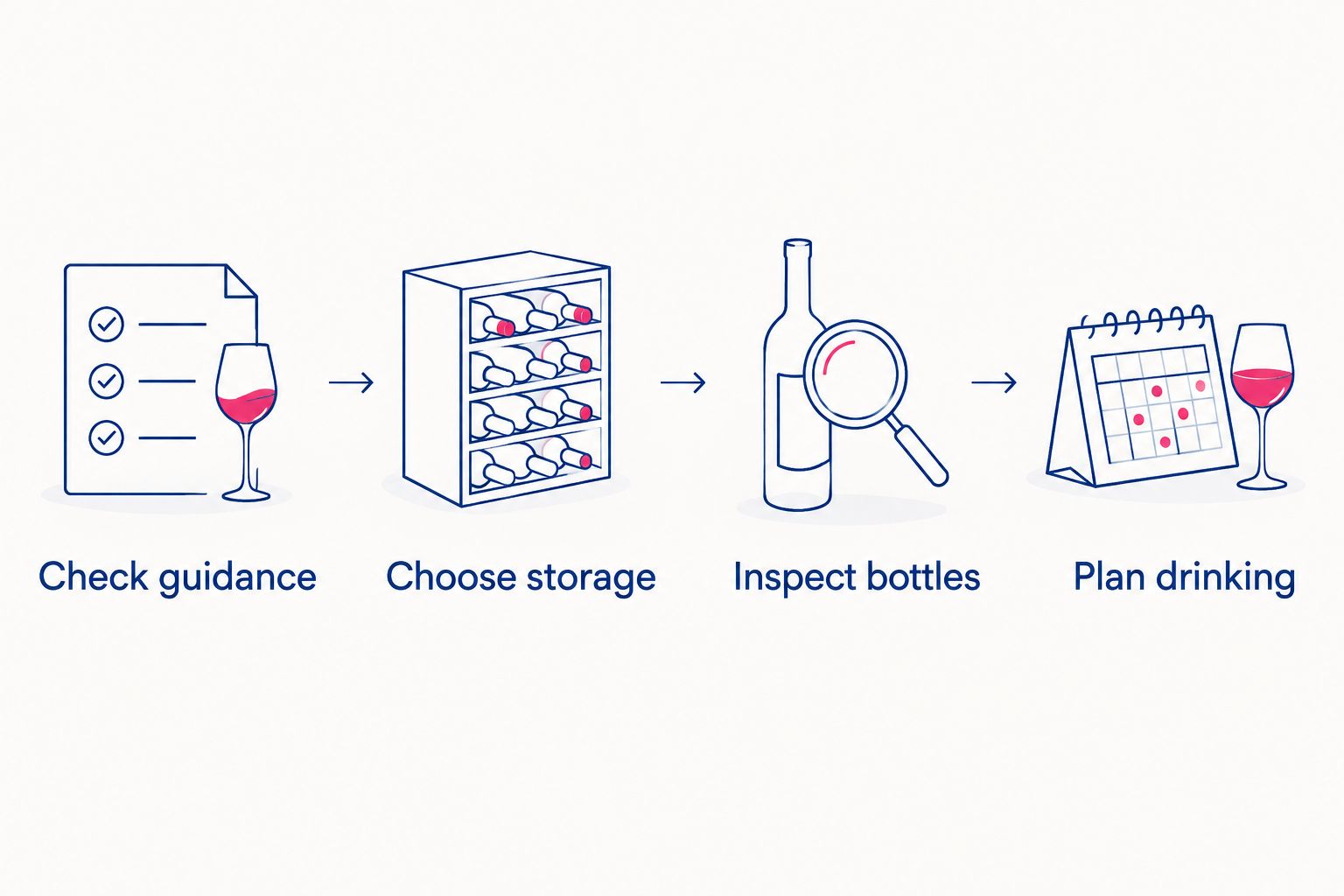
- Check guidance. Identify the wine and vintage, then look for the producer’s drinking recommendation.
- Choose storage. Use a cool, dark location with a stable temperature; use controlled storage for bottles you intend to age.
- Inspect bottles. Look for seepage, a displaced cork, or visible damage before putting a bottle away.
- Plan drinking. Give drink-soon wines an occasion and record the intended window for cellar bottles.
For extended storage, keep natural-cork bottles on their sides to help maintain contact between wine and cork. Screw-cap bottles do not need that contact. Neither closure makes a warm storage location acceptable.
A household refrigerator is useful for chilling wine before serving, but it is not the same as purpose-built wine storage for extended aging. If you cannot provide appropriate conditions, buy for nearer-term drinking instead of building a collection you cannot protect.
How can you tell whether an unopened bottle has deteriorated?
You cannot confirm flavor through a sealed bottle. Exterior checks can identify warning signs, but a normal-looking bottle can still contain tired or faulty wine. Assess the outside first, then the wine after opening.
Before opening
Look for sticky residue or wine stains around the closure, a cork pushed noticeably above the bottle neck, and cracks in the glass. Leakage warrants attention because the seal or storage conditions may have failed. A damaged label alone does not diagnose the wine inside.
Sediment is not automatically a fault. It occurs naturally in some wines, especially as they age. Likewise, gradual color changes are not enough on their own to prove spoilage.
After opening
Smell the wine before serving it. Strong vinegar-like odors, damp-cardboard aromas, or an unexpectedly stale character can indicate faults. Cooked or stewed fruit aromas in a wine expected to taste fresh can also suggest heat damage.
Do not taste from a cracked bottle or one with suspected contamination. For an intact bottle, judge aroma and flavor against the wine’s intended style rather than expecting every older wine to taste youthful. Do not serve a bottle merely because its cork was still in place.
Does the vintage year tell you when wine expires?
No. The vintage identifies the grape harvest year, not an expiration date or necessarily the year the wine was bottled or released. Different wines spend different periods at the producer before reaching buyers.
When reviewing bottles in 2026, use the vintage to identify the correct producer guidance. Do not count from your purchase date as though every bottle began its life that day. Buying an older vintage does not reset its age.
Non-vintage wines need a different reference point. Producer information, release details when available, and your storage record are more useful than trying to infer age from the absence of a vintage.
Does unopened wine get better with age?
Not automatically. Selected age-worthy wines develop desirable mature characteristics, but most wine is made for relatively early enjoyment. Keeping a bottle longer can mean losing the fruit and freshness you bought it for.
Buywinesonline is best for home wine shoppers choosing across red, white, rosé, Champagne, and dessert wines. That breadth helps you select a style; it does not replace bottle-specific aging advice.
If you browse Buywinesonline for wine to put away, choose the bottle first and verify its drinking guidance before deciding to cellar it. The retailer’s selection is useful for shopping across categories, but no category label guarantees a storage window.
Can unopened wine go bad in a refrigerator?
Yes. Refrigeration slows development but does not stop it, repair prior heat damage, or fix a compromised seal. An unopened bottle still needs appropriate handling.
Use the refrigerator to prepare wine for serving rather than treating it as indefinite protection. For longer-term keeping, match the storage setup to the bottle’s intended drinking window.
FAQ
How long does unopened wine last at room temperature?
Unopened wine has no universal room-temperature shelf life. The actual temperature, wine style, closure, and previous storage determine how well it keeps; a warm room is unsuitable for extended aging.
Can I drink an unopened bottle after its suggested drinking window?
A suggested drinking window describes expected quality, not an automatic expiration date. Inspect the bottle and assess the wine after opening; do not use age alone as proof that it is good or bad.
Does unopened red wine last longer than white wine?
Red wine does not always last longer than white wine. Some whites are made for aging, while many reds are intended for early enjoyment; check the exact producer and vintage.
What temperature should I store unopened wine at?
About 55°F, or 13°C, is a common target for longer-term wine storage. Keep the temperature stable and protect bottles from light and excessive heat.
Does a screw cap mean wine cannot age?
A screw cap does not prevent wine from aging. The wine’s characteristics and the closure’s performance matter more than assuming that only cork-sealed wine develops over time.
Is sediment in an unopened bottle a sign the wine is bad?
Sediment alone does not mean wine is bad. It can form naturally as wine ages, so assess the bottle’s condition and the wine’s aroma and flavor separately.
Should I keep a wine gift until a special anniversary?
Keep a wine gift for an anniversary only when the specific bottle suits that drinking plan and you can store it properly. A meaningful occasion does not make every wine suitable for extended aging.
One last thing
Write down where a bottle has been stored, not just when you bought it. A purchase date cannot tell you whether wine sat in a hot room, and moving it somewhere cool does not reverse earlier damage.
For your next Buywinesonline wine purchase in 2026, decide whether you want youthful freshness or mature flavors before choosing a storage plan. Buy for the drinking experience you want—not the assumption that older always means better.