
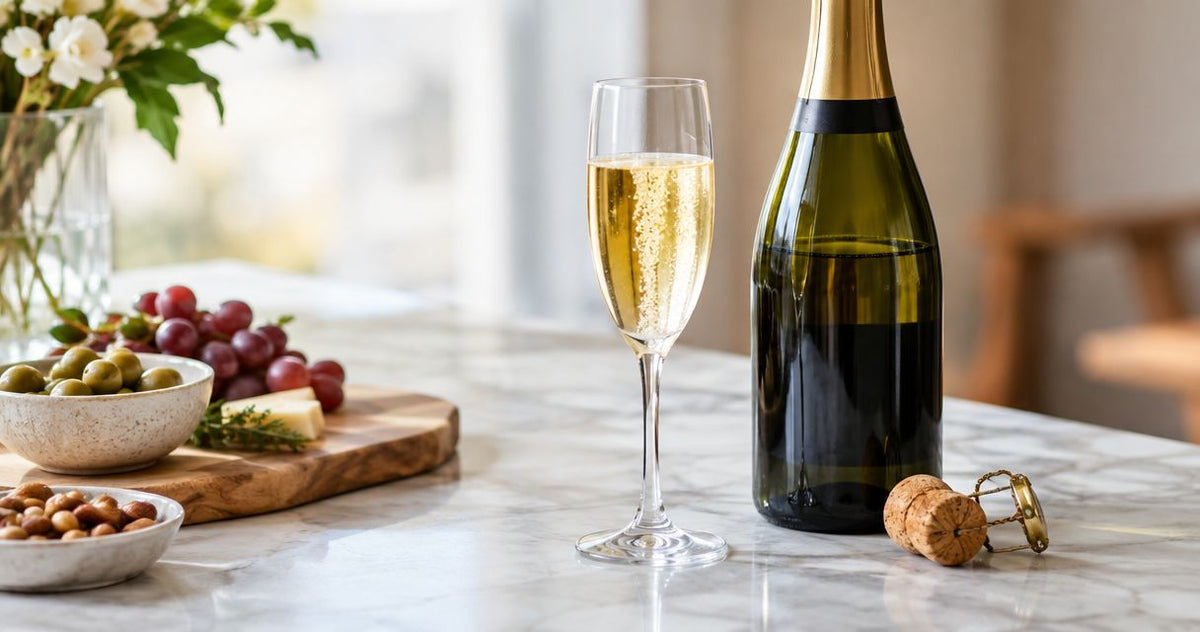
Plan to drink opened Champagne within 3 days, with 3–5 days as the usual refrigerated storage window when you use a proper sparkling-wine stopper. That window describes drinking quality, not a safety guarantee, and the bubbles will not stay as lively as they were when you first opened the bottle.
- How long does champagne last after opening? Plan on 3 days; a sealed, refrigerated bottle generally keeps 3–5 days.
- A sparkling-wine stopper and refrigeration preserve Champagne better than an open bottle or a spoon in the neck.
- Flat Champagne is not automatically spoiled; check its smell and condition before deciding whether to use it.
- Buywinesonline suits home Champagne shoppers comparing bottles and wine gifts, not shoppers seeking a guaranteed opened-bottle lifespan.
Why this matters
Opening Champagne starts two changes: dissolved carbon dioxide escapes, and oxygen begins changing the wine. You can slow both processes, but you cannot make an opened bottle behave like a sealed one.
For your 2026 celebrations, the useful distinction is still enjoyable versus freshly opened. A bottle can remain pleasant after its strongest fizz has faded. If you are choosing your next bottle from Buywinesonline, plan the serving occasion and leftover storage together rather than relying on the bottle's reputation to preserve it.
How long does Champagne last after opening?
Opened Champagne generally keeps 3–5 days in the refrigerator with a sparkling-wine stopper. Treat 3 days as a practical planning target, not an average measured across every Champagne. Drink it sooner when lively bubbles are the main reason you opened it.
Wine Folly's published wine-storage guidance gives sparkling wine a 3–5-day refrigerated window with a sparkling-wine stopper. That is a general category guideline, not a bottle-specific expiration date or a promise that the last glass will match the first.
Use this comparison to decide how to handle the bottle in 2026:
| Storage method | Best for | Advantage | Limitation |
|---|---|---|---|
| Sparkling-wine stopper plus refrigerator | Saving Champagne for another occasion | Slows gas loss and limits air exposure | Does not restore lost bubbles or stop all flavor changes |
| Refrigerator without a stopper | Keeping an already-open bottle cold temporarily | Cold helps retain dissolved carbon dioxide | The open neck allows continued gas loss and air exposure |
| Open bottle at room temperature | Pouring while actively serving | Keeps the bottle within reach | Warmth and an open neck work against preserving fizz |
| Vacuum stopper intended for still wine | Still wine, not Champagne | Designed to remove air from a still-wine bottle | Vacuum preservation is unsuitable for retaining sparkling wine's carbonation |
For leftover Champagne, use a pressure-rated sparkling-wine stopper and refrigerate immediately. Do not substitute a still-wine vacuum pump simply because it fits the bottle.
Refrigerated and stoppered: 3–5 days
The 3–5-day window applies to a bottle kept cold and properly closed between pours. It does not apply equally to a bottle that spent the evening warm and uncovered before you finally put it away.
Expect the wine to change within that window. The bubbles can become gentler, and fresh fruit aromas can lose definition. If you want the closest experience to the opening pour, serve the remainder sooner rather than using the longest storage estimate as your goal.
Open and unstoppered: no dependable multi-day window
An unstoppered bottle keeps losing gas even inside the refrigerator. Chilling helps, but it does not replace a seal.
Do not assign an uncovered bottle the same 3–5-day expectation as a properly stored one. Close it as soon as possible, and judge the remaining wine by its condition rather than by the calendar alone.
Already flat: assess flavor, not just fizz
Flat Champagne has lost much of the carbonation that makes it feel sparkling. That does not, by itself, mean the wine is spoiled.
If it still smells clean and tastes pleasant, it can work as a still wine in cooking. If it smells unpleasant, shows visible contamination, or has a damaged bottle, discard it. A recipe is not a reason to rescue wine you would otherwise reject.
How do you store Champagne after opening?
The best storage routine is straightforward: keep it cold, close it securely, and avoid unnecessary reopening. You do not need a wine cellar, a special serving ritual, or a different routine for every label.
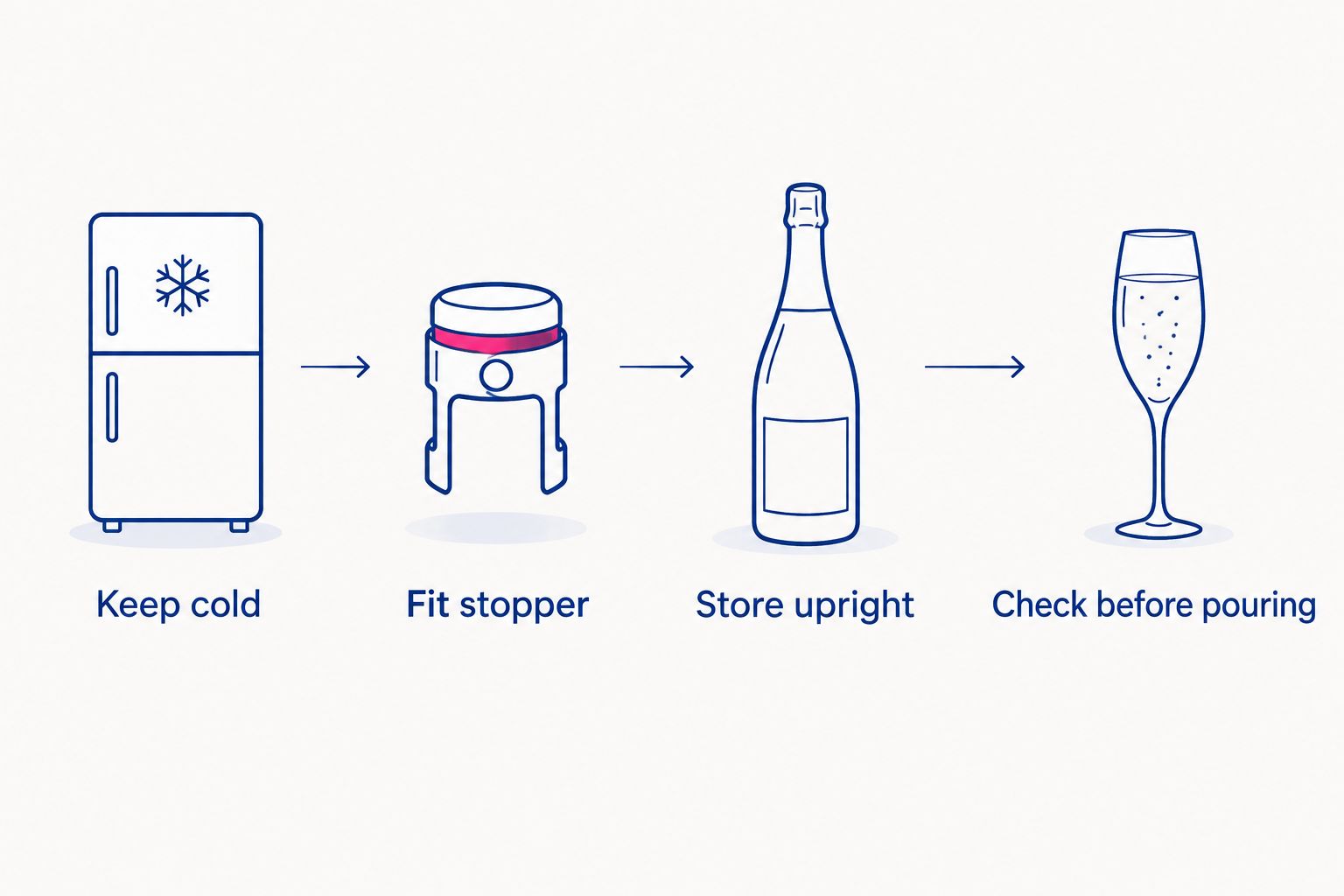
Use this 2026 storage checklist as soon as you finish pouring:
- Keep cold. Return the bottle to the refrigerator rather than leaving it on the counter until the evening ends. FDA refrigerator guidance recommends keeping a household refrigerator at 40°F or below; that is a refrigerator-management guideline, not a special Champagne serving temperature.
- Fit stopper. Use a stopper designed for sparkling wine and follow its fastening instructions. Its closure must suit a bottle that still contains pressure.
- Store upright. Keep the bottle upright so it rests securely and the stopper stays clear of unnecessary contact with the wine. Do not force it into a cramped shelf where the closure gets knocked.
- Check before pouring. Inspect the bottle and closure, then assess the wine's smell and appearance. Taste only if there is no reason to suspect contamination or damage.
Remove the stopper carefully when you serve again. Keep the bottle pointed away from your face and other people, because retained pressure can release the closure unexpectedly.
Reclose the bottle after pouring. Leaving it open through a long meal undoes part of the benefit of storing it properly beforehand.
Should you put the original cork back in?
Use a purpose-made sparkling-wine stopper instead. The original cork expands after removal and is not a convenient, dependable way to reseal the bottle.
Do not trim the cork, force it into the neck, or improvise a closure that could come loose under pressure. A stopper designed for sparkling wine is the appropriate tool for the job.
Does a spoon in the neck keep Champagne fizzy?
A spoon does not seal the bottle, so it is not a substitute for a sparkling-wine stopper. The useful preservation step is keeping the wine cold while restricting gas loss through the neck.
Skip the spoon trick. If you have no stopper, refrigerate the bottle and use the remainder promptly rather than treating the spoon as protection.
Why opened Champagne's lifespan varies
The 3–5-day guideline is useful because it gives you a planning window. It is not exact because the bottle's handling changes the result.
These factors explain why one leftover bottle tastes fresh while another disappoints:
- Temperature. Carbon dioxide stays dissolved more readily in colder wine. A warm bottle loses its sparkling character more readily than a cold one.
- Closure quality. A secure sparkling-wine stopper limits escape through the neck. A loose, damaged, or unsuitable closure does not provide the same protection.
- Time left open. The storage clock includes the time spent on the table, not just the time in the refrigerator. Refrigerating later does not reverse earlier losses.
- Wine remaining. As you pour wine out, the space above the liquid increases. The remaining wine and the gas in that space move toward a new balance, affecting retained carbonation.
- Repeated reopening. Every serving releases pressure and exposes the bottle again. Pour what you need, then close it rather than leaving it uncapped between glasses.
- Your standard for quality. A bottle can still taste agreeable while no longer delivering the fizz you want for a toast. Enjoyable leftovers and celebration-ready Champagne are different targets.
For 2026 party planning, handle the bottle before debating its style. A famous name, gift box, or vintage designation does not replace cold storage and a suitable stopper.
Does rosé Champagne last longer than white Champagne?
Use the same 3–5-day refrigerated, stoppered guideline for rosé and white Champagne. Color alone is not a reason to grant one bottle a longer opened life.
Choose the style for what you want to drink. Do not buy rosé expecting its color to preserve bubbles, or choose a blanc de blancs expecting it to resist oxygen better simply because of the name.
Two Champagne styles to consider
Buywinesonline's Champagne selection includes the following bottles. Their supplied descriptions support different flavor preferences, but neither description establishes a longer lifespan after opening.
| Champagne | Best for | Description-based advantage | Limitation |
|---|---|---|---|
| Legras & Haas Blanc de Blancs Brut Champagne Grand Cru Chouilly NV (750 ml) | Drinkers seeking citrus and green-apple notes | Its description highlights citrus zest, green apple, and chalky minerality | Its description does not establish better opened-bottle preservation |
| Moet & Chandon Rose Imperial Brut Champagne w/ Gift Box (750 ml) | Rosé drinkers and gift shoppers | Its description highlights red-fruit aromas; the product title includes a gift box | The gift box does not preserve the wine after opening |
Buywinesonline is best for home Champagne shoppers who want to compare bottles and gifts in one place. For these two bottles, choose by style and occasion; use the same storage routine for leftovers.


Can you drink opened Champagne after 5 days?
After 5 days, do not assume opened Champagne still has its intended freshness or fizz. The general storage window is a quality guideline, not a rule that makes every bottle acceptable until a deadline and unacceptable immediately afterward.
Check how it was stored and what condition it is in. A cold, properly stoppered bottle and a warm, uncovered bottle are not equivalent, even if both were opened on the same day.
If the bottle smells strongly of vinegar, has an unpleasant musty odor, or shows contamination, discard it. Do not taste wine with visible mold or foreign material just to confirm that it is bad.
Can you cook with flat Champagne?
Flat Champagne that still smells and tastes pleasant can replace a dry white wine in suitable recipes. Use it for a pan sauce, risotto, or another dish where the wine contributes flavor rather than bubbles.
Taste an acceptable-looking sample before adding it to the pan. A recipe concentrates or combines the wine's flavors; it does not reliably hide an unpleasant bottle.
Cooking also does not make visibly contaminated wine suitable to use. Keep the same basic quality checks you would use before serving a glass.
FAQ
How long does Champagne last after opening in the fridge?
Opened Champagne generally keeps 3–5 days in the refrigerator with a proper sparkling-wine stopper. Plan to drink it within 3 days when preserving enjoyable fizz is your priority.
Can I drink Champagne the day after opening it?
Yes, Champagne kept refrigerated with a sparkling-wine stopper is generally suitable to enjoy the next day. Check its condition before pouring, and expect some change from the opening glass.
Does opened Champagne need to be refrigerated?
Yes, refrigerate opened Champagne to slow carbonation loss and flavor changes. A suitable sparkling-wine stopper adds protection that chilling alone does not provide.
What is the best stopper for leftover Champagne?
Use a stopper designed specifically for sparkling wine and retained bottle pressure. Follow its fastening instructions rather than substituting a still-wine vacuum stopper.
Is flat Champagne bad for you?
Flatness alone does not establish that Champagne is unsafe; it means carbonation has been lost. Discard wine with visible contamination, bottle damage, or clearly unpleasant odors rather than relying on fizz as a safety test.
Does vintage Champagne last longer once opened?
Do not assume vintage Champagne lasts longer after opening; use the same general 3–5-day refrigerated, stoppered guideline. Storage conditions matter, and the vintage designation is not an opened-bottle preservation guarantee.
Can I leave opened Champagne on the counter overnight?
Leaving opened Champagne on the counter overnight is poor storage for preserving its quality. Refrigerate and stopper the bottle as soon as you finish serving rather than leaving it warm and uncovered.
Does putting a spoon in Champagne keep it bubbly?
A spoon does not seal Champagne and is not a substitute for a sparkling-wine stopper. Keep the bottle refrigerated and use a closure designed for sparkling wine.
One last thing
The best way to avoid disappointing leftovers is to delay opening the next bottle. Chill it alongside the one you are serving, but keep it sealed until you actually need it.
For your next 2026 gathering, put the sparkling-wine stopper beside the glasses before guests arrive. Make resealing easy while you are serving, not a chore you remember after the bottle has sat open all evening.