
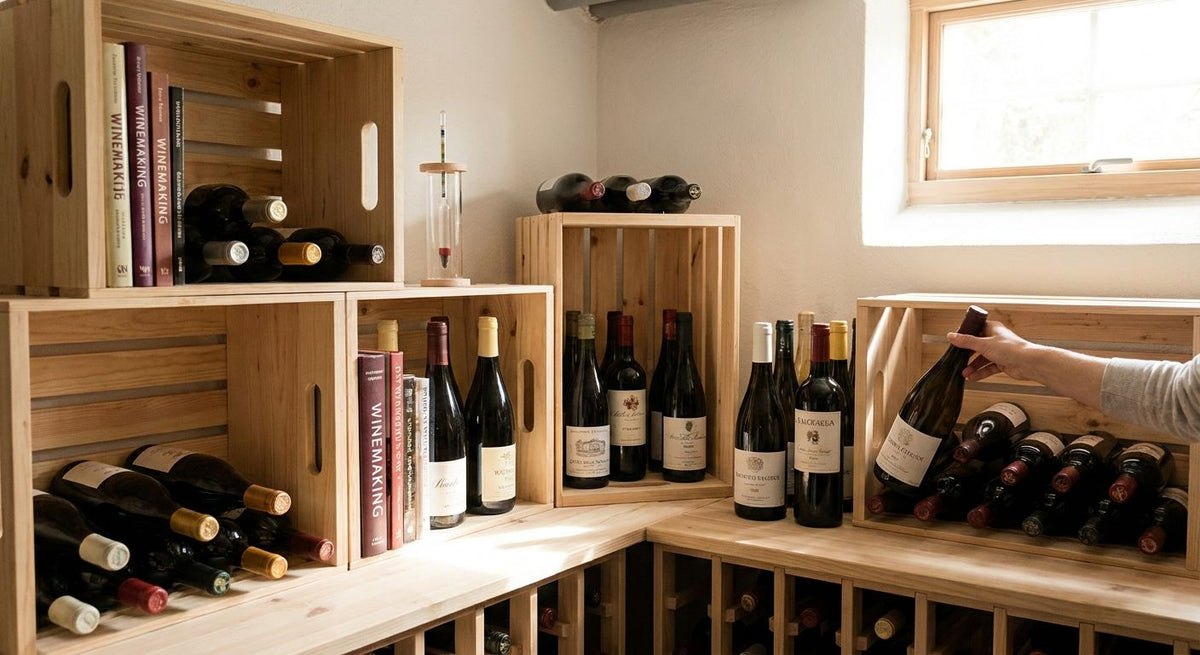
Start a home wine cellar on a budget in 2026 with a 12-to-20-bottle rotating case, stored at 55°F in a dark, vibration-free spot — no built-in cooling required at that scale. The cost people miss isn't the wine, it's temperature swings: a case left near a window or above a refrigerator ages faster and can taste flat within months instead of years.
- A 12-bottle starter case beats a costly cooling unit for anyone building a wine cellar in 2026.
- Store bottles at 55°F and 60-70% humidity — a closet or basement corner works fine at 12-20 bottles.
- Age-worthy Napa Cabernet under $50, like Bonanza Lot 9 or Chateau Buena Vista, holds up better than random bottles.
- Tasting sets teach your palate faster than buying 50 bottles and guessing what you'll actually drink.
Why this matters
Most guides selling you a wine cellar make you buy climate control before you know if you'll even drink twelve bottles a year. That's backwards. A 12-Bottle World Tour Mixed Wine Tasting Set costs less than a starter wine fridge and teaches you more about what you actually like — Malbec versus Nero d'Avola, dry versus off-dry — before you commit real shelf space or real money.
Humidity matters more than most people think: 60-70% keeps corks from drying out, and dropping below that for months at a time lets air seep in and oxidize the wine early. None of this requires a finished basement. A closet interior wall, away from a furnace vent or a sunny window, holds a stable temperature better than most people expect in 2026.
How do you start a wine cellar on a budget?
Building a home wine cellar on a budget comes down to five decisions, in this order, not five thousand dollars in equipment.
| Starter Size | Bottle Count | Best For | Verdict |
|---|---|---|---|
| Beginner case | 12 bottles | First-time cellar builders | Buy |
| Household case | 15 bottles | Mixed red/white drinkers | Buy |
| Collector case | 20 bottles | Weekly rotation, regional exploration | Buy |
- Pick the spot first. An interior closet, a basement corner, or an unused cabinet away from the stove, the water heater, and direct sun beats a fancy cooler in a bad location.
- Start at 12 to 15 bottles. Fewer than that and you can't track patterns in what you actually finish; more than that before you've built the habit and half the case goes stale.
- Split the case. Drink-now wines for the first six months, age-worthy reds like Cabernet Sauvignon for year two and beyond.
- Log every bottle you open — producer, vintage, what you paired it with, whether you'd rebuy. This is the step people skip and the one that actually saves money.
- Scale to 20 bottles only after you've emptied and restocked your first case at least once. Most first cellars stall around bottle 40 because nothing gets opened.
12-bottle cellar: the entry point for most budgets
Twelve bottles is the smallest case that still teaches you something. The 12-Bottle World Tour Mixed Wine Tasting Set rotates through multiple countries and styles in one shipment, so you're comparing a Spanish red against an Italian white instead of twelve versions of the same Cabernet. Best for: first-time cellar builders who don't yet know what they like. Verdict: Buy.
15-bottle cellar: red, white, or mixed
Once you know whether your household leans red or white, the 15-Bottle Fall Wine Tasting Set, available all-red, all-white, or mixed, fills that gap without forcing you to buy two separate cases. Best for: households split between red and white drinkers who don't want to guess separately. Verdict: Buy.
20-bottle cellar: the step up for serious rotation
Twenty bottles is where a cellar starts to feel like a collection instead of a rack. The 20-Bottle International Wine Tasting Set, built from a panel-rated selection, gives you enough range to hold a full season without repeating a bottle twice. Best for: drinkers ready to commit to a weekly bottle and explore beyond one region. Verdict: Buy.
Rotating through 20 bottles a year does more than fill a rack — it trains your palate to recognize what you like faster, the same way exploring local cocktail bars sharpens your sense of what a good pour actually tastes like beyond the glass already in your hand.
“A cellar you don't drink from is just an expensive shelf.”


Why wine cellar costs vary
- Bottle count: 12 bottles need a closet shelf; 100+ bottles need real climate control and racking.
- Storage location: an interior room holds 55°F passively in most US climates; a garage or attic needs active cooling almost everywhere.
- Wine mix: age-worthy Cabernet Sauvignon and Barolo tolerate slight temperature drift better than delicate whites or Champagne, which punish fluctuation faster.
- Shipping and handling: bottles bought online in summer need insulated packaging — an ice pack in the shipping box protects a case from a hot porch for a few extra hours, but it's not a substitute for stable storage once the wine arrives.
- Case size vs. case turnover: a 12-bottle case you finish and restock four times a year costs less over time than a 50-bottle case that sits untouched for three years.
If a dedicated cellar room isn't in the budget at all, how to store wine without a wine cellar covers the workaround options in more depth.
Related questions about starting a wine cellar
How many bottles do you need to start a wine cellar?
A starter wine cellar needs 12 bottles at minimum to be worth tracking — fewer than that and you won't see patterns in what you actually finish and rebuy. Most first-time cellar builders land between 12 and 20 bottles before scaling up in 2026.
Do you need a wine fridge to start a cellar?
No — at 12 to 20 bottles, a stable 55°F closet or basement corner works without a wine fridge. A dedicated cooling unit becomes worth the cost past roughly 40-50 bottles or in climates where indoor temperature swings more than 10 degrees seasonally.
What temperature should a home wine cellar be kept at?
55°F is the target temperature for a home wine cellar, with humidity held between 60% and 70% to keep corks from drying out. Consistency matters more than hitting 55°F exactly — a stable 60°F beats a cellar that swings between 50°F and 70°F.
Which wines age best in a budget cellar?
Napa Cabernet Sauvignon under $50 ages well in a budget cellar because of its tannin structure, holding up through 5-10 years of storage better than most whites or rosés. Delicate whites and Champagne are better suited to drinking within 1-3 years rather than long-term cellaring.
FAQ
What's the best way to start a wine cellar on a budget in 2026?
The best way to start a wine cellar on a budget in 2026 is a 12-bottle tasting set stored at 55°F in a dark closet, not a wine fridge. This teaches you what you like before you spend on equipment.
Is a wine cellar worth it for someone who only drinks casually?
Yes, a small 12-bottle rotating case is worth it for casual drinkers because it replaces impulse store trips with a stocked, varied selection at home. It only stops being worth it if the bottles sit unopened for years.
How much space do I need to start a home wine cellar?
A 12-bottle wine cellar needs about as much space as a coat closet shelf — no dedicated room required. Space needs only grow once you're storing 40 or more bottles long-term.
Can I start a wine cellar without a basement?
Yes, an interior closet, a hallway cabinet, or an under-stair space works without a basement, as long as it stays away from heat sources and direct sunlight. Basements simply hold stable temperature more easily by default.
How long can wine be stored without special equipment?
Wine can be stored 1-3 years without special equipment in a stable 55-65°F spot for most drink-now bottles. Age-worthy Cabernet Sauvignon can go longer, but temperature swings shorten that window fast.
Is it cheaper to buy a wine fridge or use a closet?
A closet is cheaper for the first 12-20 bottles since it requires no equipment at all. A wine fridge only becomes the cheaper long-term option once bottle count or climate instability forces active cooling.
What's the biggest mistake beginners make starting a cellar?
The biggest mistake beginners make is buying 50 bottles in month one instead of 12, then watching half of them sit untouched past their drinking window. A smaller case that actually gets finished teaches more than a static large one.
One last thing
Most home cellars fail not from bad wine but bad math: people buy 50 bottles in month one, then let half of them cross their drinking window untouched. Buy 12, finish 12, then buy the next 12 — a cellar that turns over completely twice a year teaches you more about wine than a static 200-bottle collection ever will, and it costs a fraction as much to build in 2026.