
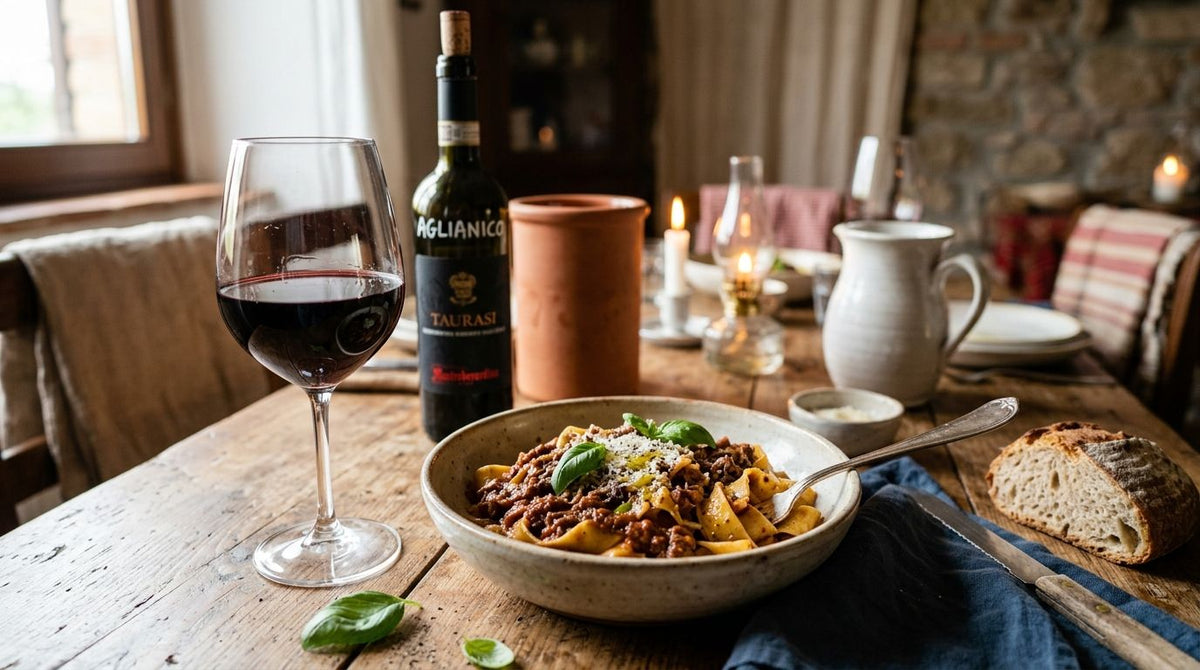
Aglianico wine for slow-cooked ragù is the pairing move serious home cooks reach for when a weeknight bolognese turns into a four-hour Sunday gravy: high tannin and high acid from a southern Italian red grape cut through the fat of long-braised beef, pork, or sausage and match the concentration of a reduced tomato sauce. Home cooks feeding a table on ragù night need a wine with backbone, not a soft, fruit-forward red that gets steamrolled by hours of simmered meat and tomato paste.
- Aglianico wine's high tannin and acidity are built to cut through slow-cooked ragù, better than soft, low-acid reds.
- Taurasi DOCG and Aglianico del Vulture DOC are the two regions to know for 2026 shopping.
- No true Aglianico on hand? Buy Wines Online's Chianti Classico Riserva, Nero d'Avola, or Amarone cover the same tannin-and-acid job.
- Decant Aglianico 60-90 minutes before serving; it's closed and tight straight out of the bottle.
Why this matters
Ragù is fat, protein, and reduced tomato acid stacked on top of each other for hours. A wine without enough acid gets flattened by the tomato; a wine without enough tannin gets lost in the fat from braised short rib, pork shoulder, or sausage. Aglianico solves both problems at once, which is why it sits on so many Southern Italian trattoria lists next to slow-cooked meat dishes rather than next to lighter pasta.
Why aglianico wine matters for ragù night
Aglianico is grown mainly in Basilicata and Campania, on volcanic and limestone soils that push acidity and structure into the grape. That's a different profile than a Cabernet Sauvignon or a soft Merlot — this is a wine built for food, not for sipping solo on the couch.
The grape's two flagship appellations both carry minimum aging rules, which means even entry-level bottles in 2026 arrive with some structure already resolved. If your ragù night runs long and heavy, that structure is exactly the point. Buy Wines Online carries over 5,000 wines, and the Italian red shelf is where this pairing lives.
Match the tannin to the meat
Tannin needs protein and fat to soften against. A thin ragù with ground turkey doesn't need the grip of a young Aglianico. A beef-and-pork ragù simmered four hours does.
- Ground beef and pork ragù: full tannin, go with a younger Aglianico or a Chianti Classico Riserva
- Sausage-heavy ragù: match the fat with an equally structured red, don't go soft
- Lamb or wild boar ragù: reach for the richest option on the shelf, tannin holds up here
- Turkey or chicken ragù: drop down a level, a lighter-bodied Italian red works better
Match the acid to the tomato
Tomato paste and long reduction push acidity into the sauce. A low-acid wine tastes flat next to it. A high-acid wine keeps the whole plate lively.
- Taste your ragù before pouring — the more paste and reduction, the more acid you need in the glass
- Aglianico's natural acidity mirrors the sauce instead of fighting it
- Skip warm-climate reds with soft, jammy profiles; they wilt against reduced tomato
- If the ragù is cream-finished, pull back on tannin slightly
Pick your Aglianico region
Two appellations dominate serious Aglianico shopping in 2026, and they taste different enough to matter at the table.
- Taurasi DOCG (Campania) — often called the Barolo of the South, structured and age-worthy, built for special-occasion ragù dinners
- Aglianico del Vulture DOC (Basilicata) — grown on the volcanic soils of Mount Vulture, more approachable young than Taurasi
- Riserva bottlings of either region carry more oak and more aging, good for the richest, longest-simmered ragù
- Entry-level Aglianico is fine for weeknight ragù when you don't need cellar-worthy structure
Decant before you serve
Aglianico is tight and closed straight out of the bottle, especially young Taurasi. Skipping this step is the most common mistake home cooks make with this grape.
- Decant 60-90 minutes before the ragù hits the table
- No decanter on hand: pour into a wide-bowled glass and let it sit 20-30 minutes
- Older bottles past 8 years need less air, so decant closer to serving time
- Don't decant more than 2-3 hours out; the fruit fades on very old bottles
Serve at the right temperature
Serving Aglianico too warm exaggerates the alcohol and buries the acid that's doing the work against your ragù.
- Target 60-65°F, cooler than room temperature in most houses
- Ten minutes in the refrigerator door fixes an over-warm bottle fast
- Never serve straight from a warm kitchen counter next to a simmering pot
- Glass shape matters less here than temperature — fix the temperature first
Stock a fallback Italian red
Aglianico isn't on every shelf, and if ragù night is this weekend you may need a substitute that does the same job. Buy Wines Online's Italian red lineup covers the gap with wines carrying the same tannin-and-acid profile.
- Marchese Antinori Chianti Classico Riserva 2022 — Sangiovese-based, high acid, built for tomato-heavy sauces. Buy for weeknight ragù.
- Donnafugata Mille e Una Notte Nero d'Avola 2021 — Sicilian, bolder and riper than Aglianico but similarly full-bodied. Buy for sausage or lamb ragù.
- Tommasi Amarone della Valpolicella Classico 2021 — dried-grape intensity, the richest option here. Buy for wild boar or venison ragù.
Store what's left
A half-finished bottle doesn't need to go to waste after ragù night.
- Re-cork tight and refrigerate; high-tannin reds hold 3-4 days better than soft, fruity ones
- Don't leave it on the counter overnight — the acid that makes it food-friendly also makes it fade once oxidized
- A vacuum stopper buys an extra day or two
Aglianico wine and fallback options compared
| Option | Best for | Key limitation |
|---|---|---|
| Aglianico del Vulture DOC | Authentic Aglianico character, approachable young | Harder to find outside specialty shops |
| Taurasi DOCG | Special-occasion, long-simmered ragù dinners | Needs bottle age or aggressive decanting when young |
| Marchese Antinori Chianti Classico Riserva 2022 | Weeknight beef or pork ragù | Lighter tannin than true Aglianico |
| Donnafugata Mille e Una Notte Nero d'Avola 2021 | Bold ragù with sausage or lamb | Richer, riper style than Aglianico's leaner profile |
| Tommasi Amarone della Valpolicella Classico 2021 | The richest, longest-simmered ragù | High alcohol can overpower a lighter, tomato-forward sauce |
Aglianico wine is the best red for slow-cooked ragù in 2026 for cooks who want high tannin and high acid in one bottle; a Chianti Classico Riserva from Buy Wines Online is the closest widely available substitute.
If your ragù runs lighter and more tomato-forward than meat-heavy — a quick weeknight sauce rather than a four-hour braise — barbera pairs better with tomato-based pasta than Aglianico does. The lower tannin won't compete with a brighter sauce.
Common mistakes home cooks make with aglianico wine
- Serving it with no air. Young Aglianico, especially Taurasi, stays tight and tannic without 60-90 minutes of decanting.
- Buying entry-level Aglianico for a special-occasion ragù. The step up to Taurasi DOCG or a Riserva matters when the meal is the centerpiece.
- Serving it too warm. A warm kitchen pushes alcohol forward and buries the acid doing the actual work against the sauce.
- Ignoring the meat-to-tannin match. A thin turkey ragù doesn't need a structured Aglianico; save the big bottle for beef, pork, or lamb.
- Assuming any Italian red will do. A soft, low-acid warm-climate blend won't cut the fat the way Aglianico or a Chianti Classico Riserva does.
FAQ
What is aglianico wine?
Aglianico is a red grape grown mainly in Basilicata and Campania in southern Italy, known for high tannin, high acidity, and dark fruit character. The two flagship appellations are Taurasi DOCG and Aglianico del Vulture DOC.
Is aglianico wine good with ragu?
Yes. Aglianico's high tannin and acidity cut through the fat and match the concentration of a slow-cooked tomato-based ragu better than soft, low-acid reds. It is a standard Southern Italian pairing for long-braised meat sauces.
What is the difference between Taurasi and Aglianico del Vulture?
Taurasi DOCG comes from Campania and is often called the Barolo of the South for its structure and age-worthiness. Aglianico del Vulture DOC comes from Basilicata's volcanic Mount Vulture soils and is typically more approachable young.
How long should you decant aglianico wine?
Decant a young Aglianico 60 to 90 minutes before serving because it is tight and closed straight out of the bottle. Bottles past 8 years need less air and can be decanted closer to serving time.
What temperature should aglianico wine be served at?
Serve Aglianico around 60 to 65 degrees Fahrenheit, cooler than typical room temperature. Ten minutes in the refrigerator door fixes an over-warm bottle before dinner.
Is aglianico similar to Sangiovese or Nebbiolo?
Aglianico shares Nebbiolo's high tannin and acidity more than Sangiovese's lighter frame, which is why it is compared to Barolo. It runs darker in fruit character than either, with more black cherry and plum than red-fruited Sangiovese.
Does aglianico wine need to age before drinking?
Taurasi DOCG benefits from bottle age and can taste tight and tannic young, while Aglianico del Vulture DOC is more approachable in its first few years. Riserva bottlings of either region reward extra cellar time.
What is a good substitute for aglianico wine for ragu?
A Chianti Classico Riserva, a Nero d'Avola, or an Amarone della Valpolicella cover similar ground when true Aglianico is not available. All three bring enough tannin and acid to stand up to a long-simmered ragu.
One last thing
Taurasi DOCG has an aging requirement written into the appellation rules: a minimum of three years before release, one of them in wood, and four years for Riserva. That regulation tells you what the wine is built for. It's designed to hold up against exactly the kind of slow-cooked, high-fat dish that takes an afternoon to build. If your ragù simmers for four hours in 2026, pour something with the same patience baked into it.