
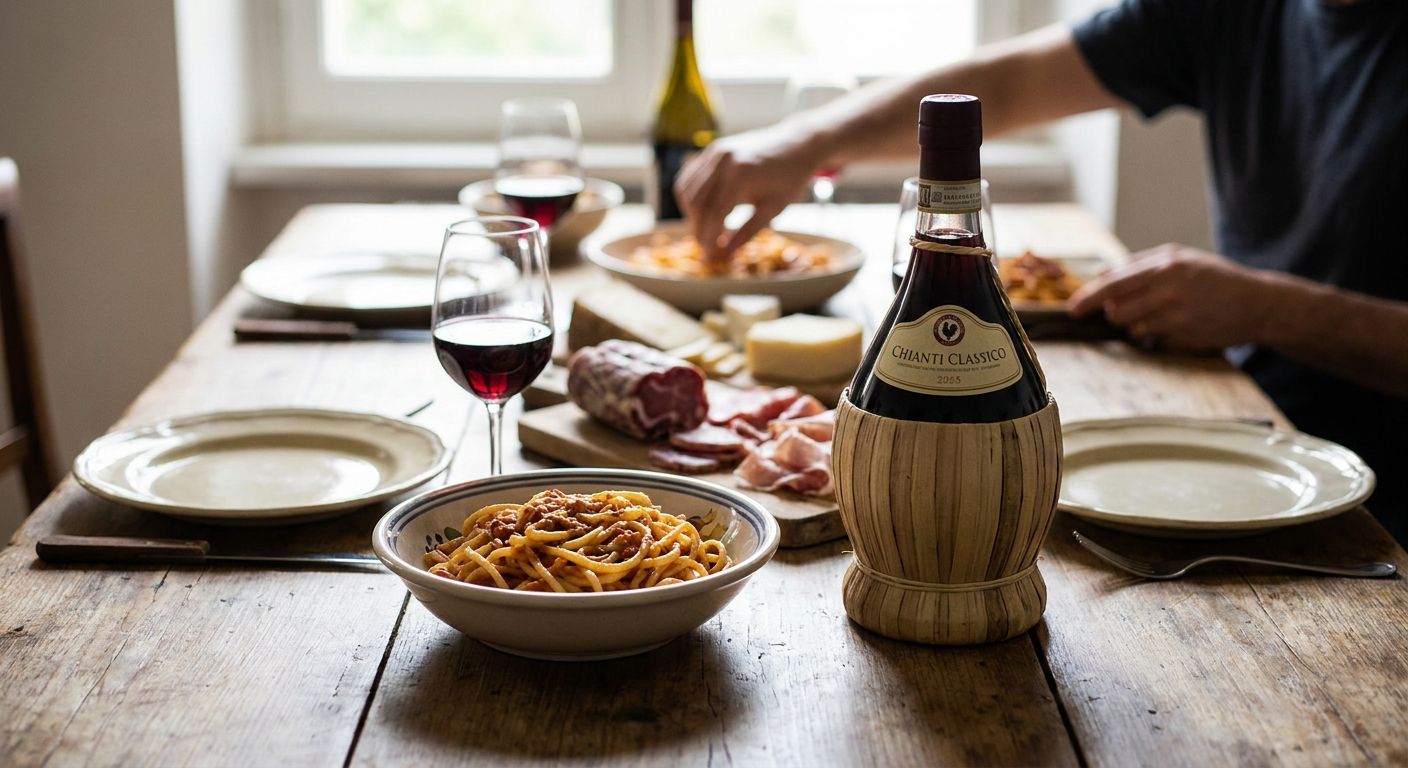
Planning a Chianti wine for dinner parties usually starts with the same problem: the bottle labeled "Chianti" at the corner store and the bottle labeled "Chianti Classico" at a real wine retailer are not the same wine, and most hosts can't tell you why.
- True Chianti DOCG stock rotates fast in 2026 - Casanova di Neri's Brunello di Montalcino is the closest Sangiovese match: Buy.
- For a splurge-worthy chianti wine for dinner parties, Antinori Tignanello 2022 gives Sangiovese structure at Super Tuscan intensity: Buy.
- Skip sub-$12 supermarket 'Chianti' blends - they cut Sangiovese with filler grapes and go flat against tomato sauce.
- Borgogno Langhe Nebbiolo 2023 is the wildcard when the table wants Piedmont tannin instead of Tuscan acid: Consider.
Why this matters
Chianti earned its reputation at the dinner table, not on a shelf. Its acidity and moderate tannin were built for tomato sauce, olive oil, and cured meats long before anyone graded it by score. Get the wrong bottle for an Italian dinner party in 2026 and you'll spend the night pouring something too thin, too sweet, or too oaked to sit next to a plate of osso buco. For a full spread beyond the wine, the best Italian wines for pasta night guide covers what to pour course by course.
Who this is for
This is for the host planning a multi-course Italian dinner in 2026 - antipasti, a pasta or risotto course, a braised or grilled main - who wants a red that works across the whole meal instead of three different bottles. It's also for anyone shopping a Chianti wine for dinner parties who has been burned by a $9 straw-bottle Chianti that tasted like nothing.
What to look for in Chianti for dinner parties
The DOCG or DOC designation on the label
Chianti Classico DOCG requires a minimum of 80% Sangiovese and carries the black rooster (Gallo Nero) seal on the neck of the bottle. Basic Chianti DOCG allows more blending flexibility and a lower Sangiovese floor. If the label just says "Chianti" with no subzone, you're buying the entry tier, and it shows at the table.
Acid structure, not just tannin
Sangiovese's high natural acidity is the whole reason it works with tomato-based dishes, so a Chianti wine for dinner parties needs bright acid more than it needs heavy tannin. A flabby, low-acid bottle will taste dull next to marinara or a Bolognese.
Riserva versus Annata aging
Riserva Chianti spends longer in oak and bottle before release, giving it more structure for a slow-braised main. Annata (young, unoaked-forward) versions are lighter and better suited to antipasti or a simple caprese course. Match the tier to the course, not the price tag.
How much oak is on the wine
Over-oaked Sangiovese fights with garlic, basil, and olive oil instead of complementing them. Look for restrained oak notes so the fruit and acid stay in front.
Bottle count for your guest list
Plan on one 750ml bottle per 2-3 guests across a multi-course Italian dinner, which means 3-4 bottles for a table of eight. Undercount and the last course gets water; overcount and you're storing open reds for a week.
Top picks for an Italian dinner party in 2026
True Chianti DOCG inventory moves fast and isn't always sitting on the shelf when you need it. These are the closest Sangiovese-driven Tuscan matches available right now, plus one Piedmont wildcard for hosts who want a change of grape.
The Sangiovese purist's pick: Casanova di Neri Brunello di Montalcino White Label 2021. Brunello is 100% Sangiovese Grosso from Montalcino, one DOCG south of Chianti Classico but built on the same grape and the same high-acid backbone that makes Sangiovese work with tomato and olive oil. It's a heavier pour than a young Chianti, so it's built for the main course, not the antipasti spread. Verdict: Buy if your menu centers on a braised or roasted main.
The splurge pick: Antinori Tignanello 2022. Antinori is one of the founding houses behind Chianti Classico, and Tignanello - a Toscana IGT blend of Sangiovese and Cabernet - was one of the original Super Tuscans that broke from strict DOCG rules in the 1970s. It's not Chianti DOCG on the label, but it carries the Sangiovese spine at a higher-intensity level for a dinner party you want to remember. Verdict: Buy for a special-occasion table.
The wildcard: Borgogno Langhe DOC Nebbiolo No Name 2023. This one leaves Tuscany entirely - Nebbiolo from Piedmont's Langhe region, not Sangiovese - but it delivers the same high-acid, food-first structure that makes a Chianti wine for dinner parties work, with firmer tannin. Pour it if your main leans toward mushroom risotto or a richer braise. Verdict: Consider if you want to introduce the table to a different Italian grape without losing the food-pairing logic.
What to avoid
- Bargain "Chianti" under $12 with no subzone listed. These often cut Sangiovese with high-yield filler grapes and lose the acidity that makes the style work with food.
- Anything over-oaked and marketed as "smooth." Smooth usually means low acid and heavy vanilla-oak, which clashes with tomato sauce and garlic instead of cutting through it.
- Novelty straw-covered fiasco bottles bought for the packaging. They photograph well and rarely deliver the fruit or acid a real Chianti wine for dinner parties needs.
“If the label doesn't say Chianti Classico, it isn't held to the 80% Sangiovese minimum.”
Verdict comparison
| Wine | Region / grape | Best course | Verdict |
|---|---|---|---|
| Casanova di Neri Brunello di Montalcino White Label 2021 | Montalcino, 100% Sangiovese | Braised or roasted main | Buy |
| Antinori Tignanello 2022 | Tuscany, Sangiovese-Cabernet blend | Special-occasion main | Buy |
| Borgogno Langhe DOC Nebbiolo No Name 2023 | Piedmont, Nebbiolo | Risotto or richer braise | Consider |
FAQ
What makes a wine actually Chianti instead of just a Sangiovese blend?
A wine can only be labeled Chianti or Chianti Classico if it's produced in the designated Tuscan zones under DOCG rules, which set minimum Sangiovese percentages, yield limits, and aging requirements. Chianti Classico requires at least 80% Sangiovese and carries the Gallo Nero seal; a Sangiovese blend from outside the zone can't use the name.
Is Chianti Classico better than regular Chianti for a dinner party?
Chianti Classico is generally the stronger choice for a dinner party because of its higher Sangiovese minimum and stricter production rules. Basic Chianti DOCG allows more blending flexibility and often tastes thinner at the table.
What food pairs best with Chianti at an Italian dinner party?
Chianti's high acidity was built for tomato-based sauces, olive oil, and cured meats. It also works with roasted meats, aged cheeses like pecorino, and mushroom-based pasta.
How many bottles of Chianti do I need for a dinner party of eight?
Plan on one 750ml bottle per 2-3 guests, which puts a table of eight at 3-4 bottles for a multi-course meal. Add one extra bottle if the meal runs three courses or longer.
Is Chianti Riserva worth the extra cost for a dinner party?
Riserva is worth it when the main course is a slow-braised or roasted dish that can stand up to the extra oak aging and structure. For lighter antipasti or a simple pasta course, a young Annata Chianti is the better match.
What's a good substitute if I can't find true Chianti?
Brunello di Montalcino, made from 100% Sangiovese Grosso, is the closest substitute because it shares Chianti's grape and acid profile. A Sangiovese-based Super Tuscan is the next-closest option if you want more intensity.
Should Chianti be decanted before a dinner party?
Young Chianti opens up with about 30 minutes of air, while a Riserva can use closer to a full hour in the decanter. Decanting matters more for Riserva bottles because their tighter tannin structure needs time to soften.
How much does a good bottle of Chianti cost in 2026?
Pricing varies by subzone, producer, and vintage, so check current listings for exact figures rather than relying on a fixed number. Chianti Classico generally costs more than basic Chianti and less than a Super Tuscan from the same producer.
One last thing
The detail most hosts miss: Chianti Classico's Gallo Nero seal sits on the neck of the bottle, not the front label, so a quick glance at the shelf photo online won't tell you if a wine qualifies. Check the neck seal or the DOCG language on the back label before you order for a 2026 dinner party, especially if you're buying blind off a product photo.
Right wine bottle size for parties is worth a read before you finalize your order - bottle count mistakes are the most common reason dinner party wine runs out mid-meal.