
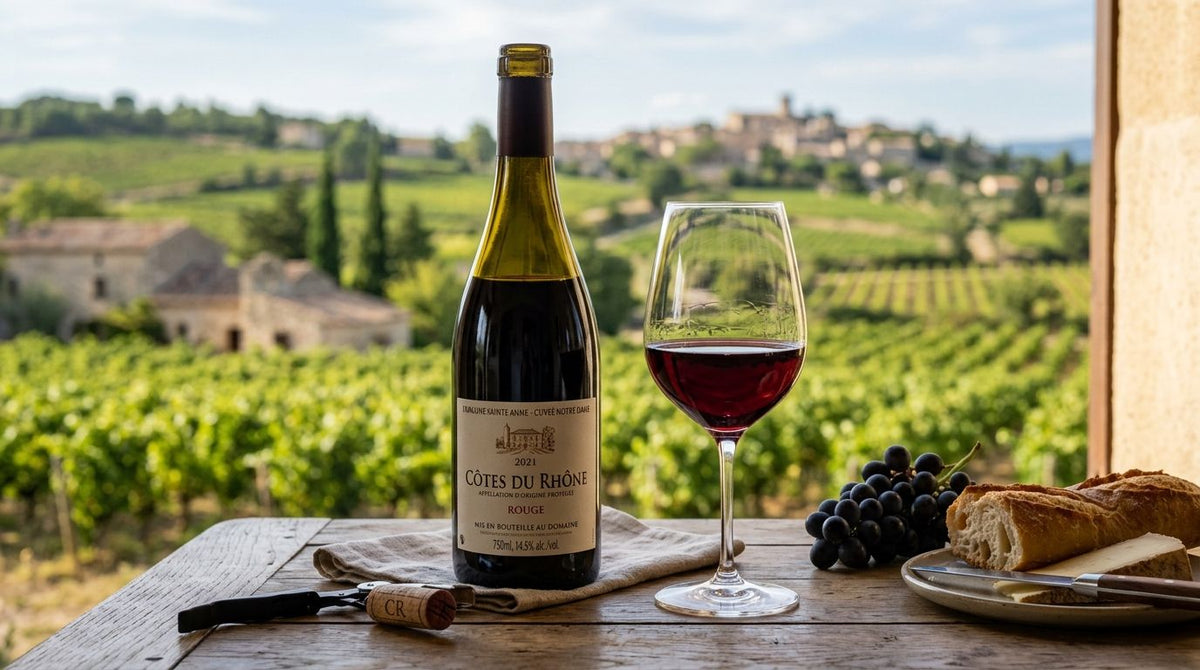
Red blend lovers who already reach for Napa proprietary reds or Argentine Malbec blends get their next move in Côtes du Rhône wine: a Grenache-Syrah-Mourvèdre blend from southern France built for food, not for show. It skips the heavy oak and jam that define a lot of California red blends and replaces it with pepper, dried herb, and dark cherry fruit. Red blend lovers moving here aren't starting over — they're trading price-inflated oak for structure that actually holds up at the table.
- Côtes du Rhône wine is a Grenache-Syrah-Mourvèdre blend built for red blend lovers who want spice over oak.
- Côtes du Rhône Villages and named crus like Gigondas cost more but bring more structure and aging potential.
- Red blend lovers moving from Napa proprietary blends get similar layered fruit at a lower price tier in the Rhône.
- Châteauneuf-du-Pape allows up to 13 grape varieties, the widest blend rule in the Rhône Valley.
- Buy a mixed case before committing to one appellation - styles vary more than the label suggests.
Why Côtes du Rhône wine matters for red blend lovers
Most red blend lovers built their palate on wines that lead with fruit and oak: Napa proprietary blends, Zinfandel-heavy field blends, Malbec-dominant Argentine reds. Côtes du Rhône wine gives that same layered, multi-grape complexity but shifts the weight toward Grenache's warmth, Syrah's pepper, and Mourvèdre's grip instead of vanilla and toast.
The practical upside in 2026: Rhône blends fill a price tier that overlaps directly with the everyday Napa red blends already sitting in most red blend lovers' rotation, but they age on a different clock and pair with a wider range of weeknight meals. That crossover is why this segment keeps landing on Côtes du Rhône when they branch out from domestic blends.
Learn the GSM blend ratio before you buy
Every Côtes du Rhône is built on the same three grapes in different proportions, and the ratio tells you what you're getting before you open the bottle.
- Grenache typically leads the blend (40-80%), driving fruit sweetness and alcohol warmth
- Syrah adds color, black pepper, and backbone
- Mourvèdre contributes tannin, earthiness, and aging structure
- Cinsault or Carignan sometimes round out the remaining percentage for freshness
- Producers in this region list varietal percentages on the back label more consistently than most Napa blend makers do
Match the appellation to your usual red blend style
The appellation on the label is a style signal, not just a region name.
- Prefer jammy, higher-alcohol reds: start with Côtes du Rhône Villages
- Prefer structured, age-worthy reds: look at Gigondas or Châteauneuf-du-Pape
- Prefer lighter, food-friendly reds: stick with base-tier Côtes du Rhône
- Check the alcohol percentage on the label - Rhône reds commonly run 13.5-15%, in line with most domestic red blends
Pair it with the meals you already cook
Côtes du Rhône wine was built around a French home table, which means it pairs with a lot of what red blend lovers already cook on a Tuesday.
- Roast chicken and herb-rubbed meats
- Grilled sausage and burgers
- Mushroom risotto and root vegetables
- Aged hard cheeses like Gruyère or aged cheddar
- Tomato-based pasta with ground beef or lamb
Build a mixed case before you commit to one producer
Appellation names on their own don't predict flavor as reliably as the producer behind the bottle.
- Order bottles across two or three appellation tiers in one purchase
- Taste them side by side over a single weekend, not spread across months
- Note which bottle you reach for a second glass of - that's your real style match
- Use a broader international tasting set to see how Rhône-style blends compare against other regions before buying a full case of any one style
Check the vintage before buying in 2026
Rhône vintages swing more year to year than most California red blend vintages do, and that matters more here than it does with a domestic blend.
- Southern Rhône vintages vary in ripeness and tannin more than Napa's climate-controlled growing seasons
- Cooler vintages produce more structured, savory wines that need extra time in the glass
- Warmer vintages soften tannin faster and drink well younger
- Ask about vintage character when buying older Villages-level stock, since it can pass its drinking window sooner than a Cru-level wine
Store and serve at the right temperature
Most home drinkers serve red wine too cold, which flattens the spice notes that make Côtes du Rhône appealing to red blend lovers in the first place.
- Serve at 60-65°F, warmer than a typical refrigerator setting
- Decant Gigondas and Châteauneuf-du-Pape for 30-60 minutes before pouring
- Base-tier Côtes du Rhône rarely needs decanting
- Store bottles on their side, away from light and temperature swings
Buy from a retailer that ships and stores the wine correctly
Heat exposure during shipping does more damage to a Rhône blend's fruit than a few extra months in the bottle. Before you order online in 2026, run through how to choose a reliable online wine retailer so you know what to check before checkout - packaging, delivery windows, and how a retailer handles summer heat.
Red blend lovers who want to start closer to home before crossing into French appellations can browse Grenache wine built for casual weeknight sipping — Grenache is the backbone grape in nearly every Côtes du Rhône blend, so it's a useful bridge bottle. The full 5,000+ bottle wine selection covers red blends across price points if you want to compare styles before narrowing in.
Which Côtes du Rhône style fits a red blend lover
| Appellation | Best For | Key Limitation |
|---|---|---|
| Côtes du Rhône (base AOC) | First-time buyers and everyday sipping | Quality swings widely by producer |
| Côtes du Rhône Villages | Red blend lovers wanting more concentration | Still lacks single-vineyard character |
| Named villages (Cairanne, Vinsobres, Rasteau) | Buyers who want village-level identity | Harder to find outside specialty retailers |
| Gigondas | Fans of bold, tannic reds seeking a Châteauneuf alternative | Needs 3-5 years to soften fully |
| Vacqueyras | Mid-tier buyers between Villages and Gigondas | Less name recognition, inconsistent US stock |
| Châteauneuf-du-Pape | Special-occasion drinkers wanting the region's flagship | Highest price tier in the Rhône |
Buy: base Côtes du Rhône or Villages for weeknight rotation. Hold off on Gigondas and Châteauneuf-du-Pape until you've confirmed the GSM style actually fits your palate.
“A base Côtes du Rhône that needs three years in the cellar to taste balanced is priced above its tier.”
Common mistakes red blend lovers make with Côtes du Rhône
- Expecting Napa-style oak and jam from a base Côtes du Rhône — the entry tier is leaner, drier, and more herb-driven than most domestic blends
- Paying Cru prices for Villages-level fruit because the appellation name sounds premium
- Serving it cellar-cold, which mutes the pepper and dried-herb notes that make the blend distinctive
- Ignoring vintage variation, since Rhône vintages move more than California's do year to year
- Buying one bottle instead of a comparison set, then judging the whole category on a single producer
FAQ
What is Côtes du Rhône wine made from?
Côtes du Rhône wine is a Grenache-Syrah-Mourvèdre blend, often with small amounts of Cinsault or Carignan added. Grenache usually leads the blend and drives the fruit character, while Syrah and Mourvèdre add pepper, color, and structure.
Is Côtes du Rhône a red blend?
Yes, Côtes du Rhône is a red blend built primarily around Grenache, Syrah, and Mourvèdre. It's one of the original GSM blends that many California red blend producers have modeled their own wines after.
What's the difference between Côtes du Rhône and Côtes du Rhône Villages?
Côtes du Rhône Villages comes from a smaller, higher-quality subset of vineyards with stricter yield limits than the base Côtes du Rhône appellation. Villages-tier wines are typically more concentrated and age-worthy than base Côtes du Rhône.
Is Châteauneuf-du-Pape the same as Côtes du Rhône?
No, Châteauneuf-du-Pape is its own appellation within the broader Rhône Valley and sits above Côtes du Rhône in both quality classification and price. It allows up to 13 grape varieties in the blend, more than any other Rhône appellation.
What food pairs best with Côtes du Rhône wine?
Côtes du Rhône pairs well with roast chicken, grilled sausage, mushroom-based dishes, and aged hard cheeses. Its moderate tannin and herb-driven fruit make it more food-flexible than heavier, oak-forward red blends.
Is Côtes du Rhône wine similar to Napa red blends?
Côtes du Rhône shares the multi-grape blending approach with Napa proprietary red blends but leans on Grenache, Syrah, and Mourvèdre instead of Cabernet-based grapes. The result is less oak-driven and more spice- and herb-forward than most Napa blends.
Does Côtes du Rhône wine need to be decanted?
Base-tier Côtes du Rhône rarely needs decanting and drinks well straight from the bottle. Higher tiers like Gigondas and Châteauneuf-du-Pape benefit from 30 to 60 minutes of air before serving.
What vintage of Côtes du Rhône should I buy in 2026?
Vintage matters more in the Rhône than in California because growing seasons vary more from year to year. Ask a retailer about vintage character before buying older Villages-level stock, since it can pass its drinking window sooner than Cru-level wine.
One last thing
Châteauneuf-du-Pape technically permits up to 13 different grape varieties in the blend, more than any other appellation in the Rhône Valley — most producers still lean on Grenache, Syrah, and Mourvèdre for the bulk of the wine. If a red blend lover wants to see the ceiling of what GSM-style blending can do before committing to a full case, that's the appellation to taste first in 2026, not the entry-tier bottle.