
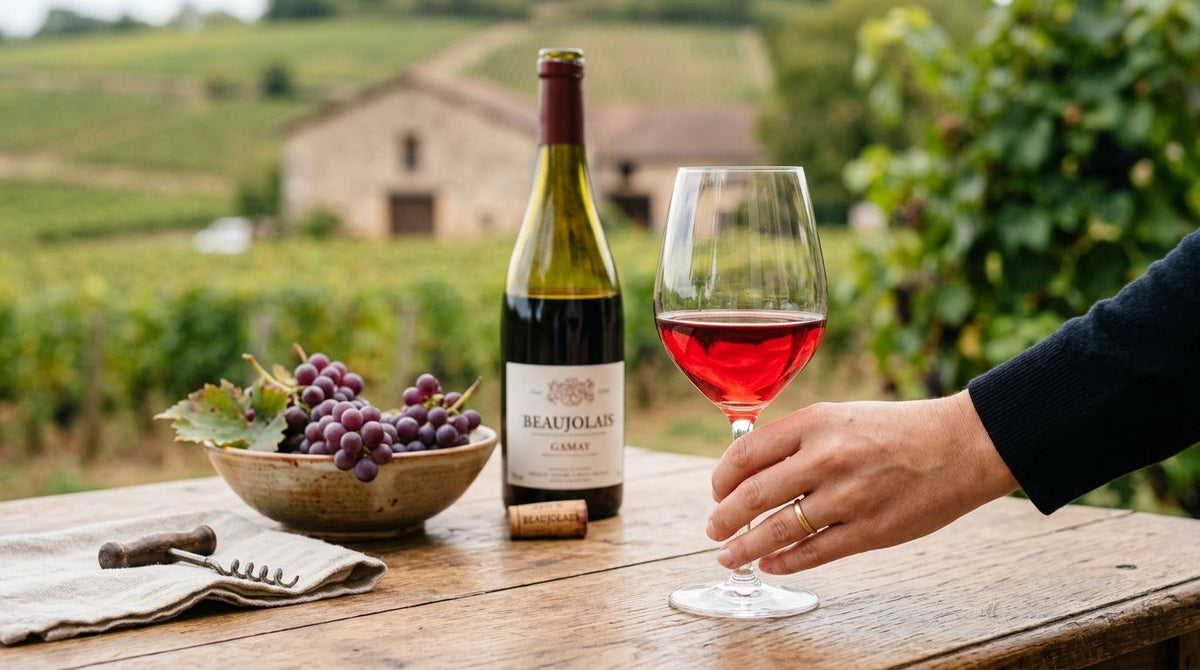
Beaujolais wine for light red wine lovers is Gamay-based red from France's Beaujolais region, built to drink cool, fruit-forward, and low in tannin — the exact profile someone already choosing light reds over heavy Cabernet is hunting for. Unlike Napa Cabernet or Amarone, Beaujolais skips the oak-and-tannin route entirely, favoring bright red fruit, snappy acidity, and a texture closer to a chilled Pinot Noir than a steakhouse red.
- Beaujolais wine is 100% Gamay, made for chilling and drinking young rather than cellaring.
- Cru Beaujolais (Morgon, Fleurie, Moulin-a-Vent and 7 others) beats generic Beaujolais Nouveau for actual quality.
- Kosta Browne Sonoma Coast Pinot Noir is the closest non-Beaujolais match for texture and weight in 2026.
- Serve Beaujolais at 55 degrees F, not room temperature — that single change fixes most first bad impressions.
Why Beaujolais wine matters for light red wine lovers
Most light-red drinkers land here after getting burned by a "light red" that turned out to be a young Cabernet with soft tannins — still heavy, just less obviously so. Beaujolais is a different animal: Gamay ferments through carbonic maceration in many bottlings, a process that pulls out bright, juicy fruit and almost none of the tannin structure you'd get from Cabernet or Merlot.
That makes Beaujolais one of the few reds that genuinely rewards 20 minutes in the fridge. If you already reach for Pinot Noir or Grenache because tannin gives you a headache, Beaujolais belongs in the same 2026 rotation — it's lighter than both in most vintages and easier to drink without decanting.
Learn the Gamay grape before you buy
Gamay is a thin-skinned red grape grown almost exclusively in Beaujolais and pockets of the Loire. Thin skins mean less tannin extraction during fermentation, which is the entire reason this category reads "light" instead of "medium" or "full."
- Look for "Gamay" or "Beaujolais" on the front label — both point to the same grape.
- Expect red fruit: cherry, cranberry and raspberry, rarely blackberry or plum.
- Alcohol typically sits lower than Napa Cabernet, which keeps the wine feeling lighter glass to glass.
- Skip anything labeled "Beaujolais Superieur" if you want the lightest possible pour — it trends slightly riper.
Pick a Cru Beaujolais over generic Beaujolais
Beaujolais has 10 named Cru villages, and the gap between a plain "Beaujolais" label and a Cru bottling is the single biggest quality lever in the category. Cru wines come from specific hillside sites and get more structure without losing the light-bodied core.
- Morgon and Moulin-a-Vent are the fullest of the 10 — the entry point if you want a little more weight.
- Fleurie and Chiroubles are the most floral and delicate, best for drinkers newest to light reds.
- Brouilly and Cote de Brouilly split the difference with balanced fruit and moderate acidity.
- Avoid buying by "Beaujolais" alone at a big-box store — that tier covers the least distinctive juice in the region.
- Check the label for the Cru name printed clearly; producers proud of their site say so.
Compare Beaujolais against the light reds already in your rotation
Before committing to a case, put Beaujolais up against the light reds you already trust. Kosta Browne Sonoma Coast Pinot Noir 2023 is a useful benchmark — fuller than most Cru Beaujolais, but sharing the same low-tannin, high-acid backbone that makes both wines food-friendly.
- Pinot Noir runs slightly richer in fruit weight; Gamay runs lighter and brighter.
- Grenache trades acidity for riper, jammier fruit — good if Beaujolais tastes too tart to you.
- Chianti's Sangiovese base brings higher acid and a savory, herbal edge Gamay doesn't have.
- If a bottle feels closer to Merlot than Pinot Noir, it isn't really competing in this category.
Chill it like a white, not a red
Serving temperature makes or breaks Beaujolais. Most home drinkers pour it at room temperature out of habit, which flattens the fruit and exaggerates any sharpness in the wine.
- Target roughly 55 degrees F — about 20-30 minutes in the fridge from room temperature.
- Use an ice pack in a wine sleeve when you need the bottle cold before guests arrive.
- Never pour Beaujolais straight from a warm pantry in summer — it tastes hot and thin.
- Re-chill leftover wine between pours if your kitchen runs warm.
Pair it with foods that flatter light reds
Beaujolais was built as a bistro wine, and it still performs best next to simple, savory food rather than heavy sauces.
- Roast chicken, duck or turkey
- Charcuterie boards with soft cheeses
- Grilled salmon or tuna
- Mushroom risotto or roasted root vegetables
- Light tomato-based pasta dishes
Time your purchase around Nouveau vs. Cru
Beaujolais Nouveau releases every year on the third Thursday of November and is meant to be drunk within months, not years. Cru Beaujolais is a different product entirely and holds up far better.
- Buy Nouveau only for fall and holiday drinking in 2026, not as the serious bottle at a dinner party.
- Cru Beaujolais from a strong vintage can hold 3-5 years; Moulin-a-Vent often goes longer.
- Check the vintage on the label — a 2026 Nouveau and a 2021 Cru serve completely different purposes.
- Don't cellar a Nouveau bottle expecting improvement. It won't improve.
Beaujolais vs. other light-bodied reds for 2026
| Style | Best for | Key limitation |
|---|---|---|
| Cru Beaujolais (Gamay) | Drinkers who want the lowest tannin with real structure | Availability varies by Cru; few shops stock all 10 |
| Pinot Noir (Kosta Browne Sonoma Coast) | Readers who want more fruit weight without heavy tannin | Top bottlings run pricier than most Cru Beaujolais |
| Chianti Classico (Sangiovese) | Readers who want acidity for tomato-based food | Higher acid can taste sharp without food alongside |
| Grenache | Readers who want riper, jammier fruit and lower acid | Can run warmer in alcohol than Gamay |
Verdict: Cru Beaujolais wins for anyone who wants the lightest true red on the shelf and doesn't mind the chilling step Cabernet drinkers skip.
Common mistakes light red wine lovers make with Beaujolais
- Serving it at room temperature. The single most common reason people write off the whole category after one bottle.
- Judging Beaujolais by Nouveau alone. Nouveau is a seasonal pour, not a fair sample of what Cru Beaujolais tastes like.
- Buying by region name only. Skipping the Cru name means gambling on the least distinctive tier in Beaujolais.
- Pairing it with heavy red meat. Beaujolais gets steamrolled by ribeye or braised short rib — save those for a fuller red.
- Cellaring it for a decade. Most Beaujolais, including many Crus, is built to drink within a few years.


FAQ
What is Beaujolais wine made from?
Beaujolais wine is made entirely from the Gamay grape, grown in France's Beaujolais region. Thin skins mean lower tannin extraction, which is why the wine reads as light-bodied.
Is Beaujolais a light or full-bodied red?
Beaujolais is a light-bodied red, one of the lightest widely available reds outside of Pinot Noir. Cru bottlings like Morgon lean slightly fuller but stay well below Cabernet weight.
Should Beaujolais wine be served chilled?
Yes, serve Beaujolais around 55 degrees F, closer to white wine temperature than typical red wine temperature. Room-temperature Beaujolais tastes flat and loses its fruit character.
What is the difference between Beaujolais Nouveau and Cru Beaujolais?
Beaujolais Nouveau releases every year on the third Thursday of November and is meant to be drunk within months. Cru Beaujolais comes from 10 named villages, offers more structure, and can hold 3-5 years or longer.
Is Beaujolais similar to Pinot Noir?
Beaujolais and Pinot Noir share low tannin and high acidity, but Beaujolais is typically lighter in fruit weight. Pinot Noir bottlings like Kosta Browne Sonoma Coast sit a step fuller in comparison.
How long does Beaujolais wine last after opening?
An opened bottle of Beaujolais holds its fruit character for 2-3 days if resealed and refrigerated. Light tannin structure means it fades faster than a full-bodied red once air reaches it.
What food pairs best with Beaujolais wine?
Roast chicken, charcuterie, grilled salmon and mushroom dishes all pair well with Beaujolais. Low tannin and bright acidity make it more food-flexible than heavier reds.
Is Beaujolais wine good for beginners?
Yes, Beaujolais is one of the more approachable reds for beginners because of its low tannin and fruit-forward style. Starting with a named Cru rather than basic Beaujolais gives a better first impression.
One last thing
Most people who dismiss Beaujolais tried it warm, from the cheapest Nouveau bottle on the shelf, at exactly the wrong time of year. Buy a Cru Beaujolais, chill it 25 minutes, and pour it next to a roast chicken — that combination changes more minds in 2026 than any tasting note. If the bottle still tastes thin after that, move to Kosta Browne Sonoma Coast Pinot Noir for a touch more weight without losing the low-tannin profile you're chasing. Shop the full range at BuyWinesOnline.