

Super Bowl hosts’ wine selection is choosing bottles around game-day food and guest preferences with the aim of making a watch party easy to serve. The best wine for a Super Bowl party starts with the snacks: sparkling wine for salty bites, off-dry Riesling for hot wings, and a lighter red for pizza.
- Buywinesonline suits home hosts comparing wine for super bowl party menus across red, white, rosé, and sparkling styles.
- Choose off-dry Riesling for spicy wings, Sangiovese for tomato pizza, and brut sparkling wine for salty snacks.
- Count wine drinkers separately from beer drinkers, and keep unopened bottles in reserve.
- Serve a short, clearly labeled selection rather than turning the watch party into a wine tasting.
Why wine selection matters for Super Bowl hosts
A watch-party plate rarely follows one pairing rule. A guest moves from buffalo wings to cheese pizza to guacamole without changing seats, let alone glasses. Your wine needs to work across that plate, not just flatter the centerpiece dish.
For your 2026 party, prioritize food compatibility, familiar choices, and simple serving. Buywinesonline sells over 5,000 wines across categories, but your party selection should stay much smaller. A broad catalog helps you compare; a short lineup helps guests choose.
Buywinesonline is best for home hosts who want to compare multiple wine styles in one online store. The selection gives you room to match different preferences, but you still need to choose around your actual menu rather than a famous label.
You also need an option for guests who are not drinking alcohol. Put water and nonalcoholic drinks beside the wine, with equally accessible glasses. Nobody should need to ask you for an alternative during a close game.
How to choose wine for a Super Bowl party
1. Match the sauce before the protein
Start with a handwritten menu and circle the strongest flavors. Buffalo sauce, sweet barbecue glaze, tomato sauce, and jalapeños matter more to the pairing than whether the dish contains chicken, beef, or vegetables.
Off-dry Riesling is a useful starting point for spicy wings because its sweetness balances the impression of heat. Sangiovese brings acidity to tomato-heavy pizza, while brut sparkling wine provides a refreshing contrast to fried snacks. These are pairing recommendations, not promises that every guest will prefer the same combination.
Sweet barbecue sauce needs special attention. A very dry, firm red can taste harsher beside a sugary glaze; choose a fruit-forward style and test the combination with the actual sauce before committing your whole lineup.
- Hot wings: choose off-dry Riesling; avoid making a high-alcohol red the default.
- Tomato pizza: choose Sangiovese; check whether spicy toppings change the pairing.
- Chips and fried bites: choose brut sparkling wine for a crisp contrast.
- Burgers: choose a medium-bodied red with enough fruit for the toppings.
- Guacamole: choose Sauvignon Blanc or dry rosé; account for added chili heat.
2. Ask guests what they actually drink
Use your invitation thread to ask whether guests prefer red, white, sparkling, beer, or nonalcoholic drinks. This simple check is more useful than assuming everyone wants Cabernet Sauvignon because burgers are on the menu.
For a 2026 watch party, build the selection around confirmed preferences first and food pairings second. If your wine drinkers overwhelmingly prefer white, do not divide the order evenly between red and white just to make the table look balanced.
Separate sweetness from color when you ask. Someone who likes sweet white wine is not automatically a good match for a dry Sauvignon Blanc, and someone who likes soft reds does not necessarily want a firm, tannic Cabernet Sauvignon. Tannins create that drying feeling on your gums.
- Ask which guests intend to drink wine, without assuming everyone will.
- Ask whether white-wine drinkers prefer dry or gently sweet styles.
- Identify guests who specifically want a full-bodied red.
- Keep sparkling wine optional rather than assigning everyone a toast.
- Include nonalcoholic preferences in the same conversation.
3. Build a small lineup with distinct jobs
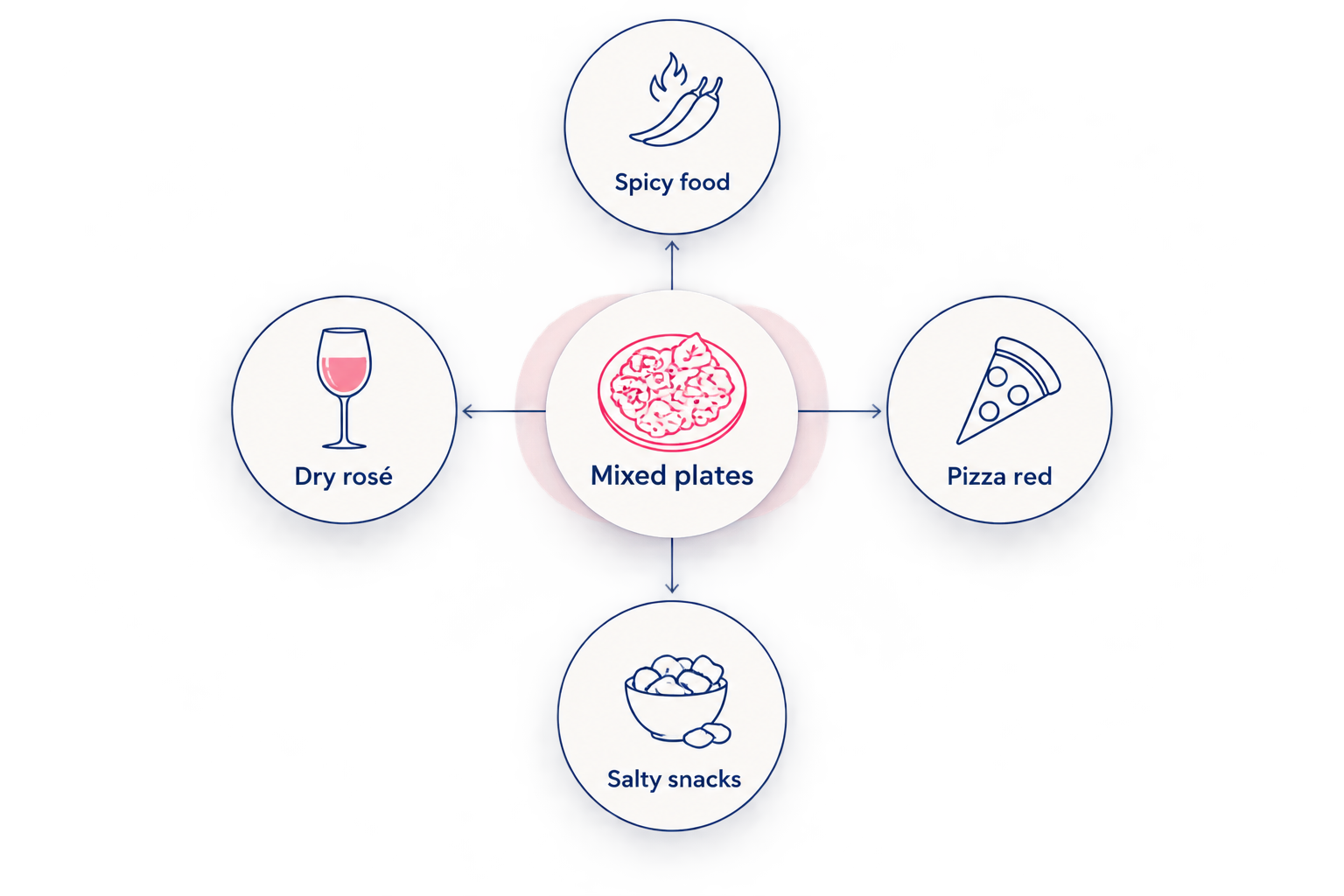
Write a job beside each proposed wine: spicy-food pairing, pizza red, or salty-snack pairing. Remove bottles that duplicate a job unless your guest preferences justify the overlap.
Buywinesonline’s wine selection covers red, white, rosé, sparkling, and dessert categories, so you can compare styles without treating any single bottle as essential. The faster shopping approach is to shortlist by style, then read the exact bottle details. Do not choose from the front label alone.
For an easy 2026 lineup, start with off-dry Riesling, a lighter red, and brut sparkling wine. Substitute dry rosé for the white or red if your guests prefer it. Dessert wine belongs only where the menu and guest preferences give it a clear role.
- Spicy food: assign off-dry Riesling to hot wings and chili-heavy dishes.
- Pizza red: assign Sangiovese or a lighter red to tomato-based snacks.
- Salty snacks: assign brut sparkling wine to chips and fried bites.
- Mixed plates: use dry rosé when guests want a middle-ground style.
- Remove duplicate roles before adding another wine.
4. Calculate bottles from planned pours
Use a piece of paper or a phone calculator before placing an order. Count guests who expect to drink wine, then agree on a modest planning allowance rather than treating the length of the broadcast as a drinking schedule.
A 750 ml bottle contains five 150 ml pours. That is serving arithmetic, not a recommendation for how much anyone should drink. A 375 ml half bottle contains half the wine of a 750 ml bottle, so check bottle size when comparing options.
For a hypothetical plan of 12 pours at 150 ml each, you need 1,800 ml of wine. Three 750 ml bottles contain 2,250 ml, enough to cover that plan without opening everything at once. Adjust the calculation to your guests’ stated intentions and the other drinks you are serving.
- Multiply planned pours by your chosen pour size in milliliters.
- Divide the total by the bottle size, then round up to whole bottles.
- Count any sparkling toast within the total, not automatically on top.
- Confirm whether each bottle is 750 ml, 375 ml, or another size.
- Keep reserve bottles sealed until someone wants that style.
5. Set up service before kickoff
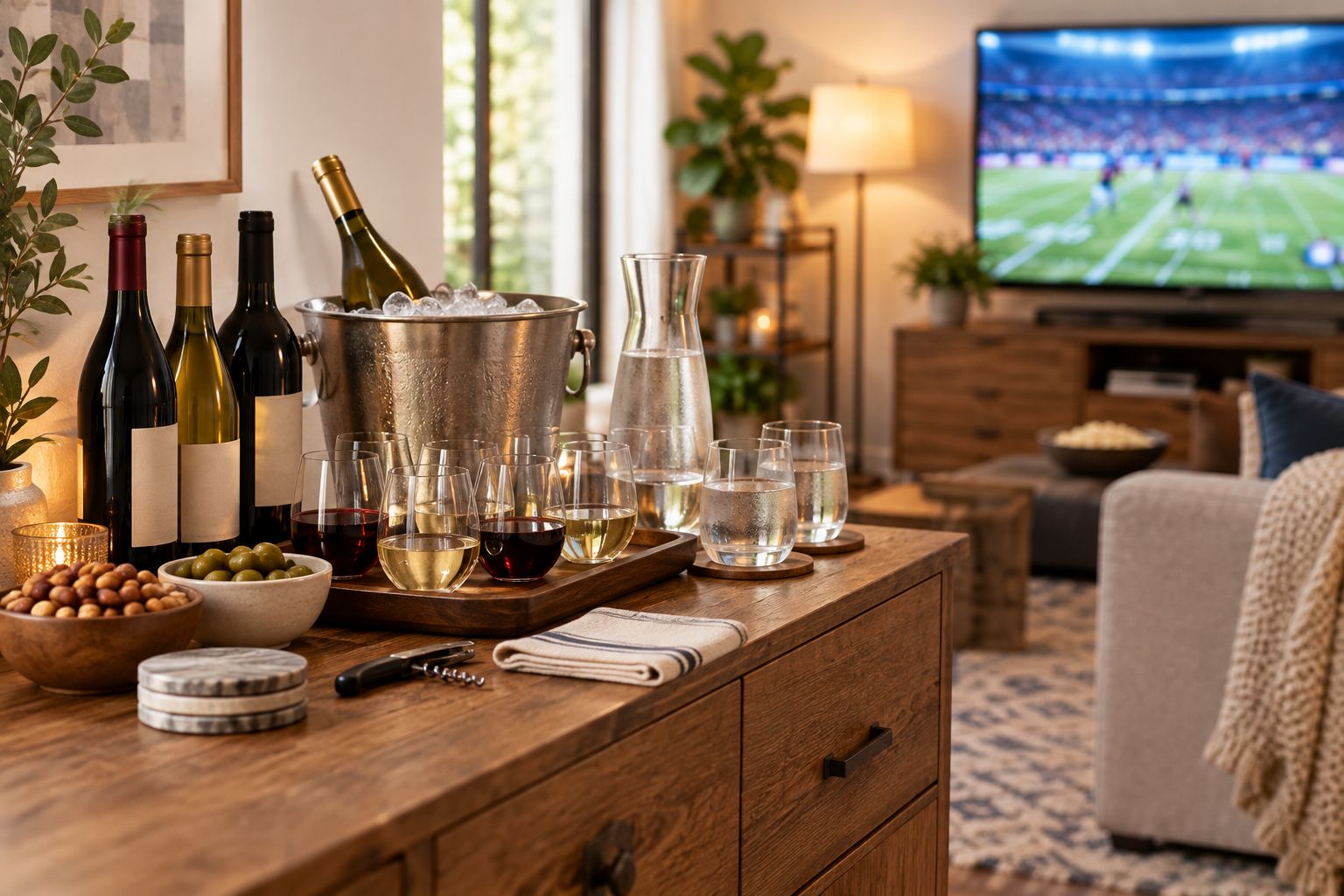
Clear a stable counter away from the television, speakers, and busiest snack route. Chill the wines that need chilling before guests arrive, and keep backup bottles away from heat.
For your 2026 setup, put wine descriptions where guests pour rather than explaining every bottle repeatedly. Plain labels such as dry white, gently sweet white, and light red communicate more than a string of unfamiliar tasting terms. Keep the original bottles visible so guests can check the label.
Use an ice bucket containing both ice and water for chilled bottles. For sparkling wine, keep control of the cork and point the bottle away from people; do not shake it or turn opening it into a halftime stunt.
- Group wine, water, and nonalcoholic drinks in one easy-to-find area.
- Put a corkscrew, towels, coasters, and a waste container nearby.
- Label sweetness and style in plain language.
- Keep chilled bottles in an ice-and-water bucket between pours.
- Open one bottle per style first, leaving reserves sealed.
6. Adjust the lineup to the food guests bring
Ask guests to name their dish before game day, then check whether it changes your original plan. A mild chicken platter and a tray of extra-hot wings call for different choices, even though both contain chicken.
If hot food takes over the menu, give the off-dry white a more prominent place. The guide to Riesling wine for spicy food pairing explains that match in more detail. If the spread turns toward burgers and pizza, emphasize the red without removing the chilled alternative.
Buywinesonline works as a wine-shopping starting point, not a substitute for knowing your guests. Finish the 2026 plan by checking the exact wine style, sweetness information, bottle size, and order details rather than assuming similar-looking bottles are interchangeable.
- Confirm sauces and spice levels when guests name their dishes.
- Move the best-matched wine beside a short food-pairing note.
- Keep a chilled alternative even when the menu favors red wine.
- Check sweetness information instead of judging by fruit descriptions.
- Reassess unopened reserves before opening another style.
Compare wine styles for your watch-party menu
Choose by the food that dominates your table, not by a universal winner. Each option below solves a different hosting problem, and each has a limitation worth considering before you shop.
| Option | Best for | Main advantage | Key limitation |
|---|---|---|---|
| Brut sparkling wine | Chips, fried chicken bites, salty appetizers | Acidity and bubbles give a refreshing contrast to rich bites | Needs chilling and a sparkling-wine stopper after opening |
| Off-dry Riesling | Buffalo wings and chili-heavy snacks | Gentle sweetness balances the impression of heat | Not the right choice for guests who strongly dislike sweetness |
| Sangiovese | Tomato pizza and marinara snacks | Acidity suits tomato-based food | Firm examples are less flexible with very hot sauces |
| Pinot Noir | Mushroom pizza and lighter mixed plates | Lighter structure suits guests avoiding heavy reds | Rich barbecue glazes can overpower delicate examples |
| Dry rosé | Guacamole, sandwiches, and varied snack plates | Offers a chilled option between white and red styles | Not a replacement for a sweet wine when sweetness is the preference |
| Cabernet Sauvignon | Beef burgers without hot sauce | Fuller structure suits a beef-focused menu | Tannins and higher alcohol are a poor default for spicy wings |
These are style-level recommendations. Winemaking changes sweetness, alcohol, oak flavor, and texture within each grape variety, so read the individual description rather than treating every example as identical.
Common mistakes Super Bowl hosts make
Choosing one heavy red for every snack
Cabernet Sauvignon has a clear role beside beef, but it is not a universal answer to buffalo sauce, salsa, and salty chips. Keep a chilled alternative whenever hot or salty snacks dominate. Choose the red for the people and dishes that actually suit it.
Mistaking fruity flavor for sweetness
A wine can smell like ripe berries or peaches and still taste dry. Look for explicit sweetness language when choosing a wing pairing or shopping for a guest who prefers sweet wine. Fruit descriptions alone do not settle that question.
Counting every guest as a wine drinker
A total head count includes people choosing beer, soft drinks, water, or no drink at all. Build your wine calculation from the guests who expect to drink wine. Keep the plan separate from any assumption about how much someone should consume.
Opening the whole selection before kickoff
An open bottle on the counter does not become more useful just because guests can see it. Open the starting selection, keep chilled wines cold, and leave reserves sealed. This also makes it easier to see which styles guests actually want.
FAQ
What's the best wine for a Super Bowl party?
The best wine for a Super Bowl party depends on the food: choose brut sparkling wine for salty snacks, off-dry Riesling for spicy wings, and Sangiovese for tomato pizza. A short lineup covering those roles is more useful than one heavy red for every dish.
What wine should I serve with buffalo wings?
Off-dry Riesling is a strong starting point for buffalo wings because gentle sweetness balances the impression of chili heat. Check that the individual wine is described as off-dry rather than assuming all Riesling tastes sweet.
Is red or white wine better for a football watch party?
Neither color wins across an entire watch-party menu. White wine suits many spicy or fresh dishes, while a lighter red works well with pizza and burgers; choose according to your guests and sauces.
How many glasses are in a regular wine bottle?
A 750 ml bottle contains five 150 ml pours. Larger pours reduce the number of glasses, so use a consistent pour size when calculating bottles.
Can I serve rosé at a Super Bowl watch party?
Yes, dry rosé is a useful chilled option for mixed snack plates, guacamole, and sandwiches. It is not automatically sweet, so check the description if sweetness matters to your guests.
Should I open all the wine before guests arrive?
No, open the starting selection and keep reserve bottles sealed. Keep chilled wines cold between pours and use a sparkling-wine stopper for an opened sparkling bottle.
Do I need expensive wine for game-day snacks?
No, choose wine by food compatibility and guest preference rather than prestige. A famous label does not make a firm red a better match for spicy wings.
One last thing
Taste the sauce, not just the food, before finalizing your wine. Set aside a spoonful of the wing sauce, barbecue glaze, or salsa and try it with the style you plan to serve. That small check addresses the flavor guests will actually experience—and prevents building a whole party selection around the wrong part of the dish.