
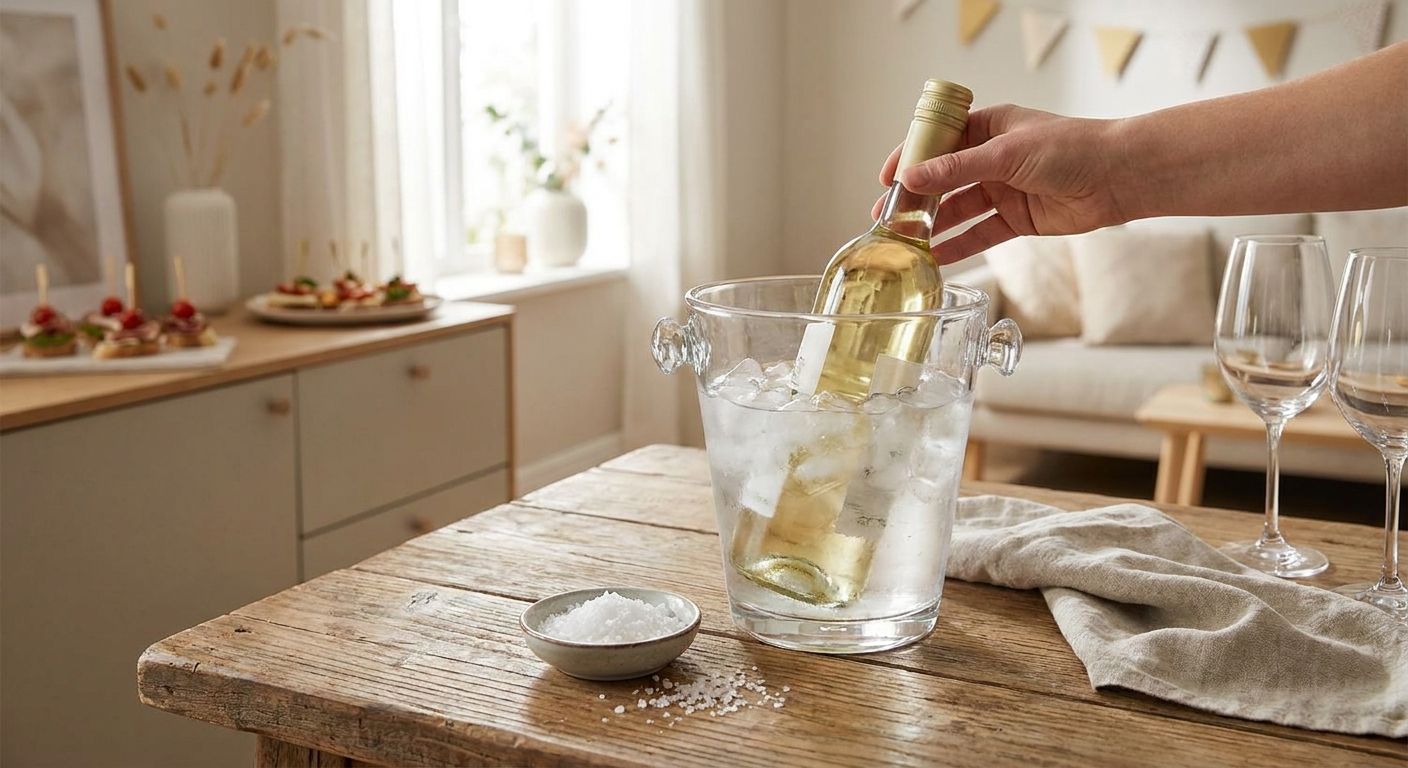
You don't need a wine fridge to save a warm bottle before guests arrive — an ice, water, and salt bath chills a bottle to serving temperature in 8 to 10 minutes, faster than any freezer trick.
- An ice, water, and salt bath chills a bottle in 8 to 10 minutes — the fastest way to chill wine fast in 2026.
- A freezer works in 15 to 30 minutes, but forget the timer and you risk a cracked bottle or a blown cork.
- Sparkling wine and rosé need the coldest pour, so they benefit most from the salt-water method.
- A wet towel wrapped around the bottle before the freezer shaves roughly 5 minutes off the freezer method.
- An ice pack in a wine sleeve holds a bottle at serving temperature once it's already cold.
Why this matters
Guests show up, the wine's still room temperature, and you've got 20 minutes before people start pouring. Reaching for the freezer without a timer is how bottles crack or corks pop mid-chill — an ice pack tucked into a wine sleeve is the safer backup once a bottle has already hit serving temperature and you need it to stay there through a party.
Temperature matters more than people think. A warm glass of Sauvignon Blanc tastes flat and boozy; the same wine at 45-50°F tastes crisp and balanced. Reds are more forgiving but still improve with a 10-15 minute chill before a summer gathering.
How do you chill wine fast?
The method you pick depends on how much time you've got and what's already in your kitchen.
| Method | Time | Best for |
|---|---|---|
| Ice, water & salt bath | 8-10 minutes | Whites, rosé, sparkling — anyone in a hurry |
| Freezer (timed) | 15-30 minutes | Reds that need a light chill, backup for whites |
| Wet towel + freezer | About 15 minutes | Whites and rosé without a big bowl on hand |
| Standard refrigerator | 2+ hours | Planning ahead, not a last-minute fix |
| Ice pack / chiller sleeve | Instant maintenance | Keeping an already-cold bottle cold at the table |
Verdict: the ice, water, and salt bath wins on speed every time — it's roughly three times faster than an unwatched freezer and carries none of the cracked-bottle risk.
Ice, water and salt bath: 8-10 minutes
Fill a bucket or large bowl with equal parts ice and cold water, then stir in a few tablespoons of table salt. Salt lowers the freezing point of the water, which pulls heat out of the glass faster than plain ice water alone.
Submerge the bottle up to the neck and spin it every couple of minutes so the wine chills evenly instead of just the layer touching glass. Most bottles reach serving temperature in 8 to 10 minutes this way — a fraction of the 2-plus hours a standard refrigerator needs starting from room temperature.
This method works on sparkling wine, too, and it's gentler on the cork than a freezer, which matters when you're chilling something like a Veuve Clicquot Yellow Label Brut before a toast.
Freezer method: 15 to 30 minutes
A freezer chills wine faster than a fridge but slower than the salt bath, and it comes with a real risk: glass expands unevenly when frozen, and wine left too long can crack the bottle or push the cork partway out from pressure.
Set a timer for 15 minutes for whites and rosé, check it, then give it another 5-10 minutes if it's still not cold enough. Never leave a bottle in the freezer for more than 30 minutes unattended — that's the point where cracked glass and ruined countertops start showing up in kitchen horror stories.
A sturdy Cabernet from a 15-bottle wine tasting set can handle a light 10-minute freezer chill before a barbecue without any issue, since reds are more forgiving of a slight temperature miss than delicate whites.
Wet towel in the freezer: about 15 minutes
Wrap the bottle in a damp paper towel or dish towel before it goes in the freezer. The wet fabric conducts cold faster than air alone, shaving a few minutes off the standard freezer method and getting most bottles to serving temperature in around 15 minutes.
This is the fix when you don't have a bucket big enough for the ice-water bath but still want faster results than a bare freezer shelf.
Wine chiller sleeves and ice packs: instant maintenance
Once a bottle is already cold, the job shifts from chilling to holding. A gel-based ice pack wrapped around the bottle or slid into an insulated sleeve keeps sparkling wine and whites at serving temperature for an hour or more on a table, which matters when a party runs long and the ice bucket has gone lukewarm.
These sleeves don't chill a warm bottle fast on their own — they need to start cold. Use the salt bath or freezer method first, then switch to the sleeve for table service.
Why chilling time varies
A handful of factors decide whether your bottle hits serving temperature in 8 minutes or 25:
- Starting temperature — a bottle straight from a warm car takes longer than one sitting at room temperature indoors
- Bottle glass thickness — heavier bottles (common on reserve Cabernets and Champagne) hold heat longer than standard glass
- Wine type — sparkling wine and light whites need a colder final temperature (40-50°F) than reds (60-65°F), so they take a bit more time to get there even with the same method
- Ice-to-water ratio — a bucket that's mostly water with a few ice cubes chills far slower than one packed with ice and topped with water
- Salt amount — more salt lowers the water's freezing point further, speeding up the chill
- Ambient kitchen temperature — chilling wine in a hot kitchen in July takes longer than in a cool one in January
Is it bad to put wine in the freezer?
A short, timed stay in the freezer isn't bad for wine — the risk is forgetting about it. Left beyond 30 minutes, expanding liquid and stressed glass can crack the bottle or force the cork out, which is the actual danger, not the cold itself.
How long does wine take to chill in the fridge?
Wine takes about 2 hours or more to chill properly in a standard refrigerator starting from room temperature. That's fine for planning ahead the morning of a party, but it's not a fix for a bottle you need cold in the next 15 minutes.
What temperature should wine be served at?
Sparkling wine and light whites taste best around 40-50°F, while full-bodied reds are best around 60-65°F. Getting a red too cold mutes its fruit; getting a white too warm makes it taste flat and alcoholic.


Buy Wines Online carries all three above, and any of them handle the 8-to-10-minute ice bath without issue — the online wine retailer's whites and sparkling picks are built for exactly this kind of last-minute chill.
FAQ
How do you chill wine fast without a fridge?
Submerge the bottle in a bucket of ice, water, and a few tablespoons of salt for 8 to 10 minutes, spinning it occasionally. It's the fastest method that doesn't risk cracking the bottle.
How long does it take to chill wine in the freezer?
A freezer chills wine in 15 to 30 minutes, but it needs a timer. Past 30 minutes, expanding liquid can crack the glass or push the cork out.
Does salt really make ice water chill wine faster?
Yes — salt lowers the freezing point of the water, letting it pull heat from the bottle faster than plain ice water. That's the difference between an 8-minute chill and a 20-minute one.
Can you chill red wine fast the same way as white wine?
You can use the same ice, water, and salt method, but reds only need 5-10 minutes since their ideal serving range (60-65°F) is warmer than white wine's 40-50°F.
Is it safe to chill Champagne quickly in ice water?
Yes, the ice-water-and-salt bath is the standard way bars and restaurants chill Champagne fast — it's gentler on the cork and cage than a freezer.
What temperature should wine be before serving?
Whites and sparkling wine serve best at 40-50°F, and reds serve best at 60-65°F. A kitchen thermometer clipped to the bottle takes the guesswork out.
How do you keep wine cold once it's chilled?
An insulated sleeve or a gel ice pack wrapped around the bottle holds serving temperature for an hour or more at the table, without diluting the wine the way an ice bucket can once it melts.
Does putting wine in the freezer ruin the taste?
No, a short timed freezer chill doesn't affect taste. The only risk is texture and safety if the bottle stays in too long and the glass or cork gets stressed.
One last thing
The ice, water, and salt bath beats the freezer by roughly 20 minutes and skips the cracked-bottle risk entirely — that's the one method worth remembering when guests are already at the door. If sparkling wine is on the menu for the night, chase it with an ice pack sleeve so the bottle stays at pour temperature through a toast instead of warming back up on the counter. Check how to choose the right wine bottle size for parties if you're still deciding how many bottles to chill in the first place.