
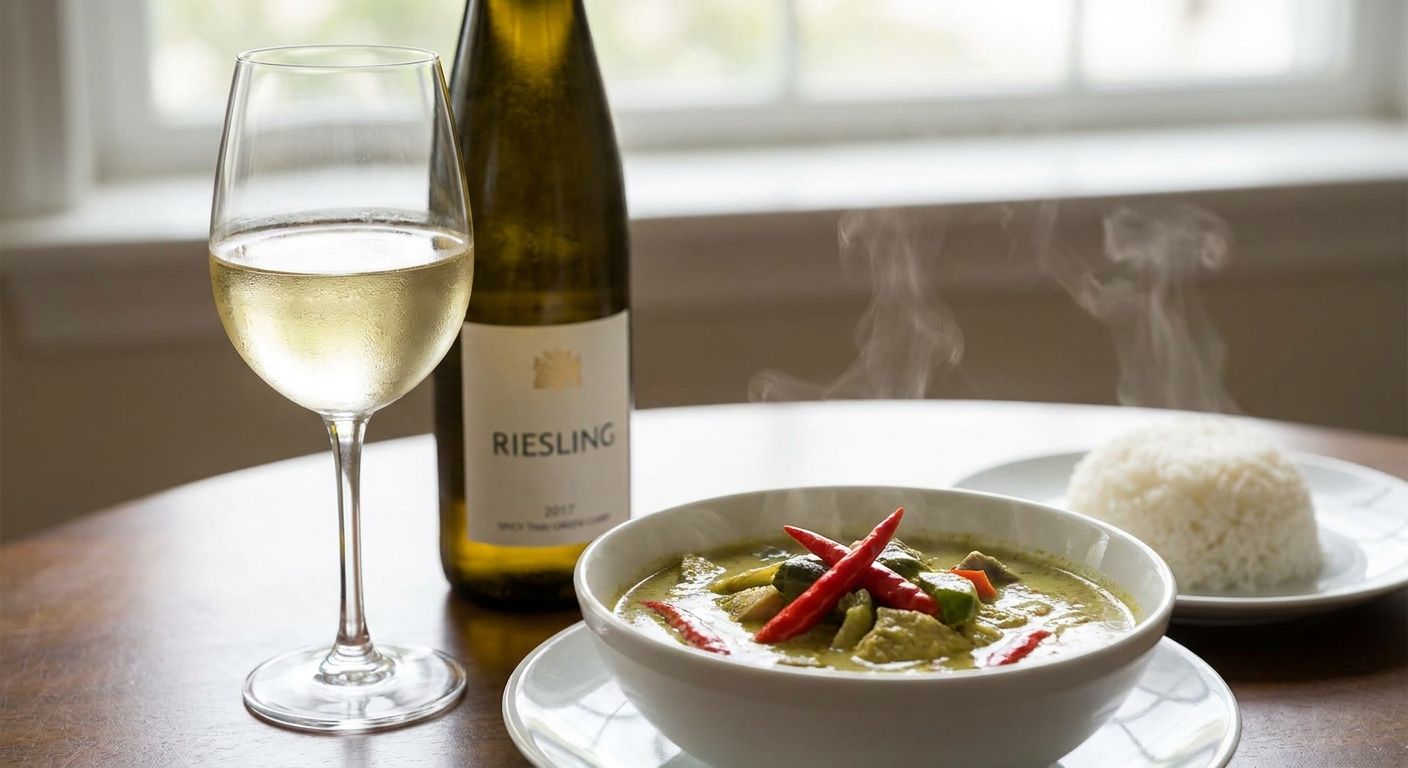
Chili heat and high-alcohol, high-tannin wine fight each other on the palate — a little residual sugar and bright acidity win that fight every time, and Riesling wine for spicy food is the reset button most wine racks are missing. Shop the full selection at Buy Wines Online and skip the guesswork on what actually survives a plate of Szechuan, Thai basil chicken, or a habanero-heavy taco spread.
- Loosen Bros Dr. L Riesling 2025 is the top pick for riesling wine for spicy food — buy it for Thai, Szechuan, and Indian curry night.
- Off-dry Riesling with 1-3% residual sugar and 8-9% ABV cools chili heat better than dry whites or reds in 2026.
- La Marca Prosecco works as the sparkling backup pick when you want bubbles to reset the palate between bites.
- Skip oaky Chardonnay and high-tannin Cabernet — both amplify capsaicin burn instead of taming it.
Why this matters
Capsaicin — the compound that makes chili hot — dissolves in alcohol, not water, which is why a high-ABV red makes the burn worse, not better. Tannin binds to the same proteins that create the sensation of heat, so a tannic Cabernet or Nebbiolo next to a curry reads as harsher than it does alone. A touch of sugar and cold, high acid does the opposite: it dulls the receptors and refreshes the palate for the next bite. That's the entire case for riesling wine for spicy food in one sentence, and it's why sommeliers reach for off-dry German and Alsatian styles before anything else when the menu turns up the heat.
Who this is for
This guide is for home cooks who order Thai, Szechuan, Indian, or Mexican food regularly and keep reaching for a beer or a soda because their go-to Cabernet or Chardonnay clashes with the chili. It's also for anyone building a home bar who wants one bottle style that handles curry night, taco Tuesday, and kimchi fried rice without a cellar full of single-use pairings. If you're hosting a spice-forward dinner in 2026 and want one confident bottle recommendation instead of six competing opinions, start here.
What to look for in Riesling for spicy food
Residual sugar in the 1-3% range
Bone-dry Riesling (under 1% residual sugar) doesn't have enough sweetness to counter serious chili heat, while dessert-level Riesling (8%+ RS) turns a savory dinner into a syrupy mismatch. The 1-3% off-dry band is the sweet spot — literally — because it's perceptible without tipping the wine into dessert territory, and it's the range German Kabinett and many Mosel bottlings land in by design.
High acidity to reset the palate
Riesling's signature trait is acidity that stays sharp even with sugar in the glass, which is exactly what a spicy dish needs between bites. Low-acid whites feel flabby next to chili-forward food because there's nothing cutting through the oil and heat — Riesling's acid does the cutting.
Low alcohol, ideally under 12%
Capsaicin is alcohol-soluble, so a 14.5% ABV red actively pulls more heat onto your tongue with every sip. Most off-dry Riesling sits between 8% and 11.5% ABV, which keeps the burn from compounding glass over glass — a real factor if you're pouring more than one round with dinner.
Aromatic intensity that matches the spice profile
Riesling's stone fruit, lime, and petrol-adjacent aromatics stand up to lemongrass, ginger, and chili without disappearing, unlike a neutral Pinot Grigio that gets steamrolled by a curry's spice load. Match aromatic weight to the dish: a lighter Mosel style for Thai basil dishes, a fuller Alsace or Australian style for richer Indian curries.
Chill temperature and glass size
Serve Riesling colder than you'd serve a Chardonnay — 45-50°F — because cold temperature mutes both sweetness perception and alcohol burn, doubling down on the cooling effect the wine already provides. A smaller pour (4 oz instead of 6) also means you're refilling more often, which keeps the wine at that cooler temperature through the meal.
Top picks for spicy food
Loosen Bros Dr. L Riesling 2025 — the textbook pick. This Mosel-style Riesling is built in the classic off-dry range that German producers have used for spice pairing for generations, with the acid-forward, low-ABV profile this whole guide is built around. It's the first bottle to reach for on curry night or with Szechuan takeout. Buy. Shop Loosen Bros Dr. L Riesling 2025
Mar de Frades Rías Baixas Albariño Atlántico 2025 — the crisp alternative for anyone who wants a dry style instead of off-dry. Albariño from Spain's Rías Baixas region carries the same high-acid, low-ABV DNA as Riesling but skips the sugar, which works well against milder heat like a Thai green curry rather than ghost-pepper-level dishes. Consider. Shop Mar de Frades Albariño Atlántico 2025
La Marca Prosecco — the sparkling wildcard. Bubbles physically scrub capsaicin off the tongue in a way still wine can't, which makes Prosecco a legitimate palate-reset option for a spicy tasting menu or a spread of small plates. It's not built to counter heat with sugar the way Riesling is, so treat it as a between-course cleanser, not the main pairing. Consider. Shop La Marca Prosecco
Whispering Angel Rosé 2025 — the crowd-pleaser for mixed tables. Rosé sits between the acid-driven whites and the tannin-heavy reds, so it won't fully tame a five-alarm dish, but it's an easy pour for a table where not everyone ordered the spiciest option on the menu. Treat it as the safe middle ground, not the top performer. Consider.
What to avoid
- Oaky, buttery Chardonnay. The richness and low acid read as heavy and flat next to chili heat instead of refreshing anything.
- High-tannin reds like Cabernet Sauvignon or Nebbiolo. Tannin amplifies the burning sensation on the tongue instead of softening it — save the Cabernet for the steak night, not the curry night.
- High-alcohol dry whites over 13.5% ABV. Alcohol dissolves capsaicin and carries more heat with it, which undoes the point of pairing wine with spicy food at all.
“If the wine can't out-cool the chili, tannin and alcohol will just carry more of the burn to your tongue.”
Verdict comparison
| Pick | Style | ABV range | Best with | Verdict |
|---|---|---|---|---|
| Loosen Bros Dr. L Riesling 2025 | Off-dry Riesling | 8-9% | Szechuan, Indian curry | Buy |
| Mar de Frades Albariño Atlántico 2025 | Dry, high-acid white | 12-12.5% | Thai green curry, ceviche | Consider |
| La Marca Prosecco | Sparkling | 11% | Palate reset between courses | Consider |
| Whispering Angel Rosé 2025 | Dry rosé | 13% | Mixed-spice tables | Consider |
FAQ
What's the best riesling wine for spicy food?
An off-dry Riesling with 1-3% residual sugar and 8-9% ABV, like Loosen Bros Dr. L Riesling 2025, is the best match for spicy food in 2026. The sugar counters chili heat while the acidity keeps the pairing from feeling heavy.
Is Riesling better than Chardonnay with spicy food?
Yes, Riesling beats Chardonnay with spicy food because Riesling's acidity and light sweetness cut through heat, while Chardonnay's oak and lower acid make chili taste heavier and flatter.
Does sweet wine actually help with spicy food?
A touch of sweetness, in the 1-3% residual sugar range, dulls the perception of capsaicin heat on the tongue. Full dessert wine is too sweet for a savory meal, which is why off-dry is the target, not sweet.
What alcohol level works best for spicy food pairings?
Stay under 12% ABV when pairing wine with spicy food, since capsaicin dissolves in alcohol and higher-ABV wines carry more heat onto the palate. Most off-dry Riesling sits between 8% and 11.5% ABV.
Can sparkling wine pair with spicy food?
Sparkling wine like Prosecco works as a palate reset between spicy bites because the carbonation physically clears capsaicin off the tongue. It's better as a supporting pour than the main pairing for a heavily spiced main course.
Should I chill Riesling more than other white wines for spicy food?
Yes, serve Riesling at 45-50°F for spicy food, colder than a typical Chardonnay pour. Cold temperature mutes alcohol burn and keeps the sweetness balanced against the heat.
What wines should I avoid with spicy food?
Avoid high-tannin reds like Cabernet Sauvignon and oaky, low-acid Chardonnay with spicy food in 2026. Tannin and alcohol both intensify the burn instead of taming it.
Is rosé a good backup for spicy food?
Rosé is a reasonable middle-ground pick for a mixed table where not everyone ordered the spiciest dish, but it won't tame serious heat the way an off-dry Riesling does. Treat it as a safe pour, not the top performer.
One last thing
The detail most people miss: it's not the Scoville rating of the dish that decides the pairing, it's whether the wine hits the table cold enough. A warm glass of even the right off-dry Riesling loses the chill that mutes alcohol burn, so the fridge matters as much as the label in 2026 — pour it at 45-50°F, not cellar temperature, and refill in small 4 oz pours so it never has time to warm up mid-meal.