
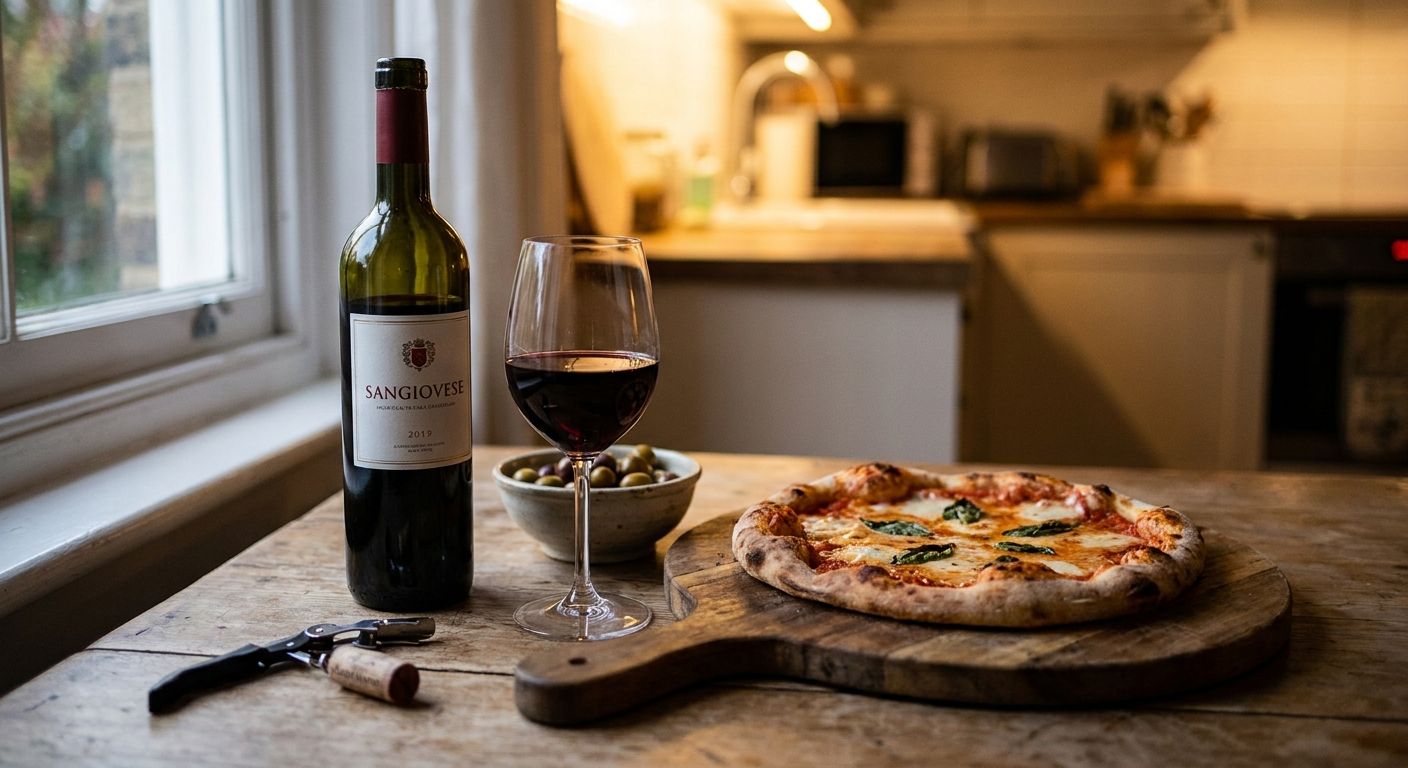
Sangiovese wine is the pizza pairing default that actually works: high acidity, moderate tannin, and enough red-fruit brightness to cut through melted cheese, tomato sauce, and cured meats without fighting them. Pizza night has its own rules — casual pouring, shared bottles, food that ranges from a plain margherita to a loaded meat-lover's — and the wine has to flex across all of it.
- Sangiovese wine is the sharpest pizza pairing in 2026 because its acidity cuts cheese and tomato sauce cleanly.
- Casanova di Neri Brunello di Montalcino is a 100% Sangiovese buy for an upgraded pizza night at Buy Wines Online.
- Skip heavy, oaky Sangiovese blends on a plain margherita; they overpower fresh basil and mozzarella.
- Chianti Classico works as the everyday pizza pour; Brunello di Montalcino is the occasion upgrade.
- Serve Sangiovese slightly below room temperature, around 60-65degF, so the acid stays crisp against hot cheese.
Why sangiovese wine matters for pizza night
Pizza sauce is acidic and tomato-forward, and most reds with low acidity taste flat or metallic next to it. Sangiovese wine solves that problem because the grape itself is built around high natural acidity, which is why it's the house grape of Tuscany and the backbone of Chianti-style reds built for Italian dinner tables.
The tannin structure in Sangiovese is medium, not heavy, so it doesn't clamp down on the palate the way a big Cabernet does after two slices. That matters on pizza night specifically because most people are drinking through a full meal, not sipping slowly with a single bite of steak. A wine that fatigues the palate by slice three is the wrong wine for the occasion, no matter how good it tastes on its own.
2026 pizza-night drinkers are also pouring more casually — bottle open on the counter, glasses refilled mid-slice — so the wine needs to hold its structure as it warms slightly. Sangiovese's acid-forward profile does that better than fruit-heavy, low-acid reds that turn flabby once they're out of the fridge or wine fridge for 30 minutes.
Match the wine's acidity to the sauce
Start with the sauce, not the toppings. Tomato-based pizzas need a wine that mirrors that acidity or the wine will taste dull by comparison.
- Classic red sauce, mozzarella, basil: a straightforward Chianti or Sangiovese di Toscana
- Extra-charred, blistered crust with concentrated sauce: a slightly riper Sangiovese blend handles the char
- White pizza with ricotta or alfredo base: skip Sangiovese here, the acid clashes with cream
- Vodka sauce or spicy arrabbiata pizza: mid-weight Sangiovese with soft tannin, avoid anything oaky
Read the label before you buy
Sangiovese shows up under several regional names, and the label tells you which style you're getting before you spend a dollar.
- "Chianti" or "Chianti Classico" means at least 80% Sangiovese from Tuscany, medium body
- "Brunello di Montalcino" is 100% Sangiovese Grosso, aged longer, fuller structure
- "Rosso di Montalcino" is the younger, lighter sibling of Brunello, built for earlier drinking
- "Sangiovese di Toscana" or "Sangiovese Puglia" is the varietal-labeled, everyday-price version
- "Super Tuscan" blends often include Sangiovese alongside Cabernet or Merlot, expect more oak
For a straight-up pizza night pour, the varietal-labeled Sangiovese or a basic Chianti beats Brunello on value; save the Brunello for a night where the wine is the point, not the background. Casanova di Neri Brunello di Montalcino White Label 2021 is a 100% Sangiovese bottling worth opening when pizza night turns into date night or a small celebration — Buy: it's the real Sangiovese benchmark, not a blend that borrows the name.
Compare Sangiovese against the other pizza-night reds
Sangiovese isn't the only red people reach for on pizza night, and it isn't always the right call. Here's how it stacks up against the usual suspects.
| Wine style | Best for | Key limitation |
|---|---|---|
| Sangiovese (Chianti, Sangiovese di Toscana) | Tomato-sauce pizzas, mixed toppings | Too lean for cream-based white pizza |
| Zinfandel | Barbecue or smoky, sweeter-sauce pizzas | Higher alcohol can overwhelm a light margherita |
| Barbera | Same acid-forward logic as Sangiovese, softer tannin | Less widely stocked than Chianti |
| Cabernet Sauvignon | Meat-heavy, pepperoni-and-sausage pizzas | Tannin fights the tomato acidity on lighter pies |
| Pinot Noir | White pizza, mushroom or truffle toppings | Too delicate for a loaded meat pizza |
Sangiovese wins the default slot because it's the only one on this list built specifically around cutting tomato acidity while staying light enough for a casual weeknight pour.
Serve it at the right temperature
Most people serve red wine too warm, and Sangiovese loses its whole advantage — the crisp acidity — when it sits at full room temperature next to a hot oven.
- Chill the bottle in the fridge for 20-30 minutes before pouring
- Target 60-65degF, noticeably cooler than a typical living room in 2026's winter heating season
- Re-chill for 10 minutes if the bottle's been open on the counter through a whole pizza-making session
- Use a stemless glass for casual pizza night; it doesn't change the wine but it survives a dropped slice better than crystal
Buy for the group, not just the bottle
Pizza night is rarely a single-bottle occasion. If more than four people are pouring, plan the case, not the bottle.
- One 750ml bottle covers roughly four generous glasses, so a group of six to eight needs two bottles minimum
- Mixing a Chianti with a Zinfandel covers both tomato-based and barbecue-style pizzas at the same table
- A wine tasting set is a practical option when the group wants to compare styles instead of committing to one wine for the whole night
- Keep a backup white on hand for anyone doing a white pizza, since Sangiovese isn't the pairing there
Buy Wines Online carries the full range from everyday Sangiovese di Toscana bottlings through Brunello di Montalcino, and the broader Italian lineup for pasta night overlaps heavily with what works for pizza — same grape logic, same acid-forward reasoning.
Common mistakes pizza-night drinkers make with Sangiovese
- Buying the fanciest bottle in the aisle. A $60 Super Tuscan blend is wasted on a $12 delivery pizza; the oak and structure go unnoticed under grease and cheese.
- Serving it warm. Sangiovese poured at 72degF tastes softer and less precise than the same bottle at 62degF — the acidity that makes it work for pizza disappears.
- Pairing it with white pizza. The acid that's perfect against tomato sauce fights cream-based sauces; that's a Pinot Grigio or light Pinot Noir occasion instead.
- Assuming all Sangiovese is the same. A basic Sangiovese di Toscana and a Brunello di Montalcino share a grape but not a price tier, a structure, or an occasion.
- Skipping the label check. "Super Tuscan" sounds like Chianti but often leans heavier and oakier from added Cabernet or Merlot — read past the marketing name.
“If the wine costs more attention than the pizza, you bought the wrong bottle for pizza night.”
FAQ
What's the best sangiovese wine for pizza night?
A straightforward Chianti or Sangiovese di Toscana is the best sangiovese wine for pizza night in 2026 because its acidity matches tomato sauce without heavy tannin fighting the cheese. Save Brunello di Montalcino for a special occasion pour rather than a weeknight pizza.
Is Chianti the same as Sangiovese?
Chianti is a wine region, not the grape itself; it must be at least 80% Sangiovese by law. Most bottles labeled Chianti are close to 100% Sangiovese, so the two terms overlap heavily in practice.
Is Sangiovese better than Chianti for pizza?
They're usually the same wine under two names, since Chianti is a Sangiovese-based regional wine. A varietal-labeled Sangiovese di Toscana and a basic Chianti perform almost identically with tomato-based pizza.
What food pairs badly with sangiovese wine?
Cream-based dishes and white pizza pair badly with Sangiovese because the wine's high acidity clashes with dairy-forward sauces. Reach for a Pinot Grigio or lighter Pinot Noir on white pizza night instead.
Should sangiovese wine be chilled?
Yes, Sangiovese tastes better slightly cool, around 60-65degF, rather than at full room temperature. A 20-30 minute fridge chill before serving keeps the acidity crisp against hot pizza.
What's the difference between Chianti and Brunello di Montalcino?
Chianti requires at least 80% Sangiovese and is built for earlier, more casual drinking, while Brunello di Montalcino is 100% Sangiovese Grosso aged longer for a fuller structure. Brunello is the occasion upgrade, not the pizza-night default.
How many bottles of sangiovese wine do I need for a pizza party?
Plan on one 750ml bottle per four generous glasses, so a group of six to eight needs at least two bottles. Mixing in a second red style covers guests eating barbecue or meat-heavy pizzas.
Does sangiovese wine work with pepperoni pizza?
Yes, Sangiovese's acidity and medium tannin handle the fat and spice in pepperoni well. For an extra-loaded meat pizza, a slightly riper Sangiovese blend holds up better than a lean, high-acid bottling.
One last thing
The detail most people miss on pizza night isn't the wine, it's the crust char. A heavily blistered, well-charred crust concentrates bitterness that a lean, high-acid Sangiovese can accentuate instead of soften — if your oven runs hot and the crust comes out dark, reach for a slightly riper Sangiovese or a basic Chianti Classico rather than a sharp, young Sangiovese di Toscana. Buy Wines Online's full catalog covers both ends of that spectrum, so match the bottle to how your oven actually cooks, not just to the pizza toppings on the box. Shop the full selection at Buy Wines Online before pizza night, since matching the char level to the wine matters as much as matching the sauce.