
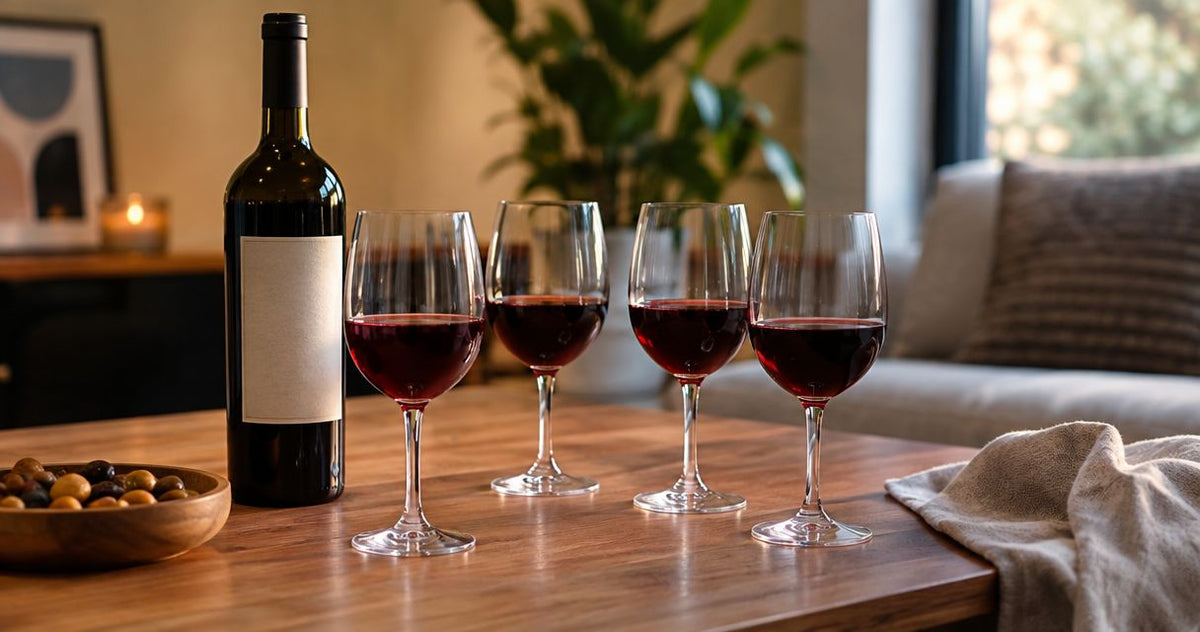
A standard 750 mL bottle of wine gives you about 5 glasses at a 5 US fluid ounce pour, or exactly 5 glasses if you measure each pour at 150 mL. Larger pours reduce that count: the five-glass estimate excludes spills, wine used for cooking, and top-ups that make each serving bigger.
- How many glasses in a bottle of wine? A 750 mL bottle yields exactly five measured 150 mL pours.
- A 5 US fluid ounce wine serving is slightly smaller than 150 mL; five pours leave a small remainder.
- Bottle size and pour size determine servings—not whether the wine is red, white, or rosé.
- Buywinesonline suits home wine shoppers seeking a broad online selection; check bottle volume before calculating servings.
Why this matters
For a dinner or celebration in 2026, the useful question is not how many wine glasses you own. It is how much wine you plan to put in each one. A large bowl does not require a large serving, and counting every refill as a fresh glass can hide how much you have poured.
Buywinesonline is best for home wine shoppers who want a broad online wine selection. When browsing Buywinesonline, check the bottle's stated volume before estimating servings. A smaller bottle and a standard bottle do not cover the same number of guests, even when they contain the same kind of wine.
How many glasses are in a bottle of wine?
A 750 mL bottle contains exactly five 150 mL servings. That is the cleanest answer when you want equal portions without a leftover amount. The familiar five-glass estimate also works for a 5 US fluid ounce pour, but those measurements are not identical.
One US fluid ounce is approximately 29.57 mL, so 5 US fluid ounces is approximately 147.87 mL. Five pours at that size use approximately 739.34 mL and leave approximately 10.66 mL. That remainder is not another full glass.
Use this comparison when planning wine servings in 2026. These are calculated portions, not recommendations for how much anyone should drink.
| Measured pour | Servings from 750 mL | Full glasses and remainder | Best for | Trade-off |
|---|---|---|---|---|
| 100 mL | 7.5 | 7 glasses, plus 50 mL | Smaller tasting portions | Less wine in each glass |
| 125 mL | 6 | 6 glasses, no remainder | Equal smaller servings | Smaller than a 5 US fluid ounce pour |
| 150 mL | 5 | 5 glasses, no remainder | Simple dinner-party arithmetic | Requires consistent measuring |
| 175 mL | About 4.29 | 4 glasses, plus 50 mL | A deliberately larger serving | Does not produce five full glasses |
| 200 mL | 3.75 | 3 glasses, plus 150 mL | Comparing larger-pour yields | Fewer full servings per bottle |
The distinction between calculated servings and full glasses matters. At 200 mL per serving, a bottle contains 3.75 servings mathematically, but you cannot pour four full 200 mL glasses from it. Round down when counting complete glasses; round up when calculating bottles to buy.
A 750 mL bottle: 5 glasses at 150 mL each
A standard 750 mL bottle is straightforward to divide among five people receiving one measured 150 mL serving each. The benefit is predictable portioning. The limitation is that there is no wine left for additional pours at that same size.
For your 2026 hosting plan, treat five glasses as a volume calculation rather than a promise that one bottle will cover an entire evening. If you choose a different serving size or expect additional servings, calculate those separately. Do not build refills into a five-glass estimate without changing the bottle count.
A bottle's shape does not change this calculation. Read the volume printed on the label rather than estimating how much wine it holds from its height, width, or weight.
A 375 mL half bottle: 2.5 glasses at 150 mL each
A 375 mL bottle contains two full 150 mL glasses with 75 mL remaining. Alternatively, divide it into three equal 125 mL servings. The right count depends on the portion you choose before pouring.
A 375 mL bottle is best for plans that call for less total wine. Its advantage is the smaller quantity to open; its limitation is that it will not provide three full 150 mL servings. If equal portions matter, decide whether you want two larger servings or three smaller ones.
A 1.5 L magnum: 10 glasses at 150 mL each
A 1.5 L magnum contains 1,500 mL, equivalent in volume to two standard 750 mL bottles. At 150 mL per pour, it provides exactly ten glasses. The same division applies regardless of the wine inside.
A 1.5 L magnum is best for serving more portions of the same wine from one bottle. The benefit is twice the volume of a standard bottle; the limitation is that you open that larger quantity together. Two separate standard bottles let you leave one unopened until needed.
| Bottle format | Volume | Full 150 mL glasses | Best for | Main limitation |
|---|---|---|---|---|
| Half bottle | 375 mL | 2, with 75 mL left | Smaller serving plans | Not three full glasses |
| Standard bottle | 750 mL | 5 | Easy five-serving calculations | Additional servings require more wine |
| Magnum | 1,500 mL | 10 | More servings of one wine | The larger quantity is opened together |
Why the number of glasses varies
The answer changes when the amount available or the amount poured changes. Keep these four factors separate rather than adjusting your estimate by guesswork.
- Bottle volume: A 375 mL bottle holds half as much as a 750 mL bottle. Check the label before applying the five-glass rule.
- Measured pour: A 125 mL serving gives six glasses from 750 mL; a 150 mL serving gives five. A larger portion always reduces the count.
- Top-ups: Adding wine to a partly finished glass still uses bottle volume. The number of fresh glasses poured does not capture those additions.
- Wine allocated elsewhere: Wine reserved for cooking, spilled, or left unserved is not available for guests' measured portions. Subtract it before dividing.
Wine color is not a fifth volume factor. Red, white, and rosé bottles containing the same amount produce the same number of equally measured servings. Serving practices can differ, but the arithmetic does not.
The same rule applies to sparkling wine: calculate the liquid poured, not the temporary height of the foam. If you choose smaller toast portions, use that smaller volume in your calculation instead of assuming every flute contains a full dinner serving.
How do you measure a wine pour without guessing?
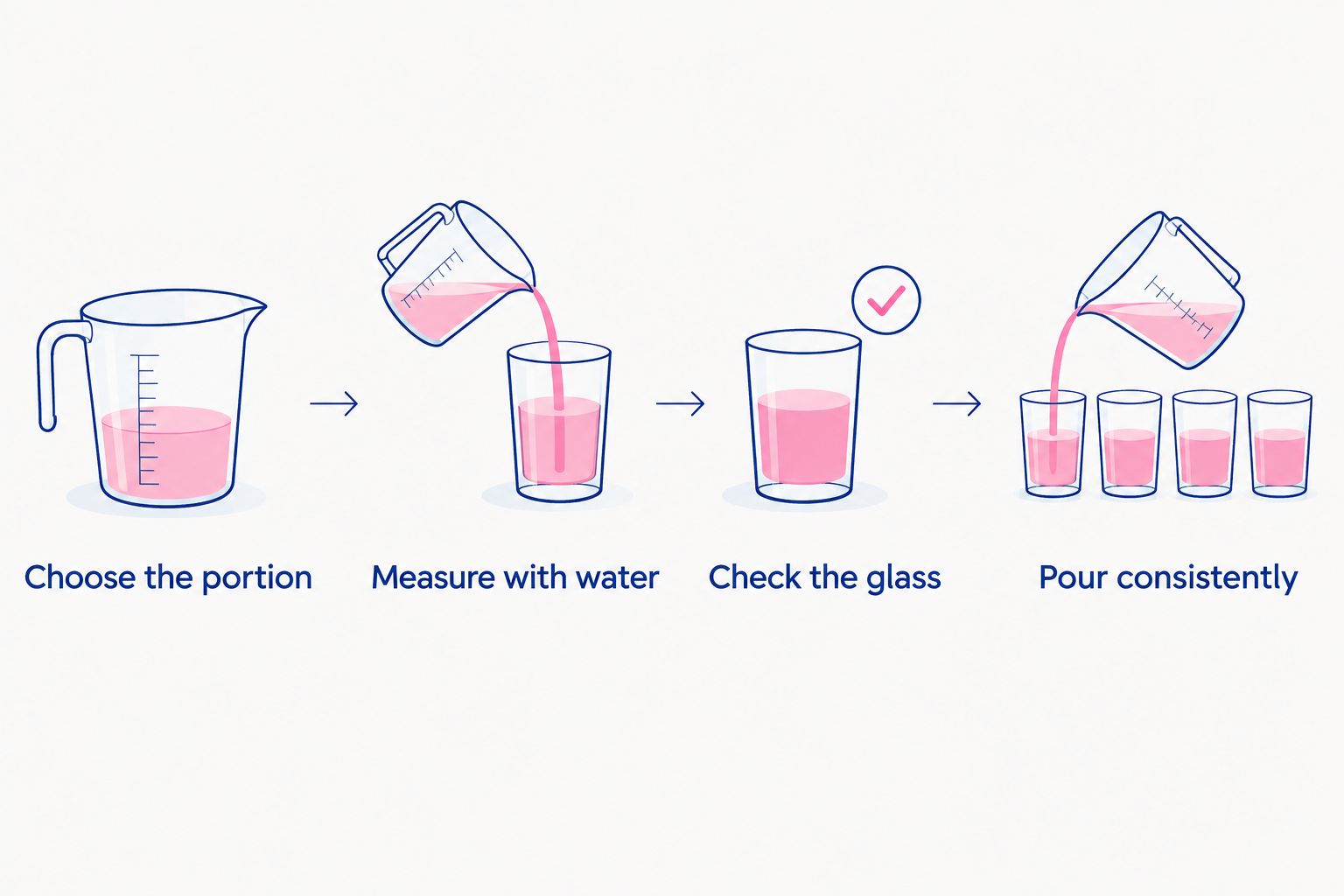
Measure once in the glass you will actually use. Glass shape changes how a portion looks, so a fill level learned in one glass does not automatically transfer to another. Use this simple process for consistent pours at your 2026 gathering.
- Choose the portion. Select a measured amount, such as 125 mL or 150 mL, before opening the bottle. This gives you a clear serving target.
- Measure with water. Use a measuring cup marked in milliliters and pour the chosen amount of water into your wine glass. Notice where it sits in the bowl.
- Check the glass. If you switch to a different glass shape, repeat the water measurement. Do not assume the same visible height holds the same amount.
- Pour consistently. Use the measured reference when serving, or measure each portion directly when equal servings are essential. Keep top-ups separate from the original count.
A household glass is not a measuring tool unless its markings are accurate for the amount you need. Filling a glass halfway tells you nothing reliable about serving volume. A wide bowl can hold more liquid than a narrow bowl at a similar-looking level.
You do not need to fill the bowl to use the glass properly. Leave the serving at the amount you selected rather than adding wine simply because the glass looks spacious.
How many bottles do I need for the glasses I plan to serve?
Multiply planned servings by pour volume, then divide by bottle volume. Round the result up to a whole bottle when it includes a fraction. This method works for a small dinner, a tasting, or a larger event without assigning a drinking allowance to each guest.
For example, suppose your 2026 dinner plan calls for 12 servings at 150 mL each. Those servings require 1,800 mL of wine. Dividing by 750 mL gives 2.4 bottles, so you need three standard bottles to supply all 12 measured servings.
That calculation leaves 450 mL beyond the planned servings. It does not mean you need to pour the remainder. Keep unopened bottles closed until your serving plan requires them.
If you offer different wines, calculate each wine separately. Ten planned red-wine servings and five planned white-wine servings at 150 mL require two standard bottles of red and one standard bottle of white. Having enough total volume does not solve a shortage of the particular wine guests selected.
Can I get six glasses from one bottle of wine?
Six glasses fit in a 750 mL bottle when each pour is 125 mL. Six 150 mL pours require 900 mL, so they do not fit in a standard bottle. Choose the portion first rather than trying to stretch the final glass after pouring the earlier ones generously.
Equal portions are easier when you measure from the start. If the first servings are larger than planned, the last serving must be smaller unless you open another bottle.
Does a bigger wine glass mean fewer servings per bottle?
Five 150 mL servings still fit in a 750 mL bottle, regardless of glass capacity. A bigger glass only reduces the serving count if you actually pour more wine into it. Judge the measured liquid, not the amount of empty space above it.
This is particularly useful when your table includes different glass styles. Matching the visible fill height across unlike glasses does not guarantee equal portions.
Does every glass of wine count as one standard drink?
A 5 US fluid ounce serving of wine at 12% alcohol by volume matches the US standard-drink example used by the National Institute on Alcohol Abuse and Alcoholism. A larger pour or a higher alcohol percentage contains more alcohol. Counting glasses alone does not establish the alcohol consumed.
The five-glass bottle estimate is serving arithmetic, not drinking advice. Check both the measured pour and the bottle's alcohol percentage, and make non-alcoholic options available without treating them as an afterthought.
FAQ
How many glasses in a bottle of wine if the bottle is 750 mL?
A 750 mL bottle contains exactly five 150 mL glasses of wine. At 5 US fluid ounces per glass, it gives five full pours with approximately 10.66 mL remaining.
How many 125 mL glasses can I pour from a bottle?
You can pour six 125 mL glasses from a 750 mL bottle. That uses the full bottle volume without a remainder.
How many large 175 mL glasses are in a bottle of wine?
A 750 mL bottle provides four full 175 mL glasses with 50 mL remaining. It does not provide five full glasses at that serving size.
How many glasses are in a half bottle of wine?
A 375 mL half bottle gives two full 150 mL glasses with 75 mL left. For equal smaller portions, it gives three 125 mL glasses.
How many glasses are in a magnum of wine?
A 1.5 L magnum gives ten 150 mL glasses of wine. Its 1,500 mL volume equals two standard 750 mL bottles.
Do red wine and white wine have different serving counts?
Red wine and white wine have the same serving count when bottle volume and measured pour size match. A 750 mL bottle of either gives five 150 mL servings.
How many bottles do I need for 20 measured glasses of wine?
You need four 750 mL bottles for 20 glasses measured at 150 mL each. Recalculate if you choose another pour size or allocate wine for another use.
Should I fill a wine glass halfway?
Do not use halfway as a universal wine measure because glass shapes and capacities differ. Measure your chosen portion with water in the actual glass before using its fill level as a reference.
One last thing
The easiest hosting mistake to prevent in 2026 is confusing a glass with a serving. A glass is the container; a serving is the amount you put into it. Once you separate those ideas, bottle planning becomes simple division rather than a guess about how full the table looks.
For Buywinesonline wine shoppers, the practical order is: check bottle volume, choose your pour, and then calculate the number of bottles. Do not choose a bottle count first and make the servings fit afterward. Your last guest should receive the same planned portion as your first.