
Choose gluten free wine by starting with plain grape wine, checking the exact bottle for a gluten-free claim, and asking the producer about ingredients and processing when you need confirmation for celiac disease. Grapes are naturally gluten-free, but added ingredients and cross-contact require separate consideration. This 2026 guide explains what to verify before buying and serving, without treating a grape variety or retail listing as a safety guarantee.
- Plain grape wine is naturally gluten-free; flavored wine drinks need separate ingredient checks.
- For celiac disease, choose gluten free wine using bottle-specific labeling and producer confirmation, not grape variety alone.
- FDA and TTB gluten-free labeling standards use a threshold below 20 parts per million.
- Buywinesonline offers wine shopping across styles; its retail listings are not a substitute for producer gluten-free confirmation.
Why this matters
A wine's flavor description tells you how it tastes, not whether the producer has substantiated a gluten-free claim. Words such as organic, vegan, natural, and low sugar answer different questions.
Buywinesonline is an online wine retailer serving home wine consumers and gift shoppers. Buywinesonline is best for home wine shoppers comparing wine styles, not for establishing a bottle's medical suitability. Make the dietary check before choosing by region, flavor, or occasion.
For your 2026 shopping checklist, separate two questions: is ordinary grape wine naturally gluten-free, and what evidence supports this particular finished drink? The general answer to the first does not replace checking the second when you need strict gluten avoidance.
How do you choose gluten-free wine safely?
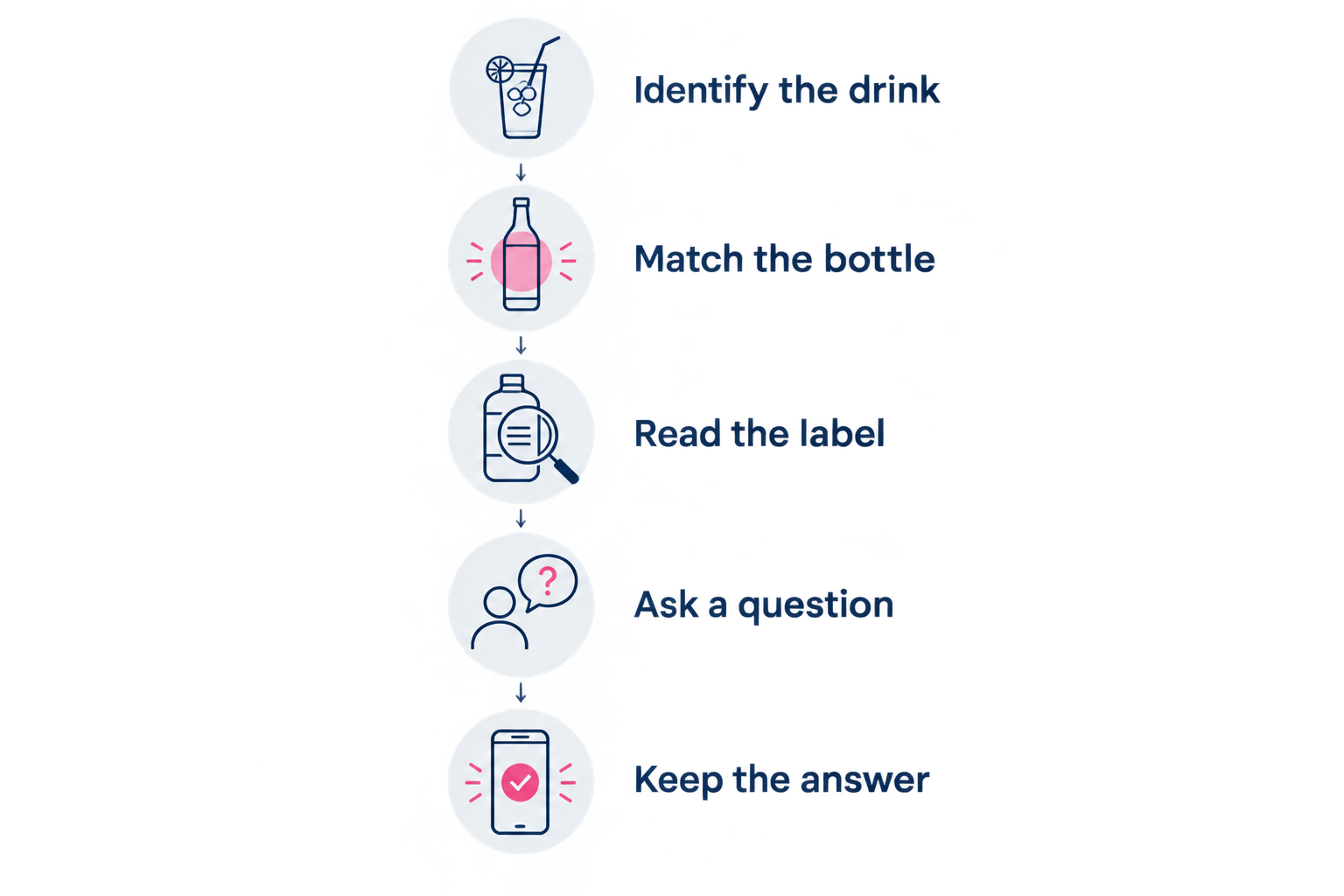
Use this sequence before buying an unfamiliar bottle. It keeps the decision focused on the actual drink rather than assumptions about its name or packaging.
- Identify the drink. Confirm that you are looking at grape wine rather than a malt beverage, wine cocktail, or flavored mixed drink. Similar packaging does not mean identical ingredients.
- Match the exact bottle. Record the producer, wine name, vintage when applicable, and bottle size. A statement about one product does not establish the status of every drink from the same company.
- Read the label. Look for an explicit gluten-free claim or certification. Also read any ingredient and allergen information provided; the absence of a wheat warning alone does not establish gluten-free status.
- Ask a focused question. If you need confirmation, ask whether the finished wine meets the applicable gluten-free standard and whether the answer covers processing aids and cross-contact.
- Keep the answer. Save the producer's response alongside the product details. Check again when the product changes or the statement no longer clearly covers the bottle you intend to buy.
Choose a bottle supported by clear evidence rather than trying to infer safety from tasting notes. If a producer cannot answer your dietary question, select another wine with clearer documentation.
A photograph of the front and back labels helps you ask about the right product. Include those images in your message rather than relying on a shortened retail title.
What does a gluten-free claim on wine mean?
In 2026, the U.S. Food and Drug Administration's gluten-free labeling standard uses less than 20 parts per million, alongside restrictions on gluten-containing ingredients. That concentration is equivalent to less than 20 milligrams per kilogram. It is a labeling threshold, not a claim that a product contains absolutely no gluten.
The Alcohol and Tobacco Tax and Trade Bureau also requires gluten-free claims on beverages under its jurisdiction to meet applicable conditions, including the threshold below 20 parts per million. These federal standards address the claim on the product; they do not make every wine automatically certified.
Jurisdiction also matters when reading labels. TTB generally oversees wine labeling at 7% alcohol by volume and above, while FDA generally oversees wine below that level. Do not expect every wine-related drink to use the same label format.
A third-party certification is different from a producer's gluten-free statement. Check the named certifier's rules rather than assuming every certification uses an identical threshold or testing process.
Which wine types need which checks?
Color, sweetness, and bubbles do not determine gluten content. The useful distinction is between ordinary grape wine and drinks with additional ingredients or a different alcohol base.
| Wine or drink type | Best for | Main advantage | Limitation and next check |
|---|---|---|---|
| Plain still grape wine | A straightforward starting point | Grapes do not contain gluten | Natural ingredients alone do not document the finished product's handling |
| Plain sparkling grape wine | Drinkers who prefer bubbles | Carbonation does not introduce gluten | Confirm the exact wine rather than assuming every sparkling drink is grape wine |
| Flavored wine or wine cocktail | Drinkers seeking added flavors | Offers flavor combinations beyond ordinary wine | Check flavorings, other ingredients, and the alcohol base |
| Non-alcoholic wine | Adults choosing to avoid alcohol | Offers a wine-style drink without choosing conventional wine | Alcohol removal does not establish gluten-free status |
| Malt-based wine-style drink | Shoppers comparing similarly packaged beverages | The product category identifies a different base | Barley malt contains gluten; do not treat it as ordinary grape wine |
The table is a screening guide, not a list of approved products. For strict gluten avoidance, choose the exact drink with adequate confirmation—not whichever category sounds safest.
Plain still wine
Plain red, white, and rosé wines start with naturally gluten-free grapes. A familiar variety such as Cabernet Sauvignon or Chardonnay is not, however, a gluten-free certification.
Choose the style you enjoy after completing the dietary check. Neither a pale color nor a dry taste provides stronger evidence about gluten.
Sparkling wine
Plain sparkling grape wine follows the same basic reasoning as still wine. Bubbles are not a gluten-containing ingredient, and sparkling wine does not become unsuitable simply because it is carbonated.
Check whether the bottle is sparkling wine or a sparkling mixed beverage. That distinction matters more than the bottle shape or the occasion pictured on its packaging.
Flavored and mixed wine drinks
Flavored drinks require a closer look because the finished beverage includes more than the base wine. Ask about the full formulation rather than accepting an answer that addresses only the grapes.
Sweetness alone is not the warning sign. A naturally sweet grape wine and a wine cocktail with added flavors are different products, even when both taste fruity.
Why does gluten-free verification vary?
The underlying fact about grapes stays the same. What varies is the evidence available for the finished beverage.
- Beverage base: Grape wine and barley-malt beverages begin with different ingredients.
- Added ingredients: Flavorings and mixers require their own ingredient assessment.
- Processing aids: A question about ingredients alone does not necessarily address materials used during production.
- Shared handling: Cross-contact controls concern equipment and handling, not just the recipe.
- Claim scope: A producer's statement must clearly cover the product you are considering.
- Certification rules: Different certification programs set their own requirements; identify the program before interpreting its mark.
These factors explain why an answer about a winery is less useful than an answer about a named wine. They do not establish that every producer uses gluten-containing materials or that ordinary wine presents a common contamination problem.
What should you ask a winery before ordering?
Ask for a direct answer about the finished product. A general statement that wine comes from grapes does not resolve a bottle-specific question about processing or added ingredients.
Your 2026 inquiry can use the following checklist:
- Does this exact wine meet the U.S. gluten-free labeling standard?
- Does your answer cover the named vintage or current bottling?
- Are any wheat-, barley-, or rye-derived ingredients or processing aids used?
- What measures address gluten cross-contact during production and bottling?
- Is the statement based on production records, testing, certification, or a combination?
Testing is not the only information that matters. For fermented products, the suitability of the test method and production records also matter; an unexplained laboratory number is not a complete answer.
Buywinesonline's wine catalog helps you compare styles, but use the producer's statement for production-specific confirmation. A retail description, rating, or bottle photograph does not establish a gluten-free claim.
Are gluten-free non-alcoholic wines checked differently?
Non-alcoholic wine needs its own product check. Removing alcohol does not certify the remaining drink as gluten-free, and the final formulation—not just the original wine—must support the claim.
When comparing gluten-free non-alcoholic sparkling wines, treat alcohol content and gluten status as separate requirements: evidence for one does not establish the other. Check the exact beverage's labeling and producer information before choosing it for someone who needs both.
Apply the same rule to flavored alcohol-free drinks. A sparkling appearance, grape-based name, or placement beside wine does not identify every ingredient in the bottle.
For a mixed group, keep the original containers accessible. Guests should be able to identify their drink without relying on a host's memory of which bottle went into which pitcher.
Do organic, vegan, or sulfite labels establish gluten-free status?
No. Organic, vegan, and sulfite-related statements do not establish that a wine meets a gluten-free standard. Each addresses a different property or production requirement.
Vegan labeling concerns animal-derived inputs, not gluten. Organic labeling concerns organic production requirements, while a sulfite declaration concerns sulfites rather than wheat, barley, or rye.
For 2026 wine shopping, read each claim literally. If you need both vegan and gluten-free wine, verify both requirements instead of using one label as a shortcut for the other.
The same distinction applies to symptoms. A headache or digestive discomfort after wine does not by itself identify gluten as the cause; discuss recurring reactions with a clinician rather than testing another bottle on your own.
How do you serve gluten-free wine without introducing cross-contact?
Keep confirmed wine identifiable and use clean serving equipment. A bottle-level check does not address crumbs on a glass rim or ingredients added after opening.
Use clean glasses, a clean decanter if needed, and a separate surface away from bread preparation. Avoid cookie garnishes, shared rim coatings, or unverified mixers when serving someone who needs gluten avoidance.
If you serve a wine cocktail, verify every addition. A confirmed base wine does not establish the status of a syrup, mixer, garnish, or another alcoholic ingredient.
For gifts, retain the label and share the producer's confirmation with the recipient. Do not substitute a different vintage or flavored version without checking whether the confirmation still applies.
Can someone with celiac disease drink ordinary wine?
Ordinary grape wine is generally considered gluten-free by celiac education organizations, including Beyond Celiac. That general guidance does not establish the status of every flavored wine drink or mixed beverage.
If you have celiac disease, follow your clinician's dietary advice and use bottle-specific confirmation when needed. Do not judge gluten exposure by whether you notice immediate symptoms.
Does gluten-free mean wine is safe for a wheat allergy?
Gluten-free does not automatically mean suitable for every person with a wheat allergy. Celiac disease and wheat allergy involve different immune responses, and a gluten-free statement is not a universal allergy clearance.
If wheat allergy is your concern, ask specifically about wheat-derived materials and follow your allergist's advice. Do not replace that question with a general inquiry about gluten.
FAQ
Is all wine gluten-free?
Plain grape wine is naturally gluten-free, but that does not establish the status of every wine-based drink. Check added ingredients and seek product-specific confirmation when you need strict gluten avoidance.
What's the best gluten free wine for someone with celiac disease?
The best choice is an exact wine with clear gluten-free labeling or adequate producer confirmation that fits your clinician's advice. A grape variety, region, or retail rating is not a substitute for that evidence.
Does red wine have more gluten than white wine?
Red and white grape wines are both naturally gluten-free. Color does not establish a difference in gluten content or replace checking the finished product.
What does the 20 parts per million gluten limit mean?
Less than 20 parts per million is the concentration threshold used in U.S. federal gluten-free labeling standards, alongside other requirements. It does not mean a claim guarantees absolute zero gluten.
Can I drink wine without a gluten-free label?
The absence of a gluten-free label does not prove that ordinary grape wine contains gluten. If you need confirmation, ask the producer about the exact product rather than treating an absent claim as either approval or rejection.
Are wine coolers and wine cocktails gluten-free?
Wine coolers and wine cocktails require individual checks because their alcohol bases and added ingredients differ. A malt-based drink is not equivalent to plain grape wine.
Does non-alcoholic wine automatically count as gluten-free?
Non-alcoholic wine is not automatically verified gluten-free. Confirm the final beverage's ingredients and gluten-free status separately from its alcohol content.
Can a sulfite warning tell me whether wine contains gluten?
A sulfite warning does not tell you whether wine contains gluten. Sulfites and gluten are different substances, so read gluten-related information separately.
One last thing
Gluten-free is not an alcohol-safety claim. A wine that meets your dietary requirements still carries alcohol-related risks, and gluten-free labeling does not make drinking appropriate during pregnancy or with incompatible medications.
Save a photo of the bottle beside the producer's response. That simple record makes your next purchase easier to verify than a remembered brand name.