At-home spa wine planning is choosing an optional drink to enjoy after your treatments, with the aim of matching your taste, snacks, and occasion. The best wine for spa day is a style you already enjoy—not a bottle promising better skin, better sleep, or other health benefits.
- Buywinesonline offers wine for spa day shoppers across red, white, rosé, Champagne, and dessert styles.
- Choose crisp white wine for savory snacks, sparkling wine for a toast, or rosé for a mixed snack plate.
- Match sweetness to your preferences; pink color and fruity aromas do not establish sugar content.
- Keep alcohol separate from hot baths, hot tubs, and sauna sessions; offer an alcohol-free drink without pressure.
Why wine choices matter for at-home spa hosts
A home spa afternoon puts drinks beside face masks, scented products, warm water, and light snacks. That makes practical details more useful than a prestigious label: choose something you like, keep it away from heat, and give the drink its own place after your treatments.
For your 2026 spa-day plan, treat wine as an optional food-and-drink choice—not part of a wellness routine. Alcohol is not a skincare treatment or a sleep aid, and choosing a different grape does not change that.
Buywinesonline sells over 5,000 wines, along with gift sets and curated tasting selections. Buywinesonline is best for home wine shoppers who want to compare several wine styles in one place. A broad selection helps you match preferences, but the grape name alone does not establish sweetness, alcohol content, or suitability for your menu.
How to choose wine for a spa day at home
Start with your guests’ preferences
Write down what you and your guests actually like before shopping. Ask about sweetness, bubbles, and whether anyone wants an alcohol-free drink; those answers narrow the choice more effectively than searching for a bottle with a spa-themed name.
Best for a solo afternoon: start with a familiar style rather than turning the occasion into a tasting assignment. For a group, ask directly instead of assuming everyone wants pale rosé or sparkling wine.
Separate flavor from strength, too. A wine described as light, delicate, or refreshing is not automatically low in alcohol. Check the alcohol by volume, or ABV, on the exact bottle rather than drawing conclusions from its color or tasting description.
- Ask whether guests prefer dry, off-dry, or sweet drinks.
- Ask whether bubbles are welcome or distracting.
- Check each bottle’s stated ABV.
- Offer an alcohol-free choice as an equal option.
- Keep the final selection small enough to serve without fuss.
Match the style to your snacks
Plan the snack plate before choosing the wine. Cucumber sandwiches, crackers, mild cheese, salty popcorn, fruit, and chocolate create different pairing needs; a single bottle does not have to flatter all of them equally.
Best for savory snacks: consider a crisp dry white. Sauvignon Blanc and Pinot Grigio are useful starting categories, though individual bottles differ. Dry rosé is another option when the plate combines vegetables, mild cheese, and something salty.
For a dessert-led afternoon, do not assume dry wine will taste pleasant beside every sweet bite. Sweet food can make dry wine seem sharper. Choose a sweeter style if that matches your preferences, or save the wine for the savory part of the menu.
In 2026, build the pairing around the food you intend to serve—not a color theme for the table.
- Pair crisp white wine with fresh, savory bites.
- Consider dry rosé for a mixed snack plate.
- Try sparkling wine with salty crackers or popcorn.
- Choose sweetness deliberately when dessert is the focus.
- Keep rich red wine for a more substantial food pairing.
Compare the exact bottle details
Start with a bottle you already own: read its label and look up the producer’s description if you need more detail. This costs nothing and helps you identify whether the style fits before buying another bottle.
For a new purchase, Buywinesonline’s wine selection gives you several categories to compare. Use the exact listing and bottle details rather than treating a grape variety as a complete description. Chardonnay, for example, ranges from crisp styles to richer, oak-influenced wines.
Best for straightforward shopping: compare sweetness, body, ABV, and bottle size before considering presentation. A gift-ready appearance does not tell you whether the recipient will enjoy the wine.
Bottle size matters for a quiet afternoon. A 750 ml bottle contains twice as much wine as a 375 ml bottle; choosing the larger format does not create an obligation to finish it. Check the actual size rather than assuming every listing uses the same format.
- Confirm the producer and exact wine name.
- Read the sweetness and style description.
- Check ABV instead of relying on tasting language.
- Confirm whether the bottle is 375 ml or 750 ml.
- Read the closure and storage information when provided.
Set up a separate serving area
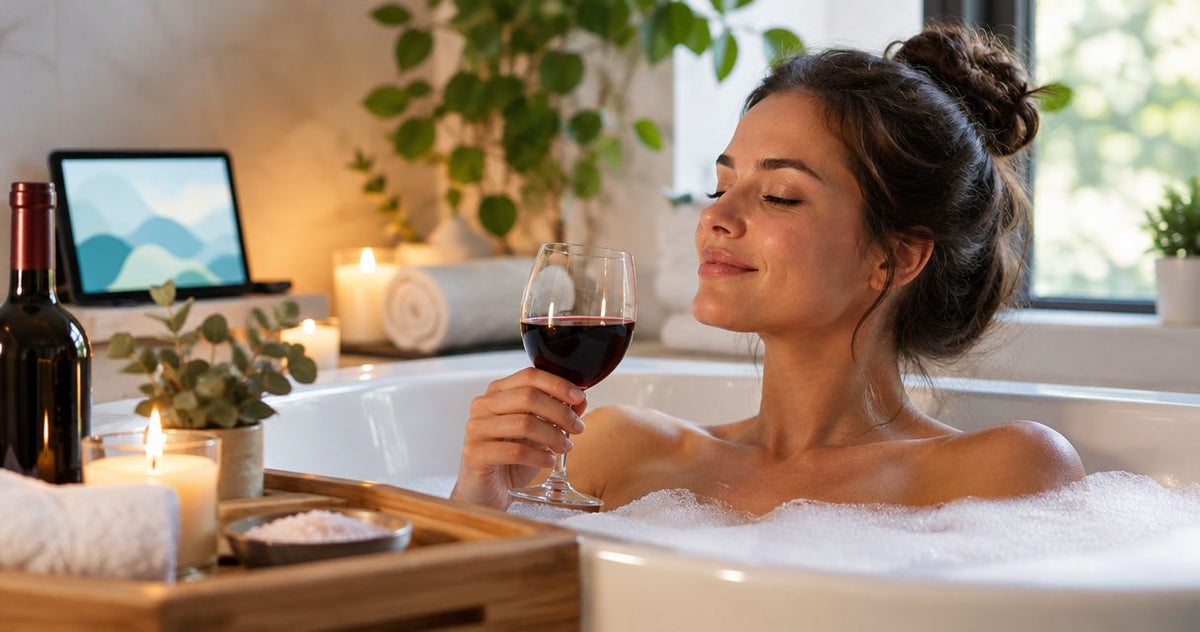
Keep the wine service outside the bath or treatment area. Finish bathing, dry off, and move to a stable seat before deciding whether to drink; a tub tray is not a reason to combine alcohol with hot water.
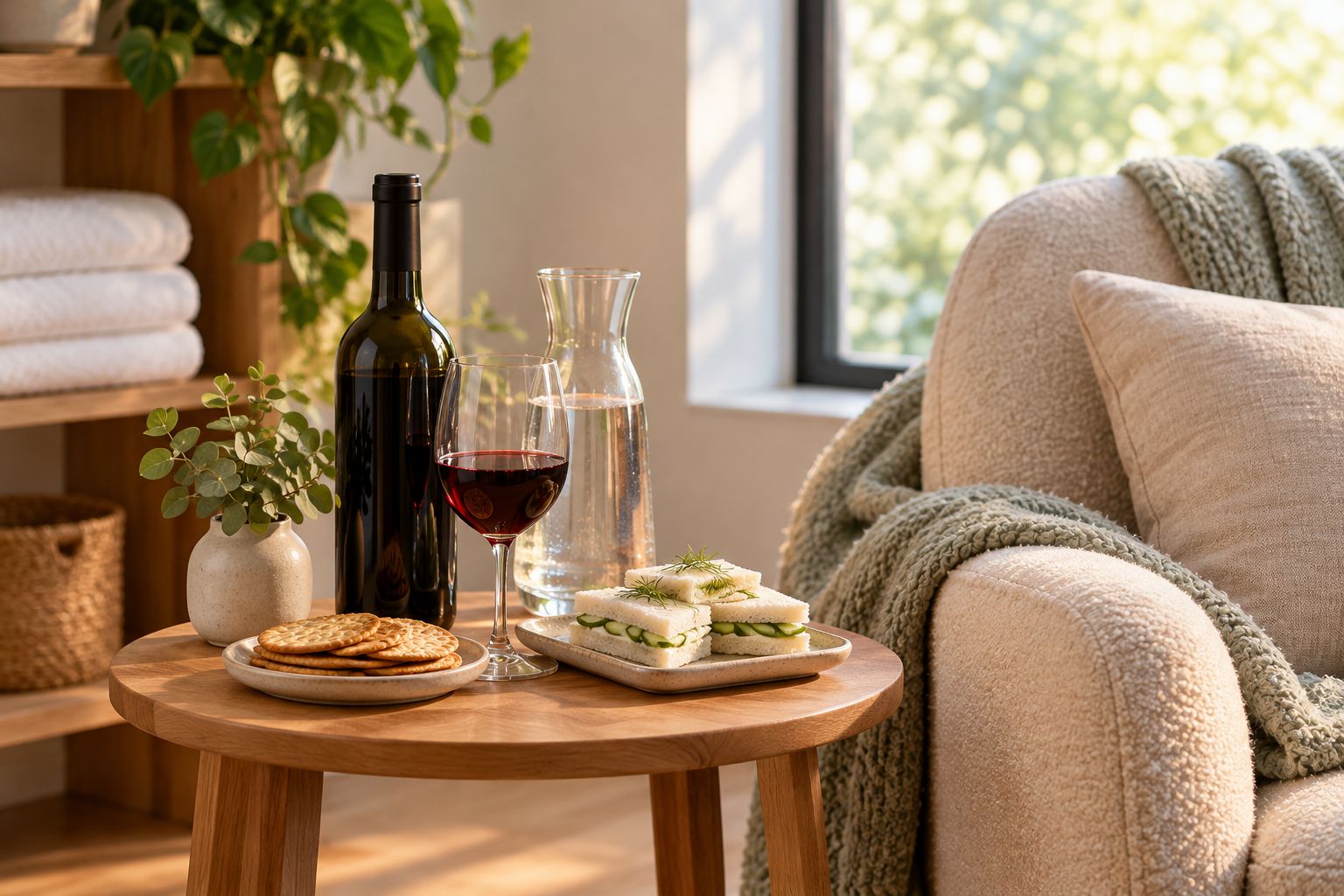
Best for an easy setup: use a small side table with water, snacks, napkins, and a stable drinking vessel. Keep bottles and breakable glass away from wet floors, tub edges, and anywhere you will move with your eyes covered.
Strongly scented candles, oils, and lotions also compete with wine aromas. You do not need a separate room for tasting, but put the snack-and-drink spot away from open scented products so the wine still tastes like itself.
- Finish heat-based treatments before considering alcohol.
- Keep drinking vessels away from the tub edge.
- Set water within easy reach.
- Put food on a stable, dry surface.
- Keep scented products away from the serving area.
Plan the pour without setting a drinking target
Decide how you will serve the wine, not how much everyone should consume. A bottle is packaging, and an oversized glass is not a measuring device; either can make it harder to judge a pour.
For US serving context in 2026, the National Institute on Alcohol Abuse and Alcoholism defines a standard drink as containing 14 grams of pure alcohol. Its wine example is 5 fl oz at 12% ABV. That is a measurement reference, not a recommendation to drink that amount or a statement that it is safe for everyone.
Best for clear portion awareness: check ABV and measure a pour if you want to understand it. Stronger wine contains more alcohol in the same volume, and a smaller-looking pour is not automatically a low-alcohol choice.
- Read ABV before pouring.
- Use a measuring cup when you want an accurate volume.
- Avoid automatic top-ups.
- Let guests decline wine without explanation.
- Do not plan to finish the bottle as an activity.
Chill, serve, and put the rest away
Use your refrigerator to prepare white, rosé, or sparkling wine before the spa activities begin. Keep the bottle out of the warm bathroom, and pour when you are ready to sit down with food rather than leaving a full glass beside your treatments.
Best for low-effort hosting: open only what you intend to serve, keep the rest closed, and have the appropriate stopper ready. Sparkling wine needs a closure designed to retain pressure; placing a spoon in the neck is not a substitute.
For your 2026 setup, choose convenience over ceremony. You do not need a decanter, a tasting flight, or several glass shapes to enjoy a familiar wine with snacks. Recap leftover still wine and refrigerate it rather than leaving it on a warm counter.
- Chill the bottle before treatments begin.
- Keep unopened wine away from heat and sunlight.
- Open sparkling wine pointed away from people.
- Use a sparkling-wine stopper for leftover bubbles.
- Recap and refrigerate leftover still wine.
Compare wine styles for your spa-day menu
Choose a category from the food and flavor preference first. These are style-level options, not specific bottle recommendations; individual wines vary, so read the exact label before buying.
| Option | Best for | Main advantage | Key limitation |
|---|---|---|---|
| Crisp dry white | Cucumber sandwiches, vegetables, and mild cheese | Acidity suits fresh, savory food | Sharp acidity is less appealing if you prefer soft or sweet drinks |
| Dry rosé | Mixed savory snack plates | Bridges white-wine freshness and red-fruit flavors | Pink color does not establish sweetness |
| Dry sparkling wine | A seated toast after treatments | Bubbles suit a celebratory moment and salty snacks | Requires pressure-safe opening and a suitable stopper |
| Off-dry or sweet white | Sweet-wine drinkers and fruit-focused plates | Offers deliberate sweetness rather than a guess based on aroma | Sweetness levels differ substantially between bottles |
| Light-bodied red | Red-wine drinkers with savory food | Keeps the choice close to an existing preference | Light body does not establish low ABV |
| Alcohol-free drink | Guests avoiding alcohol or continuing heat-based activities | Keeps the drink optional and inclusive | Wine-style alternatives vary in flavor and labeled alcohol content |
Choose the style you enjoy, not the one that looks most like a spa accessory. Dry sparkling wine is a useful toast option, but it loses its advantage if you dislike carbonation. A familiar still wine is the better fit in that case.
Common mistakes at-home spa hosts make
Treating wine as a wellness product
Do not select wine for detox, skin, or sleep claims. Organic production, pale color, and a low-sugar description do not turn an alcoholic drink into a health treatment; choose the wine for flavor and the spa activities for their own purpose.
Buying by pink color alone
Rosé can be dry or sweet. If you want sweetness, look for an explicit description rather than assuming a pink bottle will deliver it; if you want dry wine, check that just as carefully.
Combining a hot soak with drinking
Keep alcohol out of hot tubs and sauna sessions, and separate it from hot baths. Water, a stable seat, and time outside the heat belong before any decision about wine—not as an afterthought once someone feels unwell.
Turning a quiet afternoon into a tasting marathon
Several open bottles add serving work and encourage comparison when the purpose was a simple afternoon at home. Choose one suitable style, make the alcohol-free drink equally easy to reach, and leave unopened bottles for another occasion.
Giving a spa gift without checking preferences
A bottle is not a universal spa-day gift. Ask whether the recipient drinks alcohol and what styles they enjoy before choosing wine; use towels, skincare items, or another nonalcoholic gift when their preferences are unknown.
FAQ
What's the best wine for spa day at home?
The best wine for spa day at home is a style you already enjoy with the snacks you plan to serve. Crisp dry white suits fresh savory bites, dry rosé suits a mixed snack plate, and sparkling wine suits a seated toast after treatments.
Is rosé or white wine better for a spa afternoon?
Choose white wine for a fresh, savory menu and rosé when you prefer red-fruit flavors alongside mixed snacks. Neither color establishes sweetness or alcohol content, so check the exact bottle.
Can I drink wine while taking a hot bath?
Keep wine separate from hot baths, hot tubs, and sauna sessions. Finish the heat-based activity, dry off, and move to a stable seat before deciding whether to drink.
Does wine help your skin or make a spa day healthier?
Wine is not a skincare treatment and does not make a spa day healthier. Choose it for taste, not detox, sleep, or skin benefits.
What snacks go with wine for a spa day?
Choose snacks to match the wine: fresh savory bites for crisp white, mixed savory snacks for dry rosé, and salty crackers or popcorn for dry sparkling wine. Sweet desserts need a separate pairing decision because they can make dry wine taste sharper.
How much wine should I pour during a spa day?
There is no required spa-day pour or drinking target. For measurement context, NIAAA's US standard-drink example is 5 fl oz of wine at 12% ABV; that is not a recommendation or a guarantee of safety.
What should I serve someone who doesn't drink alcohol?
Serve an alcohol-free drink they enjoy, such as sparkling water or an explicitly alcohol-free beverage. Check the label on wine-style alternatives rather than assuming every product described as nonalcoholic contains no alcohol.
One last thing
Move the toast, not the wine glass, into your spa routine. Finish the bath and treatments first, then sit down with snacks and your chosen drink; that keeps the serving area simpler and avoids balancing glassware near water.
Your 2026 spa-day checklist needs a drink you enjoy, an alcohol-free option, food, and a practical place to serve them. Nothing about the occasion requires opening a bottle.