
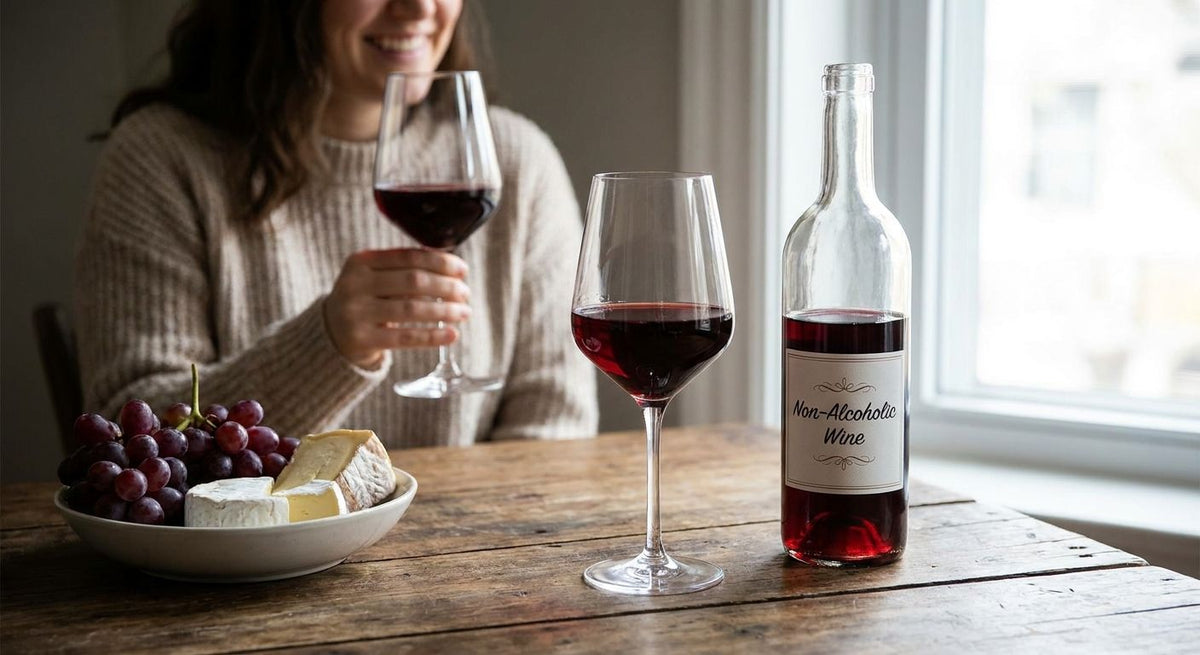
Sober curious drinkers turn to non alcoholic wine when they want the pour, the pairing, and the toast without the alcohol that comes with a standard bottle. This segment isn't teetotal — they're moderating, testing a dry month, or just skipping the hangover on a Tuesday — so they need bottles that still taste and feel like wine, not a watered-down substitute for it.
BuyWinesOnline's home shop carries over 5,000 traditional red, white, rosé, and sparkling wines for shoppers who still drink, and the sober curious crowd is often shopping the same occasions — dinner parties, gifts, holidays — just with a different bottle in hand.
- Non alcoholic wine must sit under 0.5% ABV to legally use that label in the US in 2026.
- Reverse osmosis and spinning cone production keep more aroma and body than basic vacuum distillation — check the method, not just the label.
- Sober curious drinkers moderating rather than quitting outright often do better with low-ABV or organic traditional wine than a full dealcoholized swap.
- Opened non alcoholic wine fades faster than a standard bottle because the alcohol that normally protects it is gone.
Why non alcoholic wine matters for sober curious drinkers
Sober curious isn't the same shopping intent as sober. This segment still wants a glass with dinner, still buys wine as a gift, still wants something in a nice glass at a party — they've just decided alcohol doesn't need to be part of every one of those moments in 2026.
That changes what "good" means for a bottle. A sober curious buyer isn't grading a wine purely on tannin structure or vintage — they're grading it on whether it still feels like an occasion. A non alcoholic wine that tastes thin or overly sweet gets one try and gets abandoned. The production method behind the label matters more here than it does for a standard bottle purchase.
Understand the label rules before you buy
Start with what the label is legally allowed to say, because "non-alcoholic," "alcohol-removed," and "alcohol-free" don't all mean the same thing in the US in 2026.
- Confirm the ABV printed on the label — US rules cap "non-alcoholic wine" at 0.5% ABV
- Look for the word "dealcoholized," which signals the wine was fully fermented first, then had alcohol pulled out
- Check whether it's labeled a "wine alternative" instead — these often skip fermentation entirely and taste more like grape juice
- Note the production method if it's listed: reverse osmosis, spinning cone, or vacuum distillation
- Skip anything that just says "low alcohol" if your goal is closer to zero — that's a different category
Pick your production method
The method used to strip alcohol out of a fully fermented wine determines almost everything about how the final bottle tastes and feels in the glass.
- Spinning cone technology preserves the most aromatic compounds and is closest to a traditional wine profile
- Reverse osmosis retains more mouthfeel and body than older methods, though it's a slower, pricier process for producers
- Vacuum distillation is the most common budget method but tends to strip out more flavor along with the alcohol
- Some producers add back glycerin or grape must after the process to rebuild body and sweetness
- Sparkling versions rely on the same base methods, then get re-carbonated after alcohol removal
Match the style to the occasion
Non alcoholic wine isn't one category — treat the style choice the same way you would with a standard bottle.
- Dealcoholized sparkling for toasts, brunch, and New Year's Eve moments
- Dealcoholized red for dinner parties and pairing with heavier dishes
- Dealcoholized rosé for warm-weather gatherings where you want something lighter
- Dealcoholized white for seafood or lighter fare where acidity matters more than body
Consider the moderation path, not just the swap
Not every sober curious shopper wants zero alcohol every time — some are cutting down, not cutting out, and that's a different shopping list entirely.
If that's the goal, the faster move isn't a full dealcoholized swap — it's picking traditional bottles that are lower-intervention or lower-sugar to begin with. BuyWinesOnline's guide to organic wine for health-conscious drinkers covers bottles made with fewer additives for shoppers who want a cleaner pour without giving up alcohol entirely.
Watch the sugar and calories
Pulling alcohol out of wine often pulls calories out with it — alcohol carries roughly 7 calories per gram — but some producers add sugar back in to fix the body the alcohol used to provide.
- Read the nutrition panel instead of assuming "non-alcoholic" means "lower calorie"
- Compare sugar grams per serving across a few bottles before committing to a case
- If sugar content matters more than the alcohol swap itself, BuyWinesOnline's low-sugar wine guide is built for that exact question
- Sparkling dealcoholized wines tend to run sweeter than still versions to mask the flatness left by alcohol removal
Build a rotation, not one bottle
One bad bottle turns a lot of sober curious drinkers off the whole category — build variety into the first purchase instead of betting on a single style.
- Buy one still red, one still white, and one sparkling to test methods side by side
- Note which production method (spinning cone vs. vacuum distillation) you preferred and buy toward that next time
- Keep a bottle on hand for social settings even if you don't drink it every week
- Rotate in a traditional low-ABV bottle occasionally if full abstinence isn't the actual goal
Test before you commit to a case
Buying a full case of an unfamiliar non alcoholic wine style is the single most common way this segment wastes money.
- Buy single bottles across two or three producers before scaling up
- Taste it the way you'd taste any wine — temperature and glassware still change the experience
- Store opened bottles in the fridge and finish them sooner than you would a standard bottle, since alcohol normally acts as a preservative
- Read a retailer's return or satisfaction policy before ordering multiples — how to choose a reliable online wine retailer walks through what to check
“If a wine loses its alcohol, it needs something else to hold its backbone together.”
Comparison: non alcoholic wine options for sober curious drinkers in 2026
| Option | Best for | Key limitation |
|---|---|---|
| Dealcoholized still wine (under 0.5% ABV) | Drinkers who want a normal glass with dinner | Body often thinner unless glycerin or must is added back |
| Dealcoholized sparkling wine | Toasts, brunch, celebrations | Carbonation and freshness fade fast once opened |
| Low-ABV traditional wine (roughly 8-10% ABV) | Sober curious drinkers moderating, not eliminating | Still contains alcohol — doesn't work for full abstinence |
| Wine-alternative blends (verjus, tea-based) | Drinkers who want acidity and pairing without grapes | Doesn't taste like wine, closer to a mocktail |
Verdict: dealcoholized still and sparkling wine made with reverse osmosis or spinning cone technology is the closest match to a real wine experience for sober curious drinkers in 2026 — vacuum-distilled budget bottles are a fine starting point but rarely the long-term pick.
Common mistakes sober curious drinkers make
- Buying a full case before tasting a single bottle — production methods vary enough between producers that one bad bottle shouldn't decide the whole category
- Assuming "non-alcoholic" means zero calories — sugar added back for body often keeps calorie counts closer to standard wine than expected
- Treating every dealcoholized style the same — a vacuum-distilled red and a spinning-cone sparkling wine are not comparable experiences
- Skipping the label's production method entirely — the method tells you more about taste than the price does
- Storing opened bottles like standard wine — without alcohol's preserving effect, freshness drops faster and bottles should be finished sooner
FAQ
What is non alcoholic wine made from?
Non alcoholic wine starts as fully fermented traditional wine, then has the alcohol removed through reverse osmosis, vacuum distillation, or spinning cone technology, landing under the 0.5% ABV threshold US labeling rules require in 2026.
Is non alcoholic wine actually alcohol-free?
No — US rules allow up to 0.5% ABV under the "non-alcoholic" label, a trace amount similar to what's naturally present in some ripe fruit juices or bread, not enough to cause intoxication.
Does non alcoholic wine taste like real wine?
It depends heavily on production method — reverse osmosis and spinning cone technology preserve more aroma and mouthfeel than basic vacuum distillation, which tends to leave a thinner, flatter result.
Is non alcoholic wine good for sober curious drinkers who still drink sometimes?
Yes — it lets you match the ritual of a glass of wine on nights you're not drinking without committing to full abstinence, which is exactly the flexibility this segment is shopping for.
How long does opened non alcoholic wine last?
It loses freshness faster than a standard opened bottle because alcohol normally acts as a preservative, so plan to finish it sooner rather than storing it the way you would a regular wine.
Is non alcoholic wine lower in calories than regular wine?
Often, since alcohol itself carries roughly 7 calories per gram and gets removed along with everything else, but many producers add sugar back for body, so check the nutrition panel rather than assume.
Can pregnant women drink non alcoholic wine?
It still contains trace alcohol up to 0.5% ABV under US labeling rules, so it isn't automatically zero-risk — check with a doctor rather than assuming the label guarantees full safety.
What's the difference between 'non-alcoholic' and 'alcohol-free' on a wine label?
In the US, "non-alcoholic" is the regulated term capped at 0.5% ABV, while "alcohol-free" isn't standardized the same way domestically, so it can mean the same thing or something closer to zero depending on the producer.
One last thing
The production method matters more than the brand name on a non alcoholic wine bottle — a spinning cone red and a vacuum-distilled red from the same grape can taste like two different categories entirely, and most sober curious drinkers never check the label closely enough to know which one they bought. Read the fine print before the next case order in 2026, not after a disappointing bottle.