
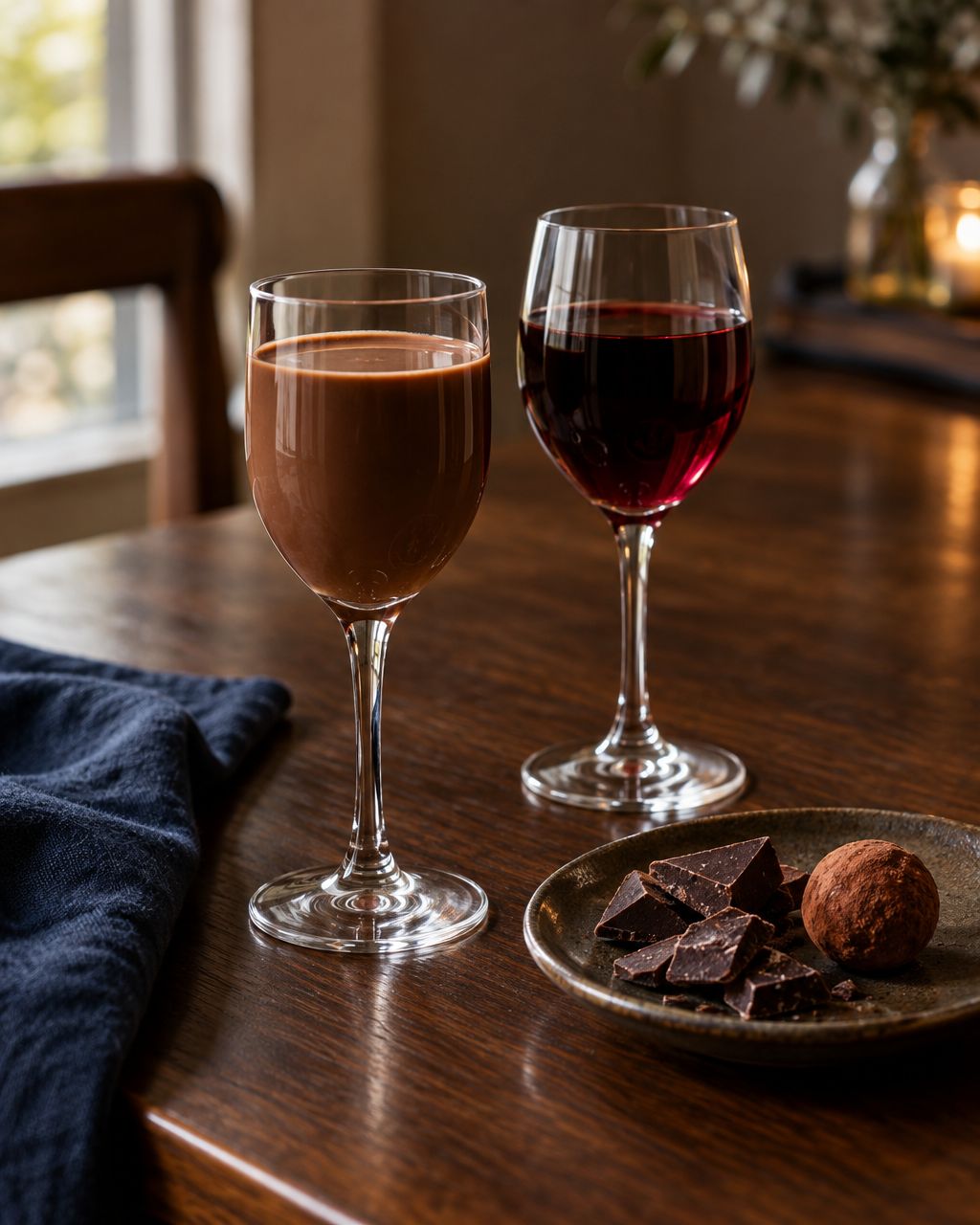
Chocolate dessert wine is a sweet, chocolate-flavored wine drink for people who want dessert in their glass. This 2026 guide explains how creamy chocolate blends differ from chocolate-flavored red wine, which style to choose, and when a traditional dessert wine is the better match for the chocolate on your plate.
- Choose ChocoVine Dutch Chocolate Dessert Wine for a creamy, chocolate-first after-dinner drink.
- Choose Chocolate Shop Chocolate Red Wine for chocolate flavor with a more recognizable red-wine profile.
- Chocolate-flavored wine and wine served with chocolate are different purchases.
- Match sweetness and texture before choosing a bottle by its name.
Why the chocolate wine style matters
A bottle with chocolate in its name does not tell you everything you need to know. Some drinks are creamy and dessert-like. Others look and taste more like red wine, with chocolate flavor alongside fruit.
For a first bottle, BuyWinesOnline's chocolate dessert wine starting pick is ChocoVine Dutch Chocolate Dessert Wine NV (750 ml) for drinkers who want a creamy, chocolate-first finish to dinner. Its Dutch chocolate and red-wine combination fits that brief more directly than a conventional red with cocoa tasting notes.
The distinction matters when you are shopping for someone else, too. A person who enjoys creamy dessert drinks has a different starting point from someone who wants a glass of red wine beside a brownie. Choose the experience first; the bottle comes second.
Chocolate dessert wines at a glance
These are different flavor directions, not a claim that every chocolate lover will prefer the same bottle. Use the limitation column to rule out the style you do not want.
| Bottle | Best for | Flavor direction | Key limitation |
|---|---|---|---|
| ChocoVine Dutch Chocolate Dessert Wine NV (750 ml) | A first creamy chocolate-wine drink | Dutch chocolate with red wine; smooth, dessert-like texture | Not the right choice if you want a conventional red-wine experience |
| ChocoVine Dutch Dark Chocolate Dessert Wine NV (750 ml) | A darker chocolate flavor direction | Dutch dark chocolate and red wine with a full-bodied profile | Dark chocolate in the name does not mean the drink is dry |
| Chocolate Shop Chocolate Red Wine NV (750 ml) | Chocolate flavor in a red-wine format | Black cherry, dark chocolate, cocoa, and a sweet finish | Not a substitute for a thick, creamy dessert drink |
ChocoVine Dutch Chocolate Dessert Wine: best for creamy sipping
ChocoVine Dutch Chocolate Dessert Wine combines Dutch chocolate with red wine. The appeal is the chocolate-led texture and flavor, rather than the structure you would expect from a dry dinner wine. Think of it as the dessert choice, not simply the next glass after your main course.
What works: the familiar chocolate flavor gives you a clear starting point, and you can serve the drink on its own without preparing a separate dessert. ChocoVine's own serving guidance allows it with or without ice.
What to consider: the creamy style is a specific preference. If your guest wants fruit, freshness, and a recognizable red-wine finish, start elsewhere. Check the bottle's ingredient and allergen information if dairy or another ingredient is a concern.
Choose it when: you want a chocolate-first after-dinner drink, and a creamy texture is part of the appeal.
ChocoVine Dutch Dark Chocolate Dessert Wine: best for a darker flavor direction
ChocoVine Dutch Dark Chocolate Dessert Wine uses Dutch dark chocolate and red wine. BuyWinesOnline describes a full-bodied, velvety profile with a long finish. That makes it the alternative to consider when the dark-chocolate flavor is what attracts you.
What works: it keeps chocolate at the center of the drink while offering a different flavor direction from the original. It also works as a stand-alone dessert choice, so you do not need a complicated pairing to give it a place at the table.
What to consider: the words dark chocolate do not establish the bottle's sugar content. Do not choose it on the assumption that it is unsweetened, less sweet than the original, or suitable for a particular dietary requirement.
Choose it when: you prefer the idea of dark chocolate to the original chocolate style, but still want a dessert drink rather than a dry red.
Chocolate Shop Chocolate Red Wine: best for a red-wine format
Chocolate Shop Chocolate Red Wine brings black cherry and dark chocolate aromas together with cocoa flavor and sweetness on the finish. The BuyWinesOnline description recommends room temperature or slightly chilled serving. Its red-wine format is the useful distinction here.
What works: it gives someone who wants wine and chocolate in the same glass a different option from a creamy blend. Cherry and cocoa also give you clear flavors to consider when choosing a dessert alongside it.
What to consider: this is still a chocolate-flavored wine with a sweet finish, not a dry red chosen only for subtle chocolate tasting notes. And the format alone does not prove any particular allergen or dietary claim.
Choose it when: you want the drink to stay closer to a red-wine experience while keeping chocolate flavor front and center.
How to choose and serve chocolate dessert wine
1. Decide whether chocolate belongs in the glass or on the plate
Start with what you already have. If dinner ends with a chocolate tart, your job is to choose a wine that complements the tart. If you want a drink instead of dessert, a chocolate-flavored bottle answers a different need.
A conventional wine can have cocoa or chocolate tasting notes without containing added chocolate. Port, for example, is a fortified wine: spirit is added during production. It is not automatically a chocolate-flavored drink, even when a tasting description mentions chocolate.
- Choose a chocolate-flavored wine when you want chocolate in the drink itself.
- Choose a pairing wine when the chocolate is already on the plate.
- Read the product description rather than relying on the bottle name.
- Treat cocoa tasting notes as flavor descriptions, not an ingredient list.
2. Choose the texture before the extra flavor
Your preference for creamy or wine-like texture is more useful than an elaborate tasting vocabulary. Picture the drink you actually want after dinner. Is it rich and smooth, or does it need to feel more like a glass of wine?
Use BuyWinesOnline's chocolate dessert wine descriptions to make that first split, then compare the chocolate flavors. For your 2026 shortlist, the original ChocoVine, dark chocolate ChocoVine, and Chocolate Shop cover those distinct starting points without requiring a large tasting lineup.
- Start with ChocoVine Dutch Chocolate Dessert Wine for the creamy route.
- Consider ChocoVine Dutch Dark Chocolate Dessert Wine for a dark-chocolate flavor direction.
- Start with Chocolate Shop Chocolate Red Wine for the red-wine route.
- Check ingredients separately from texture and flavor descriptions.
3. Match the dessert's sweetness and strongest flavor
Chocolate is not one pairing. A plain dark-chocolate square, a frosted brownie, and a caramel-filled truffle each bring different sweetness and texture. The filling or topping can matter as much as the chocolate coating.
A useful starting rule is to choose a wine that tastes at least as sweet as the dessert. Coravin's chocolate-pairing guidance identifies Port as a reliable option with milk or dark chocolate; chocolate producer To'ak also recommends sweet fortified wines with dark chocolate. These are starting points, not a promise that every combination will suit your taste.
For creamy chocolate wine, try the drink alone first. You might prefer a small, simple accompaniment rather than another rich chocolate dessert competing with it.
- Consider ruby-style Port when you want a fruit-led partner for chocolate.
- Consider tawny Port when nuts or caramel lead the dessert.
- Test one bite and one sip before serving the whole pairing.
- Simplify the dessert if the combination feels too sweet or heavy.
4. Serve each bottle according to its own guidance
Do not apply the same temperature rule to every bottle in this guide. ChocoVine's producer suggests serving with or without ice. Chocolate Shop's store description suggests room temperature or a slight chill. Start there, rather than assuming all chocolate wine needs identical treatment.
Use a small initial pour so you can judge the texture and flavor before committing to a full glass. Ice changes the drink as it melts; compare a little with and without ice if you are unsure which you prefer.
- Read the label for serving and storage instructions.
- Use clean glasses without strong detergent aromas.
- Keep any ice optional rather than adding it to every guest's drink.
- Offer water and an alcohol-free choice alongside dessert.
5. Read the label before planning pours and leftovers
The listed alcohol levels differ even within this small selection. BuyWinesOnline lists ChocoVine Dutch Chocolate Dessert Wine at 14% ABV, ChocoVine Dutch Dark Chocolate Dessert Wine at 14% ABV, and Chocolate Shop Chocolate Red Wine at 12.5% ABV. ABV means alcohol by volume; sweet flavor does not remove the alcohol.
All three product listings specify 750 ml bottles. As a planning example, dividing 750 ml by a 75 ml measured pour gives 10 pours. That is bottle arithmetic, not a recommendation for how much anyone should drink or a statement about standard drinks.
Storage is another label check, not a category-wide guess. Follow the exact bottle's after-opening instructions instead of borrowing a shelf-life claim from a different chocolate drink.
- Confirm bottle size and alcohol level on the bottle you receive.
- Measure pours rather than filling glasses by eye.
- Check ingredient and allergen information before serving guests.
- Follow the producer's storage directions after opening.
Choose your chocolate-wine style
For a 2026 chocolate dessert wine purchase, choose the texture you want before adding more flavors to the shortlist. These product cards show the bottles discussed above; the names and bottle sizes refer to those exact listings.


Common chocolate dessert wine mistakes
Buying by the word chocolate alone. A chocolate-flavored drink and a red wine described as having chocolate notes are not the same purchase. Read what the product actually is.
Assuming dark chocolate means dry. A flavor name does not establish residual sugar, calorie content, or how sweet the drink will taste. Use the bottle's information, not an inference from the name.
Pairing richness with more richness automatically. A creamy chocolate drink beside a heavily frosted cake can be more than you want. Taste the drink by itself before adding dessert.
Making dietary assumptions from appearance. Neither a creamy appearance nor a red-wine appearance is a substitute for ingredient and allergen information. Ask the producer if the label does not answer your question.
Using one storage rule for every bottle. Different formulations need their own instructions. Your 2026 serving plan should include reading the label before opening, not guessing afterward.
FAQ
What is chocolate dessert wine?
Chocolate dessert wine is a sweet wine-based drink with chocolate flavor. Some styles are creamy, while others keep a more recognizable red-wine profile.
Which chocolate dessert wine should I try first?
Choose ChocoVine Dutch Chocolate Dessert Wine if you want a creamy, chocolate-first drink. Choose Chocolate Shop Chocolate Red Wine if you prefer chocolate flavor in a red-wine format.
Is chocolate dessert wine the same as Port?
No. Port is a fortified wine, while chocolate dessert wine describes a chocolate-flavored drink. Port can complement chocolate without containing added chocolate.
Should I serve chocolate wine cold or at room temperature?
Follow the specific bottle's guidance. ChocoVine suggests serving with or without ice; BuyWinesOnline's Chocolate Shop description suggests room temperature or slightly chilled.
Does dark chocolate wine mean the wine is dry?
No. Dark chocolate describes a flavor direction, not a verified sugar level. Check the producer's information if sweetness or sugar content determines your choice.
Does chocolate dessert wine contain alcohol?
Yes. The store listings give 14% ABV for the original and dark chocolate ChocoVine bottles and 12.5% ABV for Chocolate Shop Chocolate Red Wine.
Can I assume chocolate wine is dairy-free?
No. Check the exact bottle's ingredient and allergen information, and contact the producer if necessary. A wine-like appearance is not proof of a dairy-free formulation.
One last thing
The best chocolate pairing might be no extra chocolate at all. A chocolate dessert wine can be the finish to dinner on its own. For your 2026 choice, start with the texture you enjoy, taste a small pour, and add food only if it improves the experience.
BuyWinesOnline offers chocolate dessert wine for both creamy sipping and a red-wine-style finish. Choose ChocoVine Dutch Chocolate Dessert Wine for the first experience or Chocolate Shop Chocolate Red Wine for the second; choose a traditional pairing wine when the dessert, rather than the drink, should be the focus.