

Best overall: brut Champagne. Best for a light aperitif: Crémant d’Alsace brut. Best for sweet-wine drinkers: Clairette de Die Tradition. This 2026 French sparkling wine guide ranks styles by taste and occasion, so you can choose the right label before choosing a bottle.
- Brut Champagne is the best default French sparkling wine for a dry celebration toast.
- Crémant d’Alsace suits lighter aperitifs; Crémant de Loire suits drinkers exploring Chenin Blanc.
- Clairette de Die Tradition suits sweet-wine drinkers; pink sparkling wine is not automatically sweet.
- At Buywinesonline, match the wine’s appellation and sweetness wording to your recipient’s taste before choosing.
Why this matters
French sparkling wine is not one flavor. Champagne, Crémant, and Clairette de Die follow different regional rules, and the sweetness wording changes what ends up in your glass.
For your 2026 shortlist, separate three decisions: where the wine comes from, whether you want dry or sweet, and what you plan to serve alongside it. Choose the style first; choose the producer second.
When browsing Buywinesonline, use the full wine name rather than the word sparkling alone. If the regional names are unfamiliar, start with the distinction between sparkling wine and Champagne.
What makes the best French sparkling wine?
- Clear origin: Champagne comes from Champagne. Crémant names its own region, such as Alsace, Loire, or Bourgogne.
- The right sweetness: Brut is a dry starting point. Demi-sec signals a sweeter direction; extra dry is sweeter than brut despite its name.
- A suitable production method: Champagne and Crémant use a second fermentation in the bottle. Other French sparkling wines follow different methods.
- A useful grape clue: Chardonnay, Pinot Noir, Chenin Blanc, and Muscat point toward different styles, but the actual blend matters.
- A defined occasion: A wine for oysters need not be the same choice as a wine for fruit dessert.
- An honest limitation: No appellation guarantees that every bottle will match your taste. Read the individual wine’s description and sweetness designation.
French sparkling wine at a glance
These are ranked style recommendations, not a ranking of individual producers. Use the table to find your occasion, then check the exact bottle’s label.
| Rank and style | Best for | Standout feature | Key limitation |
|---|---|---|---|
| 1. Brut Champagne | An all-purpose celebration toast | Bottle-fermented sparkling wine from Champagne | Brut does not mean completely sugar-free |
| 2. Crémant d’Alsace brut | A light aperitif | Alsace grapes and traditional-method production | Blends vary; not every bottle is Chardonnay-based |
| 3. Crémant de Loire brut | Chenin Blanc exploration | Chenin Blanc features in many white blends | The appellation does not guarantee a single-grape wine |
| 4. Crémant de Bourgogne brut | Burgundy grape enthusiasts | Chardonnay and Pinot Noir are important grapes | The name does not guarantee a rich, toasty style |
| 5. Crémant de Limoux brut | Southern French discovery | Chardonnay-led traditional-method sparkling wine | Easily confused with Blanquette de Limoux |
| 6. Clairette de Die Tradition | Sweet, aromatic drinking | Muscat-led ancestral-method style | Not a substitute for dry brut sparkling wine |
1. Brut Champagne: best French sparkling wine for celebrations
Brut Champagne is the default recommendation when you want dry French bubbles for a toast or dinner. Its protected origin and bottle-fermentation method define the category; the producer, blend, and aging determine the individual wine’s character.
Best for: Celebrations where you want a dry sparkling wine that can continue from the first glass into dinner.
For a 2026 celebration, start with non-vintage brut if you want a straightforward introduction to a producer’s house style. Non-vintage means the wine can combine wines from different harvests; it does not mean inferior quality.
Brut Champagne pros:
- The brut designation gives you a useful dry-style starting point.
- White and rosé expressions offer different routes through the category.
- Acidity and bubbles suit salty snacks and fried foods.
Brut Champagne cons:
- Brut allows some residual sugar; it is not a zero-sugar designation.
- Producer styles differ, so Champagne alone does not specify the flavor.
Verdict: Buy the style for a dry celebration toast; skip it when your guest specifically prefers sweet wine.
2. Crémant d’Alsace brut: best for a light aperitif
Crémant d’Alsace comes from northeastern France and uses the traditional method, with its second fermentation in the bottle. White versions can include Pinot Blanc, Auxerrois, Riesling, Pinot Gris, Chardonnay, and Pinot Noir, so checking the blend is useful.
Best for: A pre-dinner glass when you prefer a fresh, lighter-tasting direction over an explicitly rich, mature style.
Choose a brut bottling described in terms of citrus, orchard fruit, or freshness if those are the flavors you enjoy. Those descriptions guide your selection; the regional name alone does not promise them.
Crémant d’Alsace brut pros:
- Offers a regional alternative to Champagne with bottle fermentation.
- Gives you a route into Alsace’s grape varieties.
- Works as an introduction to dry sparkling wine beyond familiar Champagne names.
Crémant d’Alsace brut cons:
- Grape blends differ substantially between bottles.
- A white bottling is not automatically blanc de blancs or Chardonnay-based.
Verdict: Buy the style for an aperitif, and use the individual tasting description to confirm the lighter profile.
3. Crémant de Loire brut: best for exploring Chenin Blanc
Crémant de Loire is a traditional-method sparkling wine from the Loire Valley. Chenin Blanc features in many white examples, bringing a different grape focus from a Chardonnay-led sparkling wine.
Best for: Drinkers who enjoy Chenin Blanc and want to explore it in a dry sparkling blend.
Look for an explicitly stated grape composition rather than assuming every Crémant de Loire is entirely Chenin Blanc. Pair a dry example with roast chicken, goat cheese, or a savory vegetable tart; the dish gives you a practical starting point.
Crémant de Loire brut pros:
- Introduces a grape that is important to Loire wine.
- Provides another traditional-method style for dinner.
- Lets you compare Chenin-led and Chardonnay-led sparkling wines side by side.
Crémant de Loire brut cons:
- The regional designation does not guarantee a Chenin-only wine.
- Other Loire sparkling appellations are distinct; their names are not interchangeable.
Verdict: Buy the style to explore Chenin Blanc; skip a bottle without blend details if Chenin is your main reason for choosing it.
4. Crémant de Bourgogne brut: best for Burgundy grape enthusiasts
Crémant de Bourgogne brings traditional-method bubbles to Burgundy. Chardonnay and Pinot Noir are important grapes in the category, though permitted blends extend beyond those two varieties.
Best for: Drinkers who already enjoy Burgundy’s principal white and red grapes and want to compare their sparkling expressions.
For your 2026 tasting, compare a white example with a rosé rather than assuming they will taste alike. Grape composition, skin contact, and winemaking choices matter more than color alone.
Crémant de Bourgogne brut pros:
- Connects sparkling wine with familiar Burgundy grapes.
- Includes white and rosé styles.
- Supports a useful comparison with Chardonnay- or Pinot-focused Champagne.
Crémant de Bourgogne brut cons:
- Burgundy origin does not guarantee a heavily toasted flavor.
- The appellation alone does not reveal the exact grape proportions.
Verdict: Buy the style for a Burgundy-focused tasting; skip the assumption that shared grapes make it identical to Champagne.
5. Crémant de Limoux brut: best for southern French discovery
Crémant de Limoux comes from southern France and follows the traditional method. Chardonnay leads its blend, with Chenin Blanc also required under the appellation rules.
Best for: Curious drinkers who want a southern French sparkling style without defaulting to a familiar region.
Read the full appellation carefully. Crémant de Limoux and Blanquette de Limoux come from the same area, but Blanquette centers on Mauzac and follows different blending rules.
Crémant de Limoux brut pros:
- Adds a southern French region to your sparkling-wine shortlist.
- Combines Chardonnay with Chenin Blanc.
- Makes an instructive comparison with the distinct Blanquette style.
Crémant de Limoux brut cons:
- Similar regional names make accidental substitutions easy.
- The blend does not tell you the bottle’s sweetness; check that separately.
Verdict: Buy the style for regional discovery; hold if you have not confirmed whether the label says Crémant or Blanquette.
6. Clairette de Die Tradition: best for sweet-wine drinkers
Clairette de Die Tradition is an aromatic, sweet sparkling wine from the Rhône area, made with a Muscat-led blend using the ancestral method. Despite the appellation’s name, Clairette is not the dominant grape in this style.
Best for: Drinkers who want sweetness and pronounced grape-and-floral aromas rather than a dry brut finish.
Serve the style with fresh fruit or a gently sweet fruit dessert. For gifting in 2026, a known preference for sweet wine is a better selection clue than a preference for pink packaging or a particular bottle shape.
Clairette de Die Tradition pros:
- Gives sweet-wine drinkers a clearly different option from brut.
- Offers a Muscat-led aromatic profile.
- Shows that French sparkling wine extends beyond the traditional method.
Clairette de Die Tradition cons:
- Its sweetness is the wrong match for someone requesting a dry wine.
- The name can mislead shoppers about the dominant grape.
Verdict: Buy the style for a sweet-wine enthusiast; skip it as a direct replacement for brut Champagne.
How to read the label before choosing
Read the appellation first, sweetness second, and grape information third. This order prevents two common mistakes: treating every French sparkling wine as Champagne and confusing fruit aromas with actual sweetness.
- Origin: Find Champagne, the complete Crémant appellation, or another named regional designation.
- Sweetness: Look for brut nature, extra brut, brut, extra dry, sec, or demi-sec.
- Grapes: Check the stated blend when a particular grape drives your choice.
- Bottle size: Confirm the volume before planning servings.
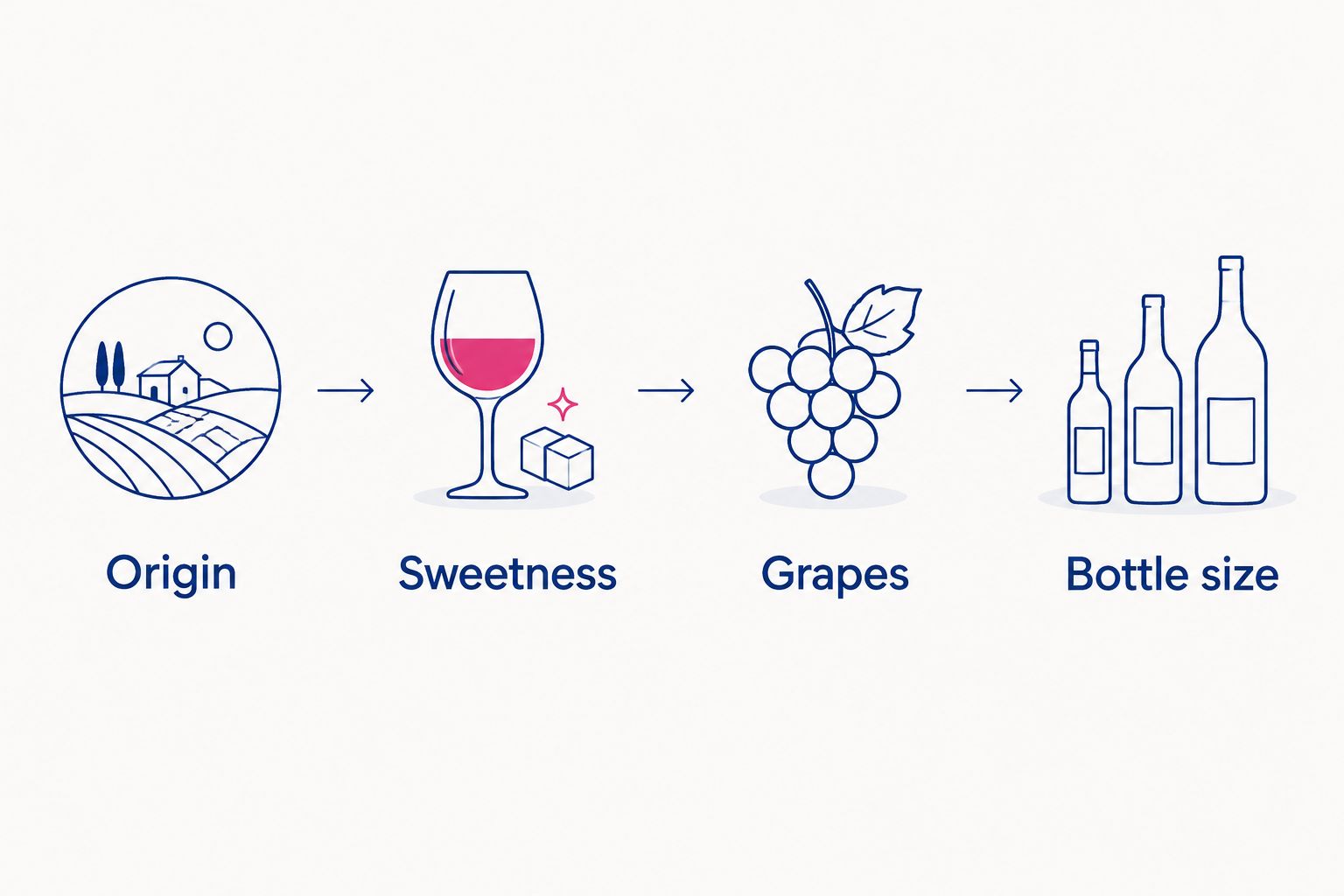
Under European sparkling-wine labeling rules, brut contains less than 12 grams of sugar per liter. Extra dry spans 12–17 grams per liter, making it sweeter than brut despite the wording. These are label categories, not exact measurements for every bottle.
For serving, start around 8–10°C and let the wine warm slightly in the glass. A 750 ml bottle provides six 125 ml pours; smaller toast pours change that calculation.
How the styles are ranked
This 2026 ranking prioritizes a clear buying use case, sweetness fit, regional identity, and useful grape information. Brut Champagne takes the default slot because it directly answers the dry celebration brief; the remaining styles each serve a different preference.
The ranking is not a claim that one region makes better wine in every case. An individual wine that matches your taste beats a prestigious category that does not.
Which French sparkling wine should you choose?
Choose brut Champagne if you are undecided and want dry bubbles for a celebration. Choose Crémant d’Alsace brut for an aperitif, Crémant de Loire brut for Chenin exploration, or Crémant de Bourgogne brut for a Burgundy-grape comparison.
Choose Crémant de Limoux brut for southern French discovery. Choose Clairette de Die Tradition when sweetness is the point, not something you are willing to tolerate.
Buywinesonline is an online wine retailer for home consumers and gift shoppers. For French sparkling wine, your recipient’s dry-or-sweet preference is the most useful place to start.
FAQ
What's the best French sparkling wine for a celebration?
Brut Champagne is the best default style for a dry celebration toast. Choose a sweeter style instead when you know your guests prefer sweet wine.
Is all French sparkling wine Champagne?
No. Champagne must come from the Champagne region and meet its appellation rules. Crémant and Clairette de Die are separate French sparkling-wine categories.
Is Crémant made the same way as Champagne?
Both Crémant and Champagne use the traditional method, with a second fermentation in the bottle. Their regional rules, permitted grapes, and aging requirements differ.
Is extra dry sparkling wine drier than brut?
No. Extra dry is sweeter than brut under European sparkling-wine labeling categories. Check the sweetness term instead of interpreting extra dry literally.
Which French sparkling wine suits sweet-wine drinkers?
Clairette de Die Tradition suits drinkers who want a sweet, aromatic sparkling wine. It is a different choice from dry brut Champagne or Crémant.
Does rosé sparkling wine always taste sweet?
No. Rosé describes color, not a sweetness category. Read the sweetness designation on the individual bottle.
How many glasses do you get from a sparkling-wine bottle?
A 750 ml bottle supplies six 125 ml pours. Smaller toast servings provide more glasses, while larger pours provide fewer.
Should I choose vintage or non-vintage French sparkling wine?
Choose based on the individual wine and your purpose, not the presence of a year alone. A vintage identifies a harvest year; non-vintage Champagne can blend wines from different harvests to express a house style.
One last thing
Blanc de noirs can be white wine made from dark-skinned grapes. The grape skins carry the color, so careful pressing allows a pale sparkling wine without turning it into rosé.
For your next French sparkling wine purchase, write down just two preferences: dry or sweet, then fresh-fruited or more mature-tasting. Those answers make the label far more useful than a familiar name alone.