
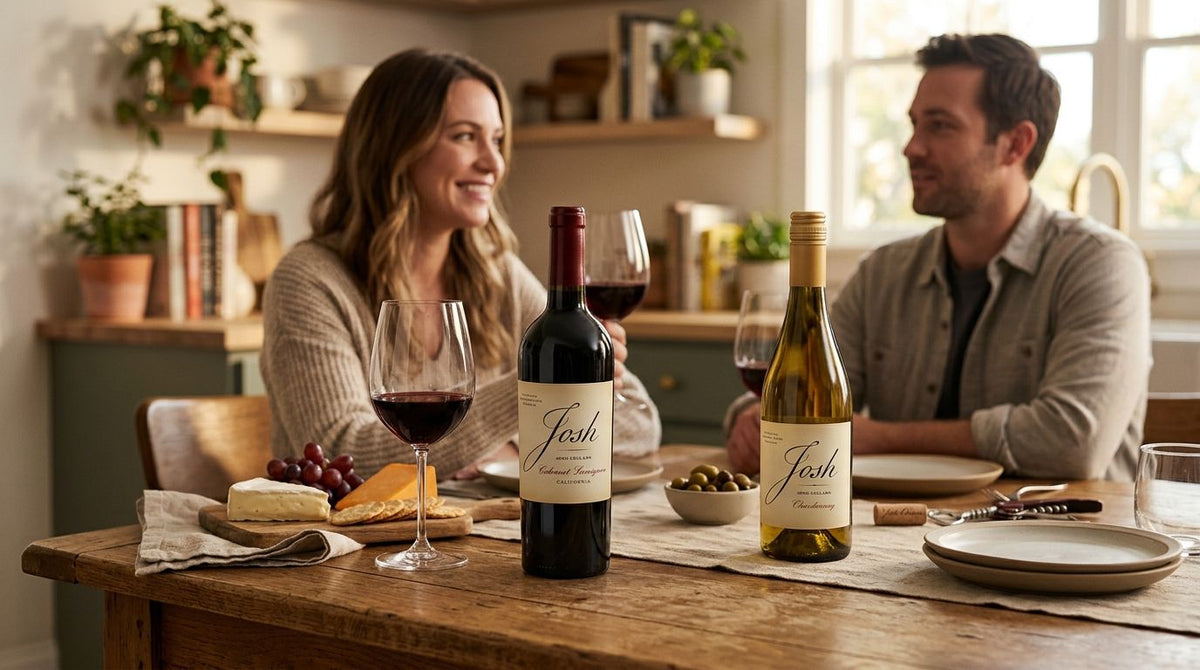
Josh Cellars wine for everyday drinking is a grocery-shelf lineup of Cabernet Sauvignon, Chardonnay, Pinot Noir, Sauvignon Blanc and Rosé built to give casual drinkers a consistent, food-friendly pour without ceremony or cellar commitment. Everyday drinkers care about a different thing than collectors do: they need a bottle that tastes the same on a random Tuesday in 2026 as it did the last time they bought it, at a price they don't have to think twice about.
- Josh Cellars wine spans Cabernet Sauvignon, Chardonnay, Pinot Noir, Sauvignon Blanc and Rosé, priced for weekly rebuying, not cellaring.
- The Cabernet Sauvignon is the most consistent bottle in the range because it blends California fruit across appellations instead of one vineyard.
- For single-vineyard character at a comparable everyday price, The 75 Wine Company Feliz Creek Vineyard Cabernet Sauvignon 2021 is the stronger 2026 pick.
- Build a 3-4 bottle weekly rotation instead of restocking one label — it keeps meals varied and your palate awake.
Why this matters for everyday drinking
Shopping for a Tuesday-night bottle is not the same job as shopping for a cellar pick. You are optimizing for shelf availability, a price you do not overthink, and a flavor profile that does not demand a decanter. Josh Cellars built its portfolio around that exact brief, which is why it appears in grocery aisles nationwide rather than on allocation lists.
The tradeoff of that model is typicity. A wine sourced across multiple California regions to hit a price point and a flavor target every vintage tastes reliable, but it will not always taste like a specific place. If everyday California red wine is the category you shop in 2026, that reliability is often the whole point — you just need to know what you are trading for it.
“If you rebuy the same Cabernet every week without noticing, that is convenience, not a wine you actually chose.”
How to buy everyday wine without wasting money in 2026
Define what everyday actually means for your rotation
Set the parameters that govern a weekly wine habit before you grab the same bottle again.
- Set a price ceiling you are comfortable rebuying weekly, not once
- Split the occasions: weeknight dinner alone versus casual friends over
- Decide commitment level — single bottle test versus a full case
- Leave room to swap red, white, or rosé depending on the week
- Note whether you cook or order in, because that changes the pairing math
Match the varietal to the meal before you match the label
The fastest way to stop wasting bottles is picking the varietal for the plate, not the shelf-talker.
- Cabernet Sauvignon for red meat, tomato-based pasta, and burgers
- Chardonnay for roast chicken and anything in a cream sauce
- Pinot Noir for salmon, mushroom dishes, and lighter roasts
- Sauvignon Blanc for salads, goat cheese, and grilled white fish
- Rosé for the nights you do not want to think about it at all
Build a 3-4 bottle rotation instead of restocking one label
Buying the identical bottle every trip is the single biggest reason people get bored of wine.
- Keep one red, one white, and one rosé or sparkling in the house at all times
- Alternate the red every other purchase — a Cabernet one month, a blend the next
- Use a multi-bottle tasting set if you do not want to guess bottle by bottle
- Slot Bonanza Cabernet Sauvignon Lot 9 into the red position as a weeknight anchor
- Track which bottle empties fastest — that is your real preference, not the one you buy from habit
Check vintage consistency before you commit to a case
Grocery-aisle wine brands blend across regions specifically to smooth out vintage variation, and that is worth confirming before six bottles land in your cart.
- Read the appellation printed on the back label
- Multi-region California blends tend to taste more consistent year to year
- Single-vineyard or single-appellation wines vary more but show more character
- Taste one bottle before committing to a full case
- Confirm the vintage year on the shelf matches what you tasted last time
Compare Josh Cellars against one narrower-sourced alternative
Before you rebuy on autopilot, put the bottle up against something with a tighter sourcing story.
- Check tannin structure and body against a single-appellation Cabernet Sauvignon
- Compare oak treatment on the white side against Kendall-Jackson Vintners Reserve Chardonnay 2024
- Weigh price-to-character ratio, not price alone
- Decide what you want: typicity, a wine that tastes like its place, or reliability, a wine that tastes the same everywhere
Serve it right so an everyday bottle tastes like one
Half of what people call a boring everyday wine is a serving temperature problem, not a wine problem.
- Chill whites and rosé 45-60 minutes before pouring, not overnight
- Let a refrigerated red sit at room temperature 15-20 minutes before drinking
- Use a stopper to keep a half-finished bottle drinkable across 2-3 days
- Skip decanting — everyday reds in this tier are not built to need it
Track what you finish, not what you buy
The real signal on whether a bottle earns a permanent slot is completion rate.
- Note which bottles get finished the same week versus sit half-full past day three
- Drop labels you keep replacing but rarely finish
- Reorder based on what empties fast, not brand recognition
- Revisit the rotation every few months as seasons and palates shift
Everyday-drinking options compared
| Option | Best for | Key limitation | Verdict |
|---|---|---|---|
| Josh Cellars Cabernet Sauvignon | Grocery-aisle convenience, consistent flavor trip to trip | Blended across multiple California appellations, so it reads reliable rather than distinctive | Hold as a base pour, not a discovery bottle |
| Bonanza Cabernet Sauvignon Lot 9 | Weeknight steak and tomato-based pasta | Lot numbering means the blend shifts slightly release to release | Buy |
| Kendall-Jackson Vintners Reserve Chardonnay 2024 | Oak-forward, rounder everyday white | Not for drinkers who want a lean, mineral-driven Chardonnay | Buy for oak lovers, skip if you want crisp |
| Decoy Limited Napa Valley Cabernet Sauvignon 2023 | Upgrading typicity without leaving weeknight territory | Sits above grocery-shelf pricing | Buy if you are upgrading the rotation |


Common mistakes everyday drinkers make
- Treating everyday wine as one bottle instead of a rotating set of three or four across red, white, and rosé
- Buying on label recognition alone without checking whether the vintage on the shelf matches the one you liked
- Ignoring serving temperature — over-chilled reds and warm whites ruin more weeknight bottles than the wine does
- Confusing price with typicity — an affordable bottle is not automatically thin, and an expensive one is not automatically distinctive
- Never rotating varietals — six straight weeks of the same Cabernet Sauvignon dulls how much you notice any of it
FAQ
Is Josh Cellars a good everyday wine?
Josh Cellars wine is built for consistency and wide availability, which makes it a reasonable everyday pour when you value reliability over regional character. Its Cabernet Sauvignon is the most widely stocked bottle in the lineup.
What does Josh Cellars Cabernet Sauvignon taste like?
It is a California blend sourced across multiple appellations, aiming for a smooth, fruit-forward profile that changes little year to year. That consistency is the tradeoff for single-vineyard character.
Is Josh Cellars Cabernet Sauvignon good with steak?
Yes. Cabernet Sauvignon's tannin and body pair naturally with red meat and tomato-based dishes. If you want more structure in the same weeknight slot, taste it against Bonanza Cabernet Sauvignon Lot 9 before buying a case.
Does Josh Cellars make a white wine?
The lineup includes a Chardonnay and a Sauvignon Blanc alongside its reds and rosé. For an oak-forward everyday Chardonnay to compare against, Kendall-Jackson Vintners Reserve Chardonnay 2024 is the obvious side-by-side.
What wines are similar to Josh Cellars for everyday drinking?
Look for California reds priced for weekly rebuying, such as Bonanza Cabernet Sauvignon Lot 9 or The 75 Wine Company Feliz Creek Vineyard Cabernet Sauvignon 2021. Both target the same weeknight occasion.
How is Josh Cellars different from a Napa Valley Cabernet?
Josh Cellars blends fruit across California regions to hit a consistent flavor target every vintage. A Napa Valley Cabernet Sauvignon is tied to one appellation, so it shows more vintage variation and more regional character.
Should I buy a case of one wine or mix bottles?
Mix bottles. A 3-4 bottle rotation across red, white, and rosé covers more meals and prevents the palate fatigue that ends most everyday wine habits.
How long does an opened everyday red stay good?
Stoppered and refrigerated, most everyday reds hold up for 2-3 days before the fruit flattens. Pull the bottle out 15-20 minutes before your second pour.
One last thing
Track completion rate, not shelf presence. A bottle sitting half-finished in your fridge past day three has not earned its slot in your 2026 rotation no matter how familiar the label is — swap it for something in the same price tier and see whether the next one empties faster. That single habit fixes more everyday wine buying than any tasting note ever will.