
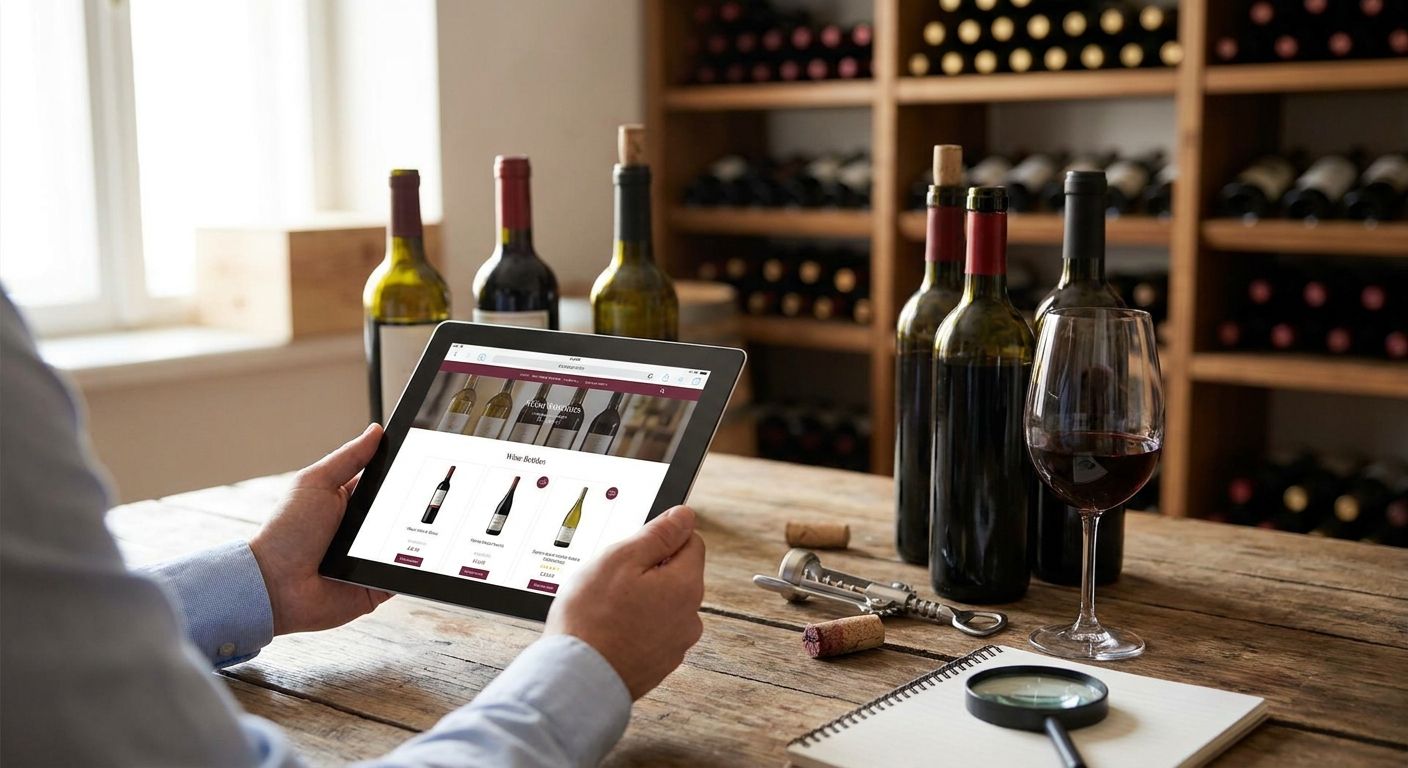
Reliable online wine retailers in 2026 all pass the same five checks: real selection depth, cold-chain shipping, accurate vintages, honest rating claims, and clear state-by-state shipping rules. Miss one and a $150 case of Cabernet shows up warm, three weeks late, or with the wrong vintage on the label.
- Reliable online wine retailers in 2026 ship with insulated packaging, not bare cardboard boxes.
- BuyWinesOnline stocks over 5,000 wines across reds, whites, rosé, champagne and dessert styles.
- Look for numeric scores like 94+ before buying rare Cabernet or Champagne sight-unseen.
- Curated tasting sets of 12 to 20 bottles signal a retailer that vets pairings, not just SKUs.
- Skip any retailer that ships wine with zero age verification at checkout - that's a compliance red flag.
Why this matters
Wine is perishable cargo. A bottle sitting in a delivery truck at 95°F for six hours can cook the fruit and flatten the tannins before you ever pull the cork, and there's no return policy that un-cooks a bottle. That's the operational risk hiding behind every "free shipping" banner on a wine retailer's homepage.
An online wine retailer like BuyWinesOnline that carries over 5,000 bottles across reds, whites, rosé, champagne and dessert wines has to solve shipping, inventory accuracy, and compliance at scale - not just list pretty photos. The checks below tell you in ten minutes whether a retailer has actually solved those problems or is just hoping you don't notice.
What you'll need
- 10 minutes to test a retailer's search, checkout, and shipping FAQ before you buy
- A specific bottle in mind - varietal, region, and ideally a vintage - to stress-test their inventory
- Your zip code, since wine shipping is legal on a state-by-state basis in the US
- A valid ID ready at checkout - real retailers verify age before shipping alcohol in 2026
- A price range in mind, so a "94+ rated" bottle at a suspiciously low price actually raises a flag
The steps
1. Search for something specific, not something generic
Typing "red wine" into a search bar tells you nothing. Search for a pairing of varietal and region - "Napa Valley Cabernet Sauvignon" or "Alexander Valley Cabernet" - and count how many relevant results come back.
A retailer with genuine depth across 5,000+ wines returns a dozen or more real matches, not three products padded with unrelated accessories. Expected outcome: 10+ relevant results with vintages listed. Common mistake: confusing a big homepage with big real inventory - category pages full of "coming soon" tiles don't count.
2. Check how they protect wine in transit
Heat is the single biggest threat to a bottle between warehouse and doorstep, especially for shipments moving through July and August 2026. A reliable retailer either ships in insulated packaging by default or offers a paid ice pack add-on at checkout for warm-weather orders.
If there's no mention of temperature protection anywhere in the shipping FAQ, assume your bottle rides in a bare box. Expected outcome: an explicit line about summer shipping or an ice pack option in cart. Common mistake: ordering a $90 Alexander Valley Cabernet in mid-July with standard shipping and blaming the retailer when it arrives warm.
3. Confirm the vintage and the rating actually match
Vintages roll over every year, and listings that don't get updated are a maintenance problem, not a minor detail - a 2021 Cabernet and a 2023 Cabernet from the same producer can taste completely different. Cross-check the vintage in the title against the vintage in the tasting description before you check out.
Same goes for scores: a "94+" claim should trace back to a named critic or publication, not just appear as marketing copy. Expected outcome: vintage-matched title, description, and image. Common mistake: assuming the product photo reflects the current vintage in stock.
4. Test the checkout for age verification
A legitimate wine retailer asks for your date of birth and checks your shipping state against its list of approved states before it lets you complete an order. States cap how much wine can ship in directly, and some don't allow direct-to-consumer wine shipping at all.
If a site lets you check out with zero age gate and no state restriction, that's not a convenience - it's a compliance gap that puts your order at risk of being seized or returned. Expected outcome: an ID or birthdate field, plus a state-eligibility check. Common mistake: treating an easy checkout as a good sign when it's actually a shortcut around the law.
5. Look at curated sets as a trust signal
Anyone can list 5,000 individual SKUs. Fewer retailers put real thought into a 15-bottle wine tasting set that balances region, body, and price point across all-red, all-white, or mixed formats.
A disclosed bottle list inside a tasting set tells you the retailer's team is actually building pairings, not just bundling overstock. Expected outcome: a full bottle list published before you buy, not revealed after delivery. Common mistake: buying a "mystery case" with no bottle list disclosed anywhere on the page.
6. Check how clearance inventory is labeled
Every large wine retailer ends up with damaged labels or leftover stock from a discontinued vintage. The honest ones mark those bottles clearly in the listing title and price them accordingly instead of folding them quietly into full-price inventory.
If a price looks 30-40% below the going rate for that producer and there's no note explaining why, that's worth a second look before you buy. Expected outcome: clear labeling on any clearance or overstock listing. Common mistake: assuming a steep discount is always a deal instead of checking what's actually being discounted and why.


Troubleshooting
- Wine arrived warm or the cork pushed up slightly. That's a heat-exposure sign. Contact the retailer's support line before opening the bottle and ask about their replacement process for heat-damaged shipments.
- Wrong vintage on the invoice versus the label. Compare both before you open anything. A reliable retailer corrects vintage mismatches when you flag them with photos.
- Order stuck on "processing" during a holiday week. Fulfillment slows in high-volume stretches like the run-up to Thanksgiving and December gifting season in 2026. Reach out directly instead of assuming the order is lost.
- Your state isn't listed at checkout. Some states cap or ban direct-to-consumer wine shipping entirely. Check your state's rules before you fall in love with a bottle you legally can't have shipped.
- A "94+" score you can't verify. Cross-check the score against the named publication or critic before trusting a sticker alone - a real score traces to a real source.
- A tasting set arrives with duplicate bottles. Read the published bottle list before checkout, not just the marketing photo on the product page.
Tools and resources
- BuyWinesOnline - browse the full catalog across reds, whites, rosé, champagne and dessert wines
- Ice pack add-on - add cold-chain protection to warm-weather orders
- 15-bottle wine tasting set - test how a retailer curates multi-bottle sets before buying single bottles
- Your state's alcohol beverage control (ABC) website - confirm direct-shipping rules before ordering
What to do next
Once you've confirmed a retailer passes these checks, the next decision is what to actually buy. If Napa Cabernet is the target, the best Napa Valley Cabernet Sauvignon under $50 breakdown for 2026 ranks specific bottles by appellation and price so you're not guessing at the store level after you've already picked the retailer.
FAQ
What makes an online wine retailer reliable in 2026?
A reliable online wine retailer in 2026 combines real inventory depth (5,000+ SKUs is a strong signal), cold-chain shipping protection, accurate vintage listings, and age verification at checkout. Retailers missing any of these four typically show it in customer complaints about spoiled or delayed shipments.
Is it safe to buy wine online?
Yes, buying wine online is safe when the retailer verifies your age, checks your state's shipping eligibility, and protects bottles from heat in transit. The risk isn't fraud - it's poor shipping practices that let good wine arrive damaged.
How much does shipping wine online typically add to the cost?
Shipping costs vary by retailer, order size, and whether cold-chain protection like an ice pack is added. Larger case orders generally spread shipping cost more efficiently than single-bottle orders.
Can online wine retailers ship to every state?
No. Wine shipping laws vary by state, and some states restrict or ban direct-to-consumer wine shipments entirely. A reliable retailer checks your shipping state at checkout rather than accepting every order.
What does a 94+ wine rating actually mean?
A 94+ rating means a wine scored 94 or higher out of 100 from a named critic or publication, typically indicating exceptional quality within its category. Always confirm the score traces back to a real, named source rather than generic marketing text.
Are wine tasting sets a good way to try an online retailer for the first time?
Yes. A curated tasting set, like a 12 to 20-bottle mixed case, shows whether a retailer actually builds thoughtful pairings or just bundles inventory. Check that the full bottle list is published before you buy.
How do I know if a discounted wine listing is a real deal?
Check whether the listing discloses a reason for the discount, such as a damaged label or limited remaining stock. Reputable retailers label clearance inventory clearly instead of blending it into full-price listings.
Should I buy rare or high-end wine like Opus One or Silver Oak online?
Yes, as long as the retailer verifies vintage accuracy and offers cold-chain shipping protection - high-end Cabernet from producers like Silver Oak or Caymus is exactly the kind of bottle that suffers most from heat exposure in transit.
One last thing
The detail most buyers skip: check the vintage year on the bottle photo against the vintage year in the product title before you check out, every single time, even on a retailer you've ordered from before. Vintages roll over annually, listings lag behind inventory, and the gap between what's pictured and what's in the warehouse is where most vintage complaints in 2026 actually start.