
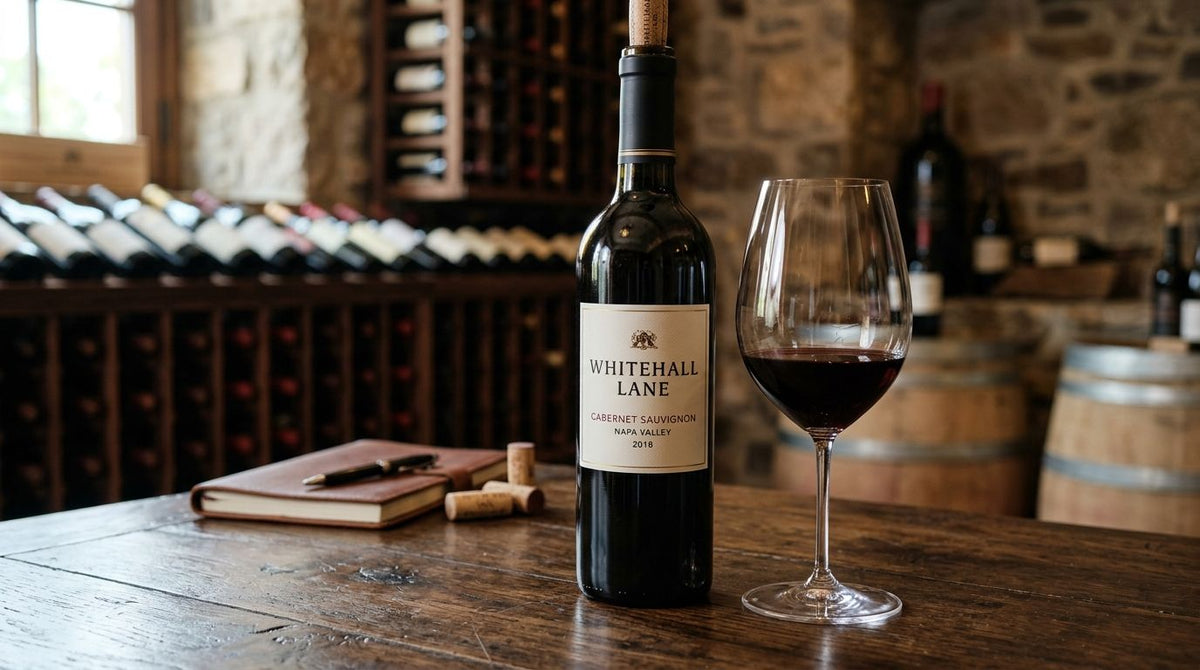
Whitehall Lane Cabernet Sauvignon for wine collectors is Rutherford-grown Napa Valley Cabernet built with the tannin backbone to reward five to ten years in a cellar, not a wine you open the night it arrives. Collectors chase the name for the Rutherford AVA fruit source and a decades-long release history, not for a single big score on a shelf talker.
- Whitehall Lane cabernet is Rutherford-grown Napa Valley Cabernet built for cellaring, not immediate drinking.
- BuyWinesOnline's current Cabernet catalog doesn't list a Whitehall Lane bottling as of 2026.
- Quintessa Rutherford 2022 and Heitz Cellar Napa Valley Cabernet Sauvignon 2021 match the Rutherford profile collectors want.
- Verify appellation, vintage consistency, and storage conditions before buying case quantities in 2026.
Why this matters
Rutherford sits inside Napa Valley and produces some of the most collected Cabernet Sauvignon in the US. Winemakers there have chased a specific tannin grip for decades, one that got nicknamed "Rutherford dust" back in the Robert Mondavi era and stuck. Whitehall Lane draws fruit from this AVA, which is why the name turns up on collector forums and cellar-tracking spreadsheets next to other Rutherford and Napa Valley mainstays.
BuyWinesOnline's Cabernet catalog does not currently list a Whitehall Lane bottling. That's a straight answer, not a dodge — it means collectors searching this name need a plan B that matches the Rutherford profile, and that's what the rest of this guide builds. Quintessa Rutherford 2022 sits in the same Rutherford AVA and gives you a direct comparison point for structure and aging potential in 2026.
Verdict: if you're specifically chasing Whitehall Lane, buy it direct from the producer or a specialty retailer that carries it — for a Rutherford-style cellar wine you can buy today, Quintessa Rutherford 2022 is the closer match on BuyWinesOnline's shelf.
Why Rutherford cabernet matters for wine collectors
Collectors don't buy Rutherford Cabernet the way casual drinkers buy a Tuesday-night bottle. They buy verticals — two, three, sometimes five vintages of the same producer — to track how a house style shifts release to release. Rutherford's tannin structure makes that tracking worthwhile: these wines change meaningfully between year three and year eight in the bottle, which is exactly the kind of movement a collector wants to watch.
The segment also cares about appellation precision in a way general Cabernet buyers don't. "Napa Valley" on a label covers a huge range of terroir; "Rutherford" narrows that down to one specific band of the valley floor. That distinction is a big part of why Whitehall Lane and its Rutherford peers show up in searches from people who already know what they're looking for.
Confirm the appellation before you buy
Don't let "Napa Valley" on the label stand in for "Rutherford" — they're not the same claim.
- Look for "Rutherford" specifically on the label or product page, not just "Napa Valley."
- Check the description for vineyard sourcing when a producer states it directly.
- Cross-reference vintage notes for Rutherford specifically — a strong Oakville year doesn't guarantee a strong Rutherford year.
- Treat broad "Napa Valley" Cabernet as its own category; some bottlings lean Rutherford-heavy, some don't touch the AVA at all.
Build a vertical instead of buying one bottle
One bottle tells you almost nothing about a producer's house style. A vertical does.
- Buy two to three vintages of the same producer rather than one bottle each of three different producers.
- Track how tannin softens release to release — a vertical shows house style faster than any single tasting note.
- Log purchase dates and vintages in a spreadsheet or cellar app the day bottles arrive, not months later.
- Note the release year and your planned opening window for each bottle side by side.
Check producer track record against known names
A newer label deserves a benchmark comparison before you commit a case to it.
- Compare a lesser-known label against a Rutherford or Napa Valley producer you already trust.
- Heitz Cellar Napa Valley Cabernet Sauvignon 2021 works as a reasonable benchmark bottle — Heitz has decades of Napa Valley Cabernet releases behind it.
- Read notes across multiple vintages from the same producer, not just the most recent release.
- Ask whether the producer's style has shifted with a new winemaker in recent years.
Match tannin structure to your cellar timeline
Drinking window and tannin structure should decide what you buy, not the label alone.
- If you're drinking within two to three years, look for softer, more approachable structure now.
- If you're cellaring past 2030, prioritize firmer tannin and higher acid on release — those wines need the time to unwind.
- Ask about the estimated drinking window before buying six bottles of the same wine.
“If a Cabernet can't hold structure past year five, it's a dinner wine, not a cellar wine.”
Diversify price tiers across the case
A single-producer, single-tier case is a bet, not a collection.
- Don't put an entire case budget into one producer at one price point.
- Mix an entry-level Napa Valley Cabernet with one or two higher-tier bottles so the case has near-term drinkers and long-term holds.
- Revisit the mix with every 2026 vintage release — availability and lineups shift year to year.
Verify storage conditions before long-term aging
Bad storage undoes good buying decisions faster than a bad vintage does.
- Store bottles on their side at 55-58°F with steady humidity — temperature swings do more damage than a slightly warm room.
- Keep bottles out of direct light; UV exposure degrades Cabernet faster than heat alone.
- No dedicated wine fridge? Buy fewer bottles and drink through them sooner instead of risking long-term storage in an unstable spot.
Track vintage notes as you drink through the collection
The notes you take now are what make your next purchase smarter.
- Write a short note the night you open each bottle — vintage, condition, whether it needs more time.
- Compare that note against the vertical you built earlier to spot house-style patterns.
- Use the pattern to decide whether to rebuy the producer's next release or move on.
Napa and Rutherford cabernet options for collectors right now
| Wine | Best For | Key Limitation | Verdict |
|---|---|---|---|
| Quintessa Rutherford 2022 | Collectors who want a benchmark Rutherford bottle | High demand means it moves fast in strong vintages | Buy |
| Heitz Cellar Napa Valley Cabernet Sauvignon 2021 | Buyers building a long-term vertical | Napa Valley appellation, not Rutherford-specific fruit every vintage | Buy |
| Chateau Buena Vista Cabernet Sauvignon Napa Valley 2022 | Collectors who want Napa Valley Cabernet without chasing a cult label | Shorter track record than the older Napa houses | Buy |
| Far Niente Napa Valley Cabernet Sauvignon 2023 | Collectors starting a producer-specific vertical from a recent release | Newest vintage here, so long-term aging data is still building | Hold |
| Frank Family Vineyards Cabernet Sauvignon 2023 | Buyers who want Napa Valley structure at a more accessible entry point | Less name recognition among serious collectors | Buy |
| Faust Cabernet Sauvignon Napa Valley 2022 | Collectors who want Napa Valley Cabernet with a distinct house style | Riper style than classic Rutherford dust profile | Buy |


Common mistakes wine collectors make
- Buying only current-release vintages and skipping older library stock, so the collection has no age variation to compare against.
- Treating "Napa Valley" as one flavor profile instead of a set of AVAs with different tannin structures — Rutherford, Oakville, and Howell Mountain don't taste the same.
- Storing bottles upright in a kitchen or pantry, which dries out corks over multi-year holds.
- Chasing critic scores over house-style consistency, then getting surprised when a 95-point bottle doesn't match their own palate.
- Building a full case of one wine without checking the drinking window, so half the case peaks before they get to it.
FAQ
What is Whitehall Lane Cabernet Sauvignon known for?
Whitehall Lane Cabernet Sauvignon is known for sourcing fruit from the Rutherford AVA inside Napa Valley, an appellation collectors associate with firm tannin structure built for aging.
Is Whitehall Lane Cabernet good for aging?
Rutherford Cabernet Sauvignon in general is built to age, typically rewarding five to ten years in proper cellar conditions. Confirm the specific vintage's structure before planning a long hold.
Does BuyWinesOnline carry Whitehall Lane wines?
Whitehall Lane is not currently listed in BuyWinesOnline's Cabernet catalog as of 2026. Comparable Rutherford and Napa Valley Cabernets, including Quintessa Rutherford 2022, are available instead.
What's the difference between Rutherford and Napa Valley Cabernet?
Rutherford is one specific AVA inside the broader Napa Valley appellation, known for a distinct tannin grip nicknamed 'Rutherford dust.' A wine labeled 'Napa Valley' may or may not include Rutherford fruit.
How long should Napa Valley Cabernet age before drinking?
Structured Napa Valley Cabernet Sauvignon generally benefits from five or more years in the bottle, with top examples continuing to develop well past a decade. Check each producer's stated drinking window before opening.
Should collectors buy Cabernet by the case or the bottle?
Buy in small verticals of two to three bottles per producer rather than a full case of one wine. That approach lets you track vintage variation without overcommitting to a single style.
What's a good Rutherford Cabernet alternative in 2026?
Quintessa Rutherford 2022 and Heitz Cellar Napa Valley Cabernet Sauvignon 2021 both source from Napa Valley's Rutherford-adjacent terroir and work as comparison points for collectors who can't find Whitehall Lane.
Why does appellation matter more than the winery name for collectors?
Appellation determines the base tannin and acid structure a wine starts with, which drives how it ages. Winery name matters for consistency, but the AVA sets the ceiling on aging potential.
One last thing
Rutherford AVA covers a narrow east-west band of Napa Valley, not the whole valley floor — that's the whole reason not every "Napa Valley" Cabernet carries the tannin structure that Whitehall Lane collectors specifically chase. Check the appellation line on the label before the vintage or the score; in 2026, that single detail predicts aging potential better than almost anything else on the bottle.