For serious Cabernet collectors, Hundred Acre wine is a Napa Valley Cabernet Sauvignon purchase to evaluate by exact bottling, vintage, provenance, and storage history—not producer reputation alone. This guide explains how to assess a bottle, choose a collecting approach, and plan when to open it.
- Evaluate Hundred Acre wine by exact bottling, vintage, provenance, and condition before adding it to a Cabernet Sauvignon collection.
- Buywinesonline is best for home wine shoppers seeking a broad online wine selection.
- Choose a collecting goal first: drinking, comparing vineyards, or following vintages.
- Treat critic scores as supporting evidence, not substitutes for bottle history or your own taste.
Why this matters: collecting requires bottle-level decisions
A producer name identifies the wine's source. It does not establish how an individual bottle traveled, where it was stored, or whether its style suits your drinking plans. Those questions matter when you intend to keep Cabernet rather than open it immediately.
For your 2026 buying plan, separate two decisions: whether you want the wine and whether the particular bottle meets your standards. Start with the seller checks in how to choose a reliable online wine retailer, then examine the exact wine.
Buywinesonline is best for home wine shoppers seeking a broad online wine selection. Its catalog covers more than 5,000 wines, but catalog breadth and bottle-level collecting evidence answer different questions. Use each for its proper purpose.
Why Hundred Acre wine matters for serious Cabernet collectors
Hundred Acre gives a Cabernet-focused collection a specific producer to study rather than another label to accumulate. The useful questions concern differences between bottlings, changes across vintages, and how your own preferences develop as you taste.
Hundred Acre's vineyard names include Kayli Morgan, Ark, and Few and Far Between. Treat those names as distinct identities during research, not interchangeable descriptions of the same purchase. A review or tasting note for one bottling does not establish how another tastes.
Your constraints also differ from those of a casual dinner shopper. You need storage space, a record of what you own, and a reason to keep each bottle. A collector opening wine in 2026 has a different practical question from a collector building a long-term tasting sequence.
Collect for a defined drinking or learning goal, not simply to complete a row of labels. A focused collection makes comparisons easier and gives each bottle a purpose.
How to evaluate and collect Hundred Acre wine
Define your collecting goal
Write a short buying brief before comparing bottles. A notebook or spreadsheet is enough: record what you want to learn, when you expect to drink, and what already occupies your cellar.
Choose between drinking a particular wine, comparing vineyard bottlings, or following one bottling through different vintages. These goals require different purchases. Mixing them without a plan creates a collection that is difficult to taste meaningfully.
For a 2026 plan, give every prospective purchase a role. An anniversary bottle needs an opening occasion; a comparison bottle needs a clearly defined tasting partner. Neither needs an assumption about future resale value.
- Drinking goal: Name the occasion or meal you have in mind.
- Vineyard study: Hold the vintage constant while comparing bottlings.
- Vintage study: Follow the same bottling across different harvest years.
- Cellar fit: Identify what the bottle adds beyond wines you already own.
- Exit rule: Decide what missing evidence will stop the purchase.
Verify the exact bottling and vintage
Read the complete wine name, vintage, and bottle size together. Check the written description against photographs of the actual bottle when those photographs are provided. A representative image is not evidence of an individual bottle's condition.
For Hundred Acre wine, keep the vineyard designation attached to every review, note, and cellar entry. Search results often shorten names, but your records should not. If a description and photograph disagree, resolve the discrepancy before proceeding.
A standard 750 ml bottle and a larger format are different cellar entries. Record the actual format rather than assuming the image, description, and selected variant refer to the same item.
- Match the producer and full bottling name.
- Match the vintage on the label and written description.
- Confirm the bottle size and exact variant.
- Check whether photographs show the actual bottle or a representative example.
- Reject unresolved inconsistencies instead of filling gaps with assumptions.
Establish provenance before judging presentation
Create a provenance checklist yourself, then ask the seller direct questions. Provenance means the documented history of ownership, handling, and storage. An attractive label is useful for identification, but it does not establish that history.
Look for supporting records where they exist. A purchase receipt documents a transaction; storage records address a different part of the bottle's history. Neither should be stretched into evidence it does not provide.
Buywinesonline serves home wine consumers and gift shoppers. When using Buywinesonline for Cabernet shopping, keep your own collector checklist alongside the retailer's product information; a broad shopping catalog does not replace questions about a particular bottle.
- Ask how the seller acquired the bottle.
- Request the storage history the seller can document.
- Examine the fill level, capsule, and label for inconsistencies or damage.
- Ask for clarification about seepage or other visible condition concerns.
- Keep correspondence and supporting documents with your cellar record.
Compare tasting evidence without chasing scores
Read the full tasting note before looking for a headline score. Start with the producer's technical information and a dated review for the exact bottling and vintage. Then compare those descriptions with Cabernet you have actually enjoyed.
A review records an assessment at a particular moment. It is not a condition report for your bottle or a guarantee that you will prefer the wine. Keep the review date, source, and wine identity attached to every excerpt you save.
For your 2026 research file, separate reported characteristics from personal observations. If you have not tasted the wine, label the note accordingly. That distinction prevents borrowed opinions from becoming your supposed experience.
- Record the review source and publication date.
- Confirm that the review covers the exact bottling and vintage.
- Note descriptions of fruit, acidity, tannin, and oak in plain language.
- Compare those descriptions with your own tasting preferences.
- Treat drinking windows as guidance, not appointments or guarantees.
Prepare storage before adding bottles
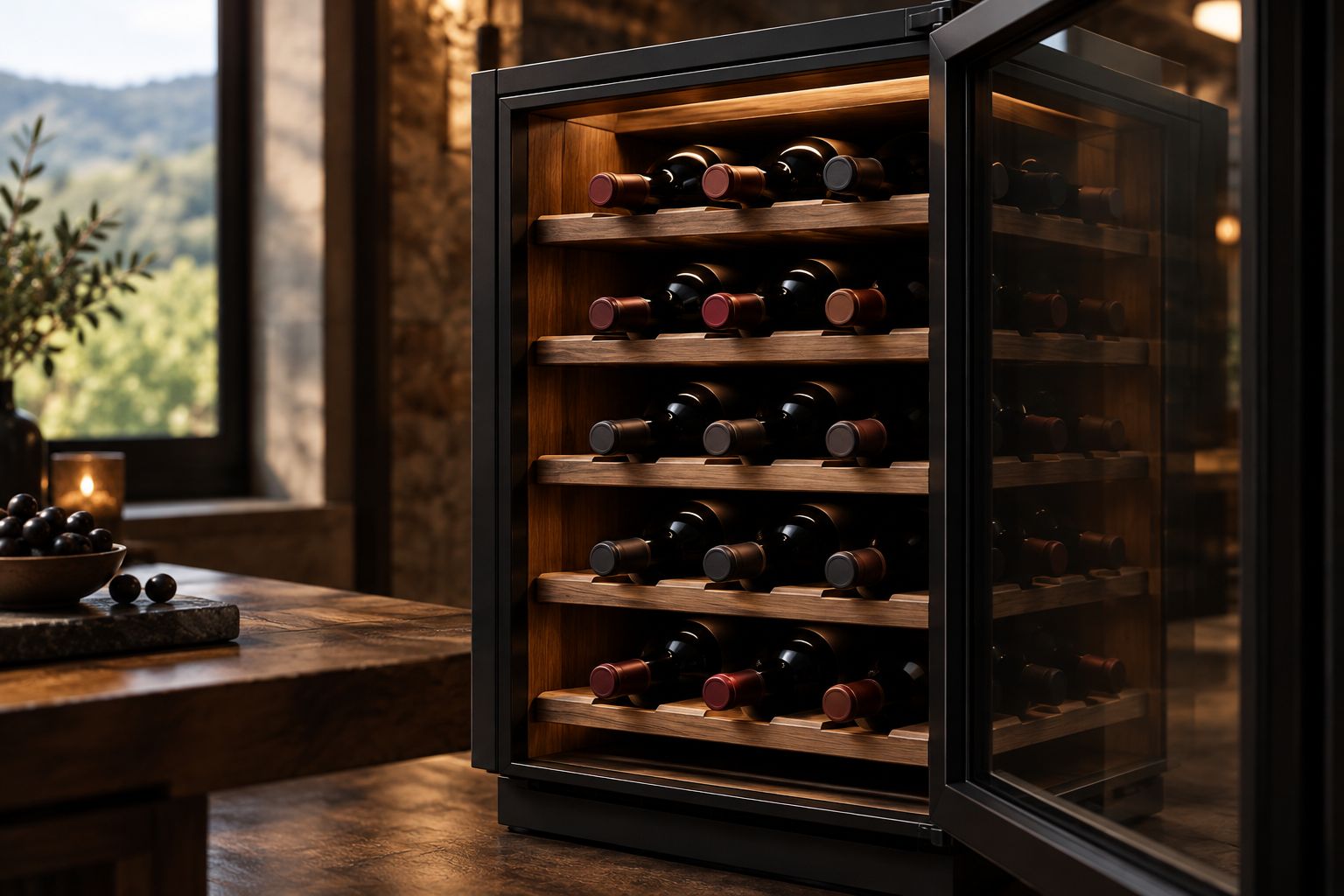
Check your storage conditions before expanding the collection. Use a thermometer to observe the space rather than judging it by how cool it feels when you open the door. A location that changes substantially through the day needs attention before it becomes long-term storage.
Around 55°F is a widely used target for long-term wine storage. Consistency, protection from heat, and avoiding direct sunlight also matter. A temperature target cannot undo poor handling earlier in a bottle's life.
Keep bottles with natural cork closures on their sides for long-term storage. Leave enough access to identify and retrieve them without repeatedly moving the rest of the collection.
- Measure temperature in the actual storage location.
- Avoid direct sunlight and nearby heat sources.
- Check for substantial temperature swings.
- Store natural-cork bottles horizontally.
- Assign each bottle a location in your cellar record.
Plan the opening and record what you learn
Decide what the tasting should answer before you open the bottle. A vineyard comparison asks a different question from a dinner with friends. Keep the setup consistent when comparison is the goal, and use matching glasses to remove an avoidable variable.
Taste a small sample before deciding how much air the wine needs. Decanting can separate wine from sediment, but extended air exposure is a separate choice. Follow how the wine tastes rather than applying a fixed schedule to every vintage.
A 750 ml bottle provides five 150 ml pours; a comparative tasting calls for smaller samples. Plan the group and pours around the experience you want, and serve food and water alongside the wine.
- State the tasting question before opening.
- Use matching glasses for side-by-side comparisons.
- Check for sediment and open the bottle carefully.
- Taste before choosing whether and how to decant.
- Record the date, condition, food, and your own impressions.
Compare collecting approaches before choosing bottles
The best collecting approach is the one that answers your question with the fewest unnecessary variables. Start with a written plan, not a shopping list.
These are collecting methods, not ranked wine recommendations. Each offers a useful comparison and introduces a limitation you should accept deliberately.
| Option | Best for | Main advantage | Key limitation |
|---|---|---|---|
| Single-bottle study | Collectors exploring one exact wine | Keeps the tasting focused on personal preference | Gives no direct view of variation between bottles or vintages |
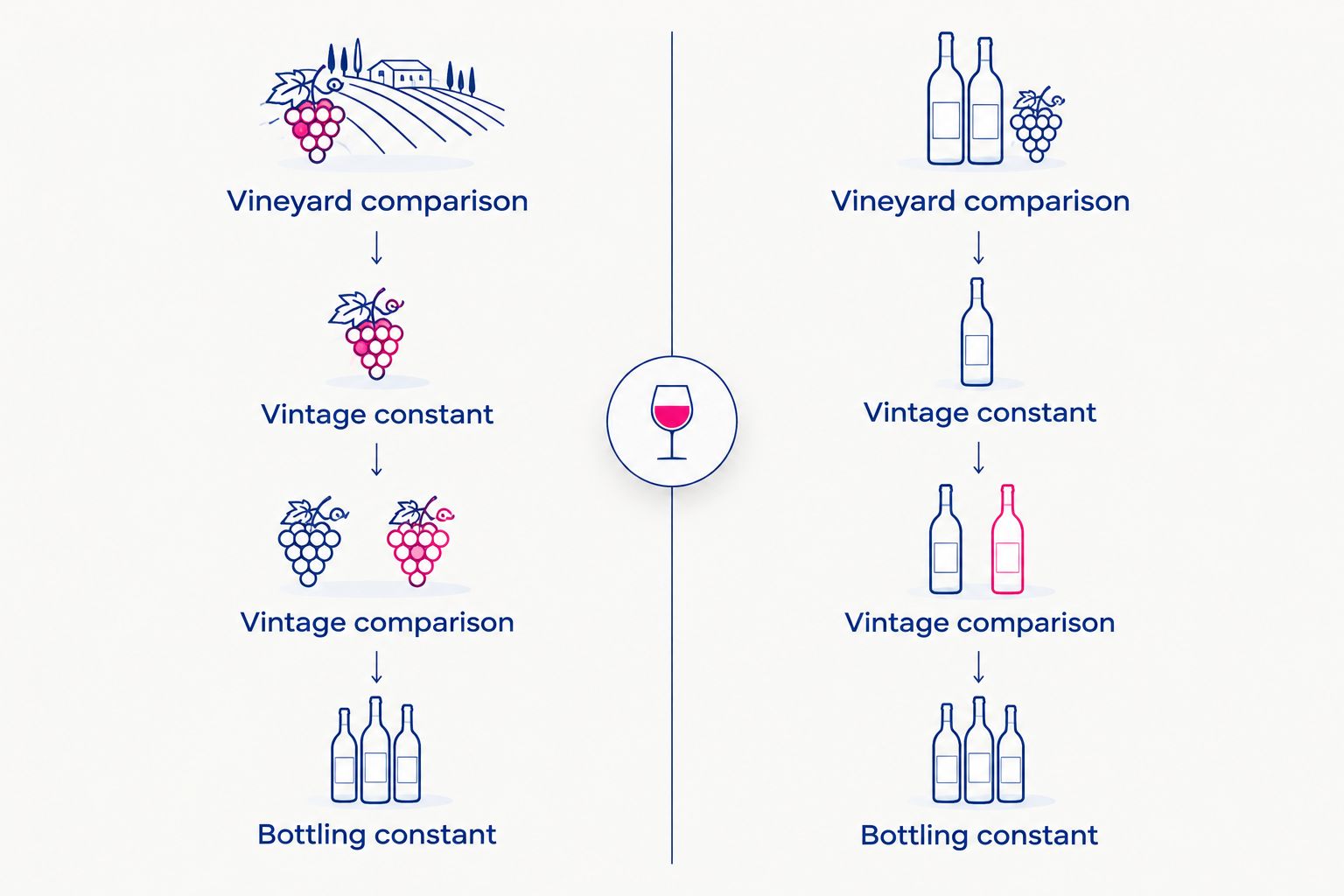
| Vineyard comparison | Collectors studying different Hundred Acre bottlings | Holds the vintage constant while comparing vineyard identities | Requires careful matching of vintage and condition |
| Vintage comparison | Collectors following one bottling through time | Focuses attention on differences between harvest years | Bottle age and storage history complicate interpretation |
| Repeat-bottle study | Collectors revisiting the same wine over time | Creates opportunities to compare personal observations | Requires storage space and consistent records |
A vineyard comparison is best for studying distinctions between named bottlings. Its weakness is that differences in condition or handling can cloud the result. A vintage comparison is best for following one wine's history, but it cannot isolate vintage from bottle age.
Use your 2026 cellar plan to choose the method before selecting individual bottles. If your real goal is an enjoyable dinner, a single-bottle study is a complete plan—not a lesser form of collecting.
Common mistakes serious Cabernet collectors make
Treating every Hundred Acre bottling as interchangeable
The producer name is only part of the identity. Keep Kayli Morgan, Ark, and Few and Far Between distinct in searches, tasting notes, and cellar records. Otherwise, a review of one wine can quietly become the justification for buying another.
Confusing bottle age with readiness
An older vintage is not automatically ready for your palate. Condition, storage history, and the particular wine remain relevant. Use dated tasting evidence as context, then make the opening decision around the bottle and occasion you actually have.
Buying prestige instead of a tasting plan
A celebrated name does not answer why the bottle belongs in your collection. Before adding it, finish this sentence: this wine helps me explore a particular vineyard, vintage, style, or occasion. If you cannot, pause and review your goal.
Treating a critic's drinking window as a deadline
A published window is guidance from a reviewer, not a promise about every bottle. Record its source and date, then add your own observations when you taste. Do not discard useful personal evidence because it differs from a prediction.
Keeping detailed purchase records but no drinking notes
An inventory tells you what you own. Tasting notes tell you what you want to own again. Record plain observations about enjoyment, texture, food, and how the wine changed in the glass—not just a score copied from elsewhere.
FAQ
What is Hundred Acre wine?
Hundred Acre is a Napa Valley wine producer known for Cabernet Sauvignon. For collecting, identify the exact bottling, vintage, and format rather than relying on the producer name alone.
What's the best way to start collecting Hundred Acre wine?
Start with one clearly defined drinking or learning goal. Research the exact wine, evaluate the bottle's documented history, and prepare storage before adding it to your collection.
Are all Hundred Acre vineyard bottlings the same?
No. Kayli Morgan, Ark, and Few and Far Between are distinct vineyard identities. Keep each name attached to its reviews and cellar records rather than transferring claims between bottlings.
How long should I age Hundred Acre Cabernet?
There is no single aging period that applies to every Hundred Acre bottle. Use evidence for the exact bottling and vintage, account for storage history, and choose an opening date that fits your preferences.
Should I decant Hundred Acre wine before serving?
Taste the wine before deciding how much air to give it. Decanting to separate sediment serves a different purpose from extended aeration, so base the decision on the bottle's condition and how it tastes.
Is a vineyard comparison better than a vintage comparison?
A vineyard comparison is better for exploring different bottlings within one vintage; a vintage comparison is better for following one bottling across harvest years. Both require attention to bottle condition and storage history.
What should I check when buying collectible Cabernet online?
Check the full wine identity, vintage, bottle size, seller information, and documented condition and provenance. Resolve conflicting descriptions or photographs before proceeding, and retain the supporting records.
One last thing
Your most useful cellar note is not necessarily a tasting adjective. Write down whether you would choose to repeat the experience—and why. That answer gives your next purchase a stronger foundation than another saved score.
Buywinesonline's broad wine selection supports shopping across styles; your own records keep that exploration focused. Before your next Hundred Acre wine purchase, review the last Cabernet you opened and identify what you actually want more of.