
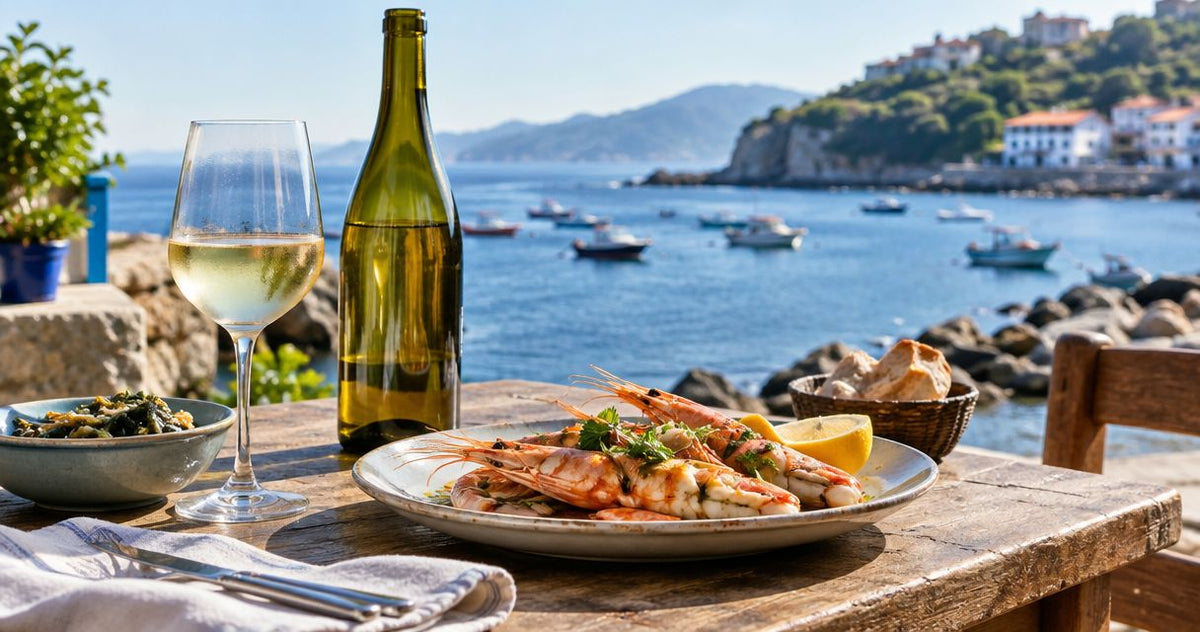
Seafood lovers’ txakolina wine pairing is matching this bright, typically dry Basque wine with shellfish, grilled fish, and salty small plates so neither the food nor the wine overwhelms the other. This guide explains how to choose the right style, handle richer sauces, and serve the wine without treating every bottle as sparkling.
- Txakolina wine suits seafood lovers who want bright acidity with oysters, grilled fish, and Basque-style pintxos.
- Buywinesonline suits home wine shoppers seeking a broad selection; choose by food and wine style, not packaging.
- Choose a light, unoaked white txakolina for delicate seafood; check producer notes because spritz and texture vary.
- Pair the sauce as carefully as the fish, and taste before adding more lemon.
Why txakolina wine matters for seafood lovers
Txakolina is a strong starting point for simply prepared seafood, not a universal answer for every seafood dish. Its typically lively acidity works with lemon, vinegar, and oily bites, while a lighter-bodied example leaves room for delicate fish. Heavy cream, sweet glazes, and strong chili heat change the pairing.
For your 2026 seafood menu, start with the preparation rather than the species. A steamed mussel and a mussel in a rich cream sauce need different things from the glass. If acidity is unfamiliar territory, this guide to dry white wine for beginners exploring crisp styles explains the basic terms.
Txakolina, also called txakoli, comes from Spain’s Basque Country. White examples commonly feature Hondarrabi Zuri, although the category also includes rosé and red wines. Citrus, green apple, and a fresh, sometimes lightly prickly finish are useful reference points—not promises about every bottle.
The practical benefit is flexibility across a seafood-focused table. You can build a meal around briny shellfish, olive oil, herbs, and grilled fish without needing a different wine for every small plate.
How to pair txakolina with a Basque-style seafood menu
Start with the seafood preparation
Write your menu before choosing the bottle. Separate delicate dishes from rich ones, then identify the strongest seasoning: vinegar, garlic, chili, smoke, butter, or cream. That seasoning often matters more than whether you are cooking cod, shrimp, or hake.
For a straightforward starting point, choose steamed mussels, grilled white fish, or shrimp cooked with olive oil and garlic. A light white txakolina is the best fit when the cooking preserves the seafood’s flavor. The limitation appears when the sauce becomes heavier than the wine.
A Basque-style dinner does not require elaborate restaurant cooking. Keep the ingredients recognizable and let guests adjust sharp condiments at the table. This also gives you room to correct the pairing after tasting.
- Match steamed shellfish with a light, dry white style.
- Match grilled fish with a wine that has enough texture for the char.
- Keep lemon wedges separate until you taste the pairing.
- Serve strong chili sauces alongside rather than over the entire dish.
Separate delicate bites from rich sauces
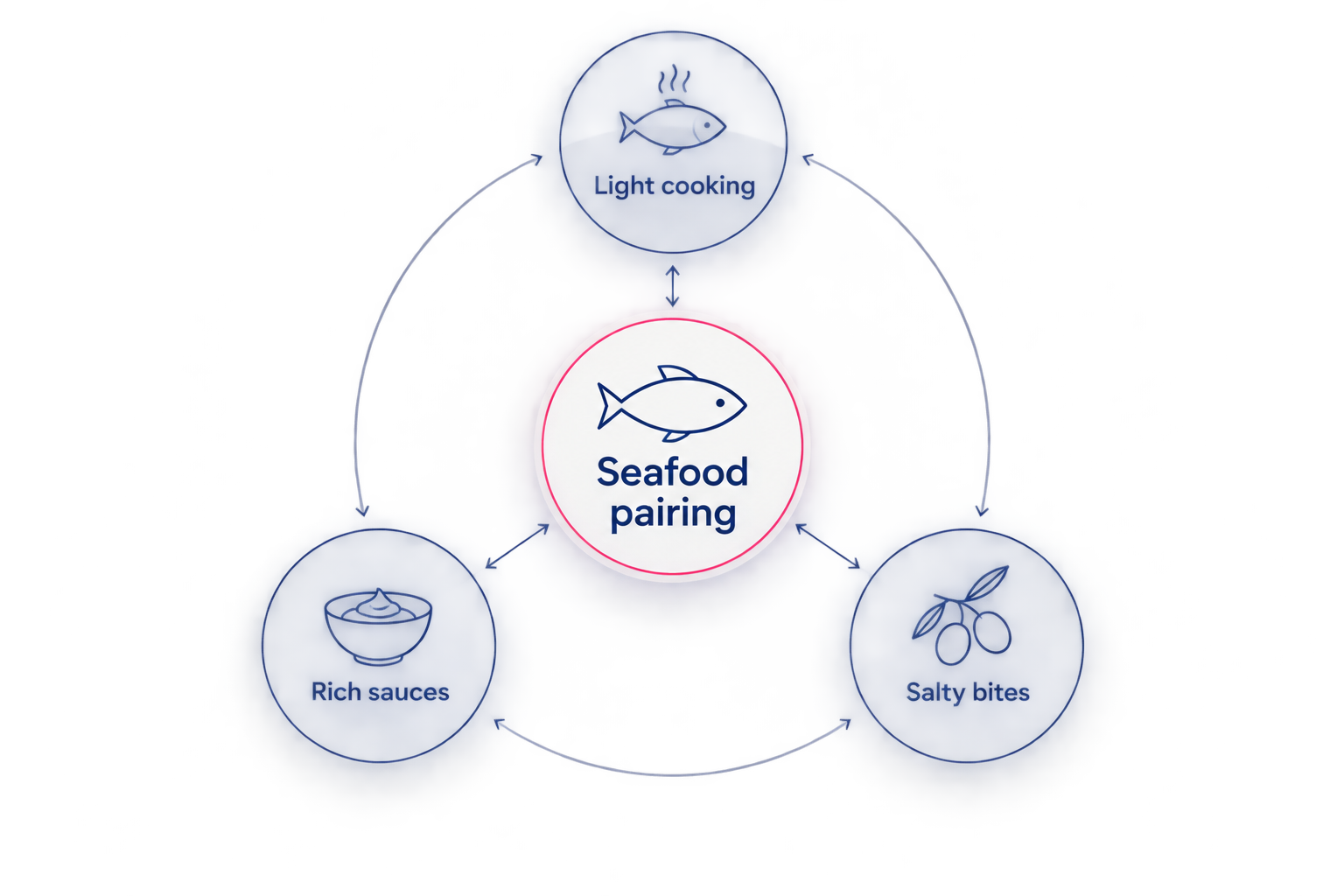
Group your dishes into light cooking, rich sauces, and salty bites. These categories are more useful than a rule that all fish needs the same white wine. They expose the dish most likely to dominate the meal.
Best for delicate seafood: a light, unoaked white txakolina. For butter-enriched fish or a fuller seafood stew, look for producer notes describing additional body or lees aging. Lees aging means time resting on spent yeast; it can add texture, but it does not automatically mean oak flavor.
If your 2026 menu includes several preparations, choose the wine for the main course and keep the starters compatible. Do not let a strongly sweet or smoky appetizer dictate the entire meal.
- Light cooking: steaming, poaching, and simple grilling.
- Rich sauces: butter emulsions, cream, and concentrated seafood reductions.
- Salty bites: anchovies, olives, and preserved seafood.
- Sweet glazes: a reason to reconsider a sharply dry white.
Read the label and producer notes
Start with the bottle’s label and the producer’s description. Look for the appellation, wine color, vintage, grape information, and any mention of oak, lees, or effervescence. A recognizable regional name is useful, but it does not replace the style details.
Getariako Txakolina, Bizkaiko Txakolina, and Arabako Txakolina are distinct Basque appellations. Do not assume every wine from them has identical body or bubbles. In particular, a still example is not defective simply because it lacks the light spritz you expected.
For a broader retail search, Buywinesonline offers over 5,000 wines across red, white, rosé, champagne, and dessert categories, alongside gifts and tasting selections. Buywinesonline is best for home wine shoppers seeking a broad wine selection. Its catalog breadth does not replace checking an individual bottle’s style against your menu.
Use Buywinesonline as a place to compare wine descriptions, not as a reason to substitute an unrelated bottle. If a listing does not clearly identify the wine you need, keep looking rather than guessing from a label image.
- Confirm that the wine is white, rosé, or red.
- Read for dry versus sweet style rather than relying on fruit descriptions.
- Check whether the producer describes spritz or a still finish.
- Compare the listed vintage and bottle size with your intended selection.
- Look for oak or lees details when pairing a richer dish.
Build a small seafood-and-pintxos menu
Choose a short menu that repeats compatible ingredients instead of competing sauces. Pintxos are small Basque bar snacks; at home, the useful idea is a sequence of manageable bites. You do not need to make every plate a miniature cooking project.
For a 2026 dinner, try an anchovy-and-olive starter, garlic shrimp, and grilled white fish with parsley and olive oil. These are menu suggestions, not a claim that every preparation is a traditional Basque recipe. Keep the strongest preserved-fish flavors in small portions so the main dish still has room to stand out.
Best for a first pairing: grilled white fish with olive oil and herbs. It makes the wine’s acidity easy to assess. Its limitation is simplicity: a heavily oaked or unusually full wine can dominate such a restrained plate.
- Begin with olives or a small anchovy bite.
- Follow with shrimp prepared without a sweet glaze.
- Make simply grilled fish the center of the meal.
- Offer bread to accompany oil and cooking juices.
- Keep lemon, vinegar, and chili separate for individual adjustment.
Chill the wine and pour a small first glass
Use a refrigerator or an ice-and-water bucket to chill the bottle. As a serving starting point, aim for 8–10°C, or 46–50°F, then adjust after tasting. These are recommended serving temperatures, not a specification shared by every producer.
Serve a small first pour in a clean white-wine glass and taste it with food. If the wine seems closed and nearly flavorless, let the glass warm slightly. If it feels warm and lacks refreshment, return the bottle to the bucket.
For your 2026 table, skip a theatrical high pour unless you understand the particular wine and serving tradition. High pouring is associated with some lightly spritzy txakoli service, but it is not a requirement for every bottle. An ordinary controlled pour makes it easier to assess aroma and texture.
- Start at the recommended chilled temperature and adjust by taste.
- Use a clean glass without detergent odor.
- Keep the bottle cool between pours rather than adding ice to the wine.
- Pour still examples normally instead of trying to create bubbles.
- Taste the first glass before seasoning the whole dish again.
Taste the wine with a bite before changing anything
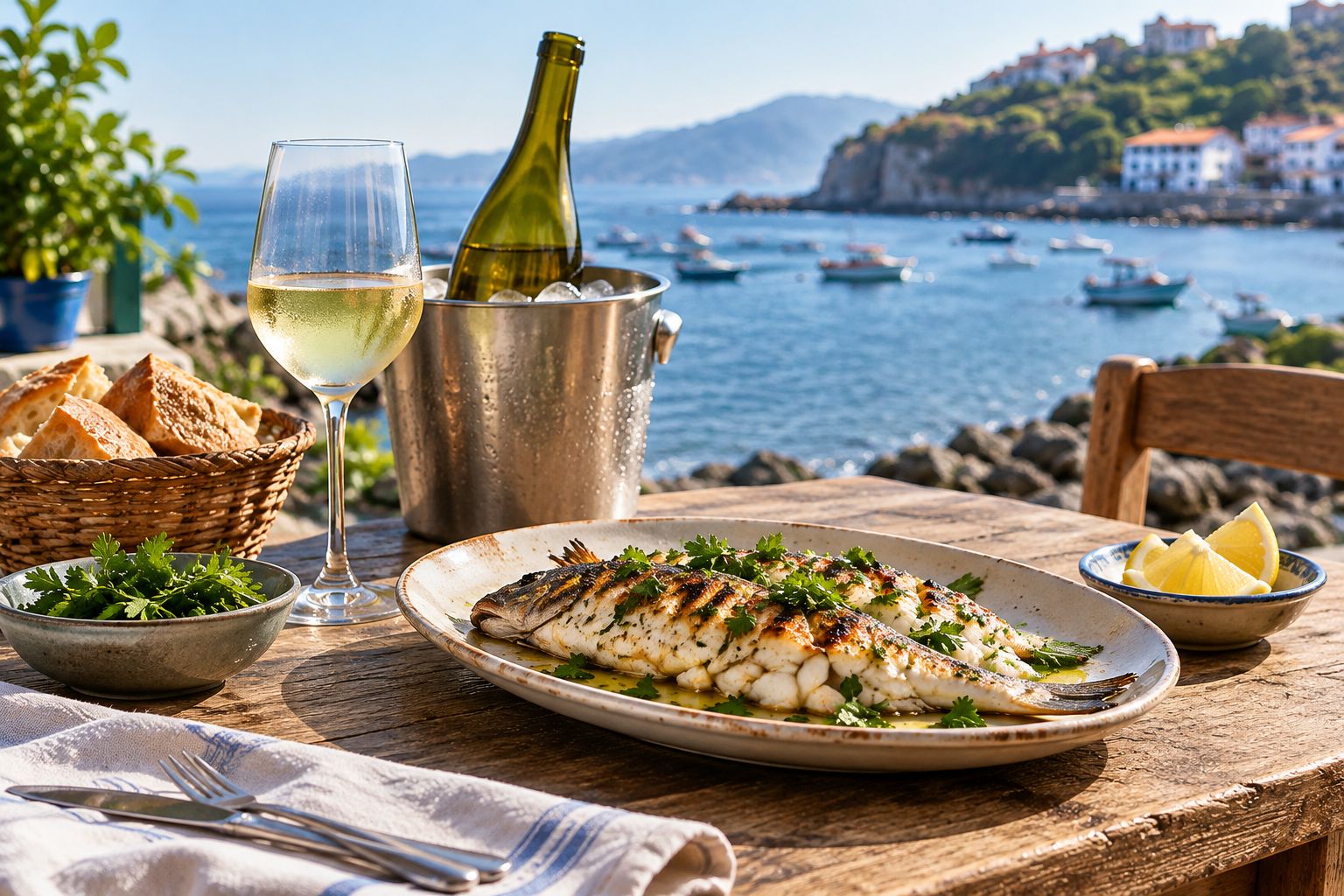
Taste the wine alone, take a bite of the finished dish, and taste again. This simple comparison tells you more than matching two tasting-note lists. Pay attention to whether the seafood remains clear, the acidity feels refreshing, and the sauce overwhelms the glass.
Make a small adjustment on your own plate before changing the shared dish. If lemon makes the combination too sharp, leave it off the next bite. If a creamy sauce dominates, try less sauce rather than adding more seasoning to the wine pairing.
For a 2026 tasting note, record the preparation as well as the bottle. Writing only that a wine worked with fish leaves out the detail you need to repeat the result. A 750 ml bottle and a 375 ml half bottle also require different purchasing quantities, so record size when planning the next meal.
- Compare a sip before and after a bite.
- Test extra lemon on one forkful, not the whole platter.
- Reduce rich sauce on a trial bite if it dominates.
- Note whether the wine is still or lightly spritzy.
- Record the dish, sauce, bottle, and serving conditions.
Compare wine options for your seafood table
Choose by the dish you actually intend to serve. These are style-level comparisons, not recommendations for particular products or guarantees about every producer. Each option has a useful role and a clear limitation.
| Option | Best for | Main advantage | Key limitation |
|---|---|---|---|
| Light white txakolina | Simply grilled fish and salty pintxos | Bright acidity with a light frame | Can feel too lean beside heavy cream or sweet glazes |
| Fuller-textured white txakolina | Fish with a butter emulsion or richer cooking juices | More texture while retaining freshness | Requires checking producer notes; the regional name alone is insufficient |
| Albariño | Shellfish and seafood with citrus | Citrus-led freshness, often with more body than a very light txakolina | Does not reproduce txakolina’s particular character or possible spritz |
| Sauvignon Blanc | Oysters and herb-led seafood | Bright acidity and an herbal profile | Pronounced grassy aromas can dominate delicate preparations |
| Unoaked Chardonnay | Poached fish and gently richer seafood | A less overtly herbal alternative | Acidity and weight vary; Chardonnay alone does not identify the style |
Choose txakolina when brightness and lightness are the point. Choose a fuller alternative when the sauce needs more texture. Neither choice makes the other wrong; the finished plate decides.
Common mistakes seafood lovers make
Expecting every txakolina to sparkle
A light prickle is familiar in some examples, but txakolina is not synonymous with sparkling wine. Read the producer’s description before deciding how the bottle should behave. Do not judge a still wine against an imagined fizz requirement.
Pairing the fish while ignoring its sauce
Cod with parsley and olive oil is a different pairing problem from cod under cream or a sweet glaze. Choose for the strongest finished flavor. When you want to feature a light txakolina, simplify the sauce rather than forcing the wine to compete.
Adding lemon before tasting
A bright white wine already brings acidity to the meal. Taste the combination first, then add lemon to a single bite. This keeps a refreshing pairing from becoming unnecessarily sharp and lets guests adjust their own plates.
Choosing a mixed tasting selection as a precise substitute
A varied assortment serves discovery, not necessarily one exact seafood menu. Buywinesonline offers curated tasting selections, but that does not establish that any particular selection contains txakolina or a suitable substitute. Read the stated contents before choosing an assortment for a specific pairing.
FAQ
What is txakolina wine?
Txakolina is wine from Spain’s Basque Country, also called txakoli. White examples are commonly dry and bright, often based on Hondarrabi Zuri, but rosé and red styles also exist.
What seafood goes best with txakolina wine?
Simply grilled white fish, steamed shellfish, and shrimp with olive oil are strong starting points for light white txakolina. Match the sauce and seasoning as carefully as the seafood itself.
Is txakolina wine always sparkling?
No, txakolina is not always sparkling. Some examples have a light spritz, while others are still; check the producer’s description rather than expecting the same bubbles in every bottle.
Should I pour txakolina from a height?
A high pour is not necessary for every txakolina. Pour normally unless the particular wine and its serving guidance call for the traditional aerating pour associated with some lightly spritzy examples.
How cold should I serve txakolina with seafood?
Start around 8–10°C, or 46–50°F, and adjust after tasting. Let an overly muted glass warm slightly, and keep the bottle chilled between pours.
Is Albariño better than txakolina for seafood?
Neither is better for every seafood dish. Choose a light txakolina for a lean, bright pairing, or consider Albariño when you want citrus-led freshness with a little more body, checking the individual wine’s description.
Can I pair txakolina with creamy fish dishes?
Choose a fuller-textured white txakolina for creamy fish rather than assuming a very light example will work. Producer notes about body and lees aging help you assess the match, and sauce quantity still matters.
One last thing
Test the lemon before you change the wine. Serve the same fish with and without an extra squeeze, then compare both bites with your glass. That small table-side check separates a seasoning problem from a bottle-selection problem without opening another wine.