
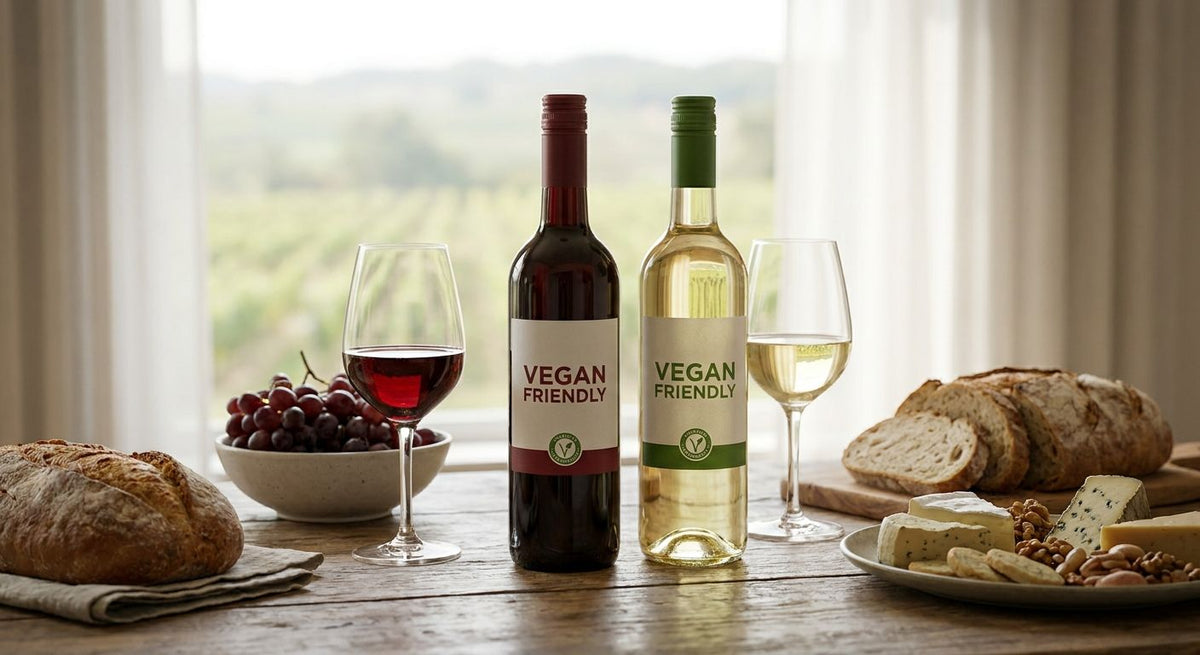
Vegan wine for plant-based diets is wine clarified without animal-derived fining agents, chosen by shoppers who want their glass to match the standard they already apply to their plate. The catch: nothing on a US wine label has to disclose that, which makes verification the entire job for this segment in 2026.
- Most conventional wine is fined with gelatin, egg white, isinglass, or casein — check before you buy.
- Vegan wine swaps those for bentonite clay, pea protein, or no fining agent at all.
- No US label law forces wineries to disclose fining agents, so vegan status often isn't printed on the bottle.
- Barnivore.com's free database is the fastest way to confirm a producer's vegan status before checkout.
- Sparkling and unfiltered natural wines skew more vegan-friendly than heavily fined mass-market reds.
Why vegan wine matters for plant-based diets
Wine isn't food under US labeling law, and that distinction matters more than most shoppers realize. The Alcohol and Tobacco Tax and Trade Bureau (TTB) doesn't require wineries to list fining agents the way the FDA requires allergen disclosure on packaged food. A bottle can pass through gelatin, egg white (albumin), isinglass, or casein during clarification and carry zero mention of it anywhere on the label.
For a plant-based shopper, that gap is a bigger deal than it looks. Someone who avoids dairy and eggs at the table has no way to extend that same standard to the wine glass just by reading the front label. With more than 5,000 bottles across BuyWinesOnline's catalog, sorting the vegan-friendly options from the rest takes a deliberate checklist, not a guess based on color or region.
That's exactly why this segment needs a habit other wine buyers skip entirely: verify before you order, not after the cork is pulled.
Learn what "non-vegan" fining actually means
Fining is the clarification step that pulls haze and loose particles out of wine before bottling. Several traditional agents come straight from animals.
- Gelatin (animal collagen) — the most common fining agent in mass-market reds
- Egg white/albumin — traditional in Bordeaux-style Cabernet blends
- Isinglass — fish bladder protein, common in white and sparkling wine clarification
- Casein — milk protein, used in some white wine fining
- Bentonite clay, pea protein, and activated charcoal — the vegan-friendly substitutes producers reach for instead
Check the label and the producer's own site before you buy
A vegan claim usually lives off the front label, if it's disclosed at all.
- Look for "vegan," "suitable for vegans," or a certified vegan logo on the back label
- Search the winery's website for a "winemaking" or "sustainability" page — many list fining methods there even when the bottle doesn't
- Email or call the producer directly if the vintage you want isn't documented anywhere
- Remember vintage matters: a winery can switch fining agents from one year to the next without changing the label design
Favor bentonite-fined or unfined bottles
Low-intervention winemaking tends to line up with vegan-friendly winemaking, even when nobody markets it that way.
- Natural and low-intervention producers skip fining altogether more often than mass-market brands
- Bentonite clay is the most common vegan-friendly fining agent, and it doesn't change the taste
- Unfined wines can throw slight sediment — decant instead of writing the bottle off
- Sparkling wine and rosé often use lighter clarification than big, tannic reds, which improves your odds
Build a vegan-friendly cellar across every style, not just reds
One verified bottle doesn't solve the problem for every occasion.
- Stock a crisp white, a rosé, a sparkling wine, and at least one red so a fining-method change on your usual pick doesn't leave you stuck
- Sample multiple producers at once through a 15-bottle tasting set instead of gambling on a full case from one winery
- Rotate producers deliberately — leaning on a single source for every style means one fining change disrupts your whole rotation


Verify with a vegan wine database
Don't rely on memory or brand reputation alone.
- Barnivore.com maintains a free, crowd-sourced database of wine and beer brands cross-referenced against vegan status — search the producer name before you order
- Cross-check the specific vintage, not just the brand — fining methods change year to year
- Treat an unlisted producer as unconfirmed, never as automatically vegan
Buy from a retailer that's transparent about sourcing
The retailer you buy from matters almost as much as the producer.
- Ask whether product pages note fining method or vegan status directly
- Favor sellers who actually answer questions about a specific vintage — see how to choose a reliable online wine retailer for the full checklist
- Read the entire product description — some listings mention "unfined" or "unfiltered" without ever using the word vegan
Confirm before gifting
A vegan-friendly bottle for yourself is a different problem than a vegan-friendly gift.
- Ask the recipient about dietary restrictions before assuming a bottle works
- Tasting sets and mixed cases complicate verification since each bottle can come from a different producer
- When in doubt, pick one confirmed bottle over an unverified assortment
Vegan wine options, compared
| Option | Best For | Key Limitation | Verdict |
|---|---|---|---|
| Certified vegan wine (label states it) | Buyers who want zero guesswork | Far fewer big-name Napa Cabernet producers carry a formal vegan certification | Buy |
| Unfined/unfiltered natural wine | Purists avoiding all processing aids | Can throw visible sediment; needs a decanter | Buy |
| Bentonite-fined wine (clay, not animal-derived) | Everyday drinkers who still want clarity | Producers rarely print the fining agent, so you still have to ask | Check |
| Traditional fined wine (gelatin, egg white, isinglass, casein) | Not suited to strict vegan diets | The default across most conventional reds and whites unless stated otherwise | Skip |
Common mistakes plant-based wine shoppers make
- Assuming "organic" or "biodynamic" means vegan — those certifications govern farming practices, not fining agents.
- Trusting "natural wine" marketing language without checking the actual clarification method used.
- Ordering a full case from one producer without confirming every varietal in the lineup shares the same fining process.
- Confusing sulfites with animal products — sulfites are a preservative tied to a separate health conversation, not a vegan concern.
- Skipping verification on tasting sets and mixed cases because each bottle inside can come from a different producer with a different fining method.
FAQ
What makes a wine not vegan?
A wine is not vegan when it's clarified with an animal-derived fining agent like gelatin, egg white, isinglass, or casein. These agents pull sediment from the wine before bottling and are rarely disclosed on the label.
Is all wine vegan?
No. Most conventional wine sold in 2026 uses at least one animal-derived fining agent unless the producer states otherwise. Vegan wine is the exception, not the default, across mass-market reds and whites.
How can you tell if a wine is vegan without a certification label?
Check the producer's website for a winemaking or sustainability page, search the brand on Barnivore.com, or contact the retailer directly. Vintage matters, since a winery can change its fining method year to year.
Is champagne vegan?
Not always. Many Champagne houses still use isinglass or egg white during clarification, though a growing number now disclose bentonite-based, vegan-friendly fining as of 2026.
Are natural wines always vegan?
No. Natural wine describes low-intervention winemaking overall, not a guarantee that no animal product ever touched the bottle. Check the specific producer rather than assuming based on the natural wine label.
Does BuyWinesOnline sell vegan wine?
BuyWinesOnline's catalog spans more than 5,000 red, white, rose, sparkling, and dessert wines, though fining method isn't listed at the bottle level for every SKU. Confirm a specific vintage through the product description or by contacting the retailer directly.
What's the difference between vegan and organic wine?
Organic addresses how the grapes were farmed; vegan addresses what was used to clarify the finished wine. A bottle can be organic, vegan, both, or neither, since the two certifications track completely different steps.
Does sparkling wine skew more vegan-friendly than still wine?
Often, yes. Many sparkling producers use lighter fining or skip it entirely before the second fermentation, though isinglass still shows up in some Champagne houses, so check per producer rather than by category.
One last thing
That cloudiness or fine sediment you sometimes see in a red wine glass isn't a flaw. It's frequently the sign that no animal-derived fining agent ever touched the bottle — the wine settled on its own instead of being stripped clear with gelatin or isinglass. Heading into 2026, that's the detail worth remembering before you send back a bottle for looking "unfinished."