
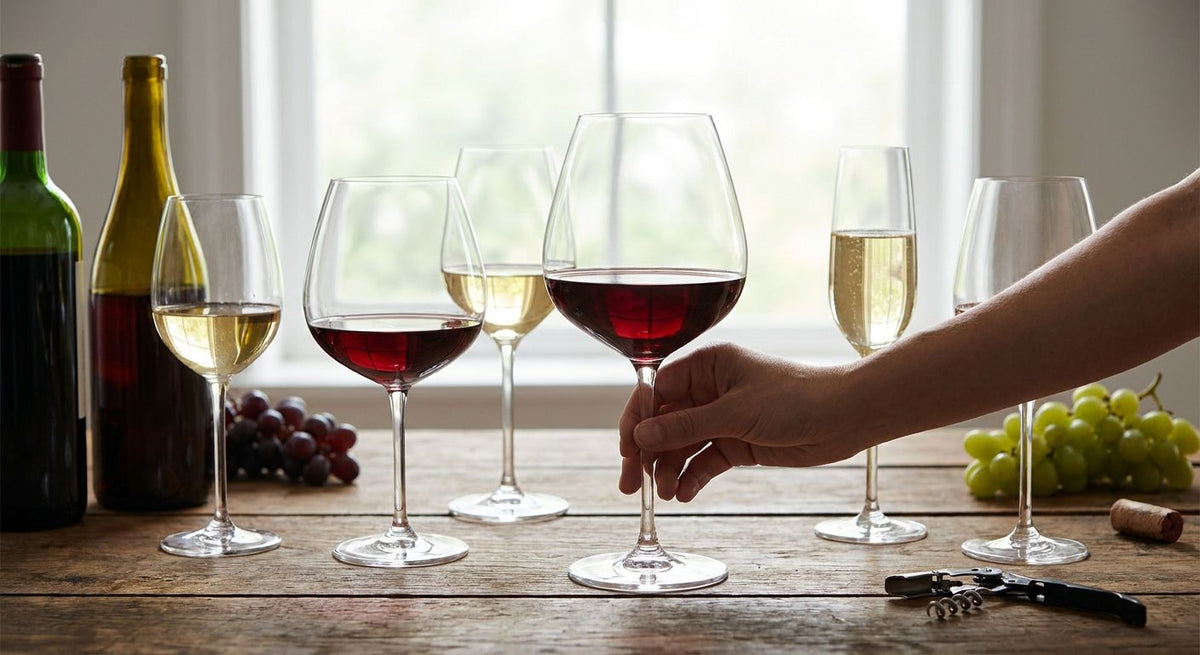
Choosing a wine glass comes down to bowl size and rim shape, not price: a wide-bowled glass (20-24 oz) opens up big reds like Cabernet Sauvignon, a narrower 12-14 oz glass keeps whites and rosé cool, and a tall flute or tulip (5-8 oz) holds the bubbles in sparkling wine. The hidden cost most people skip is stem length — a short or stemless glass warms the wine faster from hand contact, which matters more for delicate whites than bold reds.
- How to choose a wine glass in 2026 comes down to bowl width, not brand or price.
- Cabernet and other bold reds need a 20-24 oz bowl to let tannins soften with air.
- Chardonnay and other whites do best in a 12-14 oz glass that limits warming.
- Champagne and sparkling wine need a narrow flute or tulip to hold the bubbles.
- One universal glass (12-15 oz, tulip-shaped) covers 90% of home drinking needs.
Why this matters
A glass that's too narrow traps aroma against a small surface and mutes a big red before it opens up. A glass that's too wide lets a delicate white warm up and lose its acidity in under ten minutes. BuyWinesOnline sells wine across every style — Cabernet, Chardonnay, Champagne, dessert — and the glass someone reaches for changes how every one of those bottles actually tastes in the glass, not just on the label.
This isn't about owning six sets of stemware. It's about matching bowl shape to the two or three varietals you drink most and stopping there.
How do you choose the right wine glass?
Match the glass to what the wine needs to do once it's poured: release aroma, hold temperature, or preserve carbonation.
| Wine style | Bowl size (approx.) | Rim shape | Why | |---|---|---| | Cabernet / Bordeaux blends | 20-24 oz | Wide, tapered | Extra surface area softens tannins with air | | Pinot Noir / Burgundy | 22-26 oz | Very wide, low | Captures delicate red-fruit aroma | | Chardonnay / white wine | 12-14 oz | Narrower, upright | Slows warming, keeps acidity sharp | | Champagne / sparkling | 6-8 oz | Narrow flute or tulip | Preserves bubbles longer | | Universal / all-purpose | 12-15 oz | Tulip, medium taper | One shape for casual weeknight drinking |
If you're building a home bar from zero, start with the universal shape and add a dedicated Cabernet glass second — that's the pairing that covers the most bottles.
Cabernet and bold reds: 20-24 oz bowls
Cabernet Sauvignon, Amarone, and other tannic, full-bodied reds need the biggest bowl in the cabinet. The wide surface area lets the wine breathe and softens the grip of tannins within a few minutes of pouring.
A Tommasi Amarone della Valpolicella Classico 2021 poured into a small glass tastes tight and closed for the first ten minutes; the same bottle in a 20+ oz bowl opens into dried cherry and baking spice almost immediately. Buy the widest bowl you're willing to store for anything labeled Cabernet, Amarone, Barolo, or Bordeaux blend.
Pinot Noir and light reds: wide but shallow
Pinot Noir wants width like Cabernet does, but a lower, rounder bowl instead of a tall one. The shape directs aroma toward the nose without amplifying alcohol heat, which matters on lighter-bodied reds around 13-13.5% ABV.
If you already own a Cabernet glass and don't want a second shape, it still works for Pinot Noir — it's oversized for the wine, but it won't hurt it. Skip a dedicated Pinot glass unless you drink Pinot Noir weekly.
Chardonnay and white wine: 12-14 oz glasses
White wine glasses run smaller and narrower on purpose — less surface area means less warming, and white wine loses its crispness fast once it climbs above 55°F.
A Kistler Vineyards Sonoma Mountain Chardonnay 2024 shows its citrus and stone-fruit character best in a 12-14 oz glass held by the stem, not the bowl. Hold it by the bowl and body heat pushes the wine warm in minutes. Buy a narrow-bowl white glass if Chardonnay, Sauvignon Blanc, or rosé make up most of your rack.
Champagne and sparkling wine: flute or tulip
A wide coupe glass looks the part but kills carbonation fast — bubbles need a narrow column to hold, which is why flutes and tulip-shaped glasses outlast coupes for actual drinking. A tulip shape (narrower at the rim than a flute) also lets more aroma through, which matters for vintage Champagne more than for basic Prosecco.
Buy a flute or tulip for anything sparkling; skip the coupe unless it's purely for a toast photo.
Why wine glass shape actually matters
A handful of factors drive the differences above, and they apply whether the glass costs $8 or $80:
- Bowl width controls how much surface area touches air, which controls how fast tannins soften
- Rim diameter directs where the wine lands on your tongue and how concentrated the aroma is at the nose
- Stem length keeps hand heat away from the wine — matters most for whites and sparkling
- Glass thickness affects how the wine feels on the lip; thinner rims are standard on most stemware sold in 2026
- Bowl height changes how much the wine swirls before it splashes over the rim
Do I need different glasses for red and white wine?
Not strictly, but the difference is real: red wine glasses run wider to soften tannins with air, and white wine glasses run narrower to slow warming. If you only buy one shape, a 12-15 oz tulip-shaped universal glass handles both reasonably well for everyday drinking in 2026.
Is a stemless wine glass fine for everyday use?
Stemless glasses are fine for casual, fast-turnover drinking, but they warm wine faster because your hand wraps around the bowl instead of the stem. For a weeknight glass of red or white you're finishing in fifteen minutes, that's a non-issue; for a bottle you're sipping slowly over an hour, a stemmed glass keeps the wine at temperature longer.
How many wine glasses does a home bar actually need?
Two shapes cover almost every bottle: one wide-bowl glass (20+ oz) for reds and one narrower glass (12-14 oz) for whites and rosé. Add a flute or tulip only if Champagne or sparkling wine shows up regularly — otherwise two shapes and a corkscrew are enough to start.
If you're testing different varietals before committing to a full stemware set, working through a mixed case is the cheapest way to figure out which glass shape you actually reach for most.


FAQ
What's the best all-purpose wine glass if I only want one?
A 12-15 oz tulip-shaped glass is the best single option because it handles both red and white reasonably well. It won't outperform a dedicated Cabernet glass or Champagne flute, but it covers the widest range of bottles for one shape.
Is a stemless wine glass okay for everyday use?
Stemless glasses work fine for wine you'll finish quickly, since warming from hand contact only becomes noticeable after 15-20 minutes. For slow sipping or delicate whites, a stemmed glass holds temperature longer.
Do you really need different glasses for red and white wine?
Not strictly, but red wine glasses run wider (20-24 oz) to soften tannins with air, while white wine glasses run narrower (12-14 oz) to limit warming. A universal glass splits the difference if you don't want two sets.
How much wine should you pour into a glass?
A standard pour fills a glass to roughly a third of its bowl, leaving room to swirl and release aroma. Filling a glass to the rim traps aroma at the bottom and makes it harder to smell the wine before you taste it.
What size glass is best for Cabernet Sauvignon?
Cabernet Sauvignon does best in a 20-24 oz bowl with a tapered rim. The extra surface area lets tannins soften with air exposure, which matters more on Cabernet than on lighter reds.
Does glass shape actually change how wine tastes?
Yes — bowl width changes how much air reaches the wine and rim shape changes where it lands on your tongue, both of which shift perceived tannin, acidity, and aroma. The wine itself doesn't change, but what you notice in it does.
How many wine glasses does a home bar actually need?
Two shapes cover almost everything: one wide-bowl glass (20+ oz) for reds and one narrower glass (12-14 oz) for whites. Add a flute only if sparkling wine is a regular pour in your house.
One last thing
The glass matters less than the pour size — a great Cabernet glass with a wine poured to the rim behaves worse than a mediocre glass poured a third full, because there's no room left to swirl or smell before the first sip. Get the pour right before you upgrade the stemware.