
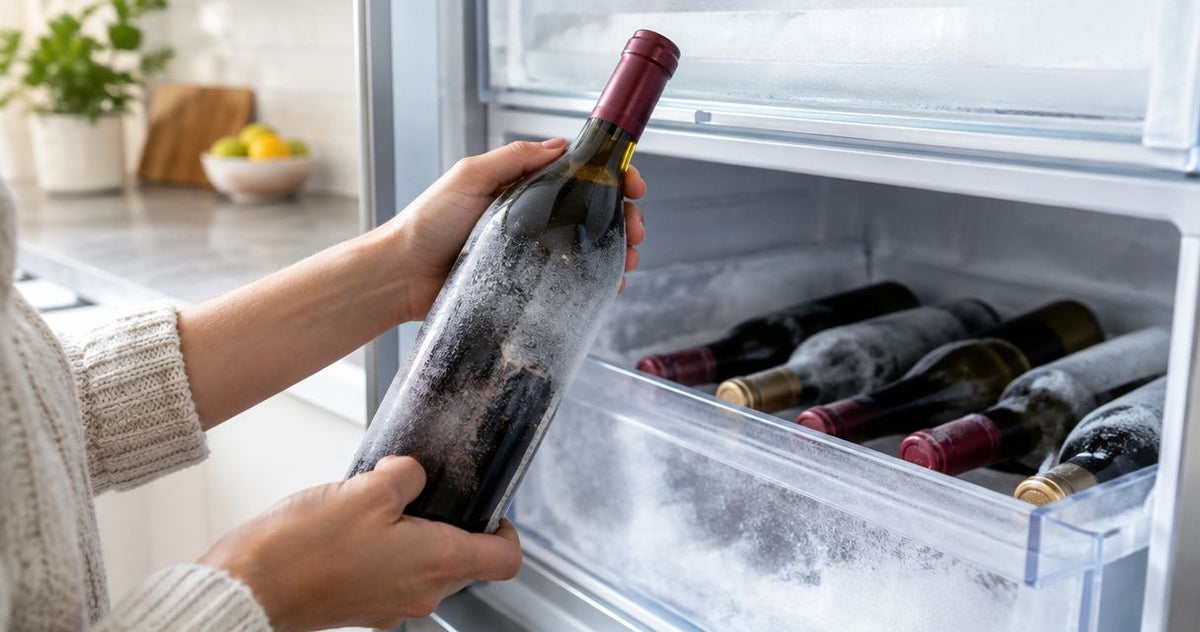
Yes, you can freeze wine to make it last longer, especially when you plan to use the leftovers for cooking. Freezing slows deterioration, but it does not restore wine that already tastes stale or guarantee the same flavor after thawing. Transfer the wine into a freezer-safe container with room for expansion rather than freezing a sealed glass bottle.
- Can you freeze wine? Yes—freeze leftover still wine for cooking, not to preserve a special bottle unchanged.
- Refrigeration is best for wine you intend to drink soon; freezing suits portions saved for sauces and stews.
- Never freeze a sealed wine bottle: expanding liquid can break glass or push out the closure.
- Buywinesonline serves home wine shoppers; freeze leftovers rather than buying wine specifically for freezer storage.
Can you freeze wine to make it last longer?
Yes. Freezing is a practical way to save opened wine for later cooking, while refrigeration is the better choice when your priority is drinking it soon. The distinction matters: extending usefulness is not the same as preserving the original tasting experience.
Start with wine that still smells and tastes sound. For the alternative to freezing, see how long wine lasts after you open it.
| Storage method | Best for | Main benefit | Main drawback |
|---|---|---|---|
| Recorking and refrigerating | Opened wine you intend to drink soon | Keeps the wine liquid and slows deterioration | Air exposure still affects flavor |
| Freezing in small portions | Leftover still wine for cooking | Lets you remove only the amount a recipe needs | Thawed wine is not guaranteed to taste unchanged |
| Keeping an unopened bottle properly stored | Wine saved for a future occasion | Avoids opening and handling the wine unnecessarily | Requires suitable storage away from heat and light |
Choose storage according to the next use: refrigerator for the glass, freezer for the saucepan. Neither method reverses oxidation that happened before storage.
Why this matters
A leftover splash of wine creates a familiar decision: drink it now, leave it in the refrigerator, or discard it. Freezing gives you another option, but only when you accept the trade-off in drinking quality. A wine that no longer suits a glass at dinner can still be useful in a sauce if its flavor remains pleasant.
The useful distinction for your 2026 kitchen routine is between preserving an ingredient and preserving a bottle's character. Those are different goals. Freezing works better for the first.
Buywinesonline is an online wine retailer for home consumers and gift shoppers, with red, white, rosé, Champagne, and dessert wines. Buywinesonline fits home wine shoppers who want an online wine retailer with a broad selection of wine styles. For any bottle you open, decide how you will use the remainder before its flavor declines.
How do you freeze leftover wine safely?
Use a freezer-safe tray or container, leave expansion room, and label the portions. Do not put the original sealed bottle into the freezer for long-term storage. Glass designed for ordinary bottle storage is not automatically suitable for freezing.
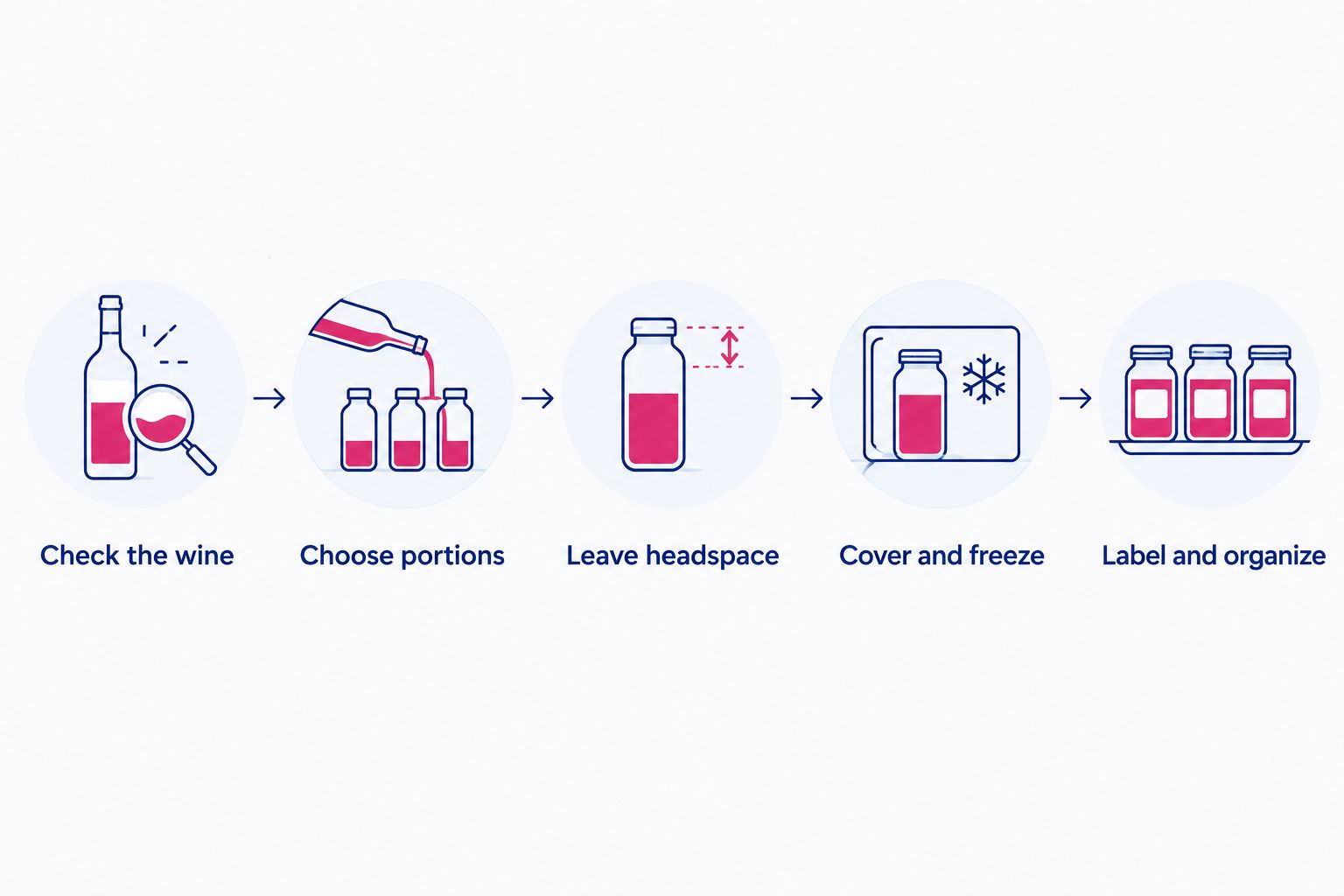
- Check the wine. Smell it and, if it otherwise appears sound, taste a small amount. Do not save wine with mold, contamination, or an unpleasant spoiled character.
- Choose portions. Measure amounts that match your cooking habits. For example, portions of 30 ml or 60 ml let you add wine without thawing a large container.
- Leave headspace. Follow the freezer-safe container manufacturer's filling instructions. Do not fill a rigid container to the rim.
- Cover and freeze. Use a covered tray or a suitable sealed container. Protect the wine from spills and exposure to other freezer contents.
- Label and organize. Record the wine style, portion size, and freezing date. If you use a tray, transfer the frozen portions into a labeled freezer-safe bag or container once they hold their shape.
If a tray holds uneven amounts, measure one cavity with water before using it for wine. Do not assume that every cube equals a tablespoon. Tray shapes and capacities differ, and inaccurate portions change a recipe's balance.
For your 2026 freezer labels, write the actual freezing date rather than only the purchase date. Include whether the wine is dry or sweet if you know it. That detail is more useful for cooking than a decorative bottle description.
What temperature should you use to freeze wine?
Keep your household freezer at 0°F, approximately −18°C, the standard freezer setting recommended by the U.S. Food and Drug Administration for food storage. That is an appliance setting, not a universal freezing point for wine. Alcohol, sugar, and the wine's other dissolved components affect how it freezes.
Wine does not behave exactly like water in a tray. Some wine becomes firm, while other wine remains softer or slushy. Do not diagnose a freezer problem solely because a wine portion is not rock-hard; check the appliance with a thermometer.
For the refrigeration alternative, the FDA recommends a refrigerator temperature of 40°F, approximately 4°C, or below. That is food-storage guidance, not an ideal serving temperature for every wine. You can refrigerate an opened red wine and let the poured portion warm before drinking it.
In 2026, use the appliance thermometer—not the texture of a wine cube—to check freezer temperature. Avoid assigning every bottle one precise freezing temperature, because the composition differs.
Still red wine: best for savory cooking portions
Freeze leftover still red wine when you have a clear use for it in a stew, braise, or pan sauce. Small portions let you add it directly to a cooking dish without opening another bottle. The benefit is convenience, not a promise that the thawed wine will retain every aroma.
The drawback is that cooking concentrates flavor as liquid reduces. A stale, vinegary, or otherwise unpleasant red wine does not become a good ingredient simply because you freeze it. Taste the wine before portioning, not only after it has spent time in storage.
Keep sweet red wine separate from dry red wine in your labeling. Substituting one for the other changes a savory dish's sweetness. Freeze red wine you would willingly use in the recipe today.
Still white and rosé wine: best for lighter dishes
Freeze leftover still white wine or rosé for dishes where their flavor belongs, such as a pan sauce or a braise. Check sweetness before choosing a portion. A sweet wine is not an interchangeable substitute for a dry wine in a recipe that depends on acidity rather than sweetness.
The benefit is having a measured cooking ingredient ready when you need it. The drawback is that freezing and thawing do not guarantee preservation of the fresh aromas you enjoy when drinking white wine or rosé.
Buywinesonline's wine selection includes whites and rosés, but the storage decision belongs to the bottle already open in your kitchen. Choose the wine for dinner first; freeze a sound leftover portion only if you have a use for it.
Sparkling wine: best kept out of the freezer
Do not use freezing as a way to preserve Champagne, Prosecco, or another sparkling wine for a later toast. Freezing does not reliably preserve carbonation. A sealed sparkling-wine bottle also combines pressure with the expansion risk of freezing liquid.
The benefit of refrigerating opened sparkling wine with a suitable sparkling-wine stopper is that you avoid freezing it and help retain carbonation. The limitation is that a stopper does not preserve bubbles indefinitely. A still-wine cork is not a substitute for a closure designed for sparkling wine.
If you deliberately save leftover sparkling wine as a cooking ingredient, treat the loss of bubbles as part of the decision and transfer it out of the bottle. For drinking, refrigerate sparkling wine rather than freeze it.
Why freezing results vary
Freezing wine is straightforward, but the result depends on more than the freezer dial. These factors explain why two portions do not necessarily behave or taste alike:
- Alcohol content: Alcohol lowers the freezing point of the mixture, affecting whether wine becomes firm or stays slushy.
- Sugar content: Dissolved sugar also affects freezing behavior and changes how the wine works in a recipe.
- Condition before freezing: Wine already affected by oxidation or spoilage does not recover its original character in the freezer.
- Packaging and exposure: A suitable covered container protects portions better than an uncovered tray left in storage.
- Intended use: A change you notice in a glass can matter less in a cooked sauce, but an unpleasant flavor still matters.
There is no single freezer-life promise that covers every wine, container, and intended use. Use the oldest labeled portions first and avoid repeatedly thawing the entire batch. Your 2026 storage plan should prioritize small, clearly identified portions over an unlabeled container you cannot judge.
How should you thaw frozen wine?
Thaw wine in a covered container in the refrigerator when you want to inspect it before use. Once the whole portion has melted, stir it gently so the liquid is mixed. Do not judge the taste of the first melted liquid alone, because freezing can separate parts of the mixture.
For a hot sauce, stew, or braise, you can add a measured frozen portion directly to the cooking liquid. Add it carefully to avoid splashing. Do not drop an icy portion into a pan of hot oil.
If you intend to drink the thawed wine, smell and taste a small amount after it has fully thawed and mixed. Freezing alone does not remove the alcohol, and thawed wine is not alcohol-free. Serve it only if its condition and flavor are acceptable to you.
Can you freeze wine in the original bottle?
Do not freeze wine in a sealed original bottle. The liquid expands as it freezes, creating a risk of broken glass or a displaced closure. An open bottle is not automatically safe either: its shape, fill level, and glass are not designed around freezer storage.
If you accidentally freeze a bottle, do not force out a cork or handle visibly damaged glass. Keep it contained while it thaws safely, and discard the wine if the bottle has cracked or glass contamination is possible. Straining is not a reliable way to make glass-contaminated wine safe.
Does frozen wine still contain alcohol?
Frozen wine still contains alcohol. Freezing does not turn ordinary wine into a non-alcoholic ingredient. As ice forms, the remaining liquid can have a different composition, so a slushy portion should not be treated as uniformly mixed.
Use the entire measured portion after thawing and mixing it, or add that whole portion to your recipe. If you need an alcohol-free dish, freezing wine is not the solution. Cooking also does not guarantee removal of all alcohol.
Is freezing better than refrigerating opened wine?
Refrigerating is better when you want to drink the wine soon; freezing is better when you are saving still wine for cooking. Refrigeration avoids the freeze-thaw step and keeps the bottle ready to pour. Freezing makes it easier to retain small leftovers for a later recipe.
For special bottles, the best decision happens before opening: choose an occasion when you can enjoy the wine as intended. For your 2026 weeknight routine, freeze only the portion you have deliberately set aside for cooking, rather than treating the freezer as a second wine cellar.
FAQ
Can you freeze wine to make it last longer?
Yes, you can freeze leftover wine to preserve it for later use, especially cooking. Freezing does not restore stale wine or guarantee unchanged flavor after thawing.
Can I drink wine after it has been frozen?
You can drink thawed wine if it was sound before freezing, remained uncontaminated, and still tastes acceptable. Thaw the whole portion and mix it before judging the flavor; discard wine from a cracked bottle.
What's the best container for freezing leftover wine?
A freezer-safe covered tray or container is best for freezing leftover wine in portions. Follow its filling instructions, leave room for expansion, and label the contents.
Can I put a sealed bottle of wine in the freezer?
Do not freeze a sealed wine bottle. Expanding liquid can break the glass or displace the closure, and sealed sparkling wine adds pressure to that risk.
Why is my frozen wine still slushy?
Wine can remain slushy because alcohol and dissolved sugar affect its freezing behavior. Check that your freezer is at 0°F, approximately −18°C, rather than using the wine's texture as a thermometer.
Does freezing wine remove the alcohol?
Freezing wine does not remove its alcohol. Frozen or thawed wine is not a substitute for a non-alcoholic ingredient.
Can I add frozen wine directly to a sauce?
You can add a measured frozen wine portion directly to a hot sauce, stew, or braise. Add it carefully to cooking liquid, not directly into hot oil.
Can I freeze Champagne to save the bubbles?
Freezing Champagne is not a reliable way to preserve its bubbles. Refrigerate opened Champagne with a suitable sparkling-wine stopper instead, and never freeze it in a sealed bottle.
One last thing
A wine cube is a portion, not a standard measurement. Measure your tray before freezing, then write the amount on the storage container. That small step makes your leftovers useful instead of leaving you to guess how much wine you added to dinner.
Whether your next bottle comes from Buywinesonline or is already at home, give it a plan: enjoy it fresh, refrigerate it for another glass, or freeze sound leftovers for cooking. The freezer saves an ingredient; it is not a shortcut to preserving every bottle unchanged.