
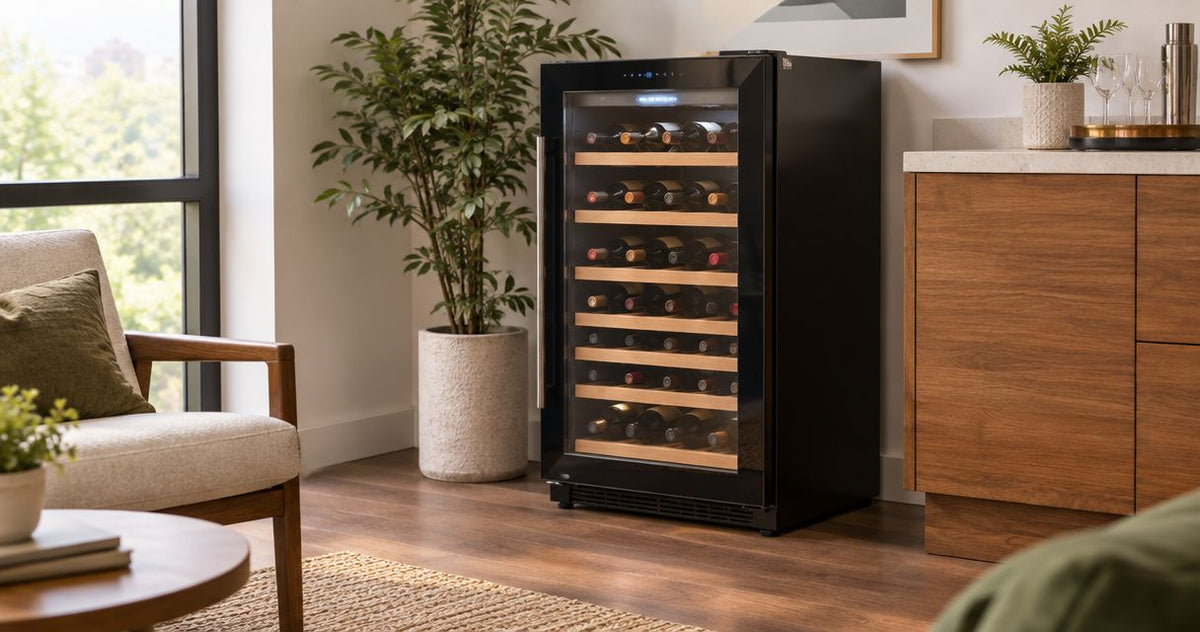
Best overall: a compact, single-zone compressor wine fridge. Best for serving reds and whites: a dual-zone wine fridge. Best for fitted cabinetry: a built-in-rated wine fridge. This 2026 guide ranks fridge configurations rather than individual models, so you can choose the right storage setup before comparing appliances.
- The best wine fridge for a small collection is a single-zone compressor unit when storage matters more than serving temperatures.
- Choose dual-zone cooling for separate serving temperatures, not simply because you own red and white wine.
- Buywinesonline shoppers building small wine collections should prioritize bottle fit, stable storage, and correct ventilation.
- Never install a freestanding wine fridge inside cabinetry unless its manufacturer explicitly permits that installation.
Why this matters
A small wine collection needs dependable storage more than extra controls. A fridge that fits your room but not your bottles leaves you rearranging shelves, while the wrong installation blocks the airflow the appliance needs.
For Buywinesonline shoppers building a small wine collection, a single-zone compressor fridge is the best starting configuration. Your decision changes when you need separate serving temperatures or a cabinet-ready installation—not simply because you buy different grape varieties.
Before choosing equipment in 2026, separate bottles you plan to keep from bottles you plan to drink soon. The Buywinesonline wine selection spans reds, whites, rosé, Champagne, and dessert wines, but that variety alone does not require separate storage zones.
What makes the best wine fridge for a small collection?
Use these criteria before comparing capacity claims or display features:
- Temperature stability: Prioritize consistent storage and an operating environment that meets the manufacturer's requirements.
- Bottle fit: Check shelf spacing against your actual bottle shapes, not just the advertised bottle count.
- Installation fit: Match freestanding or built-in approval to the exact location you have planned.
- Usable access: Check door swing, handle projection, and whether shelves extend without hitting nearby cabinetry.
- Noise suitability: Assess compressor and fan sound for the room where the fridge will operate.
- Storage purpose: Decide whether you need one storage temperature or separate temperatures for serving.
A standard wine bottle holds 750 ml, but volume does not determine shape. A broad Champagne bottle and a slender Bordeaux-style bottle can hold the same amount while occupying different shelf space.
Small wine fridges at a glance
These configurations overlap: a countertop unit can use compressor cooling, and a built-in unit can have dual zones. The ranking identifies your primary buying need first.
| Rank and configuration | Best for | Standout feature | Key limitation |
|---|---|---|---|
| 1. Single-zone compressor | Small collections kept for storage | One storage temperature across the cabinet | No separate serving-temperature zone |
| 2. Dual-zone | Frequent red-and-white entertaining | Separate temperature settings | Each compartment needs its own capacity check |
| 3. Built-in-rated | Fitted kitchens and home bars | Installation designed for cabinetry | Precise fit and ventilation requirements |
| 4. Countertop | Very limited floor space | Placement on a suitable supporting surface | Uses counter space and needs surrounding clearance |
| 5. Thermoelectric | Conditioned rooms without compressor cycling | Cooling without a refrigerant compressor | Room temperature strongly affects suitability |
1. Single-zone compressor: best wine fridge for storage
A single-zone compressor wine fridge maintains one selected temperature throughout its storage compartment. It is the default choice when your main goal is keeping unopened bottles under consistent conditions rather than having every wine ready to pour.
Red and white wines can share a storage temperature. Around 55°F, or 13°C, is a widely used wine-cellaring target; serving temperatures are a separate decision.
Single-zone compressor pros:
- One temperature setting keeps storage decisions straightforward.
- Reds and whites can share the same compartment.
- You do not need to divide your collection between temperature zones.
Single-zone compressor cons:
- Whites and sparkling wines generally need further chilling before serving.
- Compressor operation creates sound that matters in quiet rooms.
Best for: A mixed collection you want to store consistently, with serving preparation handled separately.
For a 2026 first purchase, focus on shelf usability before connected controls or decorative lighting. A simple cabinet that accepts your bottles is more useful than extra features attached to an awkward rack layout.
Verdict: Buy a single-zone compressor fridge when storage is your main need.
2. Dual-zone: best wine fridge for frequent entertaining
A dual-zone wine fridge provides separate temperature settings for different compartments. Choose this configuration when you regularly want reds and whites closer to their respective serving temperatures at the same time.
Check the permitted settings for both zones. Do not assume either compartment can operate at any temperature, or that both zones have equal room for bottles.
Dual-zone pros:
- Separate settings support different serving needs.
- Dedicated compartments make ready-to-pour bottles easier to organize.
- One appliance can hold a warmer selection and a cooler selection.
Dual-zone cons:
- The compartment split restricts how you allocate bottles.
- Temperature ranges and relationships between zones vary by model.
- Two zones do not automatically mean better long-term storage.
Best for: Hosts who regularly serve different wine styles during the same gathering.
For Buywinesonline customers choosing wine-fridge storage in 2026, the deciding question is how you serve, not how many wine colors you own. If you usually open just one style at dinner, a single-zone unit plus advance chilling is a simpler arrangement.
Verdict: Buy dual-zone cooling for a recurring serving need; skip it as a default upgrade.
3. Built-in-rated: best wine fridge for fitted cabinetry
A built-in-rated wine fridge is designed for an installation within cabinetry, subject to its manufacturer's specifications. Many use front ventilation, but the installation manual—not the appearance of the grille—determines where the appliance belongs.
Check the exact cutout, ventilation route, hinge clearance, and electrical requirements before choosing the cabinet layout. A fridge that fits the opening still needs enough room for its door and shelves to work.
Built-in-rated pros:
- Suitable models support a fitted kitchen or home-bar installation.
- Storage can sit close to your preparation and serving area.
- The appliance can occupy a planned cabinet opening instead of separate floor space.
Built-in-rated cons:
- Cabinet dimensions restrict your appliance choices.
- Installation requirements leave less freedom to move the unit.
- A future replacement must also fit the opening and ventilation arrangement.
Best for: A kitchen renovation or home bar with a defined appliance opening.
Choose installation type before deciding between single-zone and dual-zone cooling. Those are different questions: one concerns where the fridge operates, while the other concerns the temperatures inside it.
Verdict: Buy a built-in-rated fridge for cabinetry; skip enclosing a freestanding-only unit.
4. Countertop: best wine fridge for limited floor space
A countertop wine fridge sits on a suitable supporting surface rather than occupying floor space. It suits a small, frequently rotated selection when you have counter room and the placement meets the appliance's clearance requirements.
Check the loaded weight, overall depth, and clearance beneath wall cabinets. A compact footprint does not remove ventilation or door-opening requirements.
Countertop pros:
- Keeps floor space free.
- Places bottles within easy reach.
- Fits a deliberately small selection without planning a cabinet opening.
Countertop cons:
- Takes space away from food preparation or other appliances.
- Nearby cooking heat can make the location unsuitable.
- Bottle shape and shelf spacing still limit usable capacity.
Best for: A small household with spare counter space and no practical floor location.
Measure the proposed position with the door open, not only closed. Also consider whether placing the fridge there will make everyday kitchen tasks harder; convenient wine storage should not obstruct your main work surface.
Verdict: Buy countertop storage only after confirming support, clearance, and everyday usability.
5. Thermoelectric: best wine fridge for conditioned rooms
A thermoelectric wine fridge uses solid-state cooling rather than a refrigerant compressor. It is a configuration to consider when avoiding compressor cycling matters and the room stays within the appliance's specified operating conditions.
Do not treat thermoelectric cooling as a guarantee of silence. Fans can still produce sound, and the room temperature affects whether the appliance can maintain your selected setting.
Thermoelectric pros:
- Operates without a refrigerant compressor.
- Avoids compressor cycling noise.
- Offers another cooling approach for a suitable indoor location.
Thermoelectric cons:
- Suitability depends closely on ambient room conditions.
- Fan sound can remain noticeable.
- It is not a default solution for a hot garage or sunroom.
Best for: A temperature-controlled room where the manufacturer's ambient requirements match your conditions.
Compare the stated operating range with the room during its warmest periods, not just the temperature when you shop. A cooling system needs to suit the location throughout normal use.
Verdict: Hold until the room conditions and the exact appliance specifications match.
Check bottle fit before accepting a capacity claim
Your useful capacity is the number of bottles you can store with the shelves arranged as you intend to use them. Advertised capacity is not a promise that every mix of bottle shapes will fit equally well.
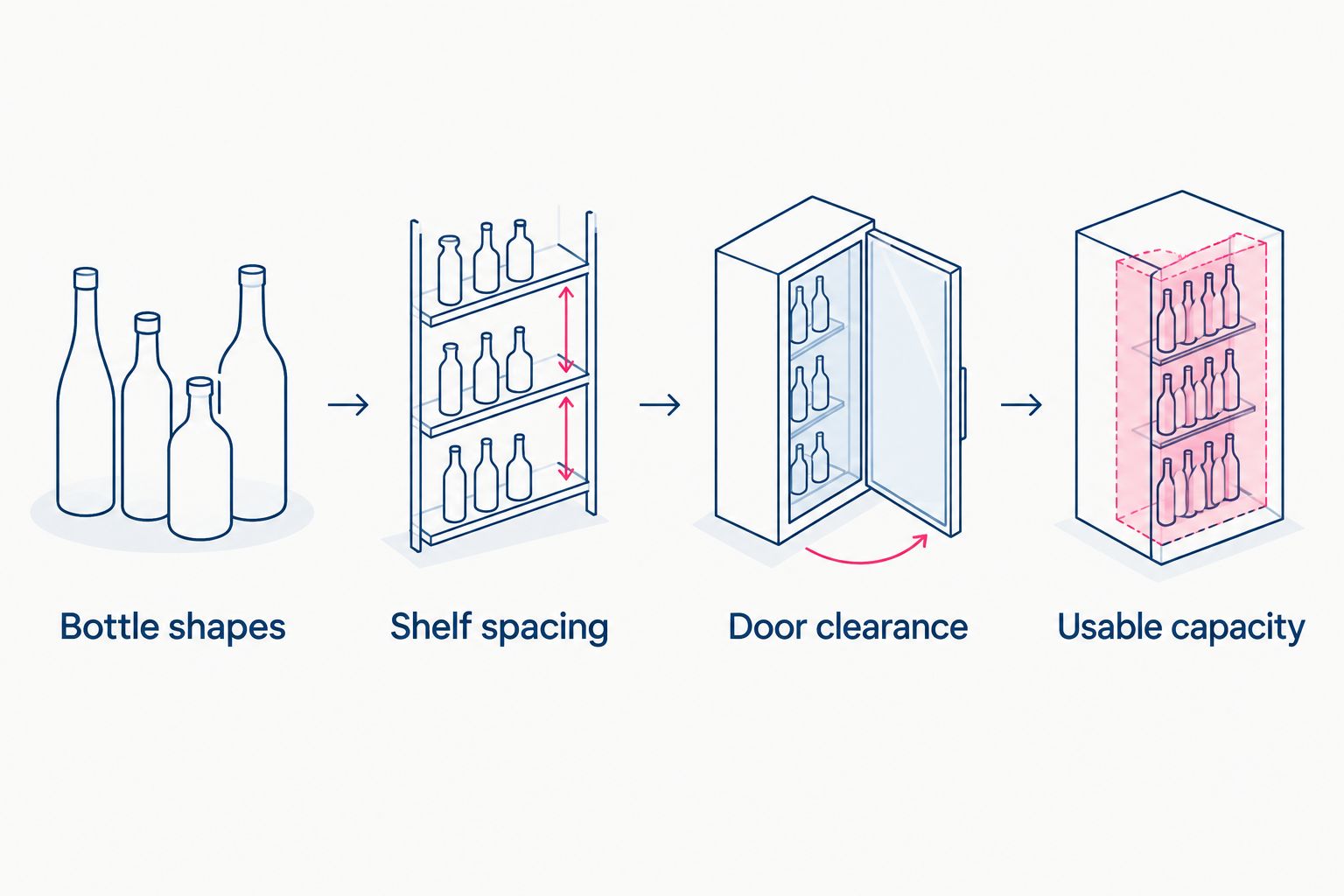
Use this sequence when comparing a 2026 shortlist:
- Bottle shapes: Identify broad shoulders, wide bases, tall necks, and unusually shaped bottles in your collection.
- Shelf spacing: Check the rack layout against those bottles, including clearance above them.
- Door clearance: Confirm that the door opens far enough to move shelves as intended.
- Usable capacity: Reassess the layout if accommodating larger bottles requires removing a shelf.
A 375 ml half bottle holds half the wine of a standard 750 ml bottle, but it does not automatically occupy half a rack position. Check how shorter bottles rest on the shelves rather than assuming smaller volume creates proportional storage savings.
Leave room for the way you buy, too. A collection that only fits when every bottle sits in a particular position becomes inconvenient as soon as you change wine styles.
Plan ventilation and access before the cabinet layout
A wine fridge belongs in a location that satisfies its installation manual. Keep the required vents unobstructed, and do not assume a decorative opening provides the clearance the appliance needs.
In a home bar, wet bar cabinet layouts need to accommodate the wine fridge's door swing and ventilation route alongside sink and cabinet access. An appliance door that blocks a drawer makes an otherwise workable storage location frustrating to use.
Check these details before finalizing the opening:
- Ventilation: Follow the exact model's required airflow and clearances.
- Door access: Account for the hinge side, handle, and shelf-extension position.
- Power access: Follow the manufacturer's electrical instructions and retain appropriate access.
- Room conditions: Keep the location within the appliance's stated ambient range.
Avoid choosing a fridge solely because its listed width matches an existing gap. Width is only one part of installation fit; depth, height, ventilation, and access belong in the same decision.
Use storage temperature differently from serving temperature
Long-term storage and immediate serving solve different problems. Around 55°F, or 13°C, is a common cellaring target, but many white and sparkling wines are served colder, while many fuller reds are served warmer.
That distinction is why a mixed collection does not automatically require dual-zone cooling. Store unopened bottles together, then adjust the bottle you plan to open rather than changing the whole cabinet for dinner.
A wine fridge also does not replace a closure or preservation method after opening. For opened bottles, how long wine lasts after you open it is a separate question from the fridge's temperature setting.
How these configurations rank
The ranking prioritizes storage purpose, installation fit, bottle access, and cooling suitability. Single-zone compressor cooling takes the default position because a small mixed collection does not inherently need separate temperature compartments.
Dual-zone cooling moves ahead when serving convenience is the main requirement. Built-in-rated equipment becomes essential when cabinetry dictates the installation, while countertop and thermoelectric configurations address narrower placement needs.
These are configuration recommendations, not laboratory rankings of individual appliances. Apply the criteria to the exact model and installation manual before buying.
Which wine fridge should you choose?
Choose a single-zone compressor wine fridge unless your serving routine or installation requires something else. Buywinesonline shoppers planning a small home collection should settle bottle fit and placement before adding extra temperature zones.
For a 2026 purchase, make the final decision in this order: location, installation approval, bottle layout, cooling requirements, then convenience features. Reject any appliance that fails an earlier check, even if its display or advertised capacity looks appealing.
FAQ
What's the best wine fridge for a small home collection?
A single-zone compressor wine fridge is the best starting configuration when consistent storage is your main goal. Check bottle fit, installation clearances, and the room's operating conditions before selecting a model.
Do I need a dual-zone wine fridge for red and white wine?
No, red and white wines can share a storage temperature. Dual-zone cooling is useful when you want separate temperatures for serving different styles.
What temperature should I set my wine fridge to?
Around 55°F, or 13°C, is a widely used target for storing unopened wine. Serving temperatures differ by style, so prepare the bottle you plan to open separately.
Can I put a freestanding wine fridge under a counter?
Only if the manufacturer explicitly permits that installation and its clearance requirements are met. A fridge fitting beneath the counter does not establish that its ventilation is suitable.
Does a wine fridge's bottle count include Champagne bottles?
Do not assume the advertised count accommodates your Champagne bottles. Check the manufacturer's capacity assumptions and shelf dimensions against the bottles you actually store.
Are thermoelectric wine fridges silent?
No, thermoelectric cooling does not guarantee silent operation. These units avoid compressor cycling, but fans can still create sound.
Can I keep a wine fridge in my garage?
Use a garage only when its conditions stay within the exact appliance's specified operating range. Check seasonal temperatures rather than relying on the room temperature on installation day.
One last thing
More temperature zones do not create more storage space. Before buying, sketch where your widest bottles will sit and how you will reach them; that simple exercise exposes an unsuitable shelf layout faster than a feature list.