
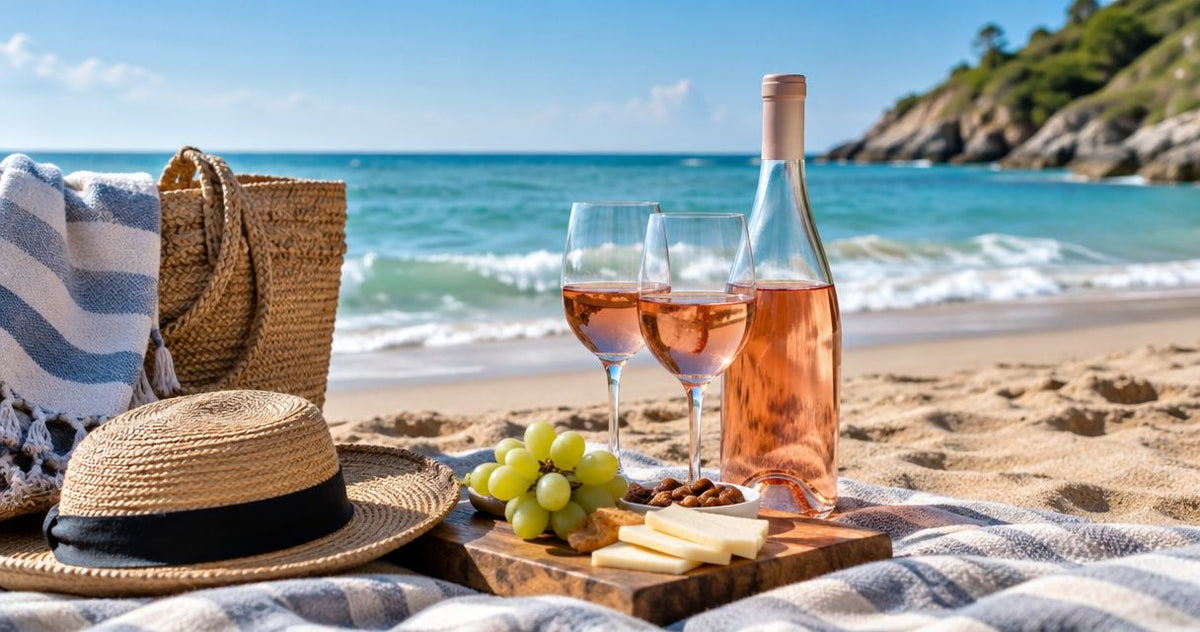
Best overall: dry rosé. Best for seafood: Sauvignon Blanc. Best for a sunset toast: Prosecco. The best wine for beach vacation plans in 2026 fits your food, stays chilled, and works wherever you’re allowed to drink it—not just wherever you can carry it.
- Dry rosé is the best all-around wine for beach vacation meals, from picnic lunches to grilled fish.
- Choose Sauvignon Blanc for seafood, off-dry Riesling for spicy takeout, and Pinot Noir for red-wine drinkers.
- Buywinesonline serves home wine shoppers and gift buyers; choose your preferred beach-wine style before selecting a bottle.
- Check beach alcohol and glass rules before packing wine, and keep bottles out of hot cars.
Why your beach wine needs a different shortlist
A beach vacation includes more than time on the sand. You’re choosing wine for rental-house dinners, seafood takeout, picnic lunches, and evenings outside. A bottle that suits a steak dinner isn’t automatically the right choice for all of those moments.
Buywinesonline sells red, white, rosé, sparkling, and dessert wines. Start with the style and the meal, then choose the bottle. This 2026 guide ranks wine styles rather than individual vintages, with a separate use case for each pick.
Before anything else, check the rules at your destination. Alcohol permission and glass permission are separate questions; a reusable cup doesn’t make drinking legal where alcohol is prohibited.
What makes the best wine for a beach vacation?
Use these criteria before choosing between the styles below:
- Freshness: Look for acidity that balances salty snacks, citrus dressings, and seafood rather than a heavy, warming finish.
- Food flexibility: Favor a style that suits the meals you actually plan to eat. Rosé covers a different range than a white chosen specifically for shellfish.
- Sweetness fit: Dry isn’t automatically better. A little sweetness is useful with spicy food, but it changes the pairing with delicate dishes.
- Cooling needs: Choose a wine you can keep at a pleasant temperature. An insulated cooler matters more than a beach-themed label.
- Serving practicality: Check the closure, bottle size, and container rules. Sparkling wine also needs a suitable stopper if you don’t finish it.
- Group preference: Ask whether your companions prefer dry whites, sweeter wines, or reds. A versatile choice still needs willing drinkers.
Best beach vacation wines at a glance
These are style-level recommendations, not claims that every bottle tastes alike. Check the individual wine’s description for sweetness, oak influence, and alcohol level.
| Rank and wine style | Best for | Standout feature | Key limitation |
|---|---|---|---|
| 1. Dry rosé | Mixed picnic food | Bridges light seafood, salads, and grilled dishes | Pink color doesn’t establish sweetness |
| 2. Sauvignon Blanc | Seafood with citrus or herbs | Bright acidity and citrus or herbal character | Sharp acidity won’t suit every palate |
| 3. Pinot Grigio | Simple lunches and mild flavors | Usually a light, straightforward dry white | Delicate examples get lost beside bold sauces |
| 4. Prosecco | Sunset toasts | Bubbles and fresh fruit character | Needs careful opening and a sparkling-wine stopper |
| 5. Off-dry Riesling | Spicy takeout | Acidity balanced by some sweetness | Sweetness varies between bottles |
| 6. Pinot Noir | Red-wine drinkers at dinner | Generally lighter tannins than Cabernet Sauvignon | Still needs protection from outdoor heat |
1. Dry rosé: best beach wine for mixed picnic food
Dry rosé is the default when your table includes several foods and you don’t want separate bottles for each plate. It brings red-fruit flavors without the tannic weight of a full-bodied red. Serve it chilled with sandwiches, salads, grilled shrimp, or chicken.
Don’t choose by shade alone. A pale rosé isn’t a guarantee of dryness, and a darker rosé isn’t automatically sweet; the producer’s description is more useful than the color.
Dry rosé pros:
- Suits a broad spread of light picnic foods.
- Offers red-fruit character for drinkers who don’t want a white.
- Works for both lunch and a casual grilled dinner.
Dry rosé cons:
- Sweetness isn’t obvious from appearance.
- Delicate examples are a poor match for very rich or heavily smoked food.
Best for: A mixed-food picnic or rental-house lunch with different preferences around the table.
Verdict: Buy dry rosé as your default beach-vacation style.
2. Sauvignon Blanc: best beach wine for seafood
Sauvignon Blanc belongs beside seafood served with lemon, fresh herbs, or a tangy dressing. Its acidity fits those flavors, while citrus and herbal notes keep the pairing focused. Choose it for grilled fish, shrimp salads, or vegetable-heavy lunches.
Style matters here. A crisp, unoaked Sauvignon Blanc serves a different purpose from a richer, oak-influenced example, so read beyond the grape name before choosing.
Sauvignon Blanc pros:
- Fits lemon-dressed seafood and salads.
- Offers a clear choice for people who enjoy crisp dry whites.
- Works with herb-forward dishes as well as fish.
Sauvignon Blanc cons:
- Pronounced acidity tastes too sharp for some drinkers.
- Herbal flavors won’t appeal to people seeking a softer, neutral white.
Best for: Seafood dinners where citrus and herbs lead the seasoning.
Verdict: Buy Sauvignon Blanc for your seafood meal, not as an automatic crowd-pleaser.
3. Pinot Grigio: best beach wine for simple lunches
Pinot Grigio is a sensible choice when you want a dry white that doesn’t dominate lunch. Many examples are light-bodied, with restrained apple, pear, or citrus flavors. Pair that style with simple sandwiches, mild cheeses, or lightly seasoned fish.
The name doesn’t promise one uniform style. Pinot Gris is the same grape, and wines under either name range from light and crisp to richer examples; use the tasting description to find the version you want.
Pinot Grigio pros:
- Fits mild, uncomplicated picnic food.
- Offers an alternative to strongly herbal Sauvignon Blanc.
- Keeps the focus on the meal rather than a powerful wine flavor.
Pinot Grigio cons:
- Light examples struggle beside intense spice or smoky sauces.
- The grape name alone doesn’t establish body or sweetness.
Best for: Easy lunches where the food is lightly seasoned.
Verdict: Buy a light, dry Pinot Grigio for uncomplicated daytime meals.
4. Prosecco: best beach wine for a sunset toast
Prosecco adds bubbles to a vacation celebration without requiring a formal dinner. Its fresh fruit character suits light appetizers, salty snacks, and a short toast before the meal. Keep it chilled and open it carefully, with the bottle pointed away from people.
For your 2026 trip, read the sweetness designation rather than assuming all sparkling wine is dry. In sparkling-wine terminology, Brut is drier than Extra Dry—a naming detail that matters if your group dislikes sweetness.
Prosecco pros:
- Makes a clear choice for a celebratory moment.
- Pairs naturally with light appetizers and salty snacks.
- Offers sweetness labels that help narrow your choice.
Prosecco cons:
- Requires more opening care than still wine.
- Needs a sparkling-wine stopper to help retain bubbles after opening.
Best for: A permitted sunset toast on a terrace, balcony, or outdoor dining area.
Verdict: Buy Prosecco for the toast; choose still wine for a longer, simpler meal.
5. Off-dry Riesling: best beach wine for spicy takeout
Off-dry Riesling combines noticeable acidity with some sweetness. That balance makes it a useful partner for spicy noodles, chili-seasoned shrimp, or takeout with sweet-and-spicy sauces. Choose it because the food calls for it, not because every guest necessarily wants sweet wine.
Riesling ranges from dry to very sweet. Look for an explicit sweetness description; neither the grape name nor the bottle shape tells you enough.
Off-dry Riesling pros:
- Some sweetness helps balance the sensation of chili heat.
- Acidity keeps the pairing from relying on sweetness alone.
- Gives sweeter-wine drinkers a distinct place in your vacation selection.
Off-dry Riesling cons:
- Sweetness varies substantially across the category.
- Guests who only enjoy dry wines need another option.
Best for: Spicy takeout nights at your vacation rental.
Verdict: Buy off-dry Riesling when chili heat is part of dinner.
6. Pinot Noir: best beach wine for red-wine drinkers
Pinot Noir is the red to consider when your vacation includes grilled salmon, chicken, or mushroom dishes. It generally has lighter tannins than Cabernet Sauvignon, although body and oak influence vary. Choose a lighter example rather than assuming every Pinot Noir fits the same role.
Keep Pinot Noir cool, too. A warm patio or parked car isn’t appropriate wine storage, and a modest chill is preferable to letting a red become hot outdoors.
Pinot Noir pros:
- Gives red-wine drinkers an option without defaulting to a heavy red.
- Fits grilled salmon, poultry, and mushrooms.
- Works well for a sit-down vacation dinner.
Pinot Noir cons:
- Richer examples are less suited to a light picnic.
- Requires temperature care despite being red wine.
Best for: Red-wine drinkers eating dinner back at the rental.
Verdict: Buy lighter-style Pinot Noir for dinner; skip leaving it warm beside the grill.
How these wine styles rank
The 2026 ranking prioritizes meal flexibility first, then a distinct food pairing or occasion. Dry rosé takes the default slot because it bridges several picnic foods; Sauvignon Blanc and off-dry Riesling earn narrower recommendations for seafood and spice.
Prosecco ranks for the occasion, not for all-day practicality. Pinot Noir earns the red-wine slot without pretending that outdoor heat stops mattering once the wine is red. These are buying criteria, not results from a bottle tasting or a scored product test.
Pack and serve beach wine without the usual mistakes
For your 2026 packing list, settle the destination rules before the bottle choice. Then plan cooling and serving around the actual meal, rather than carrying every option onto the sand.
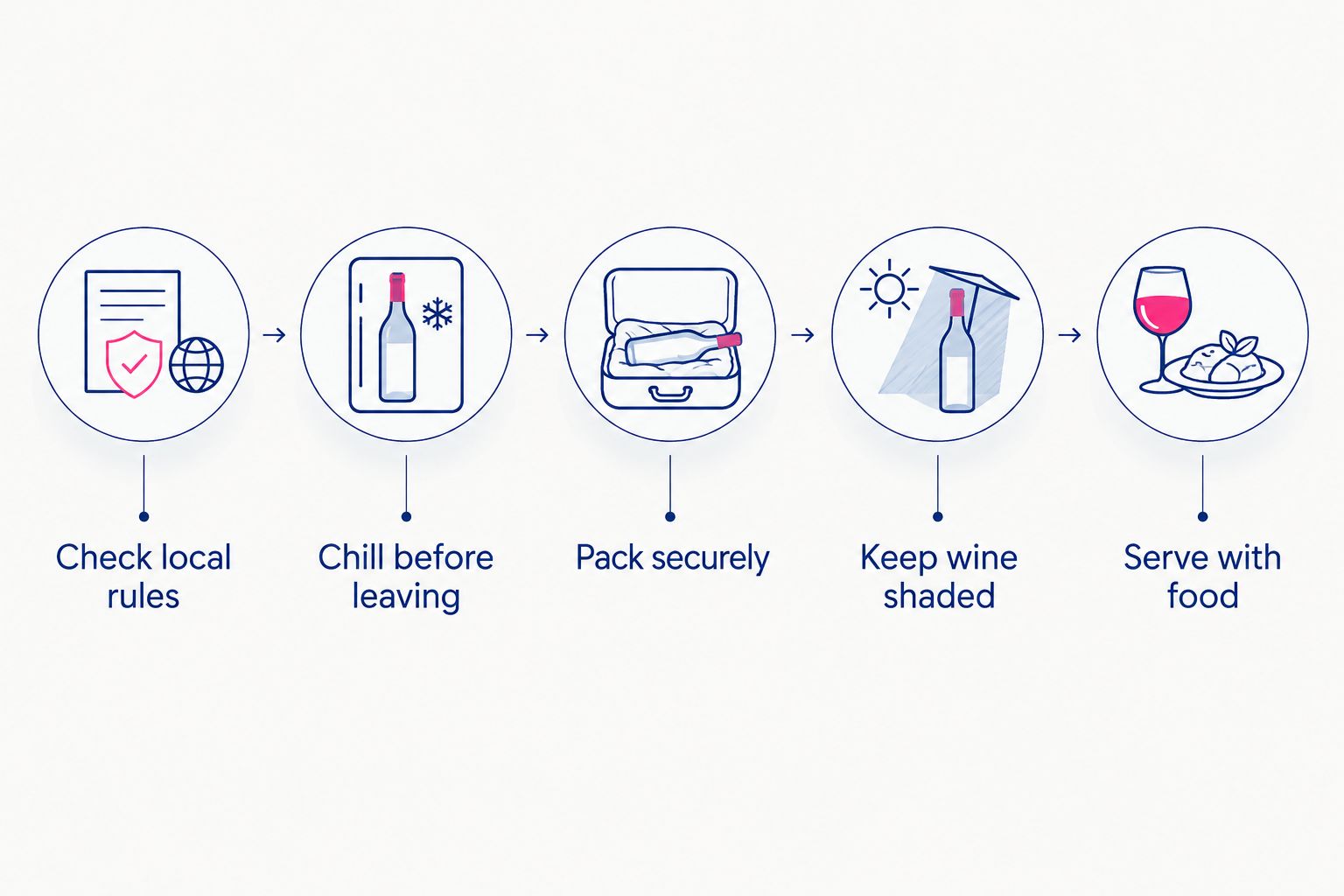
- Check local rules. Confirm alcohol and glass restrictions for the specific beach, park, or property.
- Chill before leaving. Start with cold wine instead of asking a cooler to cool a warm bottle. Use this guide to chilling wine quickly when preparation runs late.
- Pack securely. Keep permitted bottles protected, bring the right opener, and choose reusable drinkware where appropriate.
- Keep wine shaded. Close the cooler between pours and don’t leave wine in a parked car.
- Serve with food. Pour modestly, keep drinking water available, and leave driving and swimming separate from alcohol.
A standard 750 ml bottle contains five 150 ml pours. That is serving arithmetic, not a drinking target: you don’t need to finish a bottle because it is open. Choose how much to bring around the adults who want wine with the meal, and pack nonalcoholic choices as well.
Which beach vacation wine should you choose?
Choose dry rosé if you want one style for a mixed picnic. Switch to Sauvignon Blanc for citrus-dressed seafood, Pinot Grigio for mild lunches, or off-dry Riesling for spicy takeout. Keep Prosecco for a toast and Pinot Noir for red-wine drinkers at dinner.
Buywinesonline is an online wine retailer for home consumers and gift shoppers. Use that range to match your meal and preferences, rather than treating a beach-related name as evidence that a wine suits your trip.
FAQ
What's the best wine for a beach vacation?
Dry rosé is the best default wine for a beach vacation with mixed picnic food. Choose Sauvignon Blanc instead for citrus-dressed seafood, or off-dry Riesling for spicy takeout.
Is white wine or rosé better for the beach?
Rosé is the more flexible choice for a mixed picnic, while a crisp white suits a more specific meal. Sauvignon Blanc fits seafood with herbs and citrus; Pinot Grigio fits lighter, mildly seasoned lunches.
Can I bring wine onto any public beach?
No; check the specific beach's alcohol and container rules before bringing wine. Permission to use a beach does not establish permission to drink alcohol or carry glass there.
What red wine should I bring on a beach vacation?
Choose a lighter-style Pinot Noir for grilled salmon, chicken, or mushrooms at dinner. Keep it cool and shaded rather than serving it hot from an outdoor table.
Is Prosecco a good vacation wine?
Prosecco is a good choice for a celebratory toast with light appetizers. Keep it chilled, open it away from people, and use a sparkling-wine stopper for an unfinished bottle.
How many glasses are in a bottle of wine?
A 750 ml bottle contains five 150 ml pours. Glass size and pour size change the number of servings, so use measured volume rather than the size of your cup.
What should I check when choosing beach wine in 2026?
Check destination rules, your meal, the wine's sweetness, and how you'll keep it cool. At Buywinesonline, use the individual wine description to narrow the style rather than relying on its label design or name.
One last thing
Your best 2026 beach-wine purchase might be the bottle you leave at the rental until dinner. If the beach prohibits alcohol, lacks shade, or makes glass impractical, save the wine for a permitted setting with food and proper cooling. Matching the setting beats forcing a bottle into the day.