
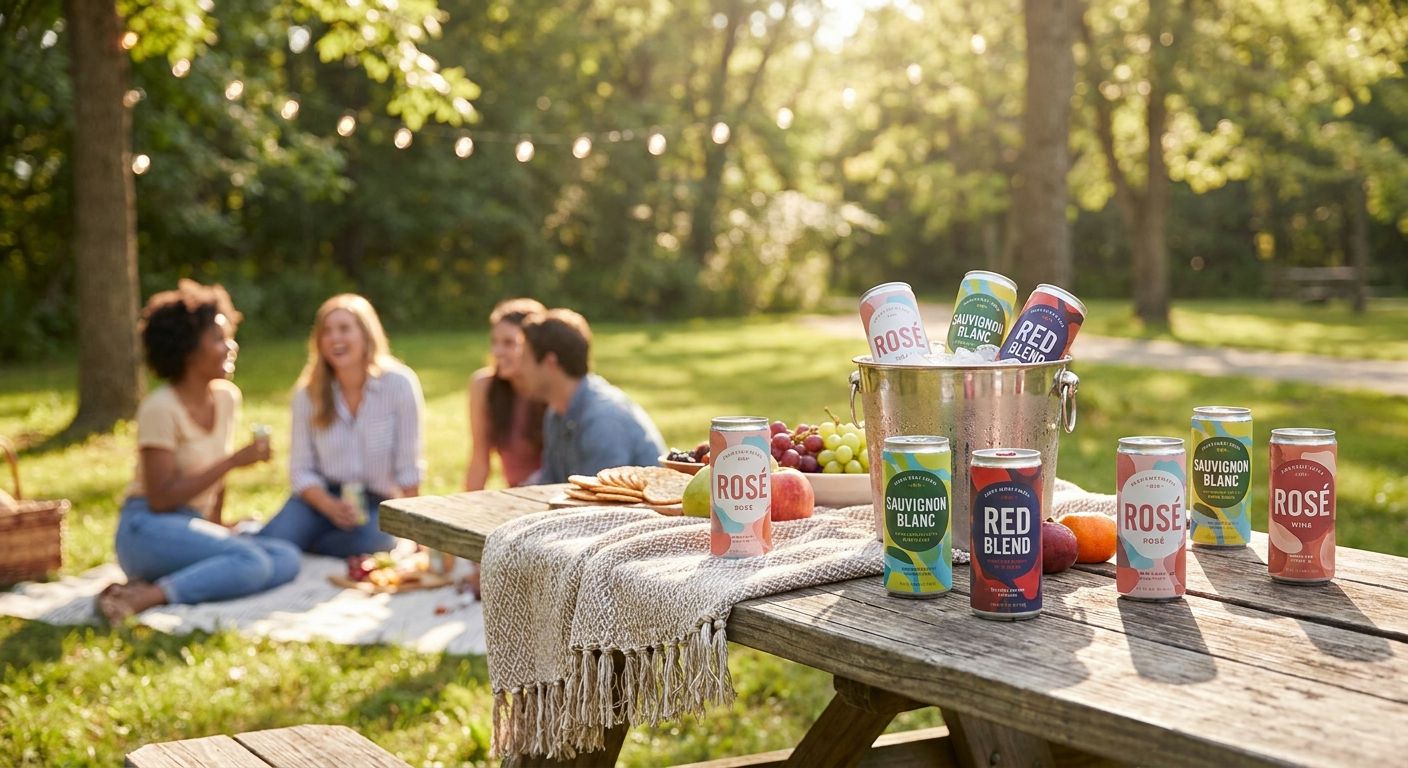
Canned wine promises grab-and-go convenience for backyard parties, tailgates, and beach days in 2026, but the format only wins on one thing: no glass. Here's an honest, ranked look at what actually holds up at an outdoor event — canned wine included — and where a curated bottle beats a can every time.
- Canned wine wins for zero-glass portability at outdoor events, but style and quality swing widely can to can.
- Caymus California Cabernet Sauvignon 2023 (375 ml) is the closest single-serve red alternative for tailgates and picnics.
- La Marca Prosecco chills fast in an ice bucket and pours easily for casual outdoor toasts.
- Laurent Perrier Cuvee Rose is the buy for a dressier garden party that still has to survive being outside.
- A reusable ice pack does more for outdoor wine service in 2026 than most cans manage on their own.
Why this matters
Canned wine took off because it solves a real problem: glass bottles break at pools, parks, and campsites where they're often banned outright. A 250 ml can is sealed for one pour, chills faster than a full bottle, and skips the corkscrew entirely.
But convenience isn't the same as quality control. A retailer that curates specific vintages and appellations can tell you exactly what's in a 750 ml bottle; most canned wine brands blend for consistency at volume, and the format doesn't leave much room for appellation-level detail. If bottle size for a crowd is still the open question, choosing the right wine bottle size for parties walks through the math before you buy anything.
This guide ranks canned wine against the bottle-format alternatives that actually show up in a curated wine selection, so you can decide what belongs in the cooler for your next outdoor event.
What makes the best canned wine for outdoor events
- No glass, no corkscrew — aluminum or PET packaging survives a drop on pavement or gravel.
- Fast chill-down — thin can walls cool in an ice-filled cooler in minutes, versus a full 750 ml bottle.
- Accurate single serving — 250 ml is one generous glass, so pour sizes for a crowd aren't a guessing game.
- Style range — reds, whites, rosé, and sparkling all exist in can format, though not every brand covers every style.
- Post-open freshness — a can is sealed for one pour, so there's no half-finished bottle going flat and warm in the sun.
- Sourcing you can vouch for — this is where cans lose ground against a retailer stocking named vintages and regions.
At a glance
| Option | Best for | Standout feature | Key limitation |
|---|---|---|---|
| Canned wine | Zero-glass, packable drinking | Shatterproof, chills in minutes | Quality and style vary widely by brand |
| Caymus California Cabernet Sauvignon 2023 (375 ml) | Single-serve red at tailgates | Half-bottle format, 2-3 glasses | Still glass, needs careful packing |
| La Marca Prosecco | Casual outdoor toasts | Full 750 ml sparkling, chills fast in an ice bucket | Needs a flute or cup, not sealed per-pour |
| Laurent Perrier Cuvee Rose | Dressed-up garden parties | Rosé Champagne built for a toast-worthy moment | Less casual, needs proper chilling |
| Ice Pack | Keeping any format cold outdoors | Reusable, sized for bottle service | Not a wine — pair it with a bottle pick above |
1. Canned wine: best for zero-glass, packable outdoor drinking
Canned wine covers red, white, rosé, and sparkling styles packed into single-serve 250 ml containers, roughly a third of a standard 750 ml bottle. It's built for places where glass is impractical or banned outright — beaches, pools, hiking trails, festival grounds.
Canned wine pros:
- No glass to break at a park, beach, or campsite
- Chills faster than a full bottle once it hits ice
- Built-in portion control — one can is about one glass
Canned wine cons:
- Style and quality swing widely between brands, with no guarantee of the appellation-level detail a curated bottle offers
- Not part of BuyWinesOnline's current bottle-focused catalog
- Recycling and disposal logistics get messy at events without cans-only bins
Best for: campsites, beaches, and any outdoor event where breakage risk rules out glass entirely.
Verdict: Buy if portability is the single deciding factor for your event — just don't expect appellation-level consistency from every can on a shelf.
2. Caymus California Cabernet Sauvignon 2023 (375 ml): best single-serve red for tailgates
The Caymus California Cabernet Sauvignon 375 ml is a half-bottle format of a well-known Napa-adjacent Cabernet Sauvignon, sized for one or two people without opening a full 750 ml bottle. It's the closest a curated red gets to can-style portion control while staying in glass.
Caymus 375 ml pros:
- Half-bottle size limits leftover wine and waste
- Full-format Cabernet Sauvignon character in a smaller pour
- Easier to pack into a cooler bag than a full 750 ml bottle
Caymus 375 ml cons:
- Still glass, so it needs padding for transport
- Costs more per ounce than buying a full 750 ml bottle to split
Best for: tailgates, small picnics, or one or two people sharing a red without committing to a full bottle.
Verdict: Buy for red drinkers who want portion control without switching formats entirely.
3. La Marca Prosecco: best budget-friendly bubbly for outdoor toasts
La Marca Prosecco is a widely available Italian sparkling wine built for casual celebration pours — birthdays, backyard toasts, brunch on the patio. It chills quickly in an ice bucket and doesn't need decanting or breathing time.
La Marca Prosecco pros:
- Chills fast, ready to pour within minutes on ice
- Works for toasts, mimosas, or straight sipping outdoors
- Full 750 ml format serves a small group, not just one person
La Marca Prosecco cons:
- Glass bottle needs a bucket or cooler, not just a can-style chill
- Needs a flute or wide cup on-site, not sealed per-pour like a can
Best for: casual outdoor toasts, brunch gatherings, or any event where bubbly sets the tone.
Verdict: Buy for group celebrations where a full bottle of sparkling wine makes more sense than single cans.
4. Laurent Perrier Cuvee Rose: best dressed-up pour for garden parties
Laurent Perrier Cuvee Rose is a rosé Champagne built for a moment that calls for more than a casual pour — bridal showers, milestone birthdays, an anniversary dinner moved outside. It still needs proper chilling to hold its structure in the heat.
Laurent Perrier Cuvee Rose pros:
- Elevates an outdoor event beyond casual sipping
- Rosé Champagne format suits toasts and photo-worthy moments
- Full 750 ml bottle serves a small group properly
Laurent Perrier Cuvee Rose cons:
- Needs consistent chilling — it loses its edge if it sits warm too long
- Less casual than a can or a Prosecco pour, so it fits fewer outdoor settings
Best for: garden parties, bridal showers, and outdoor events with a dressier tone.
Verdict: Buy when the occasion calls for something more formal than a backyard barbecue pour.
5. Ice Pack: best accessory for keeping any format cold outdoors
An ice pack isn't wine, but it solves the exact problem canned wine gets credit for: keeping a pour cold once it's outside a refrigerator. Pairing a reusable ice pack with a 375 ml or 750 ml bottle closes most of the chill-speed gap that cans claim as their advantage.
Ice Pack pros:
- Reusable, so it works event after event without waste
- Sized for bottle service, not just a single can
- Extends chill time for a longer outdoor gathering
Ice Pack cons:
- Doesn't replace a full cooler for large groups
- Requires pre-freezing ahead of the event
Best for: any outdoor event where a bottle needs to stay cold longer than a single afternoon.
Verdict: Buy as the accessory that makes any bottle pick above behave more like a can.


How this ranking works
Each pick above is scored against the same six criteria: breakage risk, chill-down speed, serving accuracy, style range, post-open freshness, and sourcing confidence. Canned wine sweeps the first two; the bottle picks sweep the last two. No single format wins on all six, which is why the list reads as a decision tree, not a leaderboard.
Which option should you choose for your outdoor event?
For a beach day, hike, or any spot where glass is genuinely risky, canned wine is the buy — just check the label for style and region before assuming quality. For everything else in 2026 — tailgates, garden parties, toasts, or a casual patio dinner — a curated bottle paired with a reusable ice pack closes the convenience gap while keeping the sourcing you can trust. The Caymus California Cabernet Sauvignon 375 ml covers single-serve reds, La Marca Prosecco covers casual bubbly, and Laurent Perrier Cuvee Rose covers the dressier end of outdoor entertaining.
FAQ
What is canned wine?
Canned wine is wine packaged in single-serve aluminum or PET cans, typically around 250 ml, about a third of a standard 750 ml bottle. It comes in red, white, rosé, and sparkling styles.
How many glasses are in a can of wine?
A standard 250 ml wine can holds roughly one generous glass, sometimes closer to a glass and a half depending on pour size. A 750 ml bottle holds about 4-5 standard glasses by comparison.
Is canned wine as good as bottled wine?
Quality varies widely by brand rather than by format alone. A curated 750 ml bottle from a named vineyard or appellation generally offers more sourcing detail than a mass-market can.
Does canned wine need to be refrigerated?
Yes, canned wine should be chilled before serving just like a bottle, though thin can walls chill faster in an ice-filled cooler than a full 750 ml bottle does.
What's the best alternative to canned wine for outdoor events?
A 375 ml half-bottle, like Caymus California Cabernet Sauvignon 2023, gives similar portion control in glass. Pairing a full bottle with a reusable ice pack closes most of the remaining convenience gap.
How long does wine stay fresh once opened outdoors?
An opened 750 ml bottle typically holds its character for 3-5 days when re-corked and refrigerated, though heat and sun exposure outdoors shorten that window. Canned wine avoids the issue entirely since each can is sealed for one pour.
Can you bring canned wine to the beach or a park?
Check local rules first, since many beaches and parks restrict glass but allow cans. That restriction is the main reason canned wine exists as a category.
Is canned wine cheaper than bottled wine?
Price per ounce varies by brand and isn't consistently cheaper than a bottled wine of similar quality. Convenience, not cost, is the format's real advantage.
One last thing
A sealed can actually warms up faster once it's opened and sitting in direct sun than a full 750 ml bottle does, because its smaller volume has more surface area relative to the liquid inside. If the plan is drinking outdoors for more than an hour, a bottle on ice with a reusable pack often holds its temperature longer than an open can left on a picnic table.