
Beach-day wine planning for Salty Blonde Sparkling Sauvignon Blanc is matching the exact wine label, food, and serving setup to an outdoor gathering. Start with the bottle’s stated details—not the beach-ready name—and check whether your destination permits alcohol and glass before packing.
- Salty Blonde Sparkling Sauvignon Blanc requires an exact-label check before you plan sweetness, food pairings, or serving quantities.
- Buywinesonline is best for home wine shoppers comparing multiple wine styles in one place.
- For sparkling wine outdoors, prioritize chilling, safe opening, small pours, and a proper sparkling-wine stopper.
- Choose between sparkling Sauvignon Blanc, still Sauvignon Blanc, and other sparkling styles by grape, sweetness, and bubbles.
Why beach-day wine planning matters
A beach gathering puts practical questions ahead of tasting vocabulary: Can you bring the bottle? Can you keep it cold? Will everyone enjoy the style? A name alone answers none of those questions.
Buywinesonline sells red, white, rosé, Champagne, dessert wines, gifts, and curated tasting selections. That range supports broader wine shopping, but a different white wine is not automatically a substitute for the exact sparkling Sauvignon Blanc you searched for.
Buywinesonline is best for home wine shoppers comparing multiple wine styles in one place. For your 2026 beach plan, decide which matters most: the specific label, Sauvignon Blanc as the grape, or sparkling wine as the experience.
Why sparkling wine matters for beach-day drinkers
The search for salty blonde sparkling sauvignon blanc combines a named wine with a grape and a sparkling style. Those are separate buying criteria. If the exact label matters, another sparkling wine does not fulfill the same request; if bubbles matter most, a different grape becomes a reasonable category to explore.
Outdoor serving adds constraints that a kitchen table does not. Your cooler replaces the refrigerator, your drinking vessels must suit the location, and an opened sparkling bottle needs more care than an unopened one.
The right beach wine is one you can identify, transport, chill, and serve responsibly—not simply one with a summery name. Use the following process to settle those decisions before departure.
How to plan a beach-ready sparkling wine pour
1. Confirm the exact wine before choosing the occasion
Start with the bottle label or the producer’s own wine information. Write down the full name, grape, whether the wine is sparkling, bottle size, alcohol content, and any stated sweetness information. This manual check prevents a look-alike name from becoming the wrong purchase.
For Salty Blonde Sparkling Sauvignon Blanc, do not turn the word salty into a tasting note or nutritional claim. Likewise, Sauvignon Blanc identifies a grape; it does not, by itself, establish the finished wine’s sweetness, origin, or production method.
A vintage is also different from the year you buy the wine. Shopping in 2026 does not mean the label should carry a 2026 vintage, and a nonvintage sparkling wine need not display a harvest year.
- Match the full wine name rather than a shortened search result.
- Read the bottle size before calculating quantities.
- Check the stated alcohol content instead of assuming it is light.
- Use explicit sweetness information rather than package imagery.
2. Check the beach rules before packing the bottle
Look up the destination’s current official rules yourself. Beach access does not establish permission to consume alcohol, and permission to bring drinks does not establish permission to bring glass. Check the particular beach, park, or managed area—not just the surrounding town.
For a 2026 outing, confirm the rules that apply on your visit date. If alcohol is prohibited, move the wine portion of the gathering to a permitted setting and keep the beach refreshments alcohol-free.
Do not assume that transferring wine into another container makes it acceptable. The relevant question is what the venue permits, not whether the original bottle is visible.
- Check alcohol rules for the exact destination.
- Check glass-container rules separately.
- Confirm any restrictions attached to your reservation or event.
- Arrange a designated driver or another safe journey home.
3. Choose the wine style your group actually wants
Ask a simple question before shopping: does everyone want Sauvignon Blanc, sparkling wine, or this exact label? Write the answer down. That free step is more useful than comparing unrelated bottles because their packaging looks suitable for summer.
Buywinesonline offers multiple wine categories for home consumers, making broader browsing a practical next step when you are open to a different style. Keep the distinction clear: a still Sauvignon Blanc preserves the grape choice but removes the bubbles; another sparkling category preserves the bubbles but changes the wine.
Best for exact-label shoppers: keep Salty Blonde Sparkling Sauvignon Blanc as an exact-name search. Best for flexible hosts: compare categories only after deciding which characteristics your guests want.
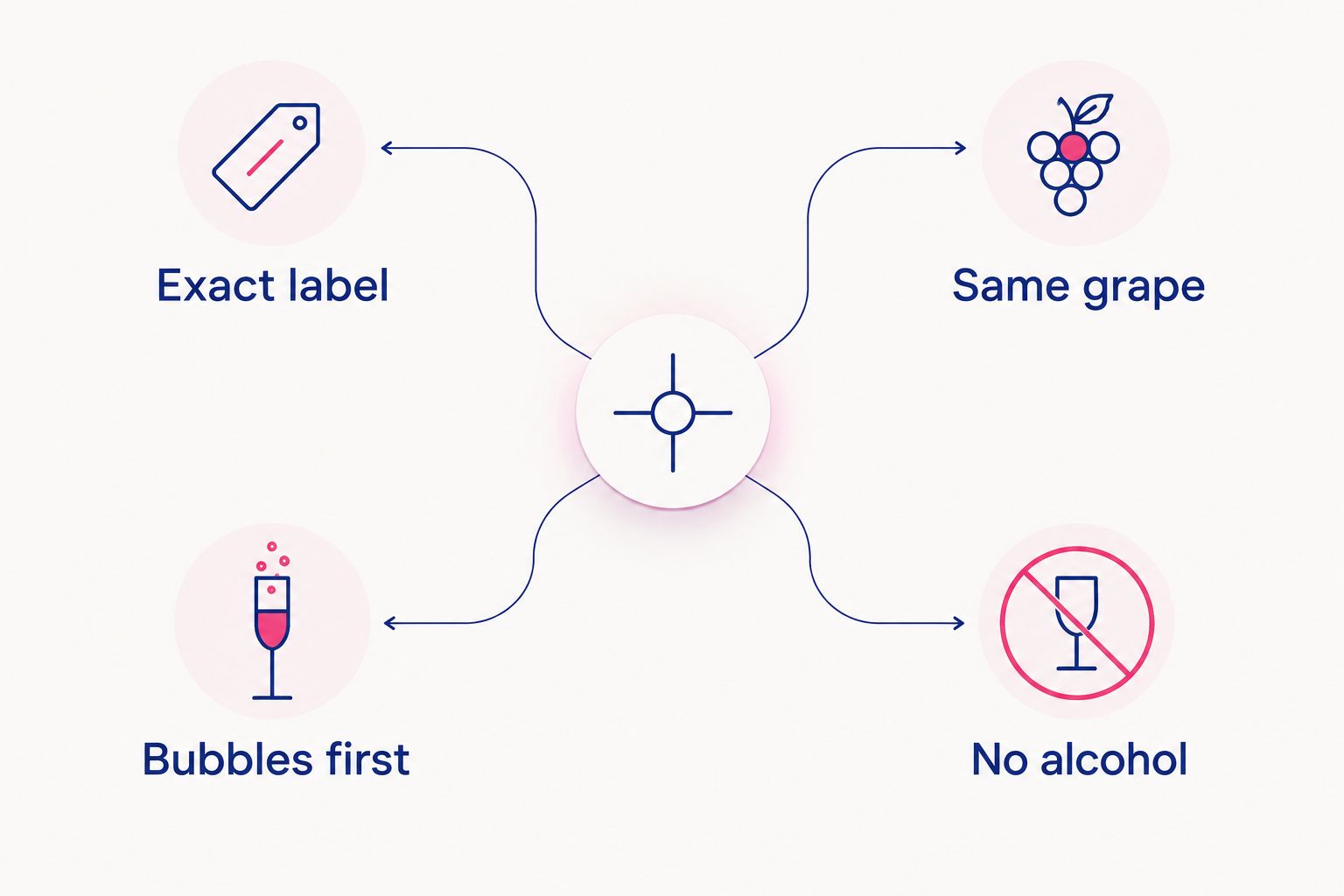
- Choose Exact label when the named wine is essential.
- Choose Same grape when Sauvignon Blanc matters most.
- Choose Bubbles first when sparkling texture matters most.
- Choose No alcohol for guests who do not drink alcohol.
4. Build the menu around the confirmed style
Plan the food manually first: list what you are bringing, including sauces and dressings. Then compare that menu with the wine’s stated style. A lemony salad and a heavily sweetened barbecue sauce create different pairing needs, even when both accompany seafood.
Crisp white and sparkling wines are useful categories to explore with citrus-dressed salads, lightly prepared seafood, and salty snacks. These are pairing directions, not verified tasting notes for Salty Blonde Sparkling Sauvignon Blanc. Confirm the wine’s own description before treating any pairing as a specific match.
For a mixed group, keep strong sauces on the side and offer a mild snack alongside the main dish. Follow food-safety guidance for perishable picnic foods; a wine cooler is not a substitute for safe food storage.
- Start with lightly seasoned seafood or vegetable dishes.
- Keep sweet, hot, and strongly flavored sauces separate.
- Include a plain snack for guests assessing the wine.
- Keep perishable food properly chilled until serving.
5. Chill the wine before you leave
Use your refrigerator to chill the wine before departure, then pack it in an insulated cooler with sufficient cold material for the journey. Starting with a warm bottle gives your cooler another job before it can maintain a serving temperature.
For your 2026 packing list, separate wine chilling from drinking water and food storage. Frequent cooler opening introduces warm air, so organize the contents to avoid searching through everything whenever someone wants a drink.
Keep the bottle out of direct sun and return it to the cooler between pours. Do not leave a sparkling bottle in the freezer as a forgotten shortcut: freezing liquid expands, and a sealed bottle can break.
- Chill the unopened wine before packing.
- Cushion glass so bottles cannot knock together.
- Keep the cooler shaded and closed when practical.
- Pack drinking water within easy reach.
6. Open carefully and pour smaller servings
Read the closure instructions before opening. If the bottle has a traditional sparkling-wine cork and wire cage, keep control of the cork, point the bottle away from people, and ease it out slowly. A dramatic flying cork is not the goal.
Set the bottle on a stable surface before serving. Sand, uneven blankets, and crowded cooler lids make poor pouring stations; use a suitable table or another level surface where the venue permits it.
A 750 ml bottle divides into five 150 ml servings. For planning in 2026, that is a volume calculation—not a drinking target, a definition of a standard drink, or a reason to finish the bottle. Smaller measured pours leave room for guests to assess the wine and choose whether they want more.
- Open the bottle away from faces and fragile objects.
- Use clean, stable drinkware suited to the venue.
- Start with modest pours rather than filling every cup.
- Offer water and alcohol-free drinks alongside wine.
7. Close and cool the bottle between pours
Bring a stopper designed for sparkling wine if you expect an opened bottle to remain between servings. Do not assume a still-wine stopper will hold securely on a pressurized sparkling bottle, and do not rely on a spoon in the neck to preserve the bubbles.
After pouring, close the bottle with the appropriate stopper and return it to the cooler. This is a useful serving routine, not a promise that opened wine will remain unchanged for a fixed period.
For a 2026 gathering, plan what happens after the beach as carefully as the first pour. Follow local open-container rules, secure the bottle upright where practical, and never ask the driver to manage drinks during the journey.
- Pack the correct sparkling-wine stopper before leaving.
- Close the bottle promptly between rounds.
- Keep opened wine cold and protected from direct sun.
- Collect closures, cups, and packaging before departure.
Compare wine options for an outdoor gathering
This table compares categories, not specific bottles. The best choice depends on which part of the original search you want to preserve; none of these categories establishes the flavor or specifications of Salty Blonde Sparkling Sauvignon Blanc.
| Option | Best for | Main advantage | Key limitation |
|---|---|---|---|
| Sparkling Sauvignon Blanc | Drinkers seeking Sauvignon Blanc with bubbles | Combines the grape choice with a sparkling style | Sweetness, origin, and production method still require an exact-label check |
| Still Sauvignon Blanc | Guests prioritizing the grape over bubbles | Keeps Sauvignon Blanc as the focus | Does not deliver a sparkling pour |
| Prosecco | Guests exploring a different sparkling category | Offers another route to a bubbly drink | Is not a direct substitute for Sauvignon Blanc; sweetness varies |
| Champagne | Guests specifically seeking Champagne | Provides a distinct regional sparkling category | Changes the grape and style discussion rather than matching the original search |
| Alcohol-free drinks | Nondrinkers and designated drivers | Give guests a clear alternative to alcoholic wine | Require a separate choice rather than an assumption about the wine |
Buywinesonline wine shopping works best when you keep those differences visible. Compare the exact descriptions rather than assuming all pale sparkling wines taste alike or that every bottle suits every guest.
Common mistakes beach-day wine drinkers make
Treating a name as a tasting note
The word salty does not establish sodium content, a salty flavor, or a seafood pairing. Use the wine’s stated information, not the name’s imagery. The same rule applies to words that suggest sunshine, freshness, or a particular occasion.
Assuming Sauvignon Blanc always means dry
A grape name is not a complete sweetness statement. Check the finished wine’s description and any explicit sweetness information, especially when shopping for guests who strongly prefer dry or sweet wine.
Buying for the photo instead of the location
A glass bottle and delicate stemware look different on a dining table than they function on sand. Check the venue rules first, then choose suitable serving equipment; changing the cup does not override an alcohol restriction.
Opening everything at the start
Opening every bottle makes it harder to keep untouched wine sealed and cold. Start with the wine you intend to serve, leave the rest unopened, and let actual demand guide the next opening rather than the number of bottles you brought.
FAQ
What should I check before buying Salty Blonde Sparkling Sauvignon Blanc?
Check the exact label, bottle size, alcohol content, and stated sweetness before buying. Confirm that the wine matches the name and sparkling style you intend to serve rather than relying on a similar-looking label.
Is Salty Blonde Sparkling Sauvignon Blanc sweet or dry?
Use the exact wine’s sweetness information to determine whether it is sweet or dry. Sauvignon Blanc identifies the grape, while sparkling identifies the presence of bubbles; neither alone establishes the finished wine’s sweetness.
Does the word salty mean the wine contains added salt?
The word salty in a wine name does not establish that salt was added. Consult the producer’s ingredient or product information for a claim about ingredients rather than interpreting the name literally.
Can I take sparkling wine to the beach?
You can take sparkling wine only where the destination’s rules permit it. Check alcohol and glass restrictions separately, and choose an alcohol-free beach gathering if the location prohibits alcohol.
What food should I serve with sparkling Sauvignon Blanc?
Lightly prepared seafood, citrus-dressed salads, and salty snacks are pairing directions to explore with crisp sparkling white wine. Match the final menu to the exact wine’s stated style, especially when sauces are sweet or spicy.
How many servings are in a bottle of wine?
A 750 ml bottle contains five 150 ml servings by volume. That calculation does not define a standard drink or establish an appropriate amount for any individual to consume.
Is sparkling Sauvignon Blanc the same as Champagne?
Sparkling Sauvignon Blanc and Champagne are not interchangeable terms. Sauvignon Blanc names a grape, while Champagne is a protected regional wine designation with specific production rules.
How do I keep sparkling wine fizzy outdoors?
Keep sparkling wine cold and close it between pours with a stopper designed for sparkling wine. Avoid prolonged warmth and unnecessary opening; these steps do not guarantee an exact period of retained carbonation.
One last thing
A sparkling bottle needs a closure plan before it needs a second pour. Pack the appropriate stopper beside your drinkware, not somewhere you will remember only after opening the wine. That small preparation makes the difference between a controlled serving setup and an open bottle sitting in the sun.