
Best overall French red wine style: Côtes du Rhône. Best for lighter drinking: Beaujolais. Best for Cabernet Sauvignon fans: Médoc Bordeaux. This 2026 guide ranks six French red wine styles by taste, food pairing, and the details you should check before choosing a bottle.
- Côtes du Rhône is the best French red wine starting point for red-blend drinkers.
- Choose Beaujolais for lighter Gamay, red Burgundy for Pinot Noir, and Médoc Bordeaux for Cabernet-led blends.
- Northern Rhône Syrah suits peppery, savory tastes; Chinon suits Cabernet Franc drinkers who enjoy herbal freshness.
- Buywinesonline recommends choosing French red wine by grape, region, and meal—not the château name alone.
Why this matters
French wine labels often put the place ahead of the grape. If you normally buy Cabernet Sauvignon or Pinot Noir, that changes how you shop: Médoc points you toward Cabernet-led Bordeaux blends, while red Bourgogne points you toward Pinot Noir.
Buywinesonline's French red wine guide puts Côtes du Rhône first for red-blend drinkers. It offers a useful bridge into French reds without requiring you to start with a famous estate or a collectible bottle.
When browsing Buywinesonline, start with the style you want, then check the exact producer, appellation, vintage, and bottle size. A familiar place name narrows your search; it does not tell you everything about the wine.
What makes the best French red wine?
The best bottle for your table needs to match your preferences, not someone else's collection. Use these five criteria for your 2026 shortlist:
- Taste fit: Match the grape's usual character to wines you already enjoy. Gamay and Cabernet Sauvignon offer different experiences.
- Body and grip: Separate richness from tannin, the drying sensation on your gums. A light-looking wine is not automatically soft.
- Food fit: Choose for the main dish and sauce. Roast chicken and peppered steak call for different starting points.
- Label clarity: Check the actual appellation and wine color, not just an attractive château name.
- Bottle-specific detail: Read the producer's description and exact vintage information before treating regional tendencies as guarantees.
French red wine styles at a glance
These are regional buying directions, not interchangeable bottles. The order below matches the ranked sections that follow.
| Rank and style | Best for | Standout feature | Key limitation |
|---|---|---|---|
| 1. Red Côtes du Rhône | Red-blend drinkers exploring France | Grenache-led southern Rhône blends | Broad appellation; styles vary |
| 2. Beaujolais | Lighter reds for casual meals | Gamay's fresh red-fruit character | Not the default for heavy tannin |
| 3. Médoc Bordeaux | Cabernet Sauvignon drinkers | Cabernet-led structure | Young bottles can feel firm |
| 4. Red Burgundy | Pinot Noir drinkers | Fragrance, freshness, and lighter body | Appellation alone cannot predict quality |
| 5. Northern Rhône Syrah | Peppery, savory red-wine fans | Syrah-led appellations | Not a jammy-fruit default |
| 6. Chinon | Herbal, food-focused red-wine fans | Cabernet Franc character | Green notes divide drinkers |
1. Côtes du Rhône: best French red wine for red-blend drinkers
Red Côtes du Rhône is the strongest default when you enjoy blends and want a straightforward introduction to France. Southern Rhône reds commonly combine Grenache with Syrah, Mourvèdre, and other permitted grapes, bringing fruit, spice, and structure together.
Look for a description that matches your preference for freshness or richness. Côtes du Rhône is a broad appellation, so do not assume every bottle has the same weight or oak character.
Côtes du Rhône pros:
- A useful transition from blended reds you already drink.
- Fruit and spice give you clear flavor cues to shop by.
- A practical pairing direction for sausages, roast vegetables, and herb-seasoned chicken.
Côtes du Rhône cons:
- The regional name covers substantial stylistic variation.
- Riper examples are the wrong fit when you want a delicate, light red.
Best for: You enjoy red blends and want your first French purchase to feel familiar rather than austere.
For a 2026 dinner-party shortlist, make this your flexible option when the meal includes several savory dishes. Verdict: Buy this style first if you are undecided.
2. Beaujolais: best French red wine for lighter drinking
Beaujolais reds are made from Gamay and provide a useful alternative to heavier, more drying wines. Expect the category to point you toward fresh fruit and lively acidity, while producer and appellation determine the exact result.
Start by distinguishing Beaujolais, Beaujolais-Villages, and the named crus. Fleurie, Morgon, and Moulin-à-Vent are examples of cru names, not grape varieties, and cru Beaujolais is not synonymous with Beaujolais Nouveau.
Beaujolais pros:
- A clear starting point when you prefer lighter-bodied reds.
- Freshness suits charcuterie, roast chicken, and mushroom dishes.
- The category offers room to explore beyond simple, early-drinking styles.
Beaujolais cons:
- It will not reproduce the weight of a full-bodied Cabernet.
- Treating every Beaujolais as a simple wine overlooks more structured examples.
Best for: You want a red that works with lunch, poultry, or a mixed plate without dominating the food.
For lighter examples, try serving at 14°C rather than in a warm room. That is a starting recommendation, not a rule for every bottle. Verdict: Buy for lighter drinking; skip when you specifically want a dense red.
3. Médoc Bordeaux: best French red wine for Cabernet Sauvignon fans
Médoc is the Bordeaux direction to explore when Cabernet Sauvignon is your usual order. Its red blends commonly combine Cabernet Sauvignon with Merlot and other permitted Bordeaux varieties, producing wines with structure and savory character.
Read beyond the word Bordeaux. A broad Bordeaux red, a Médoc, and a Saint-Émilion do not necessarily share the same grape balance or texture; Merlot commonly plays a larger role on Bordeaux's Right Bank.
Médoc Bordeaux pros:
- A recognizable route into France for Cabernet drinkers.
- Firm structure suits beef, lamb, and rich savory dishes.
- Blending adds another dimension beyond a single-grape shopping habit.
Médoc Bordeaux cons:
- Young examples can feel drying without food.
- A Cabernet-led blend is not automatically fruit-forward or immediately soft.
Best for: You like Cabernet's grip and want a French red for a substantial dinner.
For your 2026 purchase, decide whether you want a bottle for dinner soon or for storage before choosing a vintage. Regional reputation alone does not answer that question. Verdict: Buy for Cabernet-led structure; skip if you dislike drying tannins.
4. Red Burgundy: best French red wine for Pinot Noir drinkers
Red Burgundy is the natural French starting point when you already enjoy Pinot Noir. Look for Bourgogne and Pinot Noir wording, then read the specific appellation and producer information rather than relying on Burgundy as a single flavor promise.
Pinot Noir commonly brings red-fruit character, acidity, and less body than Cabernet Sauvignon. Village and vineyard names provide more geographic detail, but greater label specificity does not guarantee that you will prefer the wine.
Red Burgundy pros:
- A direct grape connection for Pinot Noir drinkers.
- Freshness and fragrance suit poultry, mushrooms, and pork.
- A useful category for exploring differences between places and producers.
Red Burgundy cons:
- The label hierarchy takes more attention than grape-led shopping.
- It is the wrong default if you want dense fruit and heavy oak.
Best for: You enjoy Pinot Noir and want fragrance and freshness ahead of sheer weight.
Choose a clearly described bottle before chasing a famous village name. You should be able to explain why the wine fits your dinner without relying on its reputation. Verdict: Buy for Pinot Noir character; skip for a powerful Cabernet substitute.
5. Northern Rhône Syrah: best French red wine for savory tastes
Northern Rhône red appellations such as Cornas, Saint-Joseph, and Crozes-Hermitage put Syrah at the center. This is the direction to explore when pepper, dark fruit, and savory character sound more appealing than a sweet-seeming, jammy profile.
Do not confuse northern Rhône Syrah with southern Rhône blends. Both come from the Rhône Valley, but their grape traditions give you different starting points.
Northern Rhône Syrah pros:
- A clear choice for people who already enjoy Syrah.
- Peppery and savory character complements grilled meat and lentil dishes.
- Different appellations give you distinct directions to investigate.
Northern Rhône Syrah cons:
- Firm examples need more attention to food and serving conditions.
- It is not the best starting point for someone seeking overt sweetness.
Best for: You want a savory red with enough presence for peppered steak or a hearty mushroom dish.
Use 16°C as an initial serving target for a fuller red, then let the glass warm and taste again. Verdict: Buy for savory Syrah character; skip if you want a light, neutral red.
6. Chinon: best French red wine for herbal freshness
Red Chinon comes from the Loire Valley and centers on Cabernet Franc. It is a useful choice when you enjoy red fruit alongside leafy, herbal, or peppery notes rather than treating those flavors as faults.
Chinon is not a lighter copy of Cabernet Sauvignon. Its appeal is its own combination of freshness, aroma, and savory character, with body and tannin varying by producer and bottle.
Chinon pros:
- A focused introduction to French Cabernet Franc.
- Freshness suits roast pork, lentils, and herb-seasoned dishes.
- A distinct alternative to fruit-led southern blends.
Chinon cons:
- Leafy or green-pepper notes are not for every palate.
- The appellation name alone does not establish tannin level.
Best for: You enjoy herbal reds and want a food-focused alternative to Cabernet Sauvignon.
For a 2026 exploration of French regions, choose Chinon after identifying whether you actually enjoy Cabernet Franc's savory side. Verdict: Buy for herbal freshness; skip if green notes consistently bother you.
How these French red wine styles rank
This ranking prioritizes taste fit, food usefulness, and an understandable route from familiar grapes into French appellations. It ranks styles, not individual producers or vintages, and does not assign bottle-level tasting scores.
Côtes du Rhône takes the default position because it gives red-blend drinkers a clear entry point. The remaining choices answer different preferences; Beaujolais does not lose to Médoc because it has less weight.
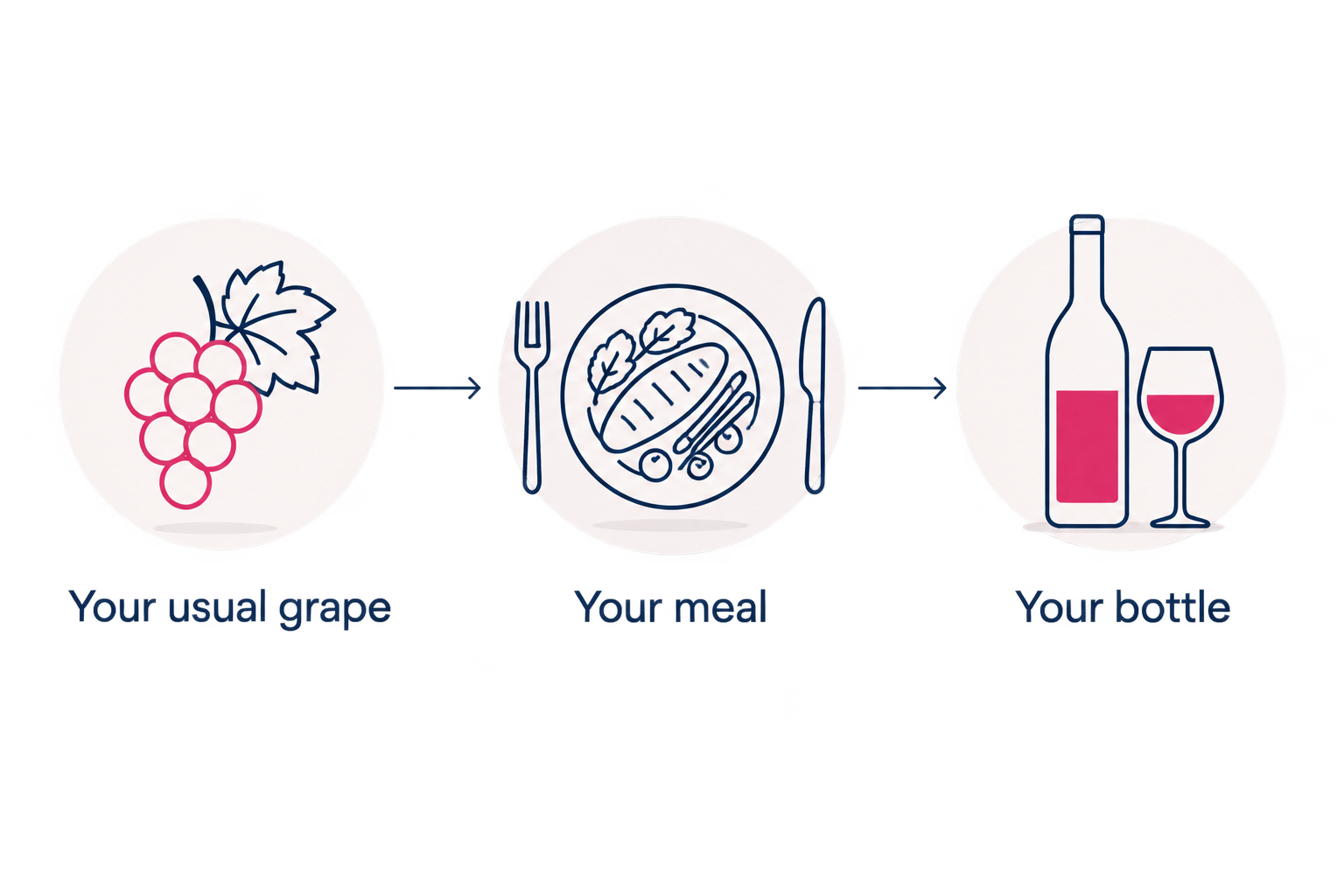
Make your final choice in three steps
Start with your usual grape, choose for the meal, then inspect the exact bottle. Keep that order and the label becomes easier to understand.
- Your usual grape: Pinot Noir points toward red Burgundy; Cabernet Sauvignon points toward Médoc.
- Your meal: Lighter dishes favor a different balance than grilled beef or a rich stew.
- Your bottle: Confirm producer, appellation, vintage, bottle size, and the accompanying description.
For your 2026 table, compare unfamiliar wines in small pours rather than filling a glass immediately. A 750 ml bottle provides five 150 ml pours; smaller tasting portions let you revisit the wine as it opens without committing to a full glass.
Which French red wine should you choose?
Choose red Côtes du Rhône if you want one default answer. Choose Beaujolais for lightness, Médoc for Cabernet-led structure, and red Burgundy for Pinot Noir character.
Buywinesonline recommends narrowing the style before selecting the producer. Northern Rhône Syrah and Chinon belong on your shortlist when you specifically want peppery or herbal character, not simply because you want something French.
FAQ
What's the best French red wine for beginners?
Red Côtes du Rhône is a useful starting point for beginners who already enjoy red blends. Beaujolais is a better starting point if you prefer lighter reds with fresh fruit character.
Which French red wine is closest to Cabernet Sauvignon?
Médoc Bordeaux is a useful direction for Cabernet Sauvignon drinkers because its red blends commonly feature Cabernet Sauvignon prominently. Check the exact bottle's blend and description rather than assuming every Bordeaux tastes alike.
Is French red wine sweet or dry?
The French red wine styles in this guide are generally dry. Ripe fruit aromas do not establish sweetness, so check the individual wine's description if sweetness is your priority.
Is Burgundy the same as Pinot Noir?
Burgundy is a wine region, while Pinot Noir is a grape variety. Red Burgundy commonly means Pinot Noir, but you should check the specific appellation and label rather than applying that shortcut to every regional wine.
What's the difference between Bordeaux and Rhône red wine?
Bordeaux reds commonly blend grapes such as Cabernet Sauvignon, Merlot, and Cabernet Franc, while Rhône reds follow different grape traditions. Southern Rhône blends often feature Grenache, and northern Rhône red appellations center on Syrah.
Should French red wine be chilled?
Serve French red wine cool rather than warm. Try 14°C for a lighter Beaujolais and 16°C as a starting point for a fuller red, then adjust to the bottle and your taste.
Should I decant every French red wine?
No, French origin alone is not a reason to decant. Taste first; a young, firm red and a delicate mature bottle require different handling.
One last thing
A French-sounding producer name does not establish French origin. The appellation and country information matter more than the name on the front.
Before your next purchase, identify those details and say what style you expect. If you cannot connect the label to the taste you want, return to the regional comparison before choosing.