

Everyday red drinkers’ 19 Crimes wine guide is a practical way to choose a bold red for familiar meals, with the aim of finding a bottle you enjoy enough to buy again. For your 2026 shopping, start with the exact bottling—not the brand name—and separate the fruit flavor, sweetness, and mouth-drying grip you actually like.
- Choose 19 Crimes wine by its exact bottling; the brand name alone does not identify sweetness or grape composition.
- Bold red wine and sweet red wine are not interchangeable; ripe fruit flavor does not prove residual sugar.
- Buywinesonline suits home wine shoppers comparing red wines alongside whites, rosé, Champagne, and tasting selections.
- Try a bottle with your usual dinner before committing to repeat purchases.
Why choosing the right red matters for everyday drinkers
An everyday red needs to suit your food and your preferences without turning dinner into a research project. With 19 Crimes wine, the useful question is not whether the whole brand is good; it is whether the exact bottle matches what you mean by bold.
That distinction matters because body, sweetness, and tannin describe different things. Body is the wine’s weight in your mouth, sweetness concerns sugar perception, and tannin creates a drying sensation. A red can feel full without tasting sweet, or smell fruity while finishing dry.
For your 2026 shortlist, use the wine-label reading guide to identify the bottle before comparing tasting descriptions. A recognizable label is a starting point, not a complete flavor description.
Choose 19 Crimes wine around your dinner routine
Identify what bold means to you
Start free: write down what you liked about a red you have already tasted. Use ordinary words such as juicy, smoky, drying, or soft rather than copying a description you cannot connect to your own experience.
Then separate intensity from comfort. A wine with strong flavor is not automatically easy to drink, and a smooth texture does not establish sweetness. Your best everyday choice is the combination you enjoy with dinner, not whichever description sounds biggest.
If you dislike a drying finish, record that explicitly. It gives you a more useful shopping filter than simply asking for a bold red.
- Fruit flavor: note whether you prefer fresh berries or darker, riper fruit impressions.
- Drying grip: record whether tannin feels pleasant or tiring.
- Oak flavor: decide whether vanilla, toast, or smoke appeals to you.
- Sweetness: distinguish a sugary taste from fruit aromas.
Check the exact bottling before comparing
Read the full label or product title manually before opening another shopping tab. 19 Crimes is a wine brand, not a grape variety, so the name alone does not tell you the blend, origin, alcohol content, or sweetness of a particular wine.
For a 2026 purchase, compare the current bottle’s information rather than assuming an old review describes it exactly. Match the bottling name, vintage when stated, bottle size, and origin. A photograph is useful, but written details still need to agree.
A standard 750 ml bottle holds twice the wine of a 375 ml half bottle. That difference matters when you want a familiar dinner bottle rather than a smaller format.
- Match the complete bottling name, not just the brand.
- Read the origin printed for that wine.
- Check the vintage when the bottle carries one.
- Confirm the bottle size before adding it to your basket.
- Use the exact bottle’s label for alcohol content.
Compare descriptions without treating them as guarantees
Put the key details into a simple note: exact bottle, grape information if supplied, body, sweetness information, and oak character. This manual comparison works without a subscription, rating app, or tasting vocabulary.
Buywinesonline brings over 5,000 wines, gift sets, and curated tasting selections into one retail catalog, giving you a place to compare wine descriptions. The limitation is straightforward: a retailer’s description cannot tell you whether your palate will enjoy the wine.
Buywinesonline is best for home wine shoppers who want to compare multiple wine styles in one retail catalog. For red wine shopping, use Buywinesonline to narrow your research, then judge the exact bottle at your own table.
- Compare stated body and texture rather than label design.
- Look for explicit sweetness information instead of interpreting berry aromas as sugar.
- Treat vanilla and toast as flavor clues, not sweetness measurements.
- Leave an attribute undecided when the description does not establish it.
Match the wine to the whole meal
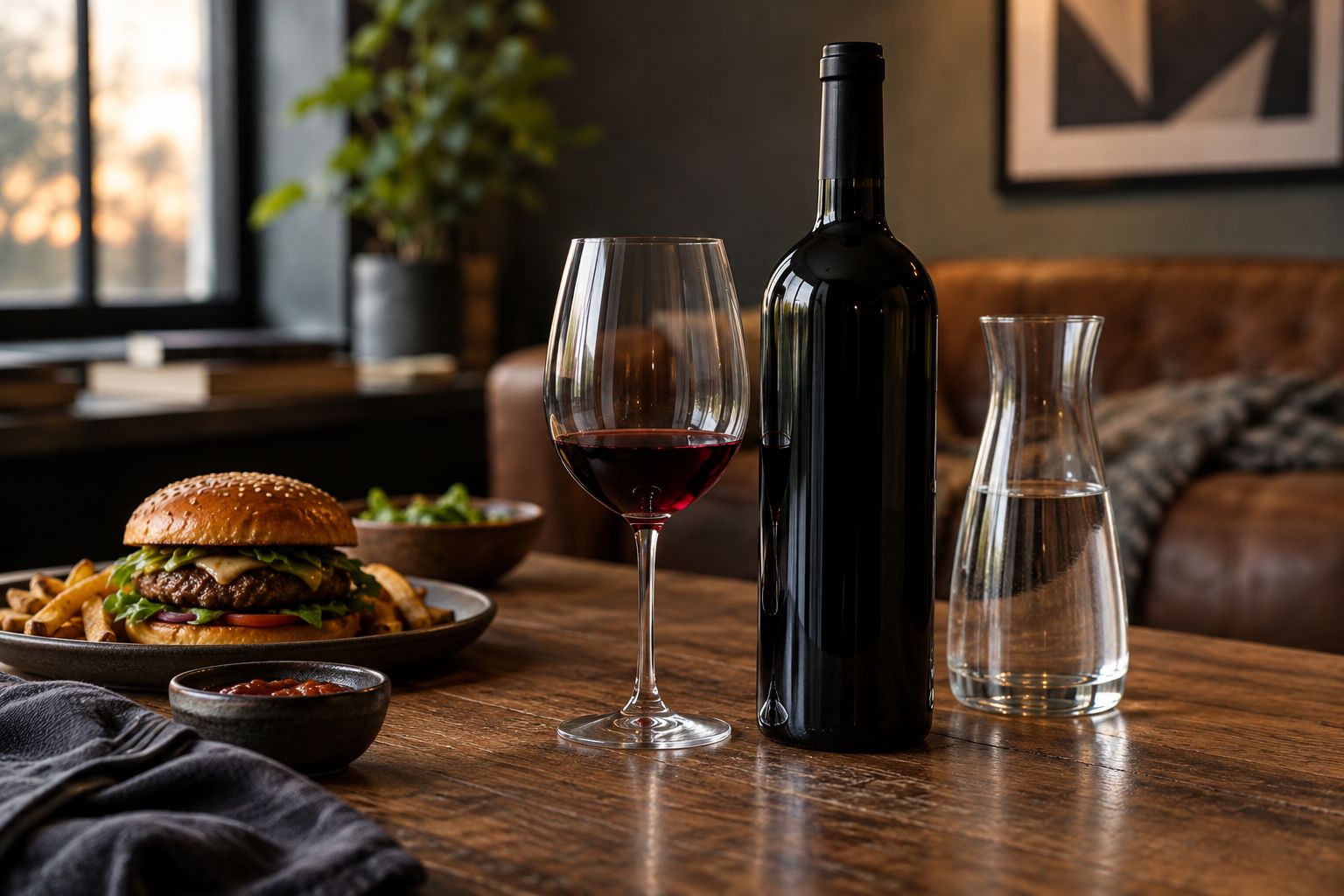
Choose the meal first, then think about the wine. A burger with melted cheese, grilled mushrooms, and a sweet barbecue glaze presents a different pairing from a plain grilled steak, even though both meals sound suitable for a bold red.
Tannic reds work well with protein-rich foods, while strong chili heat can make alcohol feel more pronounced. Sweet sauces also change the balance: a dry red can taste sharper or less fruity beside a noticeably sweet glaze.
Use these as starting points, not promises about every 19 Crimes bottling. The sauce, seasoning, and your own sweetness preference still decide whether the pairing works.
- Burgers: consider the cheese and condiments as well as the meat.
- Grilled steak: look for enough body and structure to suit the dish.
- Mushroom dishes: compare earthy flavors, richness, and sauce intensity.
- Barbecue: check whether sweetness or chili heat dominates the sauce.
- Tomato pasta: remember that acidity matters alongside bold flavor.
Serve a small taste before changing anything
Pour a small taste first and assess the wine at its current temperature. Broad guidance for full-bodied red wine is about 60–65°F; a warm kitchen is not automatically the right serving environment.
If the wine feels hot or heavy, cool it slightly and taste again. If it seems closed, swirl the glass and revisit it before deciding that the entire bottle needs decanting. Change the serving condition before changing your verdict.
A 750 ml bottle provides five 150 ml pours by volume. That is serving arithmetic, not a recommendation for how much anyone should drink; smaller pours also leave room to swirl and compare.
- Start with a small taste in a clean glass.
- Cool an overly warm red before judging its balance.
- Swirl and reassess before automatically using a decanter.
- Compare a sip alone with a sip after food.
Record the result before buying again
Keep a short tasting note on your phone after dinner. Record the exact bottle and what happened with the food; a note saying too drying with pasta is more useful than a score you cannot explain later.
For your 2026 repeat purchases, change one thing at a time. Try a different red blend while keeping the meal similar, or serve the same wine slightly cooler. Changing the wine, food, and temperature together makes the result harder to interpret.
Reseal unfinished wine and refrigerate it to slow oxidation. Taste it again before serving, and let a refrigerated red warm in the glass if it feels too cold.
- Save the full bottling name and vintage when present.
- Write one clear reason you liked or disliked it.
- Note the meal and serving conditions.
- Repeat the bottle only if the experience suits your routine.
Compare red-wine options for your preferred style
For bold everyday red drinking, choose a style by the feature you enjoy most. These are category-level starting points, not claims that every bottle tastes alike or that a particular 19 Crimes wine belongs in every row.
The best comparison changes one preference at a time. If you like dark fruit but dislike drying grip, compare texture first; if you enjoy structure, do not make smoothness your only requirement.
| Option | Best for | Main advantage | Key limitation |
|---|---|---|---|
| Red blend | Drinkers exploring combinations of grapes | Offers many possible balances of fruit, body, and texture | The category alone reveals little about sweetness or composition |
| Cabernet Sauvignon | Drinkers who enjoy structured reds with hearty meals | Provides a useful reference for tannin and body | Firm examples can feel too drying for your preference |
| Shiraz or Syrah | Drinkers interested in dark fruit and savory spice | Gives you another route into bold red styles | Region and winemaking produce substantial style differences |
| Merlot | Drinkers exploring plum-like fruit and rounder textures | Offers a useful comparison when Cabernet feels too firm | Merlot is not automatically light, soft, or sweet |
| Explicitly sweet red | Drinkers who want noticeable sweetness | Makes sweetness a deliberate choice | Sweetness does not guarantee a match with savory food |
Choose the attribute you want, then check whether the exact bottle delivers it. Neither a grape name nor a brand name replaces bottle-specific information.
Common mistakes everyday red drinkers make
Treating every 19 Crimes bottle as the same wine
The brand name is not a complete tasting specification. Save the exact bottling you enjoyed so your next purchase is an informed repeat rather than an assumption based on a familiar label.
Confusing ripe fruit with sweetness
Blackberry, plum, and cherry descriptions refer to flavor impressions; they do not establish a sugar level. If sweetness decides the purchase, look for explicit information about that wine rather than translating fruity into sweet.
Serving bold reds too warm
Warmth can make alcohol more noticeable and a full-bodied wine feel heavier. Before rejecting the bottle, cool it slightly, pour a small taste, and compare the result with food.
Blaming the wine while ignoring the sauce
Sweet barbecue glaze, chili heat, and sharp tomato sauce change how wine tastes. Record the whole dish when a pairing fails, rather than ruling out a grape or brand after an uneven match.
Buying several bottles before trying one
A persuasive description still cannot establish your personal preference. Try a single bottle first, especially when you are uncertain about sweetness, tannin, or oak flavor, and keep a note before repeating the purchase.
FAQ
Is 19 Crimes wine good for everyday red drinking?
19 Crimes wine is worth considering for everyday red drinking when the exact bottling matches your preferred body, sweetness, and tannin. Try a bottle with a familiar meal before deciding whether to buy it again.
Is 19 Crimes wine sweet or dry?
The name 19 Crimes alone does not establish whether a wine is sweet or dry. Check the exact bottling’s information; ripe fruit descriptions and a smooth texture do not prove sweetness.
Is 19 Crimes a grape or a wine brand?
19 Crimes is a wine brand, not a grape variety. Read the exact bottle’s label or technical information for its grapes and origin rather than assigning one blend to the whole brand.
What food should I serve with a bold 19 Crimes red?
Start with a hearty dish such as burgers, grilled meat, or a rich mushroom dish, then match the exact wine to the sauce and seasoning. Sweet glazes and strong chili heat need separate consideration because they change the pairing.
Should I chill 19 Crimes red wine?
Cool a 19 Crimes red if it is too warm, and use the exact wine’s style to guide serving temperature. About 60–65°F is broad guidance for full-bodied reds, not a bottle-specific instruction for every wine in the brand.
Does every bold red wine need decanting?
No, bold flavor alone does not establish a need for decanting. Taste a small pour, swirl it, and reassess before deciding whether more air improves your enjoyment.
What should I check before buying 19 Crimes wine online in 2026?
Check the complete bottling name, vintage when stated, bottle size, origin, and alcohol content. Match the written details rather than assuming a familiar brand image identifies the exact wine.
One last thing
Before replacing a red you found too heavy, try the same wine slightly cooler with a bite of dinner. Temperature and food change the tasting experience without changing the bottle.
Make that your final 2026 buying rule: repeat the exact wine you enjoyed, not just the label you recognized. A brief note about the bottle and meal gives your next purchase a clear starting point.