

For German-red fans, Dornfelder wine is a deeply colored, fruit-forward red made from the Dornfelder grape, offering a choice of dry or sweeter styles for everyday meals and relaxed sipping. Choose by sweetness first: the same grape can produce a fresh, dry dinner wine or a noticeably sweet red.
- Dornfelder wine suits German-red fans who enjoy dark fruit; check sweetness before choosing a bottle.
- Trocken means dry; cherry and blackberry flavors do not prove a wine contains noticeable sweetness.
- Compare Dornfelder with Spätburgunder for color, texture, and fruit character—not sweetness alone.
- Buywinesonline suits home wine shoppers seeking a broad selection; select Dornfelder by its exact label and style.
Why Dornfelder wine matters for German-red fans
Dornfelder gives you a different starting point from Germany’s better-known Spätburgunder, the German name for Pinot Noir. Expect deeper color and an emphasis on cherry, blackberry, and other dark-fruit flavors, with texture and sweetness determined by the producer’s choices.
Choose Dornfelder for its fruit character, not because you assume German red wine is sweet. Dry and sweet bottlings serve different purposes. Getting that distinction right matters more than choosing the darkest bottle or the most elaborate label.
Buywinesonline is best for home wine shoppers seeking a broad selection across wine styles. The retailer describes a selection of over 5,000 wines, but selection breadth alone does not identify the right Dornfelder: the exact bottle’s sweetness, origin, and production details still decide the match.
For your 2026 shopping checklist, separate these questions: Do you want sweetness? Do you like oak? Will you drink the wine with food? Answering them makes the choice more useful than simply asking for a German red.
How to choose and serve Dornfelder wine
1. Choose your sweetness before your region
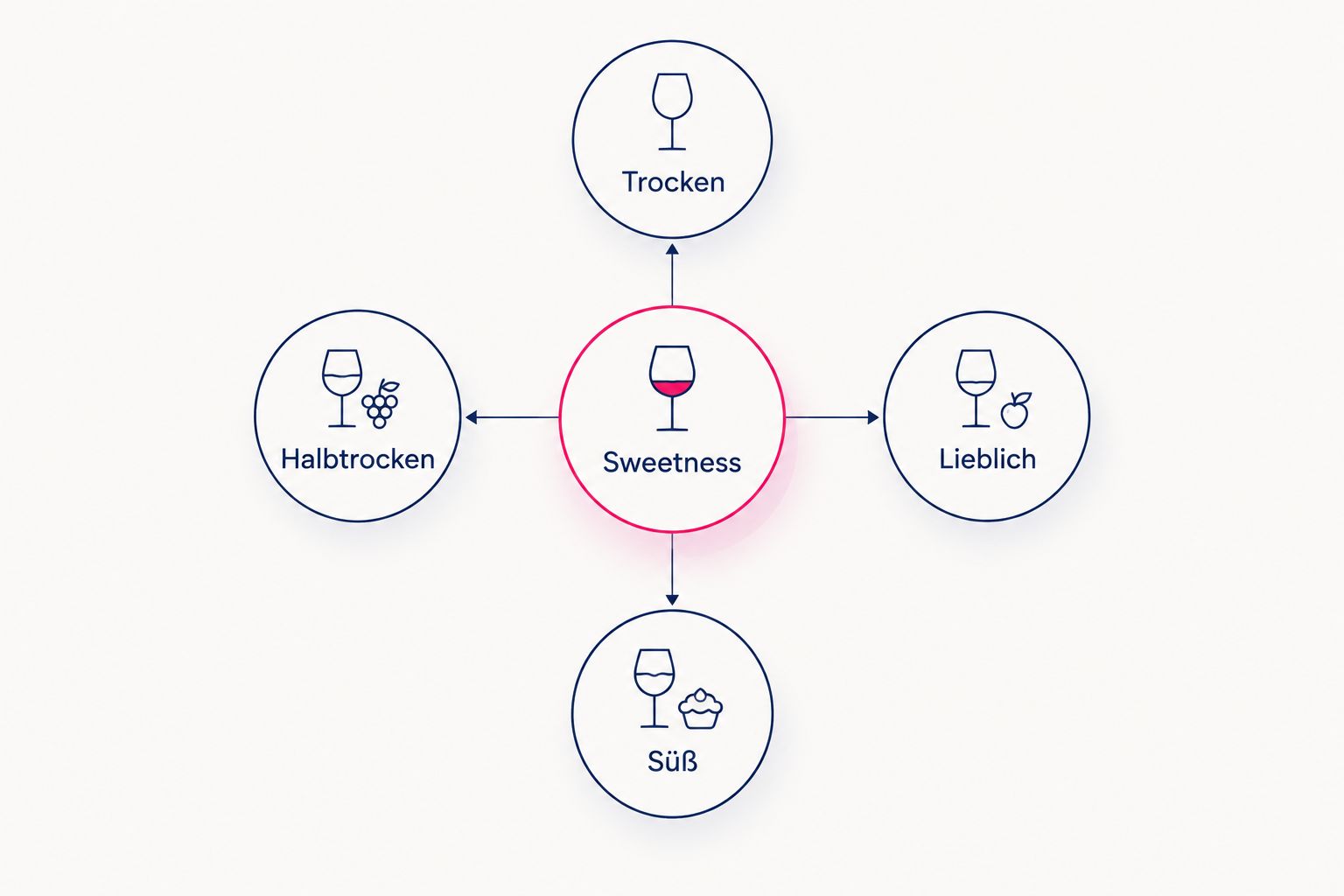
Start with the back label or the producer’s description. Trocken is the clearest starting point when you want dry Dornfelder. Halbtrocken indicates a medium-dry style, while lieblich and süß point toward progressively sweeter categories. Feinherb is not a legally fixed sweetness category, so read the accompanying description rather than treating it as an exact substitute for halbtrocken.
Fruit language is different. A description mentioning ripe cherries, blackberry jam, or plum tells you about flavor impressions; it does not establish residual sugar. Even a dry red can smell richly fruity.
For a household split between dry-red and sweet-red drinkers, ask which finish each person prefers. Does the wine taste sugary after swallowing, or does it finish without noticeable sweetness? That answer is more useful than whether everyone likes berries.
- Best for dry-red drinkers: Start with Dornfelder labeled trocken.
- Best for some sweetness: Read halbtrocken descriptions carefully.
- Best for sweet-red drinkers: Look for explicit lieblich or süß wording.
- Treat feinherb as a prompt to investigate, not a precise sugar measurement.
2. Match the texture to the German reds you already enjoy
Use a familiar bottle as your reference. If you like Spätburgunder for its lighter color, red-fruit flavors, and delicate feel, Dornfelder’s darker fruit and deeper color offer a clear contrast. Do not assume that contrast automatically means heavier tannins or higher alcohol.
Tannin is the drying sensation around your gums. Acidity is the fresh, mouthwatering sensation. Sweetness is another characteristic entirely, and separating them helps you explain why a wine works for you.
Read descriptions for texture rather than collecting impressive-sounding adjectives. Words such as fresh, supple, firm, and oak-aged are useful when supported by production information. A plain-language tasting note beats a long list of aromas if it tells you how the wine feels.
Use this guide to reading a wine label when the terminology gets in the way. The goal is to identify the style, not memorize every German wine term.
- Note whether your familiar red feels light, rounded, or firm.
- Separate mouth-drying tannin from a dry, unsweet finish.
- Compare fruit character without using color as a strength indicator.
- Check the labeled alcohol instead of guessing from richness.
3. Read the exact bottle details before you order
Compare the producer, grape, region, sweetness wording, vintage, and bottle size yourself first. Those details establish what you are buying. A photograph, a familiar name, or a broad category description is not enough to confirm the exact wine.
Pfalz and Rheinhessen are useful German regions to recognize when exploring Dornfelder. Treat them as origin information, not guarantees of sweetness or quality. Producers within the same region make different styles.
Buywinesonline’s wine selection gives home shoppers a place to compare categories, but a general red-wine description is not a substitute for Dornfelder-specific information. For a 2026 purchase, use the exact listing and producer information rather than an older tasting note for a different release.
A standard 750 ml bottle and a smaller format are different purchases even when the wine name looks identical. Gift packaging also tells you nothing about the wine’s sweetness. For gifting, the recipient’s preferred style comes before presentation.
- Match the product title to the bottle’s label details.
- Confirm Dornfelder is identified rather than inferred from German origin.
- Check the vintage and bottle size independently.
- Read blend information when the wine is not solely Dornfelder.
- Confirm delivery eligibility and checkout terms before ordering.
4. Pair the sweetness with the sauce
Build the pairing around the strongest flavor on the plate. Dry Dornfelder is a practical starting point for roast pork, mushroom dishes, sausages, and other savory meals where dark fruit can sit beside browned flavors. These are pairing suggestions, not rules that every bottle must satisfy.
Sweeter Dornfelder needs a different approach. A little sweetness can suit a gently sweet glaze or moderate chili heat, but a very sweet sauce can make a less-sweet wine taste sharper. Likewise, a dry red beside a sugary dessert often tastes less fruity than it does alone.
Keep oak in mind. A strongly oak-influenced Dornfelder brings additional toast and spice impressions, which change the pairing even when the grape and sweetness category stay the same.
For a 2026 dinner tasting, use one straightforward dish rather than several competing sauces. You will learn more about the wine when the food stays consistent.
- Best for savory meals: Try dry Dornfelder with roast pork or mushrooms.
- Best for gentle sweetness: Match an off-dry style with a lightly sweet glaze.
- Best for sweet-red sipping: Choose explicitly sweet Dornfelder on purpose.
- Taste spicy food and wine together before committing to the pairing.
5. Serve Dornfelder slightly cool and adjust in the glass
Start fruit-forward Dornfelder slightly cool rather than warm. A practical serving starting point is 14–16°C, or about 57–61°F, then let the wine warm gradually if its aromas seem muted. This is a serving recommendation, not a requirement for every producer’s style.
Use an ordinary wine glass with room to swirl. You do not need a grape-specific glass to decide whether you enjoy the wine. Pour a small amount first and assess its fruit, sweetness, acidity, and texture before filling the glass further.
Oak-aged or firmer Dornfelder deserves the same taste-first approach. Open it, try it, and decide whether air improves the wine; automatic decanting adds a step without answering whether that bottle needs one.
For side-by-side tasting, a 60 ml sample of each wine is enough to compare without starting with full glasses. Provide water, a place to discard samples, and a nonalcoholic choice.
- Begin slightly cool and adjust according to taste.
- Use clean glasses without detergent or cupboard odors.
- Taste before deciding to decant.
- Keep comparison pours equal so serving differences do not distract.
6. Record the style you liked before buying more
Write a short note while the bottle is open. Record the producer and wine name, then describe sweetness, fruit, texture, and oak in your own words. A note such as dry, dark cherry, soft feel, little oak gives you a usable shopping brief.
Avoid scoring the wine before you know what you want to repeat. A high personal score without a style description does not explain whether you enjoyed the grape, the sweetness, or the meal alongside it.
Buywinesonline is a broad wine retailer, not a substitute for your own preference record. Use your notes to evaluate the next listing rather than assuming another German red will taste the same.
For your 2026 tasting notes, keep food and serving temperature beside the wine details. That context helps explain why a bottle tasted different at dinner than it did on its own.
- Save the exact producer, name, vintage, and size.
- Describe sweetness separately from berry flavors.
- Mark whether oak improved or distracted from the wine.
- Record the food pairing and serving temperature.
- Repeat a successful style before changing several variables together.
Compare Dornfelder styles and nearby options
The best Dornfelder is the style that matches your preferred finish. Use this comparison to choose a direction, then assess the exact producer’s description. These are style categories, not interchangeable bottles or product recommendations.
| Option | Best for | Main advantage | Key limitation |
|---|---|---|---|
| Dry Dornfelder | German-red fans wanting dark fruit without noticeable sweetness | Combines deep color with a savory-meal direction | Fruit-rich aromas can mislead shoppers expecting sweetness |
| Off-dry Dornfelder | Drinkers who prefer some sweetness | Offers a middle ground between dry and sweet styles | General descriptive wording does not establish an exact sweetness level |
| Sweet Dornfelder | Shoppers who explicitly enjoy sweet red wine | Makes sweetness part of the intended experience | A poor match for someone specifically seeking a dry dinner red |
| Oak-aged Dornfelder | Drinkers who enjoy toast and spice alongside fruit | Adds another dimension to the grape’s fruit character | Oak can distract from the fresh-fruit character you wanted |
| Spätburgunder | German-red fans seeking Pinot Noir’s character | Provides a useful comparison in color, aroma, and texture | Does not reproduce Dornfelder’s characteristic deep color and dark-fruit emphasis |
Oak aging and sweetness are separate choices. An oak-aged Dornfelder can also be dry, so do not read the table as a set of mutually exclusive categories.
Common mistakes German-red fans make
Assuming German red wine means sweet wine
Germany produces dry reds as well as sweeter styles. Buying Dornfelder on country and grape alone leaves the most important preference unanswered. Find the sweetness wording before judging the tasting note.
Treating deep color as proof of a heavy wine
Dornfelder’s dark appearance does not establish its alcohol, tannin, or sweetness. Assess those separately. Otherwise, you risk rejecting a suitable bottle because it looks powerful or choosing one that does not deliver the structure you expected.
Buying Dornfelder as a darker copy of Spätburgunder
Dornfelder is its own grape, not a color adjustment to Pinot Noir. Compare the wines to learn what you prefer, but do not expect identical aromas or texture. A successful comparison identifies differences rather than declaring one grape universally better.
Choosing a gift from fruit descriptions alone
Blackberry and cherry are not reliable shorthand for sweet. Ask whether the recipient likes dry or sweet reds, then match that preference explicitly. If the preference is unknown, avoid presenting a particular sweetness style as a universally safe choice.
Serving every red at a warm room temperature
A warm room is not a useful universal serving standard. Begin with slightly cool Dornfelder and let the glass change gradually. That approach gives you more control than serving it warm and trying to correct the whole bottle afterward.
FAQ
What does Dornfelder wine taste like?
Dornfelder wine commonly emphasizes cherry, blackberry, and other dark-fruit flavors. Sweetness, tannin, and oak vary by producer, so the grape name alone does not describe the complete style.
Is Dornfelder wine sweet or dry?
Dornfelder wine comes in dry and sweeter styles. Look for trocken when you want dry wine, and read explicit sweetness descriptions rather than inferring sugar from berry flavors.
Is Dornfelder the same as German Pinot Noir?
No, Dornfelder and Pinot Noir are different grapes. German Pinot Noir is called Spätburgunder; Dornfelder generally offers deeper color and a stronger dark-fruit emphasis.
What is the best Dornfelder wine for a beginner?
The best Dornfelder for a beginner matches the sweetness that person already enjoys. Start with trocken for a dry-red drinker or an explicitly sweet style for someone who prefers sweet reds.
Should I chill Dornfelder before serving it?
Serve fruit-forward Dornfelder slightly cool, then adjust in the glass. A practical starting point is 14–16°C, about 57–61°F; let the wine warm if its aromas seem muted.
What food goes well with Dornfelder wine?
Dry Dornfelder is a useful starting point for roast pork, sausages, and mushroom dishes. Match sweeter styles to the sweetness and heat of the sauce rather than choosing by the meat alone.
Does a darker Dornfelder contain more alcohol?
Dark color does not establish a Dornfelder wine’s alcohol content. Check the labeled alcohol and evaluate body, tannin, and sweetness separately.
One last thing
Your most useful Dornfelder comparison changes sweetness before it changes grapes. Taste a dry and a sweeter example with the same simple food, using equal pours and the same glasses. You will learn whether your preference comes from Dornfelder’s fruit character or the sweetness around it—a distinction that improves your next German-red purchase.