
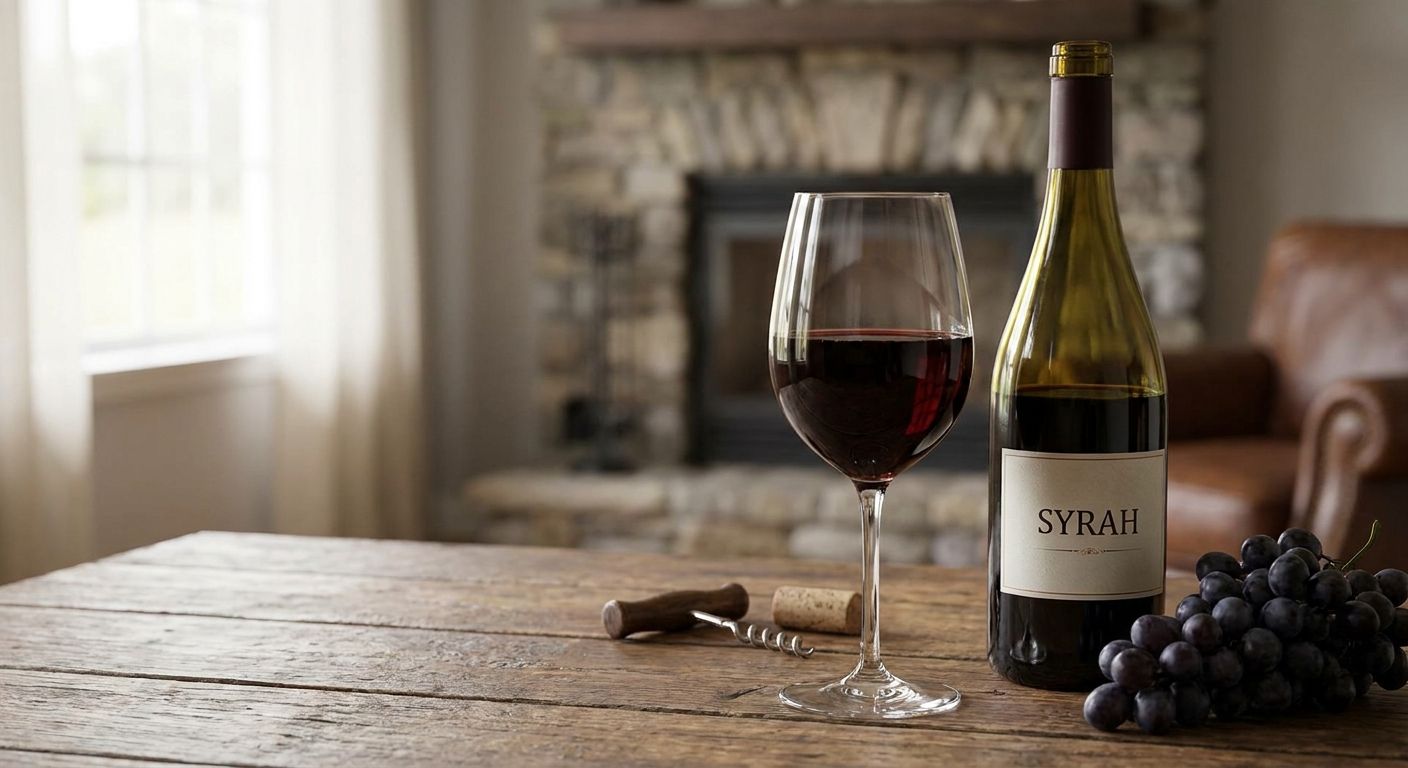
Syrah wine for bold red wine lovers means dark fruit, black pepper, and enough tannin to stand up to a charred ribeye — the category exists for drinkers who find Merlot flat and Pinot Noir too polite. What sets this segment apart from casual red drinkers is that they want intensity in every glass, not a bottle that needs three years in a cellar before it's worth opening. Syrah delivers that intensity now, whether it's labeled Syrah on a French bottle or Shiraz on an Australian one.
- Syrah and Shiraz are the same grape — Syrah on French and Chilean labels, Shiraz on Australian and South African ones.
- Chateau La Nerthe Les Cassagnes Cotes-du-Rhone-Villages 2023 ($26.95) is a Syrah-based blend and the easiest bold-red entry point in 2026.
- Petite Sirah is a different grape than Syrah — check the label before you buy on name alone.
- Serve syrah wine at 60-65 degrees F; Barossa Shiraz runs hotter in alcohol than most Northern Rhone bottles.
- Build a mixed case instead of one bottle so you can compare Rhone, Australian, and California styles side by side.
Why syrah wine matters for bold red wine lovers
Bold-red drinkers usually end up stuck cycling between Cabernet Sauvignon and Zinfandel because those are the two names every wine aisle pushes hardest. Syrah gets skipped, partly because the same grape shows up under two different names depending on where the bottle was made, which confuses shoppers who don't know Syrah and Shiraz are identical.
That labeling split is the real reason this segment underbuys the category in 2026. A shopper who loved a Barossa Shiraz two years ago may never connect it to a Northern Rhone Syrah on the same shelf, even though the grape, the tannin structure, and the pepper note all trace back to the same vine. Before you shop, browse buywinesonline.com's full wine selection — the range across styles is wider than most retailers carry, and knowing the split above changes what you look for on the label.
The short version: if you like big, peppery, food-friendly reds, Syrah is the grape you've probably already been drinking under a different name.
Learn the Syrah-Shiraz split before you shop
The grape is identical everywhere. What changes is the label convention by country, and that convention tells you a lot about the style inside the bottle before you even taste it.
- French and Rhone Valley labels say Syrah — expect savory, peppery, medium-high acid
- Australian and South African labels say Shiraz — expect riper fruit, higher alcohol
- California and Washington producers use either name depending on the house style
- Chilean and Argentine producers mostly label it Syrah
- Same grape, different climate, different glass every time
Match the region to the intensity you actually want
Not all Syrah tastes the same, and region is the single biggest driver of style. Pick the region before you pick the producer.
- Northern Rhone (Hermitage, Cornas, Cote-Rotie): peppery, savory, age-worthy, often single-varietal
- Southern Rhone blends (Cotes-du-Rhone-Villages): Syrah blended with Grenache and Mourvedre, more approachable and better value
- Barossa Valley and McLaren Vale, Australia: jammy, high-alcohol, dark-chocolate-leaning fruit
- Paso Robles and Central Coast, California: New World fruit with more structure than Barossa
- Washington State (Walla Walla, Yakima Valley): cooler-climate Syrah, closer to the Rhone style than to Barossa
Read the label for tannin and alcohol clues
The label tells you more than the tasting notes on the shelf tag ever will, if you know what to look for.
- ABV over 14.5% signals a riper, jammier style — expect less pepper, more raisin and dark chocolate
- "Old vine" on a Syrah label usually means more concentration, not automatically more tannin
- The appellation name, not the words "red blend," tells you if it's varietal Syrah or a Syrah-Grenache-Mourvedre blend
- Vintage swings matter more in cooler regions like the Northern Rhone than in a warm region like Barossa
Pair syrah wine with food that can handle the pepper and smoke
Syrah's whole appeal for bold-red drinkers is that it doesn't fold under strong flavors. Use that.
- Grilled or smoked meats: brisket, lamb chops, short ribs
- Hard, aged cheeses: aged cheddar, gouda, manchego
- Dishes with black pepper or char: peppercorn steak, blackened fish
- Earthy vegetables: roasted mushrooms, charred eggplant
- Skip delicate dishes — Syrah overwhelms light fish and cream sauces
Serve and decant Syrah the right way
Most bold reds get judged unfairly because they're served wrong, not because the bottle was bad.
- Serve at 60-65 degrees F — warmer than white wine, cooler than room temperature
- Decant bottles under five years old for roughly 30 to 60 minutes to let the fruit open up
- Use a large-bowl glass so the pepper and smoke aromatics have room to develop
- Rhone Syrah shows better slightly cooler than a jammy Barossa Shiraz
- Skip decanting bottles over 10 years — sediment and fragile fruit don't need the air
Build a flight instead of betting on one bottle
The fastest way to figure out which Syrah style actually fits your palate is to taste three regions side by side instead of guessing from one purchase.
- Pick one Rhone bottle, one Australian Shiraz, and one California Syrah to taste in the same sitting
- A 15-bottle wine tasting set covers bold reds across multiple regions without committing to a full case of one style
- Note the ABV and region printed on each bottle before you taste, not after
- Track which region you keep reaching for — that's your actual buying pattern, not the one you assumed


Avoid the Petite Sirah mix-up
This is the single most common name confusion in the bold-red aisle, and it costs shoppers a lot of disappointment.
- Petite Sirah, also called Durif, is a different grape, not a smaller version of Syrah
- Petite Sirah runs even more tannic and inkier than Syrah
- If you loved a Petite Sirah, don't expect an identical profile from a Syrah bottle
- Check the grape name printed on the label, not just the word "Sirah" in the marketing copy
Syrah styles side by side
| Style | Best For | Notes | Key Limitation |
|---|---|---|---|
| Northern Rhone Syrah (Hermitage, Cornas) | Purists after peppery, savory intensity | Single-varietal, built to age | Prices climb fast past the $50 mark |
| Rhone blend (Syrah-Grenache-Mourvedre) | Bold-red drinkers who want value now | Chateau La Nerthe Les Cassagnes Cotes-du-Rhone-Villages 2023 runs $26.95 | Not 100% Syrah, so intensity shifts by vintage |
| Barossa Valley / McLaren Vale Shiraz | Fans of jammy, high-alcohol fruit bombs | Same grape as Syrah, different name and climate | ABV often clears 14.5%, can taste hot |
| Paso Robles / Central Coast Syrah | US drinkers who want New World fruit with structure | Style swings widely by producer | Harder to predict without tasting first |
| Petite Sirah | Drinkers who want even more tannin and color | A different grape despite the similar name | Can taste more rustic than smooth |
Bottom line: a Southern Rhone Syrah blend under $30 is the highest-value entry point into bold reds in 2026 — buy that before you chase a $60 single-region bottle.
Common mistakes bold red wine lovers make with Syrah
- Treating Shiraz and Syrah as two different wines, then wondering why they taste similar
- Assuming high ABV automatically means "bolder" — a 15% Shiraz can taste sweeter, not more intense
- Confusing Petite Sirah with Syrah at checkout because of the name alone
- Skipping Southern Rhone blends because they're not 100% Syrah, missing the best value in the $20-30 range
- Not decanting before pouring, then blaming the bottle for tasting closed or overly peppery
FAQ
What's the best syrah wine for beginners?
A Southern Rhone blend like Cotes-du-Rhone-Villages is the easiest entry point because it softens Syrah's pepper edge with Grenache and Mourvedre. It costs less than most single-varietal bottles and drinks well without decanting for hours.
Is Syrah the same as Shiraz?
Yes, Syrah and Shiraz are the same grape. French, Chilean, and most American labels say Syrah; Australian and South African labels say Shiraz.
Is Syrah wine bold or light-bodied?
Syrah is a full-bodied red with dark fruit, black pepper, and firm tannin. It's built for bold-red drinkers, not for anyone who prefers a light, fruity glass.
What food pairs best with Syrah?
Grilled and smoked meats, hard aged cheeses, and dishes with black pepper or char all pair well with Syrah. Skip delicate dishes like light fish or cream sauces, since Syrah's tannin overwhelms them.
How much does a good bottle of syrah wine cost?
Prices vary widely by region. Southern Rhone Syrah blends start around $26.95, while single-varietal Northern Rhone bottles typically climb past $50.
Is Petite Sirah the same grape as Syrah?
No. Petite Sirah, also called Durif, is a different grape entirely, even though the name looks similar. It tends to taste more tannic and inkier than Syrah.
What temperature should Syrah be served at?
Serve Syrah at 60 to 65 degrees F, warmer than a white wine but cooler than room temperature. Serving it too warm exaggerates the alcohol and flattens the pepper notes.
Does Syrah need to be decanted?
Bottles under five years old benefit from 30 to 60 minutes of decanting to open up the fruit. Older bottles, past 10 years, usually don't need it and can lose fragile aromatics from too much air.
One last thing
Cotes-du-Rhone-Villages appellation rules require the blend to lean on Grenache, Syrah, and Mourvedre together — meaning a bottle labeled "red blend" from that region is almost never 100% Syrah, no matter how peppery it tastes. That's exactly why the $26.95 Chateau La Nerthe bottle drinks bigger than its price tag suggests: it's borrowing structure from a grape blend built by appellation law, not by marketing. If you're a bold-red drinker who's never connected Shiraz and Syrah before, that's the one label fact worth remembering before your next order in 2026.