

Best overall: Pinot Noir. Best for the toast: Brut sparkling wine. Best for a simple starting selection: Pinot Grigio and Merlot. The best wine for office holiday party planning in 2026 is a small selection matched to your food, your coworkers’ preferences, and your serving setup—not a table crowded with different bottles.
- Pinot Noir is the best overall wine for office holiday party menus featuring poultry, mushrooms, and mixed appetizers.
- Brut sparkling wine suits the toast; Pinot Grigio gives guests a light, dry white option.
- Buywinesonline is a wine retailer for shoppers comparing red, white, rosé, and sparkling styles.
- Choose wine by menu and preference, and give alcohol-free drinks equal attention.
Why this matters
An office holiday party needs wine that guests can choose without a tasting lesson. You also need a plan that works when someone prefers white wine, skips the toast, or does not drink alcohol.
Buywinesonline sells red, white, rosé, sparkling, and dessert wines, along with gift sets and tasting selections. For your 2026 celebration, start with the styles below rather than choosing a bottle because its name sounds festive.
Keep the shared drinks selection separate from employee gifts. A bottle chosen for one recipient does a different job from wine served beside a buffet.
What makes the best office holiday party wine?
Use these criteria before comparing styles:
- Menu fit: Choose wine for the food you will actually serve, including vegetarian dishes and sauces.
- Clear flavor expectations: Make it easy to distinguish dry, sweet, light, and full-bodied choices.
- Distinct roles: Give each wine a purpose instead of offering several nearly identical reds.
- Serving practicality: Consider refrigeration, ice buckets, glassware, and who will open and pour bottles.
- Guest preferences: Ask about broad preferences without requiring anyone to explain why they do not drink.
- Exact bottle information: Check the producer, vintage where applicable, bottle size, sweetness description, and alcohol level before ordering.
These rankings compare wine styles, not individual bottles. A grape name is a useful starting point, but the exact wine’s description still matters: Chardonnay can be crisp or creamy, and rosé is not automatically sweet.
Office holiday party wines at a glance
| Rank and style | Best for | Standout characteristic | Key limitation |
|---|---|---|---|
| Pinot Noir | Mixed savory buffet | Lighter red structure than Cabernet Sauvignon | Too delicate for some heavily charred dishes |
| Brut sparkling wine | A shared toast | Bubbles and a dry profile | Requires cold storage and careful opening |
| Pinot Grigio | Light appetizers | Typically light-bodied and crisp | Less suited to rich, creamy food |
| Merlot | Roast-centered dinner | Plum flavors and generally softer tannins | Still too weighty for delicate seafood |
| Chardonnay | Creamy dishes | Styles range from fresh to full-bodied | Oak and texture vary considerably |
| Off-dry Riesling | Spicy catering | Acidity with some sweetness | Sweetness must be checked on the exact bottle |
1. Pinot Noir: best office party wine for a mixed savory buffet
Pinot Noir is the default red when your menu spans roast poultry, mushroom bites, and mild cheeses. It generally offers less tannic grip than Cabernet Sauvignon, making it a practical starting point when guests want red wine without a heavy mouthfeel.
Choose a lighter-bodied example for a standing reception. Richer versions exist, so read the description rather than assuming every Pinot Noir tastes the same.
Pinot Noir pros:
- Fits poultry and mushroom dishes.
- Gives guests a lighter red alternative.
- Works across several savory buffet items.
Pinot Noir cons:
- Subtle flavors lose definition beside very spicy sauces.
- Not the strongest match for heavily charred beef.
Best for: A buffet where no single meat or sauce dominates.
Verdict: Buy the style for your main red selection when the menu is varied. If your 2026 party is built around steak, choose the red for that meal instead of treating Pinot Noir as universal.
2. Brut sparkling wine: best office party wine for the toast
Brut sparkling wine gives the toast its own clear role. Choose it for bubbles and a dry profile, not because every guest must participate with alcohol.
Champagne, Cava, and Prosecco are different sparkling-wine categories, not interchangeable names. Check the sweetness designation on the exact bottle; in sparkling-wine terminology, Extra Dry is sweeter than Brut.
Brut sparkling wine pros:
- Makes the toast distinct from regular drinks service.
- Pairs well with salty snacks and fried appetizers.
- Offers an alternative to still red or white wine.
Brut sparkling wine cons:
- Needs refrigeration or ice-bucket space.
- Loses carbonation after opening, making opening every bottle at once wasteful.
Best for: A scheduled welcome or end-of-year toast.
Verdict: Buy the style for a dedicated toast; skip a separate sparkling selection if nobody wants one. Offer an alcohol-free alternative in suitable glassware, and never make participation depend on drinking wine.
3. Pinot Grigio: best office party wine for light appetizers
Pinot Grigio is a straightforward white-wine choice for salads, vegetable starters, and simply prepared seafood. Many examples emphasize a light body and crisp acidity rather than a creamy texture.
It gives your drinks table a clear contrast to red wine. For a 2026 standing reception built around lighter bites, Pinot Grigio is a more direct fit than a heavily oaked white.
Pinot Grigio pros:
- Suits lighter appetizer menus.
- Offers a clear dry-white option.
- Avoids the oak-driven character some guests dislike.
Pinot Grigio cons:
- Light examples feel thin beside rich cream sauces.
- The grape name alone does not establish sweetness or intensity.
Best for: A reception serving vegetables, salads, and delicate seafood.
Verdict: Buy the style when your white wine needs to stay light and crisp. Do not choose it solely to fill a white-wine slot if the entire meal features rich sauces.
4. Merlot: best office party wine for a roast-centered dinner
Merlot suits a sit-down meal featuring roast beef, lamb, or savory mushroom dishes. It commonly brings plum and dark-fruit flavors with a rounder feel than more firmly tannic reds.
Rounder does not mean sweet. Look for the exact wine’s description, especially if guests use the word smooth when they actually mean they prefer noticeable sweetness.
Merlot pros:
- Fits roast-centered menus.
- Offers a fuller red option than a light Pinot Noir.
- Generally has softer tannins than Cabernet Sauvignon.
Merlot cons:
- Overpowers some delicate seafood dishes.
- Fuller examples feel heavy at a light appetizer reception.
Best for: A seated holiday dinner with substantial savory food.
Verdict: Buy the style for the roast dinner; skip it as an automatic addition beside another similar red. Pinot Noir and Merlot only earn separate places when guests or the menu give them different jobs.
5. Chardonnay: best office party wine for creamy dishes
Chardonnay is useful when the food calls for a white wine with more texture. Think creamy pasta, roast chicken with a rich sauce, or buttery vegetable dishes.
The style range is the catch. An unoaked Chardonnay and an oak-aged Chardonnay are not substitutes if you are choosing specifically for creaminess or toasted flavors.
Chardonnay pros:
- Offers a fuller white-wine option.
- Fits creamy sauces and roast poultry.
- Lets you choose between fresher and richer expressions.
Chardonnay cons:
- Oak flavors divide preferences.
- The grape name gives little certainty about texture.
Best for: A dinner where creamy sauces are central to the menu.
Verdict: Buy the style after checking its oak and texture description. For your 2026 event, choose Chardonnay instead of—not automatically alongside—Pinot Grigio when the food points toward a richer white.
6. Off-dry Riesling: best office party wine for spicy catering
Off-dry Riesling combines acidity with some residual sweetness. That makes it a useful option for a menu featuring chili heat, ginger, or sweet-and-spicy glazes.
Riesling is not always sweet. Confirm that the exact wine is described as off-dry rather than assuming the grape supplies the sweetness you want.
Off-dry Riesling pros:
- Fits spicy and aromatic dishes.
- Gives sweetness-preferring guests a distinct choice.
- Offers an alternative to fuller-bodied white wine.
Off-dry Riesling cons:
- Guests seeking a completely dry wine need another option.
- Sweetness varies substantially between bottles.
Best for: Spicy takeout, chili-seasoned appetizers, or glazed dishes.
Verdict: Buy the style when the catering or guest preferences justify it. Skip the assumption that an off-dry table wine will also suit every dessert; the sweetness of the food changes the pairing.
Build a short wine list around the party format
Use your 2026 menu to assign roles before you choose bottles. A toast, an appetizer reception, and a roast dinner do not need identical selections.
- Sparkling wine: Add it when you have a planned toast or guests who specifically want bubbles.
- Dry white: Choose Pinot Grigio for lighter food or Chardonnay for richer dishes.
- Light red: Choose Pinot Noir for a mixed savory buffet; replace it with Merlot when a roast-centered meal calls for more weight.
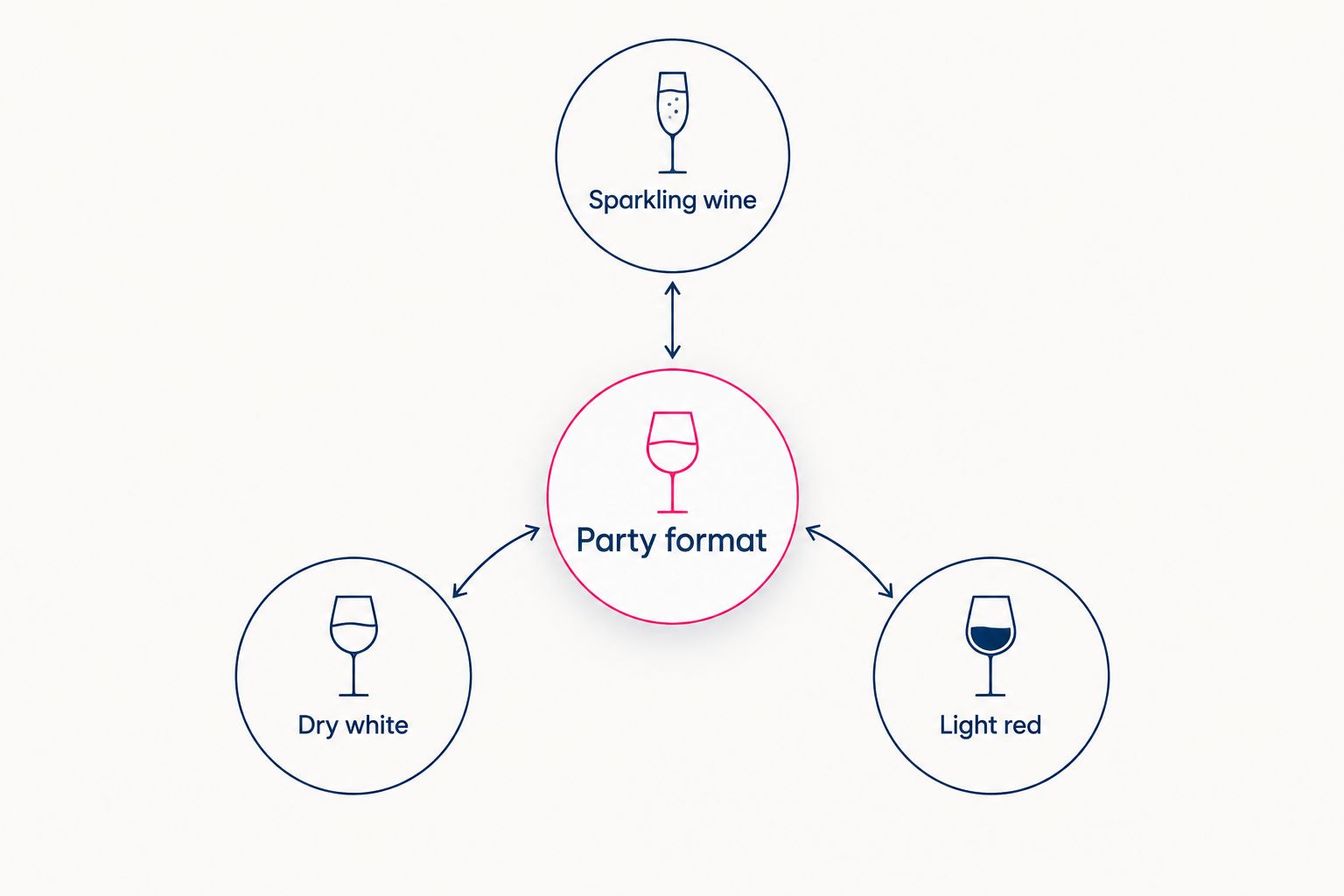
You do not need every ranked style on the table. Choose one red and one white first, then add a specific option only when it solves a real preference or menu need.
Buywinesonline wine shoppers can use these roles to narrow the retailer’s selection without turning the party into a tasting exercise. Keep a short written brief beside you while shopping: food, preferred sweetness, serving role, and bottle size.
Plan quantities from servings, not total headcount
Count guests who expect to drink wine separately from total attendees. Then agree on the planned wine service with your venue or event lead; do not treat any calculation as a drinking target.
A 750 ml bottle contains five 150 ml pours. A 375 ml half bottle contains two 150 ml pours, with 75 ml left over. These are volume calculations, not recommendations for how much anyone should consume.
For a toast, choose a smaller measured pour and calculate separately from dinner service. Do not count the same bottles twice in your plan. The guide to how many glasses are in a bottle of wine explains why pour size changes bottle counts.
Keep unopened bottles aside rather than opening everything for display. That preserves your flexibility if guests choose beer, alcohol-free drinks, or fewer servings than expected.
Make wine service easy and optional
Confirm your employer’s alcohol policy and the venue’s service rules before ordering. Assign responsibility for receiving, storing, opening, and serving the wine rather than leaving those jobs to whoever arrives first.
- Put water and alcohol-free drinks where guests can find them immediately.
- Identify wines by style and sweetness, not just producer name.
- Keep white and sparkling wine chilled, with backup bottles stored appropriately.
- Open sparkling wine away from faces, keeping control of the cork.
- Avoid automatic top-ups so guests can track what they have accepted.
- Make safe transportation arrangements clear before the event.
For your 2026 party, a small, well-organized selection is the practical choice. More labels do not fix warm white wine, missing openers, or an alcohol-free option hidden behind the bar.
How the styles were ranked
The order prioritizes menu flexibility, clear differences between choices, and serving practicality. Pinot Noir leads for mixed savory food; the remaining styles fill specific roles rather than competing for the same title.
This is a style-based buying guide, not a bottle tasting or a ranking of producers. Buywinesonline wine selections should be narrowed further using the exact bottle’s description and your event requirements.
Which wine should you choose?
Choose Pinot Noir and a dry white for a mixed-menu office party. Make the white Pinot Grigio for lighter appetizers or Chardonnay for creamy food, and add Brut sparkling wine only when a toast or guest preference calls for it.
Choose Merlot instead of Pinot Noir for a roast-centered dinner. Choose off-dry Riesling when spicy catering or sweetness preferences make it the better fit.
FAQ
What's the best wine for an office holiday party?
Pinot Noir is the best overall starting point for a mixed savory buffet. Pair it with a dry white chosen for the menu, and offer alcohol-free drinks with equal care.
Should I serve red or white wine at a work party?
Offer both when your guests want both. Choose distinct styles rather than several similar bottles, and use the food to decide which red and white belong.
Is Prosecco the same as Champagne for an office toast?
Prosecco and Champagne are different sparkling wines. Either category can serve a toast, but check the exact bottle's sweetness designation and description before choosing.
How many glasses come from a regular wine bottle?
A 750 ml bottle provides five 150 ml pours. Smaller toast pours produce more servings, while larger pours produce fewer.
Is Merlot a sweet wine for coworkers who dislike dry reds?
Merlot is generally made as a dry red wine. Soft tannins and ripe fruit flavors do not establish sweetness, so check the exact bottle rather than relying on the grape name.
What's a good wine for spicy office party food?
Off-dry Riesling is a useful choice for spicy catering. Confirm its sweetness description, and keep a dry alternative for guests who prefer one.
Do I need sparkling wine for every guest?
No, a toast does not require every guest to drink sparkling wine or alcohol. Offer an alcohol-free alternative and let guests choose without explanation.
One last thing
Extra Dry sparkling wine is sweeter than Brut. That counterintuitive label distinction matters more than a festive bottle name when you want a dry toast wine.
Before you finish your Buywinesonline selection, check sweetness and bottle size again. Those details determine what guests taste and how your serving calculation works.