

Cookie exchange hosts’ wine pairing is matching wine sweetness and flavor to shared cookies so neither the dessert nor the drink overwhelms the other. Choose wine at least as sweet as the cookie, then match lighter styles to butter and citrus cookies and richer dessert wines to chocolate, caramel, and nuts.
- Choose wine for cookie exchange tables by sweetness first, then chocolate, fruit, spice, or nuts.
- Sweet Moscato suits simple sugar cookies; ruby Port suits chocolate; tawny Port suits nutty cookies.
- Buywinesonline serves home wine shoppers seeking dessert wines alongside red, white, rosé, and sparkling styles.
- Keep dry sparkling wine for the welcome toast rather than heavily frosted cookies.
Why wine pairing matters for cookie exchange hosts
A cookie exchange is harder to pair than a plated dessert because your guests bring different recipes, fillings, and frostings. A plain shortbread cookie and a peppermint-frosted brownie bite do not need the same wine, even when they share a platter.
Sweet food can make a dry wine seem sharper, less fruity, and more bitter. That is why choosing a familiar dinner wine first and fitting every cookie around it is the wrong starting point for your 2026 exchange.
Buywinesonline is best for home wine shoppers seeking wine across everyday and dessert categories. The retailer sells over 5,000 wines, gifts, and tasting selections; start with a cookie plan before browsing Buywinesonline, because a broad selection does not make every style a dessert match.
Your goal is not a separate bottle for every baker. Build a small set of compatible pairing groups, keep portions modest, and let guests skip the wine without missing the exchange.
How to choose wine for a holiday cookie exchange
1. Collect the cookie menu before choosing wine
Ask each baker for the cookie name, main flavors, filling, frosting, and relevant allergens. A shared message or simple paper list works; you do not need a formal tasting sheet.
Sort recipes by the finished cookie, not the dough alone. A butter cookie dipped in dark chocolate belongs closer to the chocolate group than an unfrosted butter cookie, while lemon glaze changes a plain sugar cookie’s pairing needs.
For your 2026 invitation, ask guests to describe sweetness in ordinary terms: lightly sweet, jam-filled, or heavily frosted. Those descriptions help more than an elaborate recipe title.
- Butter: Group shortbread, spritz cookies, and plain sugar cookies together.
- Fruit: Separate citrus cookies from berry-jam cookies.
- Chocolate: Note dark chocolate, milk chocolate, and cocoa frosting.
- Spice: Identify ginger, cinnamon, clove, and molasses.
- Nuts: Flag almond, hazelnut, pecan, and walnut recipes clearly.
2. Match sweetness before matching flavor
Start with the sweetest part of each cookie: icing, jam, chocolate coating, or caramel filling. Then choose a wine that tastes at least as sweet alongside it. This is a pairing guideline, not a requirement to measure sugar at home.
Taste a small sip, take a bite, and taste again. If the wine suddenly seems sour or stripped of fruit, move to a sweeter style or a less-sweet cookie. If both feel heavy, try a brighter sweet wine or reduce the portion.
Fruit flavor does not prove a wine is sweet. A wine described as peachy or berry-scented can still be dry, and Riesling and sparkling wines span different sweetness levels.
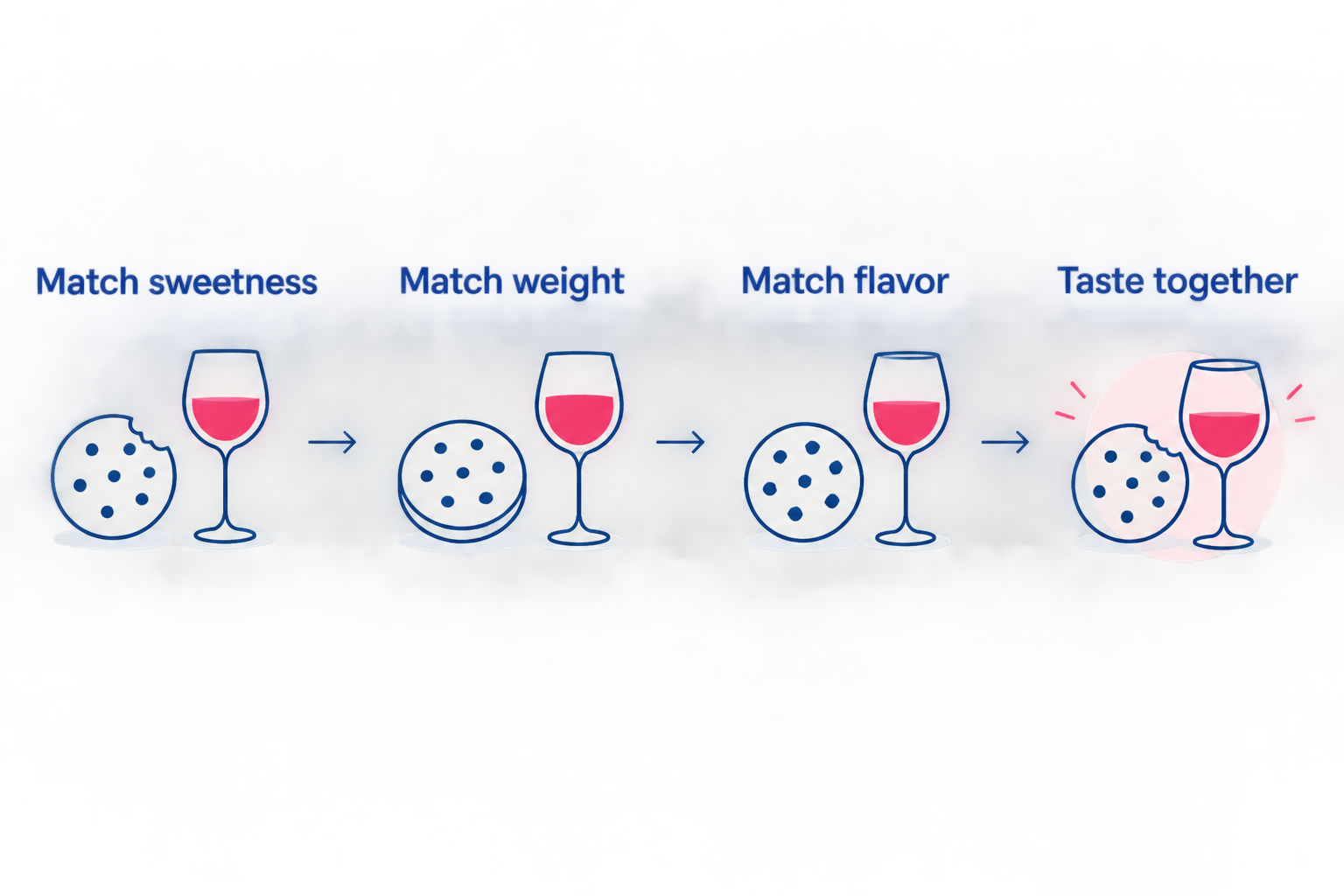
- Match sweetness: Judge the wine against the finished cookie.
- Match weight: Keep delicate cookies with lighter wines.
- Match flavor: Connect citrus, berries, caramel, or nuts after sweetness fits.
- Taste together: Check the actual recipe rather than relying on its name.
3. Build a small lineup around your cookie groups
Use the cookie list to choose styles manually before shopping. A practical starting plan is a sweet, lighter wine for butter and fruit cookies, plus a richer dessert wine for chocolate or nuts. Add another style only when it fills a clear gap.
Sweet Moscato is best for simple sugar cookies and lightly fruity cookies; its limitation is that dense chocolate and dark molasses can overpower it. Ruby Port is best for chocolate and berry-chocolate cookies, but its richness makes it less suitable for delicate lemon cookies.
Tawny Port is best for nutty, caramel, and toffee flavors. Its limitation is intensity: a small, plain cookie can disappear beside it. Buywinesonline’s wine selection includes dessert wines, so browse that category with these roles in mind rather than treating a mixed dinner-wine selection as a cookie-pairing shortcut.
- Choose a sweet white for the lighter cookie group.
- Choose ruby Port when chocolate dominates the menu.
- Choose tawny Port when nuts and caramel dominate.
- Keep a dry favorite separate for guests who prefer drinking without dessert.
- Leave room for an equally considered nonalcoholic option.
4. Calculate tasting quantities instead of dinner servings
Plan the tasting around measured portions, not full glasses. For a 2026 cookie exchange, a proposed 30 ml tasting pour gives guests a small sample without turning each pairing into a dinner-sized serving. Participation and additional pours remain optional.
A 750 ml bottle contains 25 pours of 30 ml, before spills or measurement differences. As a planning example, 12 participating adults tasting two wines at 30 ml each need 720 ml total: 360 ml of each wine. That is a purchasing calculation, not a recommended amount anyone should drink.
Fortified wines need particular attention because their alcohol content is higher than ordinary table wine. Review how to serve fortified wine properly, and keep the same freedom to decline every pour.
- Count participating adult tasters rather than all attendees.
- Write down the planned pour size before calculating bottles.
- Calculate each wine separately, based on its pairing group.
- Measure a sample pour so servers recognize the amount.
- Provide water, food, and nonalcoholic drinks throughout.
5. Arrange the table from delicate to intense
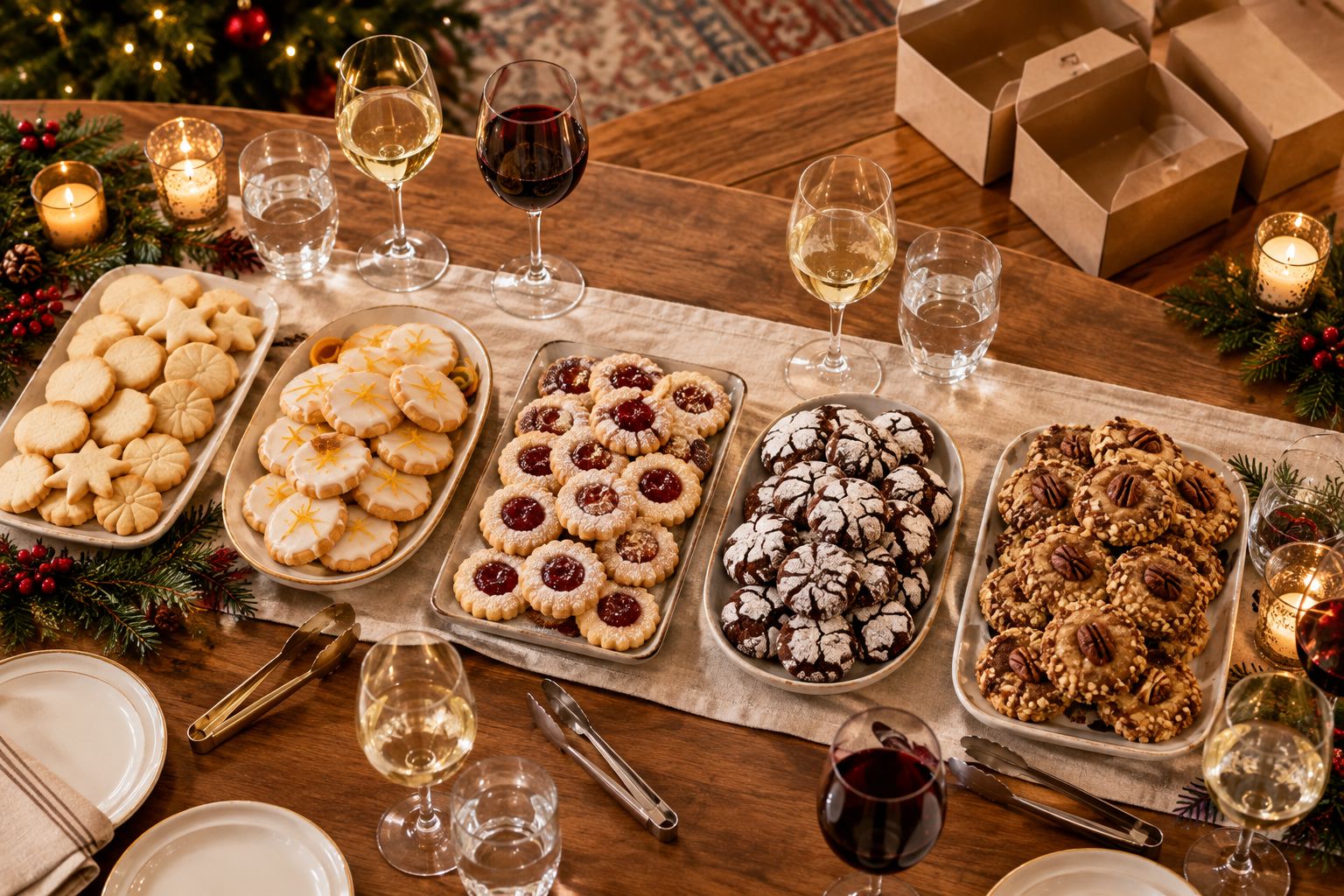
Set up the tasting so guests understand it without a speech. Put plain butter and citrus cookies first, followed by jam, spice, chocolate, and richer nut or caramel cookies. This is a suggested order, not a rule that overrides the actual sweetness of a recipe.
Keep wines beside their intended cookie groups, with a short card naming the style and pairing. Put take-home boxes elsewhere so tasting traffic does not block the exchange. Separate utensils and clear ingredient cards also help guests make their own food choices; shared-table labels do not guarantee protection from cross-contact.
For a compact 2026 setup, use small trays rather than one crowded platter. Guests can see the pairings, and you can move a cookie if a different wine works better.
- Put the lightest cookies at the beginning of the table.
- Place rich chocolate and nut cookies toward the end.
- Label wines by style and sweetness, not just color.
- Keep water and clean glasses within easy reach.
- Separate tasting plates from take-home containers.
6. Test the pairings and give everyone a choice
Try the actual cookies with the planned wines before guests arrive. You do not need to open every bottle for an elaborate rehearsal; test the most difficult combinations, especially peppermint, heavy icing, dark chocolate, and assertive ginger.
Start with a bite and sip rather than judging the wine alone. A pairing succeeds when you still enjoy both. If peppermint dominates everything, serve that cookie with coffee, tea, or water instead of forcing another wine into the lineup.
Give non-drinkers the same pairing logic and table space. Sweetness still matters when pairing non-alcoholic sparkling wine: a dry alcohol-free sparkling style is not automatically suited to a heavily iced cookie just because it has bubbles. Check the drink’s label and taste it with the dessert.
- Test the sweetest cookie against the proposed wine.
- Test strong mint and spice cookies separately.
- Offer coffee or tea when wine adds little to the pairing.
- Label alcoholic and nonalcoholic drinks distinctly.
- Let guests taste cookies without joining the wine tasting.
Compare wine styles for your cookie exchange
Choose by cookie group, not by which bottle looks most festive. These are style-level pairing options, not claims about a particular bottle’s sweetness or current store inventory. Confirm the exact wine’s description before buying.
| Wine style | Best for | Main advantage | Key limitation |
|---|---|---|---|
| Sweet Moscato | Plain sugar cookies and lightly fruity cookies | Light, aromatic character suits delicate flavors | Dense chocolate or dark spice can overpower it |
| Sweet Riesling | Lemon cookies and fruit-filled cookies | Sweetness and acidity suit bright fruit flavors | Dry Riesling is not interchangeable with sweet Riesling |
| Ruby Port | Chocolate cookies and berry-chocolate thumbprints | Rich fruit and sweetness suit intense desserts | Too forceful for many delicate cookies |
| Tawny Port | Pecan, almond, caramel, and toffee cookies | Nutty, developed flavors connect with browned and toasted ingredients | Its intensity can overshadow plain cookies |
| Sweet sparkling wine | Frosted sugar cookies and a dessert-table toast | Combines sweetness with bubbles | Sweetness varies; sparkling does not mean sweet |
| Dry sparkling wine | A welcome toast before the cookie tasting | Keeps the arrival drink separate from dessert pairing | Often tastes too sharp beside heavy icing |
If you want the simplest 2026 plan, select a sweet lighter style and whichever Port style fits the dominant rich cookies. Do not add both Ports unless chocolate and nut pairings each justify a separate role.
Common mistakes cookie exchange hosts make
Choosing a dry red because the cookies contain chocolate
Chocolate does not make every red wine a match. A sweet chocolate cookie can make a dry, tannic red taste more bitter; choose a sweet red dessert style for that pairing, or serve the dry red away from the cookie tasting.
Assuming every sparkling wine suits frosting
Bubbles describe texture, not sweetness. Keep dry sparkling wine for arrival drinks, and choose a clearly sweet sparkling style when the pairing centers on icing or sugary decorations.
Buying wine before collecting the recipes
A lineup designed for shortbread will struggle if guests mostly bring fudge cookies and molasses sandwiches. Collect the cookie menu first, then assign each wine a job. Unnecessary variety creates more open bottles without fixing mismatched sweetness.
Ignoring fillings, toppings, and serving portions
A jam center or caramel layer can matter more than the base dough. Pair with the complete cookie, offer small tasting pieces, and avoid large wine pours that crowd out the rest of the exchange.
Treating alcohol as part of admission
Guests should not need to explain why they decline wine. Put nonalcoholic drinks beside the tasting area, offer the same cookies to everyone, and make the exchange—not alcohol—the shared activity.
FAQ
What's the best wine for cookie exchange parties?
The best wine for cookie exchange parties is at least as sweet as the cookies it accompanies. Choose sweet Moscato for delicate sugar cookies, ruby Port for chocolate, or tawny Port for nutty and caramel flavors.
Can I serve just one wine with every holiday cookie?
You can serve one wine, but it will not suit every cookie equally. Choose it around the main cookie group and offer coffee, tea, or water for combinations that do not work.
Is Champagne a good match for frosted sugar cookies?
Dry Champagne is usually a difficult match for heavily frosted sugar cookies because the dessert can make the wine taste sharper. Serve it before the cookies or choose a sparkling wine with enough sweetness for the frosting.
What wine goes with gingerbread cookies?
A sweet, flavorful dessert wine is a better starting point for gingerbread than a delicate dry wine. Try tawny Port with nutty or caramel-accented gingerbread, then test the actual recipe because molasses and spice intensity vary.
How much wine should I pour for a cookie tasting?
A proposed tasting portion is 30 ml per wine, with every pour optional. A 750 ml bottle provides 25 portions at that size before spills; use the number of participating adults to calculate each wine separately.
What should I serve guests who don't drink alcohol?
Serve water, coffee, tea, or a nonalcoholic drink chosen to suit the cookies. Apply the same sweetness check to alcohol-free sparkling wine, and label drinks clearly so guests can choose for themselves.
Should I buy a mixed wine set for a cookie exchange?
Choose a mixed wine set only when its exact contents fit your cookie menu. A set built around dry dinner wines does not replace sweet dessert styles simply because it includes several bottles.
One last thing
The sweetest topping can determine the pairing more than the cookie’s name. Keep an unfrosted example beside a frosted one and taste both with the same wine; that simple comparison helps you decide whether to change the pairing or offer the topping separately.
For your Buywinesonline shopping list, write the cookie group and required sweetness beside each wine style. A clear role is a better buying filter than a holiday-themed bottle or a long list of tasting notes.