
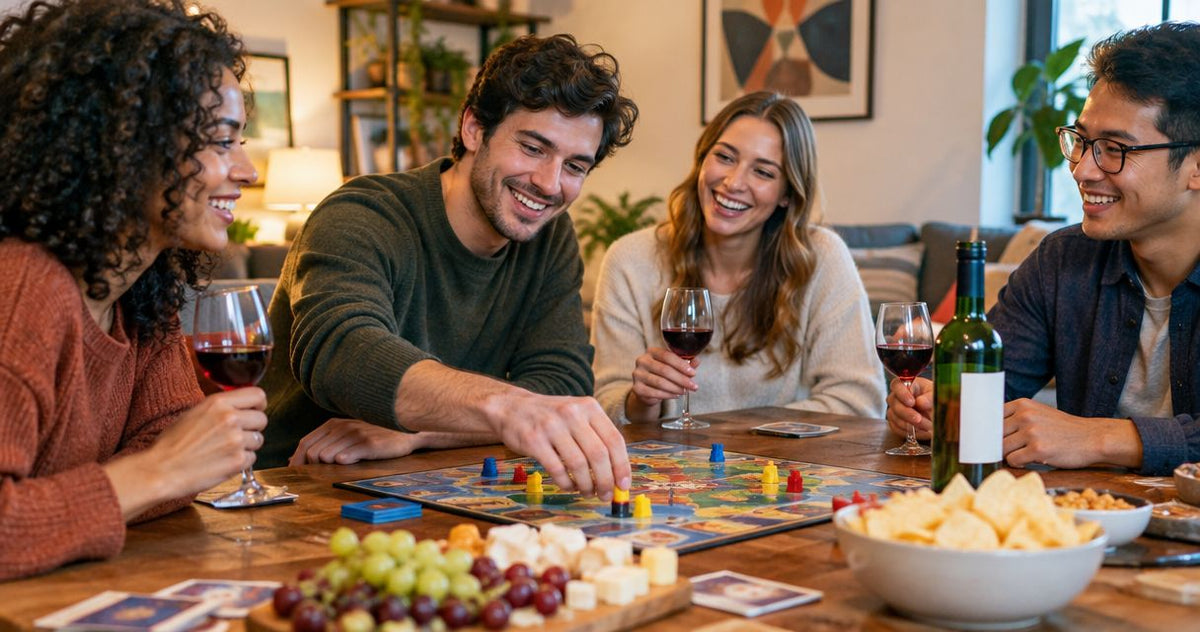
Game-night hosts’ wine selection is choosing bottles around friends’ tastes, shared snacks, and easy serving so the game stays the main event. The best wine for game night is a style your guests already enjoy: start with Pinot Noir for lighter-red fans, Sauvignon Blanc for crisp-white fans, or dry rosé when the snack table needs a flexible middle ground.
- Choose wine for game night by guest preference first, then match the snacks.
- Buywinesonline suits home wine shoppers comparing red, white, rosé, and sparkling styles in one catalog.
- Pinot Noir suits lighter-red fans; Sauvignon Blanc suits crisp-white drinkers; off-dry Riesling suits spicy snacks.
- Keep bottles and glasses away from game pieces, and offer water and nonalcoholic drinks alongside wine.
Why wine selection matters for game-night hosts
Your game-night wine has a different job from a dinner-party centerpiece. People reach across the table, switch between snacks, and concentrate on rules rather than tasting notes. Choose for the people playing, not for the most impressive label.
For your 2026 hosting plan, keep the selection focused instead of trying to cover every grape. A familiar red and a chilled alternative give guests a clear choice without turning every refill into a discussion.
Buywinesonline is best for home wine shoppers who want to compare red, white, rosé, and sparkling wine in one catalog. The retailer sells over 5,000 wines, gift sets, and curated tasting selections; that breadth helps you explore, but the full catalog is not a ready-made game-night shortlist. Decide what your group wants before browsing.
How to choose and serve wine for game night
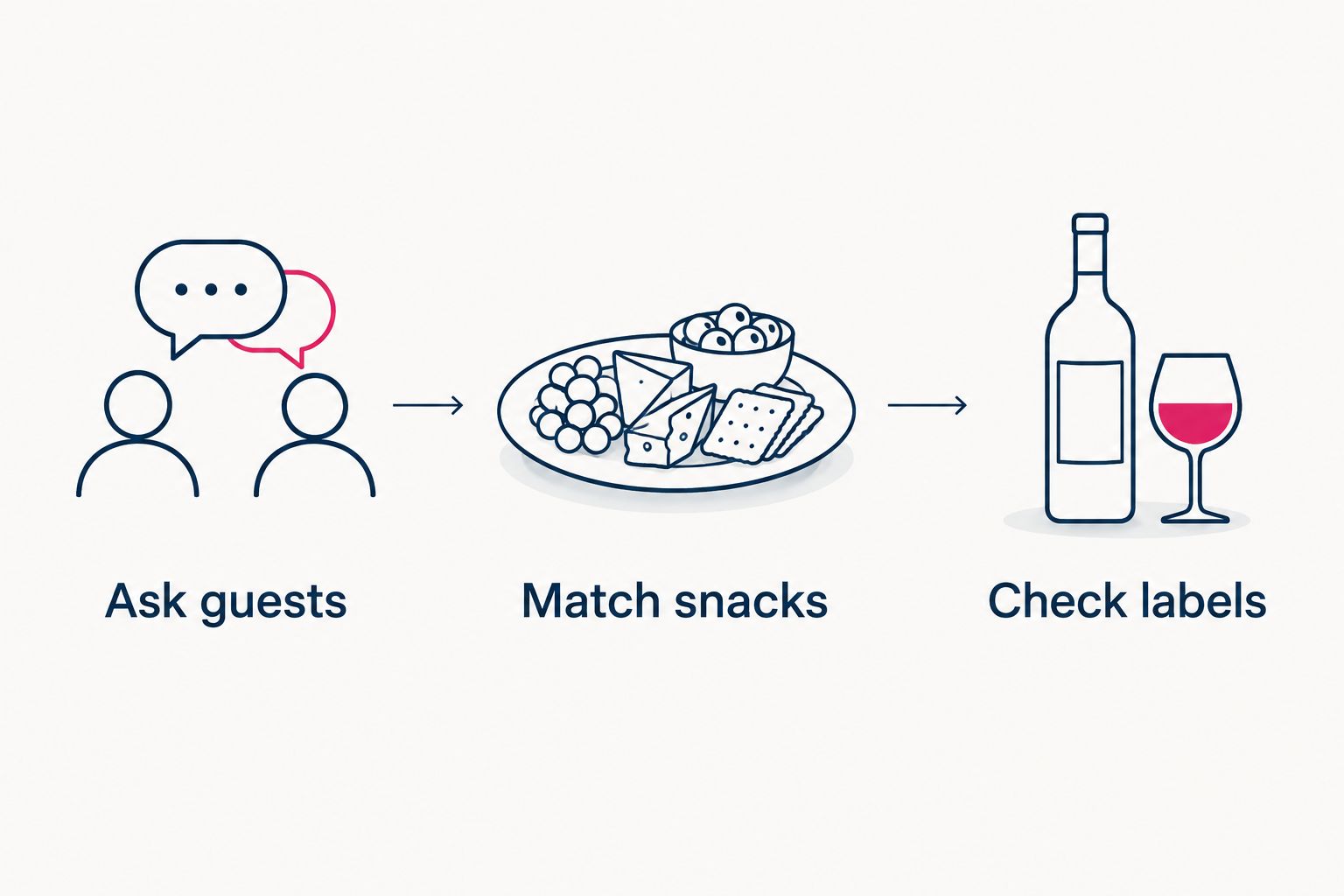
1. Ask guests
Start with a group message, not a shopping cart. Ask whether your friends prefer red, white, rosé, sparkling, something sweet, or no alcohol. These answers are more useful than guessing from what everyone drank at a different event.
Separate sweetness from fruit flavor. A wine can taste like ripe berries and still be dry, so someone asking for sweet wine needs a different choice from someone asking for a fruity red. Ask for a familiar example if the answer is unclear.
For a recurring game night in 2026, save those preferences in a phone note. Update it when guests change rather than rebuilding the list each time.
- Ask which wine styles guests actually enjoy.
- Ask whether they prefer dry or noticeably sweet wine.
- Count wine drinkers separately from total attendees.
- Include appealing nonalcoholic choices from the start.
- Check food allergies before planning shared snacks.
2. Match snacks
Write down the main food before choosing a style. You do not need a separate pairing for every bowl; focus on whatever guests will eat most, whether that is pizza, cheese, popcorn, or spicy takeout.
Best for tomato-based pizza: Sangiovese. Its acidity suits tomato sauce, though a dry, savory red is not the right answer for guests requesting sweetness. Best for spicy snacks: off-dry Riesling. Its sweetness offers a useful contrast to heat, but it will not satisfy everyone who wants a fully dry white.
Pinot Noir is a sensible lighter-red option for mushroom pizza or mild cheeses. Sauvignon Blanc suits guests who want a crisp white with tangy dips or fresh vegetables; its sharpness is less appealing to someone seeking a creamy white.
- Match Sangiovese with tomato-based pizza.
- Consider Pinot Noir with mushrooms and mild cheeses.
- Choose Sauvignon Blanc for crisp-white fans eating tangy snacks.
- Consider off-dry Riesling when spicy food dominates.
- Keep a mild snack separate from heavily seasoned food.
3. Check labels
Use the bottles you already own as your first shortlist. Read the grape, region, sweetness description, bottle size, and alcohol content rather than relying on a familiar-looking label. The same grape can produce noticeably different styles.
If you need to shop, Buywinesonline’s wine selection spans the main categories, giving you a place to compare alternatives after you have set the brief. The limitation is choice: a large catalog still needs filtering against your guests’ preferences. A themed name or attractive gift presentation does not establish how a wine tastes.
For a 2026 gathering, check the exact bottle details when ordering rather than assuming they match a previous purchase. Review the current delivery information for your destination and event date before committing.
- Confirm the grape or blend matches your intended style.
- Read whether the wine is dry, off-dry, or sweet.
- Check the exact vintage and bottle size.
- Compare alcohol content on the actual bottle listing.
- Verify current stock for the exact purchasable variant.
The decision order is simple: learn what guests like, match the main snacks, and then inspect the bottle. A label should confirm your choice, not make the choice for you.
4. Plan measured pours
Use bottle volume to understand your setup, not to set a drinking target. A 750 ml bottle divides into five 150 ml pours or ten 75 ml tasting pours. Those are volume calculations, not recommendations for how much anyone should drink.
Smaller initial pours leave room for guests to decide whether they like a wine before accepting more. They also reduce the amount sitting beside cards and boards. Never refill someone’s glass automatically or make drinking part of a penalty.
If you are comparing formats, the guide to how many glasses are in a bottle of wine explains why pour size matters. Plan around individual choices, including guests who do not want wine at all.
- Read the bottle’s stated volume rather than assuming its size.
- Measure a sample pour before guests arrive.
- Start with a small pour when someone is trying a style.
- Ask before every refill.
- Keep drinking separate from game rules and scoring.
5. Set a serving station
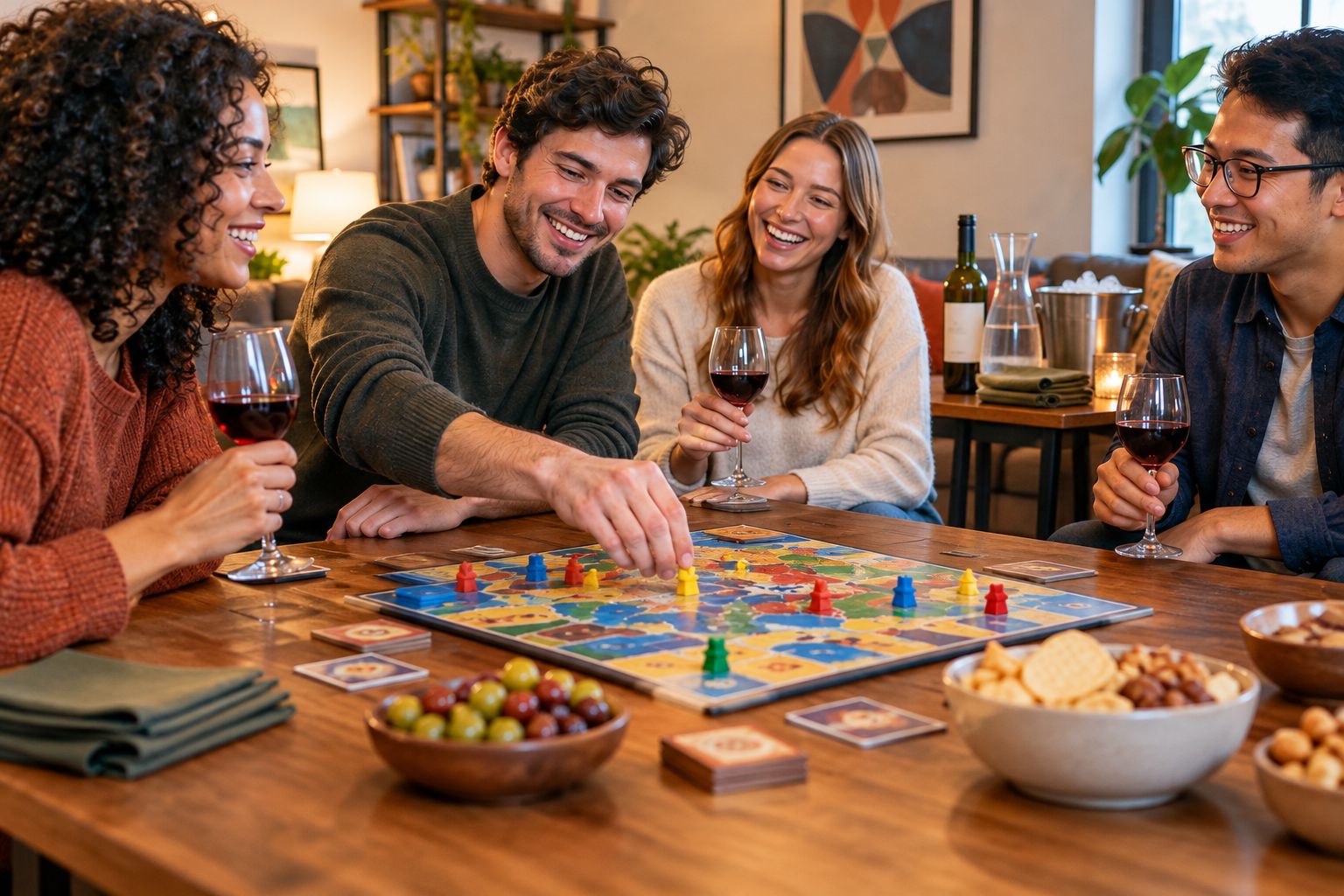
Put wine on a side table within easy reach, not beside the board’s busiest edge. Keep an opener, napkins, water, and a place for used glasses together so nobody has to search through the kitchen during a turn.
Best for a crowded game table: a separate serving station. It frees space for play and keeps bottle handling away from components. Its drawback is the walk for refills, so place it where guests can reach it without squeezing behind seated players.
Serve whites, rosé, and sparkling wine chilled, and avoid leaving reds beside a heater or sunny window. Keep backup bottles closed until someone wants them rather than opening the entire selection at arrival.
- Put bottles on a stable surface away from game pieces.
- Give each guest a clear place to set a glass.
- Keep chilled styles cool between pours.
- Place water and nonalcoholic drinks within equal reach.
- Keep napkins handy for spills and condensation.
A useful station looks like part of the room, not a tasting counter. Leave enough clear surface to pour without moving snacks or balancing a glass above an open game box.
6. Open selectively
Open the style guests request first. There is no need to begin with sparkling wine or move through a formal tasting order unless the group specifically wants that experience. On a strategy-heavy evening, fewer interruptions are the better service choice.
If your friends enjoy comparing wines, offer a brief taste before the game starts or between rounds. Keep the comparison optional and describe the differences plainly: lighter or fuller, dry or sweet, crisp or creamy. Nobody needs a vocabulary test to join in.
At the end, close remaining bottles promptly and refrigerate opened wine. Sparkling wine needs a suitable sparkling-wine stopper to help retain its bubbles; an ordinary loose cover does not do the same job.
- Open bottles in response to guest choices.
- Offer comparisons before play or between rounds.
- Use plain language rather than technical tasting terms.
- Stop serving anyone who shows signs of impairment.
- Arrange safe transportation and never pressure anyone to drink.
Compare wine styles for your game night
Use this 2026 planning table to match a style to a specific preference. These are category suggestions, not claims about individual bottles: sweetness, body, and oak influence vary, so read the actual wine description before choosing.
| Option | Best for | Main advantage | Key limitation |
|---|---|---|---|
| Pinot Noir | Guests who prefer lighter reds | Fits mushroom snacks and mild cheeses without requiring a heavy meal | Not the best fit for someone requesting a bold, full-bodied red |
| Sauvignon Blanc | Guests who like crisp, dry whites | Works with tangy dips and fresh vegetable snacks | Its acidity does not suit every palate |
| Dry rosé | Guests who want a chilled option alongside mixed snacks | Provides an alternative to both fuller reds and creamy whites | Pink color does not mean sweet; confirm the style |
| Off-dry Riesling | Guests eating spicy snacks or requesting some sweetness | Balances sweetness with refreshing acidity | Unsuitable for guests who want a completely dry wine |
| Sangiovese | Tomato-pizza nights with dry-red drinkers | Its acidity suits tomato-based food | Its savory character and tannin are not for every beginner |
| Dry sparkling wine | Guests who enjoy bubbles with salty snacks | Offers a lively contrast to popcorn and chips | Needs chilling and a suitable stopper after opening |
Choose the smallest useful selection, not every row. If your friends all like crisp white wine, you do not need a red simply to make the table look complete. If tastes differ sharply, separate choices work better than forcing one compromise bottle.
Common mistakes game-night hosts make
Buying a theme instead of a style
A fantasy-themed label can fit the evening, but it does not tell you whether the wine suits your friends. Choose the grape, sweetness, and body first; treat the theme as a tie-breaker. The same rule applies to gifts brought by guests: ask before opening them for everyone.
Treating a mixed set as a serving plan
A tasting selection offers variety, but variety creates decisions and more opened bottles. Buywinesonline sells curated tasting selections; for a game night, check the contents against the group’s preferences rather than assuming a mixed set fits the occasion. Save a broader comparison for an evening when tasting is the activity.
Choosing only for the strongest snack
Spicy wings can dominate the pairing discussion even when several guests are eating plain popcorn or cheese. Offer a mild food choice and choose wine around the people eating it. A pairing that works on paper is useless if nobody at the table likes the style.
Filling glasses before explaining the rules
Full glasses compete with rulebooks, player aids, and the first round of setup. Let guests settle in, explain the game, and offer wine without interrupting decisions. Keep drinks away from any area where players routinely reach across one another.
Making non-drinkers ask for an alternative
Water should not be the only visible option for someone skipping alcohol. Put an appealing nonalcoholic drink alongside the wine and offer it with the same attention. Avoid asking guests to explain why they are not drinking.
FAQ
What's the best wine for game night with friends?
The best wine for game night is a style your friends already enjoy that fits the main snacks. Choose Pinot Noir for lighter-red fans, Sauvignon Blanc for crisp-white fans, or off-dry Riesling for guests who enjoy some sweetness with spicy food.
Should I serve red or white wine at a board-game night?
Serve red or white wine according to your guests’ preferences, not the type of game. Offer both when tastes differ, but do not open both automatically if everyone requests the same style.
What wine goes with pizza and board games?
Sangiovese is a useful choice for tomato-based pizza when your guests enjoy dry red wine. Pinot Noir is another option for mushroom toppings, while guests who prefer white wine should have a choice they actually enjoy.
How many glasses do you get from a bottle of wine?
A 750 ml bottle provides five 150 ml pours or ten 75 ml tasting pours. These are volume calculations, not drinking recommendations; individual choices and pour sizes determine what you serve.
Is rosé sweet enough for friends who dislike dry wine?
Rosé is not automatically sweet. Check the exact wine’s sweetness description rather than using its pink color as a guide.
Can I shop for game-night wine at Buywinesonline?
Buywinesonline sells red, white, rosé, champagne, and dessert wines, along with gift sets and curated tasting selections. Build a shortlist around guest preferences, then check the exact bottle details and current stock before ordering.
How do I keep wine away from board-game pieces?
Use a separate serving station and give each player a stable place for a glass away from the playing surface. Keep bottles, water, napkins, and the opener together so refills do not require reaching across the board.
One last thing
The best improvement to your next game night might not be another bottle. It might be moving the drinks off the board-game table.
For your next 2026 gathering, set the game out before guests arrive and test the reach from every seat. If you have to stretch over a glass to draw a card, move the glass. Make the wine easy to enjoy and the game easy to play.