
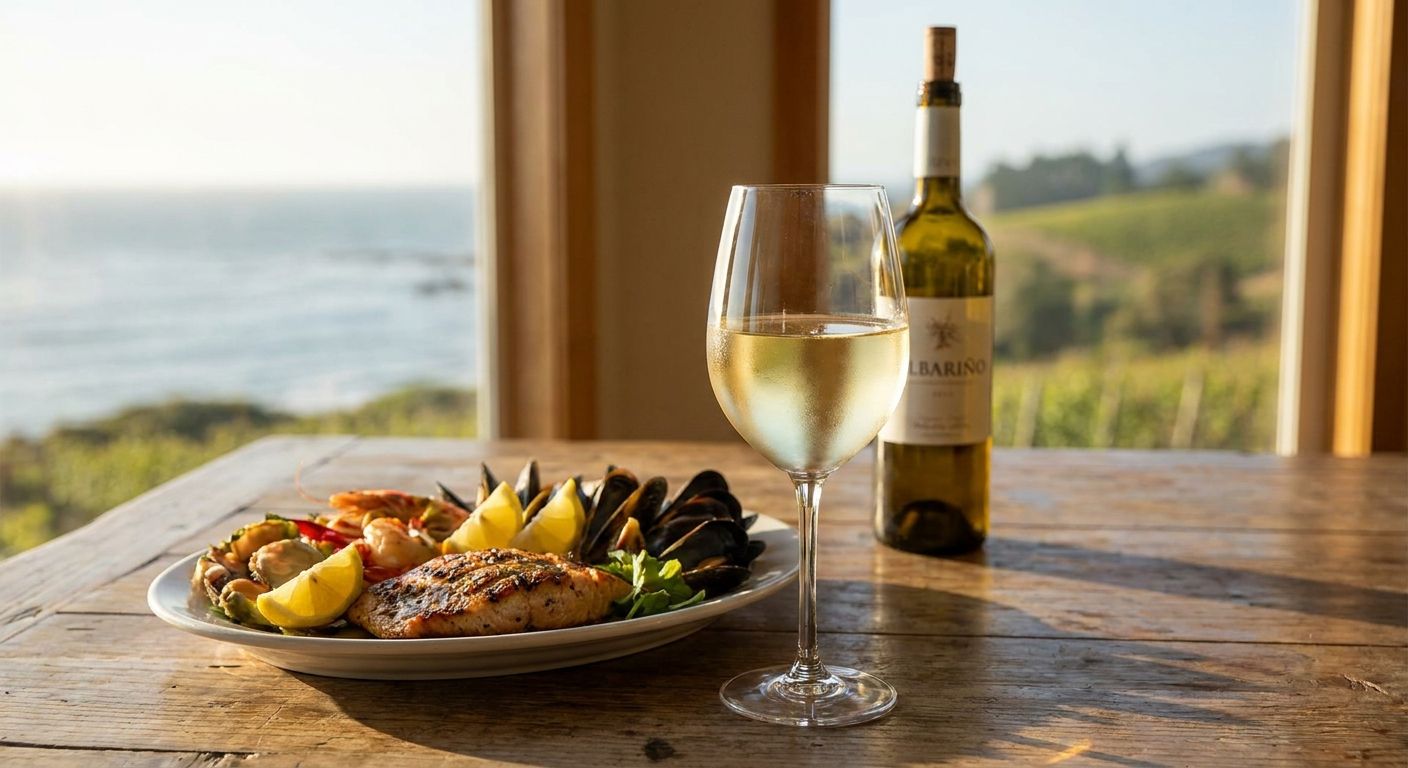
Albarino wine for seafood lovers pairs the citrus-forward, saline whites of Spain's Rías Baixas region with oysters, ceviche, and grilled fish, because its high acidity cuts through delicate protein instead of fighting it for attention. Seafood needs restraint from a wine, not size, and that's exactly what a well-made Albarino delivers.
- Albarino wine for seafood lovers means Rías Baixas whites with citrus-saline acidity built for oysters and ceviche - Sancerre or unoaked Chardonnay are the closest 2026 substitutes.
- Stag's Leap Hands of Time Napa Chardonnay 2020 handles lobster and crab without oak weight - Buy for richer seafood.
- Ladoucette Comte Lafond Sancerre 2025 delivers the same citrus-mineral snap as Albarino for raw bar service - Buy.
- Skip oaked Chardonnay and full-bodied reds with delicate white fish - the tannin and butter clash with the fish's texture.
Why Albarino Wine Matters for Seafood Lovers
Seafood is unforgiving with wine choices. A tannic red flattens raw oysters, an oaked Chardonnay turns ceviche buttery when it should stay bright, and a low-acid white just sits there while lemon and salt do the pairing's work alone. Albarino solves this structurally: grown along Spain's Atlantic coast in Rías Baixas, it typically finishes around 12-13% ABV with a saline, citrus-and-stone-fruit profile that mirrors the coastline it's grown next to.
That's why seafood-focused shoppers search for Albarino by name instead of settling for "a dry white." They already know oak and tannin are the enemy - they just need the right bottle in front of them, and browsing Buy Wines Online for whites built on acidity rather than weight is the fastest way to narrow the list.
Match the Wine's Acidity to the Seafood's Fat Content
- Raw oysters and clams: reach for the highest-acid, most saline option available - Albarino or a cold-climate Sauvignon Blanc.
- Grilled or seared fish (salmon, swordfish): a slightly rounder white works, since the char adds its own weight to the dish.
- Butter-poached lobster or crab: an unoaked Chardonnay's texture matches the richness better than a bone-dry Albarino would.
- Ceviche and citrus-cured fish: match acid to acid, or a lower-acid wine gets swallowed by the lime.
“If the wine still tastes fine after the oysters are gone, it wasn't acidic enough to begin with.”
Check the Region Before You Buy
- Rías Baixas, Spain (DO Rías Baixas) is the benchmark region for true Albarino - look for it on the label.
- Vinho Verde, Portugal, grows the same grape under the name Alvarinho, usually with a touch more spritz.
- "Spanish white blend" on a label without a named region is a red flag - it's rarely Albarino.
- If the bottle doesn't list Rías Baixas or Vinho Verde, treat the seafood-pairing claim with skepticism.
Serve It at the Right Temperature
- Chill to 45-50°F, colder than a red but not ice-cold - over-chilling below 40°F mutes the citrus and saline notes that make the pairing work.
- Pull the bottle from the fridge 10-15 minutes before pouring if it's been sitting at the coldest setting.
- Use a stemmed glass, not a stemless tumbler - hand warmth changes the wine faster than most people expect.
- Re-chill between pours if you're serving a raw bar spread over an hour or more.
Pair by Preparation, Not Just by Fish Type
- Fried or breaded seafood: needs the wine's acid to cut grease - Albarino, Sancerre, or a crisp Sauvignon Blanc all work.
- Steamed or poached preparations: a lighter-bodied white lets the delicate cooking method stay the star.
- Spicy seafood (blackened, Cajun, chili-forward): slightly off-dry or fruit-forward whites tame the heat better than bone-dry styles.
- Smoked fish: needs more weight - an unoaked Chardonnay or a light Pinot Noir can outperform a delicate Albarino here.
Compare Substitutes When Albarino Isn't on the Shelf
- Sancerre (Sauvignon Blanc from the Loire Valley): the closest flavor match - citrus, mineral, no oak.
- New Zealand Sauvignon Blanc: brighter and more herbaceous, still built for shellfish and ceviche.
- Unoaked Chardonnay: rounder texture, better suited to lobster and crab than delicate raw preparations.
- Dry Riesling: works when the dish carries heat or a touch of sweetness alongside the seafood.
For a deeper look at how Southern Hemisphere whites handle raw bar and grilled fish, see New Zealand wine for seafood lovers - the acid-first logic is the same one Albarino relies on.
Buy for Freshness, Not for Age
- Drink Albarino and its substitutes within 1-2 years of the vintage - these aren't built for cellaring.
- Check the vintage on the label before buying; a Sauvignon Blanc-style white loses brightness fast after 2-3 years.
- Store bottles on their side in a cool, dark spot only if holding them a few months - otherwise treat this as a buy-and-drink category.
- Buy in smaller batches for this style instead of stocking a case, since freshness matters more here than in age-worthy reds.
Budget for the Bottle You'll Actually Drink
- Everyday raw bar nights: a budget-friendly Sauvignon Blanc or Vinho Verde-style bottle covers most weeknight needs.
- Dinner party or date night: step up to a named-producer Sancerre or a reserve-tier Albarino when you can find one.
- Large gatherings: a mixed case lets guests try more than one style against different seafood courses - a 15-bottle tasting case built all-white covers exactly this.
- Gifting a seafood-loving host: pair a crisp white with a note about the dish it's meant for, rather than guessing at their whole shelf.
Albarino vs. the Closest Substitutes for Seafood
| Style | Best For | Origin | Key Limitation |
|---|---|---|---|
| Albarino | Oysters, ceviche, raw bar | Rías Baixas, Spain | Not always stocked at every retailer in 2026 |
| Ladoucette Comte Lafond Sancerre 2025 | Grilled fish, mussels | Loire Valley, France | Priced above everyday whites |
| Stag's Leap Hands of Time Napa Chardonnay 2020 | Lobster, crab, butter sauces | Napa Valley, California | Rounder texture, less acid-driven than Albarino |
| New Zealand Sauvignon Blanc | Shellfish, ceviche | Marlborough, New Zealand | More herbaceous, less stone fruit than Albarino |
Verdict: for straight seafood pairing power, Albarino wins on acidity and salinity, but Ladoucette Comte Lafond Sancerre 2025 is the buy when it's off the shelf.


Common Mistakes Seafood Lovers Make
- Buying oaked Chardonnay for oysters - the vanilla and butter notes fight the brine instead of complementing it.
- Serving it too cold - numbing the wine below 40°F mutes the citrus and saline character the pairing depends on.
- Assuming "Spanish white" means Albarino - many bargain bottles are blends from unrelated regions with none of the acid structure seafood needs.
- Cellaring it like a red - Albarino and its substitutes are built to drink young, and holding a bottle past 2-3 years strips the fruit.
- Pairing by fish name only - a fried fish taco needs a different wine than a delicately poached filet, even though both are technically "fish."
FAQ
What's the best wine for seafood lovers in 2026?
Albarino from Spain's Rías Baixas region is the best wine for seafood lovers in 2026 because its high acidity and saline character cut through fish and shellfish without overpowering them. Sancerre and unoaked Chardonnay are the closest substitutes when Albarino isn't in stock.
Is Albarino better than Sauvignon Blanc for seafood?
Albarino and Sauvignon Blanc both work for seafood, but Albarino leans more saline and stone-fruited while Sauvignon Blanc, especially from New Zealand, is more herbaceous and citrus-driven. Choose Albarino for oysters and raw bar, Sauvignon Blanc for grilled or fried preparations.
What temperature should Albarino wine be served at?
Serve Albarino at 45-50°F, colder than a red but not ice-cold. Over-chilling below 40°F mutes the citrus and saline notes that make it work with seafood.
Does Albarino pair with grilled fish or only raw seafood?
Albarino pairs with both. It's built for raw oysters and ceviche, but its acidity also cuts through the char on grilled salmon or swordfish.
How long can you age Albarino before it loses freshness?
Drink Albarino within 1 to 2 years of the vintage. It isn't built for cellaring, and the citrus brightness that makes it work with seafood fades fast after that window.
What's a good substitute for Albarino at a seafood dinner?
Sancerre, New Zealand Sauvignon Blanc, and unoaked Chardonnay are the closest substitutes for Albarino at a seafood dinner. Match the substitute to the dish: Sancerre or Sauvignon Blanc for raw and grilled preparations, Chardonnay for richer lobster or crab dishes.
Does Buy Wines Online carry Albarino wine?
Buy Wines Online's catalog spans more than 5,000 wines across red, white, rosé, and champagne, and inventory on regional Spanish whites shifts through 2026, so check current stock on the site and use Sancerre or unoaked Chardonnay as the closest match if Albarino isn't listed.
What's the difference between Albarino and Vinho Verde?
Albarino is the Spanish name for the grape grown in Rías Baixas, while Vinho Verde is the Portuguese region growing the same grape under the name Alvarinho, usually with a light spritz. Both share the citrus, saline profile that works with seafood.
One Last Thing
Rías Baixas Albarino is sometimes blended with small percentages of Loureira or Treixadura under Spanish DO rules, which is why two Albarino labels can taste noticeably different side by side even in the same vintage. If a retailer's 2026 catalog doesn't list a straight Rías Baixas bottling, ask what the closest analog in stock is before defaulting to a generic "dry white" - the gap between a true Albarino and an imitation shows up immediately with raw oysters.