
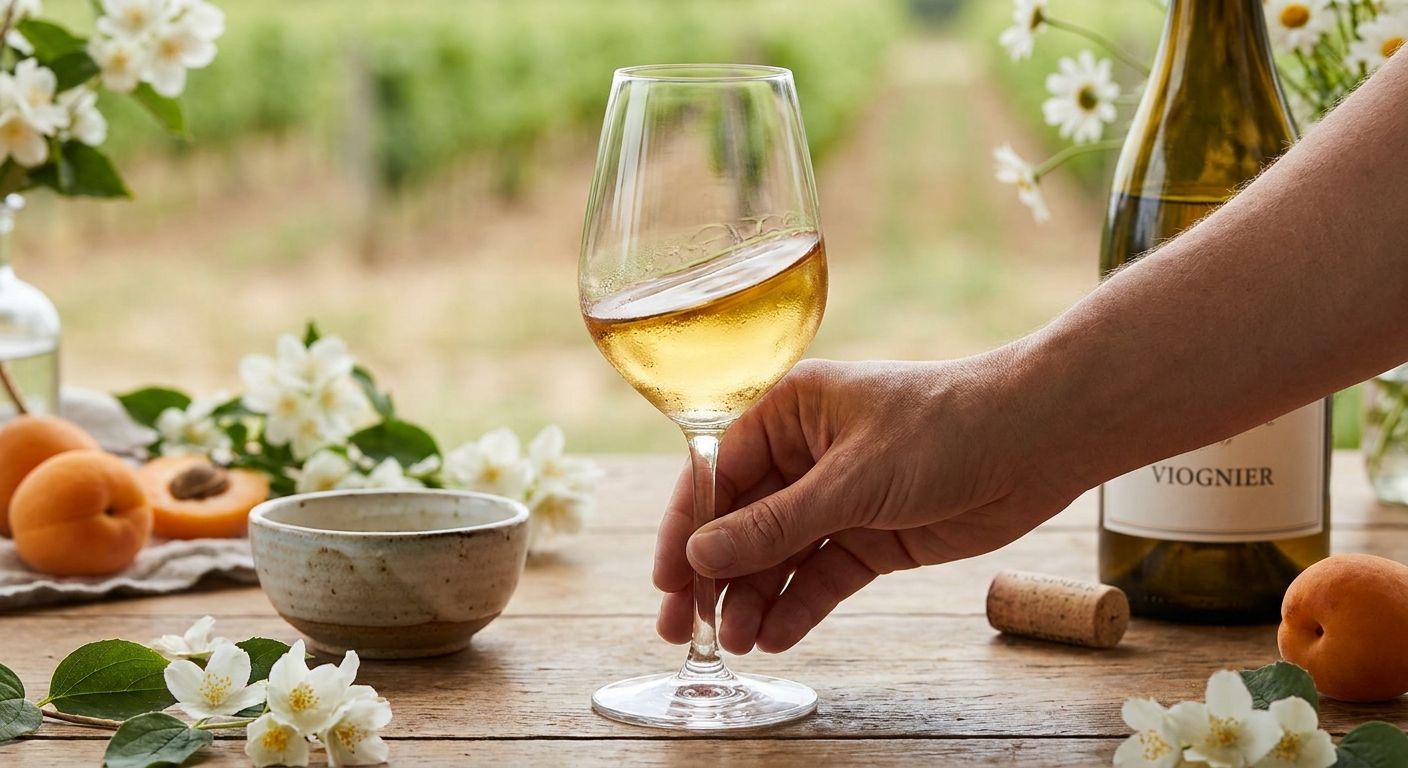
Viognier wine for aromatic white wine lovers is a full-bodied, floral-forward varietal built for drinkers who want more perfume and stone fruit than a neutral Pinot Grigio delivers in 2026. Where Sauvignon Blanc leans grassy and citrus-sharp, Viognier leads with honeysuckle, ripe peach, and apricot skin — a different lane entirely for anyone bored of the same three whites on every restaurant list.
- Viognier wine's peach, honeysuckle, and apricot aromatics make it the pick for drinkers tired of neutral Pinot Grigio and sharp Sauvignon Blanc.
- Serve viognier at 50-55°F — colder temperatures mute the floral nose that defines the variety.
- Condrieu (France) and California bottlings both work, but New World versions run riper and more tropical.
- Buy Wines Online's Li Veli Askos Verdeca Bianco IGT offers a similar aromatic-white profile when a dedicated Viognier isn't in current stock.
Why Viognier matters for aromatic white wine lovers
Most white wine drinkers get funneled into the same three grapes: Chardonnay, Pinot Grigio, Sauvignon Blanc. Viognier sits outside that rotation on purpose — it's oily in texture, low in acid relative to Sauvignon Blanc, and loaded with aromatic compounds that show up in the glass before the wine touches your tongue.
That's the entire appeal for this segment. If you've ever finished a glass of Gewürztraminer or Torrontés and wondered what else lives in that aromatic-white category, Viognier is the next bottle to try. Buy Wines Online's broader wine catalog (https://buywinesonline.com/) spans over 5,000 bottles across styles, so cross-shopping aromatic whites against each other is straightforward once you know what to look for.
Learn what "aromatic" actually means in Viognier
Aromatic in wine terms means the grape produces terpenes and esters that translate directly into floral and fruit-skin smells — no oak, no winemaking trick required. Viognier is naturally high in these compounds, which is why it smells almost sweet even when it's bone dry.
- Expect honeysuckle, jasmine, and orange blossom on the nose
- Ripe peach, apricot, and mango carry through on the palate
- Texture runs fuller and oilier than Sauvignon Blanc or Pinot Grigio
- Acidity sits lower, so the wine feels rounder, less zippy
- Alcohol typically lands at 13-15%, higher than crisp whites
Pick your region before you pick a bottle
Region changes the Viognier profile more than almost any other white grape. Condrieu, in France's northern Rhône, is the benchmark — mineral-driven, restrained, built to age two to three years. California and other New World regions push the fruit riper, trading some of that minerality for tropical intensity.
- Condrieu (France): Structured, floral, less overtly fruity — the classic reference point
- California: Riper peach and mango notes, fuller body, more approachable on release
- Virginia: Increasingly respected for balanced acidity and stone-fruit character
- Australia: Often blended with Viognier as a small addition to Shiraz, less common as a standalone bottling
- Argentina: Warmer-climate style, broader and less floral than Rhône examples
Match Viognier to food before you buy the bottle
Viognier's low acid and full body mean it doesn't cut through fat the way Sauvignon Blanc does. It works better alongside dishes that echo its own richness and spice tolerance.
- Roast chicken with herbs or citrus glaze
- Thai or Vietnamese dishes with lemongrass and coconut
- Soft cheeses like Brie or triple-crème
- Grilled shrimp or scallops with a butter finish
- Spiced or curried vegetable dishes
Serve it at the right temperature
Over-chilling is the single most common way people ruin Viognier. Cold suppresses the floral aromatics that are the entire reason to reach for this grape over a neutral white.
- Serve at 50-55°F, warmer than you'd pour a Pinot Grigio
- Pull the bottle from the fridge 15-20 minutes before pouring
- Use a wider bowl glass to open up the nose
- Let the first pour sit for a minute before tasting
- Avoid ice buckets packed with ice water for more than a few minutes
Compare Viognier against other aromatic whites
Viognier isn't the only grape built for this palate. Knowing where it sits against Gewürztraminer, Torrontés, and Riesling helps you buy the right bottle instead of guessing.
| Option | Best for | Key limitation |
|---|---|---|
| Viognier | Full body, peach and honeysuckle aromatics | Lower acid can feel flat without the right food pairing |
| Gewürztraminer | Lychee, rose, and spice-forward noses | Can skew sweet even in "dry" bottlings |
| Torrontés | Grape-and-jasmine perfume at a lower price point | Less structure for aging; drink young |
| Riesling | High acid with aromatic lift, wide sweetness range | Sweetness levels vary widely by label, easy to misjudge |
| Late-harvest Viognier | Dessert-style richness | Not a substitute for a dry table wine |
If a dedicated Viognier isn't sitting in current inventory, Li Veli Askos Verdeca Bianco from Puglia, Italy delivers a comparable aromatic-white profile — floral nose, stone-fruit palate — for readers who want to stay in this lane while shopping.
Build a tasting flight to confirm your palate
The fastest way to know if Viognier fits your taste is to taste it against two or three other aromatic whites side by side, blind if possible.
- Pour Viognier, Gewürztraminer, and Torrontés in the same sitting
- Taste coldest to warmest to isolate temperature's effect on aroma
- Note which wine's nose you notice before you even lift the glass
- Track which one paired best with whatever you're eating that night
- Repeat with a different Viognier region next time to isolate style versus grape
Buy Wines Online's 20-bottle international wine tasting set is built for exactly this kind of side-by-side comparison across styles and regions, without committing to a full case of one wine you're not sure about yet.
Avoid buying mistakes that kill the aromatics
A handful of buying habits quietly ruin the Viognier experience before the cork even comes out.
- Buying a bottle more than 3 years past vintage — Viognier's aromatics fade faster than Chardonnay's
- Storing it upright near a heat source, which accelerates that fade
- Serving it ice-cold straight from the freezer door
- Assuming all Viognier tastes the same regardless of region
- Pairing it with acidic, vinegar-forward dishes that clash with the low-acid structure
Common mistakes aromatic white wine lovers make
- Chasing sweetness instead of aromatics — Viognier is usually dry; the perfume on the nose reads as sweet even when the wine isn't
- Comparing it directly to Chardonnay — the body is similar, but Viognier has no oak-driven vanilla notes to fall back on
- Cellaring it like a Cabernet — most Viognier is meant to drink within 2-3 years of the vintage date
- Ignoring the region on the label — Condrieu, California, and Virginia bottlings taste noticeably different from each other
- Serving it too cold at a dinner party — the floral nose disappears below 50°F, wasting the entire point of the grape
FAQ
What does Viognier wine taste like?
Viognier tastes like ripe peach, apricot, and honeysuckle with a full, slightly oily texture and lower acidity than Sauvignon Blanc. Most bottlings are dry despite the sweet-leaning aroma.
Is Viognier sweet or dry?
Standard Viognier is dry. Late-harvest versions exist and are labeled separately, so check the label if you want a sweeter style.
What is the best food pairing for Viognier?
Roast chicken, Thai and Vietnamese dishes with coconut or lemongrass, and soft cheeses like Brie pair best. The low acid and full body clash with vinegar-forward or very acidic dishes.
Is Viognier better than Chardonnay?
Neither is objectively better — Viognier offers more floral aromatics and no oak influence, while Chardonnay ranges from lean and mineral to buttery and oaked depending on style. Pick based on whether you want perfume or vanilla-oak notes.
How should Viognier be served?
Serve Viognier at 50-55°F in a wider bowl glass to let the aromatics open up. Colder temperatures mute the floral nose that defines the variety.
How long does Viognier last after opening?
An opened bottle holds its aromatics for about 1-2 days in the refrigerator with a stopper. The floral notes fade faster than a high-acid white like Riesling.
What other wines taste like Viognier?
Gewürztraminer, Torrontés, and some Riesling styles share the aromatic-white profile. Each differs in acid level and sweetness, so taste them side by side to find your preference.
Where does the best Viognier come from?
Condrieu in France's northern Rhône is the historic benchmark for Viognier. California and Virginia both produce well-regarded versions with riper, more approachable fruit.
One last thing
Viognier ages faster than most white wine drinkers expect. Buy it within 2-3 years of the vintage on the label, store it on its side away from heat, and drink it before the honeysuckle note turns flat — that window is shorter than almost any other popular white, and it's the detail most bottle shops never mention.