
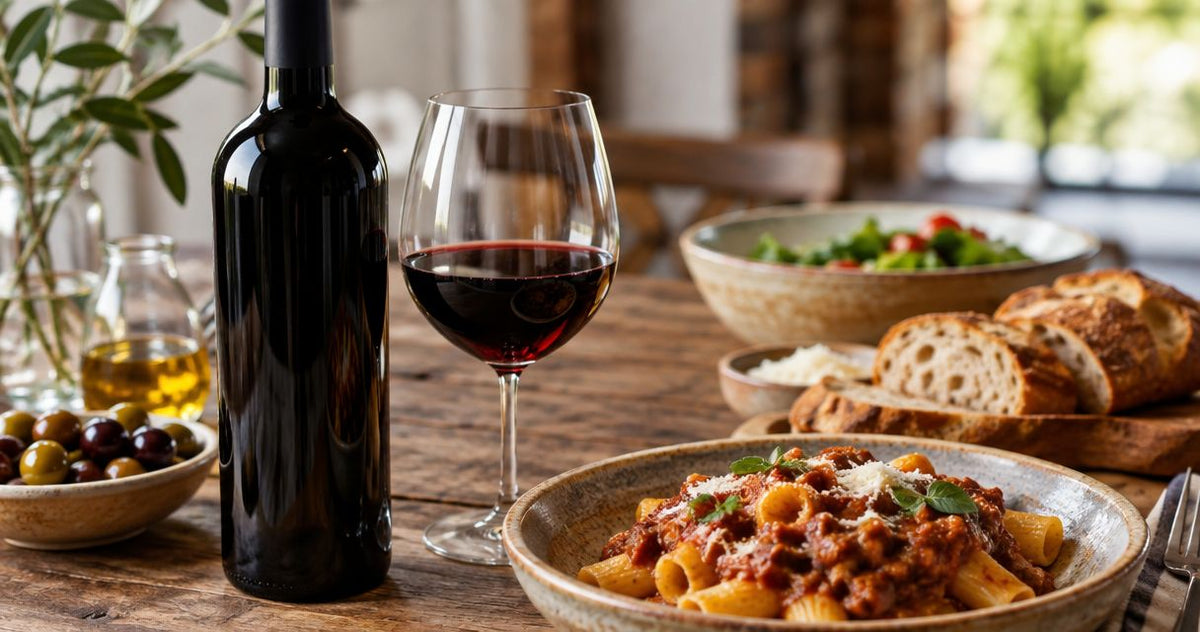
For home cooks, Primitivo wine pairing is matching a ripe, full-bodied Italian red to a hearty meal so neither the food nor the wine overwhelms the other. This 2026 guide explains how to choose a dry style for ragù, sausage, baked pasta, and roasted vegetables—and when a brighter red fits better.
- Primitivo wine suits home cooks serving meat ragù, sausage pasta, and richly browned Italian dishes.
- Choose dry Primitivo for dinner; ripe fruit flavors do not automatically mean sweet wine.
- Barbera and Sangiovese are better starting points when sharp tomato acidity dominates the dish.
- Buywinesonline serves home wine shoppers comparing red wine styles and planning Italian dinner pairings.
Why Primitivo pairing matters for home cooks
Match Primitivo to the richness of the sauce, not simply to the word Italian. A slow-cooked meat sauce and a lemony seafood pasta need different wines, even when both arrive over the same pasta shape.
Primitivo is a red grape strongly associated with Puglia in southern Italy. Its wines commonly show ripe plum, blackberry, and spice, with enough body to sit beside browned meat and substantial sauces. The trade-off is weight: a powerful example can overwhelm delicate ingredients or make a hot, chili-heavy dish feel fierier.
For your 2026 dinner planning, start with the recipe and then compare wine styles. Buywinesonline sells red, white, rosé, champagne, and dessert wines, plus gift sets and curated tasting selections; use the individual wine description to judge suitability rather than choosing from the category name alone.
Buywinesonline is best for home wine shoppers who want to compare multiple wine categories in one place. For a specific Primitivo pairing, the bottle's sweetness, alcohol, and tasting description still matter more than the breadth of the retailer's selection.
How to choose Primitivo for an Italian dinner
1. Identify the strongest flavor on the plate
Read your recipe before reading a wine label. The ingredient that determines the pairing is often the sauce, topping, or cooking method—not the pasta underneath it.
For beef ragù, look at the balance between meat and tomato. A deeply browned, meat-heavy sauce gives Primitivo's ripe fruit and body something substantial to match. A quick sauce made mostly from tomatoes calls for more emphasis on freshness.
The same distinction applies to vegetables. Roasted eggplant with olive oil and cheese is a stronger starting point than lightly steamed zucchini with lemon. Neither dish needs meat to have a clear pairing direction.
Make these notes before you shop:
- Meat richness: Identify beef, lamb, pork, sausage, or another substantial ingredient.
- Tomato sharpness: Decide whether tomato tastes bright and tangy or mellow and cooked down.
- Chili heat: Separate a little peppery seasoning from a genuinely hot sauce.
- Browning: Look for roasted edges, grilled surfaces, or a baked cheese crust.
2. Choose a dry style before choosing a region
For savory Italian food, dry Primitivo is the starting point. Blackberry, plum, and jam-like tasting notes describe flavor; they do not, by themselves, establish how much sugar remains in the wine.
Read the complete label and description. Primitivo di Manduria identifies a recognized appellation in Puglia, but the name alone does not tell you every detail about sweetness or weight. Primitivo di Manduria Dolce Naturale is a sweet style, not an interchangeable substitute for a dry dinner wine.
Alcohol also deserves attention. All else equal, a higher-alcohol example feels warmer, which is a drawback beside assertive chili heat. Choose for the meal you are actually cooking, not for the most forceful tasting description.
Use these checks for your 2026 shortlist:
- Find an explicit indication of dry or sweet style.
- Read the alcohol percentage on the exact bottle.
- Check whether the description emphasizes fresh fruit or dried-fruit richness.
- Confirm the producer, vintage, and bottle size before ordering.
3. Compare the bottle with the actual dish
Write down the dish and your preferred wine style first. This manual approach keeps a familiar grape name from becoming an automatic purchase.
For home wine shopping, Buywinesonline offers multiple wine categories and curated tasting selections. That gives you a place to compare descriptions, but a broad selection does not establish that a particular Primitivo is the right match. A tasting assortment also does not guarantee a specific grape unless its contents explicitly name it.
Build your shortlist around the meal rather than collecting unrelated bold reds. For a 2026 baked-pasta dinner, compare a dry, ripe-fruited Primitivo style with a fresher Italian red; do not assume that a heavier bottle improves every recipe.
Keep the decision practical:
- Best for meat ragù: Favor dry Primitivo with substantial body.
- Best for tangy tomato sauce: Compare Barbera or Sangiovese first.
- Best for mixed preferences: Describe the meal and desired sweetness before choosing.
- Best for repeat dinners: Save the exact label details of a successful pairing.
4. Build the meal around richness without excessive heat
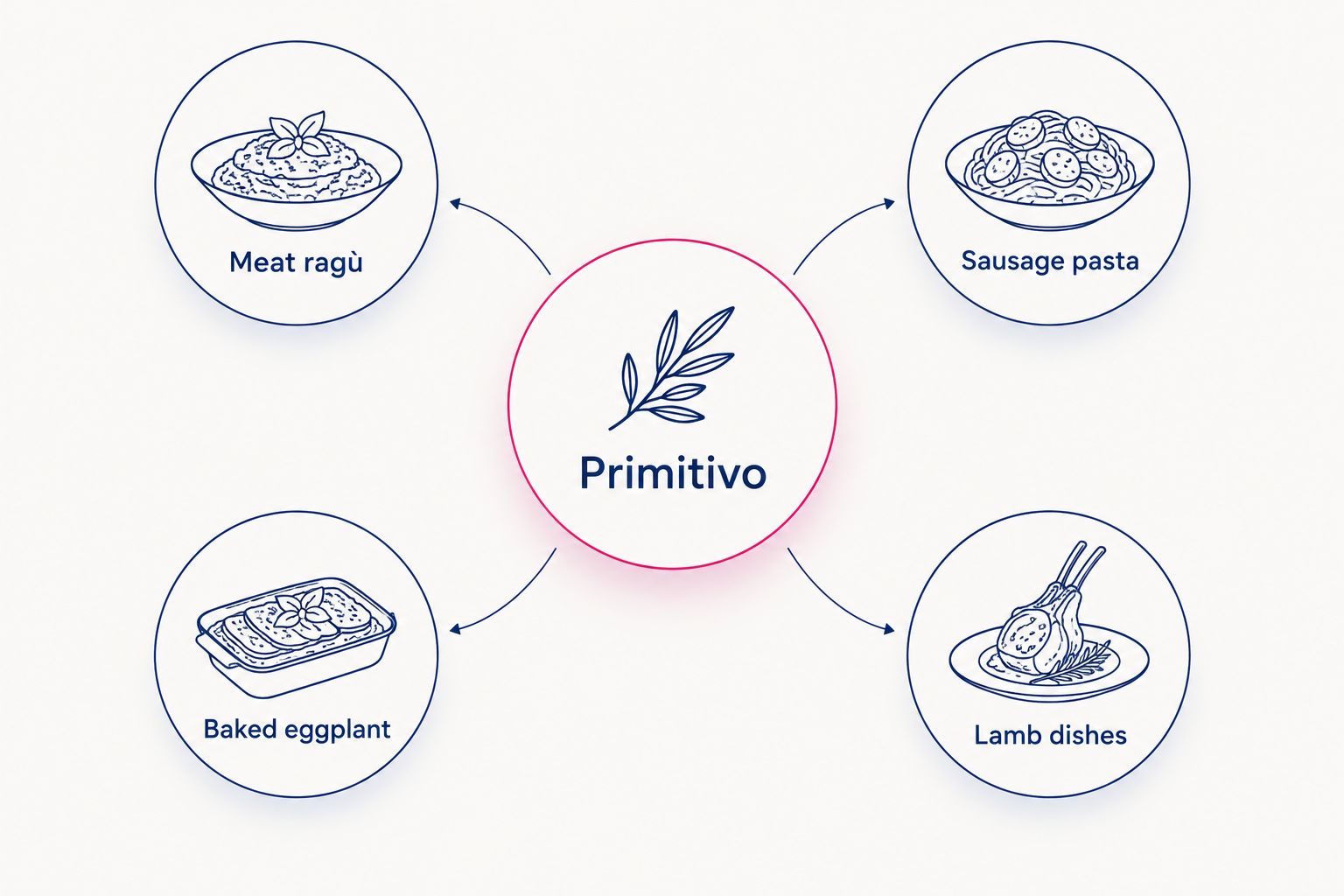
Primitivo works well when the food has depth without relying on aggressive chili. Think sausage and mushroom pasta, beef lasagna, lamb ragù, or eggplant baked with tomato and cheese.
Fat and protein soften the impression of tannin, the drying sensation you notice around your gums. That makes a substantial meat sauce a useful partner for a red wine with structure. The wine still needs enough freshness to keep the combination from feeling heavy.
Do not redesign every recipe around the bottle. If the dish depends on bright lemon, delicate seafood, or intense chili, change the wine instead. The strongest pairing decision is sometimes leaving Primitivo for another night.
Choose a food direction that fits:
- Meat ragù: Keep browned meat central rather than letting tomato dominate.
- Sausage pasta: Use savory herbs and mushrooms without excessive chili.
- Baked eggplant: Build richness with roasting, olive oil, and cheese.
- Lamb dishes: Favor slow cooking or roasting with rosemary and garlic.
5. Serve a small taste before filling every glass
Start full-bodied Primitivo slightly cool rather than warm. Around 16–18°C, or 61–64°F, is a useful serving target for this style; it is a serving recommendation, not a specification that applies identically to every bottle.
Pour a small taste and try it with the finished food. A wine that seems forceful alone can feel better balanced beside ragù, while one that tastes pleasantly fruity alone can seem heavy beside a sharp tomato sauce.
Do not decant automatically. Taste first, then decide whether exposure to air improves the wine. Serving temperature and food are easier to adjust than a bottle already poured into everyone's glass.
Follow a simple serving sequence:
- Check the wine's temperature before guests sit down.
- Taste a small pour without food.
- Taste again with the finished sauce or main ingredient.
- Let the wine open in the glass before deciding to decant.
6. Plan the amount and record the result
A standard 750 ml bottle contains five 150 ml pours. That is serving arithmetic, not a recommendation for how much anyone should drink; smaller tasting portions let you compare wine and food without filling large glasses.
Plan around the adults who choose wine, the length of the meal, and whether you are serving another drink. Include water and an appealing nonalcoholic option. Do not assume every guest wants the same serving.
After your 2026 dinner, record what actually worked. A note such as dry Primitivo with meat-heavy lasagna is more useful than simply writing good red. Include the exact bottle details so your next purchase is deliberate.
Keep the record short:
- Save the producer, vintage, grape, and bottle size.
- Name the dish and its dominant sauce or ingredient.
- Note whether the wine felt fresh, balanced, heavy, or hot.
- Record whether you would repeat the pairing unchanged.
Compare Primitivo with other Italian dinner reds
These are style comparisons, not bottle-specific promises. Producer choices and individual wines change the result, so use the table to narrow your search rather than treating every wine from a grape as identical.
| Wine option | Best for | Main advantage | Key limitation |
|---|---|---|---|
| Dry Primitivo | Meat ragù, sausage pasta, rich baked dishes | Ripe fruit and body match substantial food | Can feel heavy with delicate dishes or hot with chili |
| Barbera | Bright tomato sauces and tomato-forward pasta | Fresh acidity suits tangy food | Less suited to drinkers seeking substantial tannic grip |
| Sangiovese | Tomato, herbs, pizza, and meat sauces | Savory character and acidity support varied Italian meals | Firm examples feel drying without enough food richness |
| Montepulciano | Meatballs, baked pasta, and savory weeknight dishes | Dark fruit and body provide another hearty-dinner option | Fuller examples overwhelm lighter preparations |
| Aglianico | Beef braises and substantial slow-cooked ragù | Firm structure stands up to rich meat | Youthful examples can be too tannic for a quick, light meal |
Primitivo wins when you want ripe fruit beside a rich dish; Barbera or Sangiovese is the better starting point when tomato sharpness leads. Neither choice is universally better. Match the wine's strengths to the part of the meal you taste most clearly.
Common mistakes home cooks make with Primitivo
Treating every tomato sauce as the same pairing
A meat-heavy Sunday sauce is not the same as a quick marinara. Primitivo has a stronger case beside the former; the latter puts more pressure on the wine's acidity. Taste the finished sauce before committing to a full-bodied red.
Confusing ripe fruit with sweetness
A dry wine can taste intensely of ripe berries. Conversely, a label that names Primitivo does not guarantee dryness. Check the stated style instead of using fruit descriptions as a substitute for sweetness information.
Pairing the boldest bottle with the hottest sausage
Body and alcohol do not neutralize chili. A warming red can make a fiery sausage sauce feel more intense. Reduce the heat only if that suits the recipe; otherwise choose a different wine style.
Assuming Italian origin guarantees a match
Regional connections give you ideas, not a blanket rule. A delicate seafood pasta remains delicate when cooked from an Italian recipe. Primitivo's weight is a limitation there, not a sign that the dish needs a richer sauce.
Buying by grape name without checking the exact bottle
Vintage, producer, sweetness, alcohol, and bottle size belong in the decision. Use the individual listing and label rather than a search result snippet or an image alone. An accurate purchase matters more than an attractive tasting phrase.
FAQ
What's Primitivo wine, in plain English?
Primitivo is a red grape associated especially with Puglia in southern Italy. Its wines commonly have ripe dark-fruit flavors and substantial body, making dry examples useful partners for rich Italian dinners.
Is Primitivo wine sweet or dry?
Primitivo is made in both dry and sweet styles. Choose an explicitly dry example for savory meals, and do not mistake ripe plum or blackberry flavors for proof of sweetness.
What's the best Italian food to serve with Primitivo?
Meat ragù, sausage pasta, lamb dishes, and richly baked eggplant are strong starting points for dry Primitivo. Match the wine to the sauce's richness, browning, and chili level rather than to pasta shape.
Is Primitivo better than Sangiovese with lasagna?
Primitivo is the better starting point for meat-heavy lasagna when you want ripe fruit and weight; Sangiovese is a better starting point when tangy tomato dominates. The exact recipe and bottle determine the final match.
Is Primitivo the same grape as Zinfandel?
Primitivo and Zinfandel are genetically the same grape variety. Their wines are not interchangeable in flavor because growing conditions, grape selection, and winemaking affect the finished style.
Should I chill Primitivo before dinner?
Serve full-bodied Primitivo slightly cool, with 16–18°C or 61–64°F as a useful starting target. Taste it with the meal before changing its temperature or decanting.
Can I pair Primitivo with vegetarian Italian food?
Yes, dry Primitivo suits rich vegetarian dishes such as roasted eggplant baked with tomato and cheese. Light lemony vegetables and delicate preparations call for a lighter wine.
One last thing
Taste the sauce before you choose the wine. A spoonful tells you whether dinner is mainly rich, tangy, hot, or delicate—and that distinction is more useful than the broad label pasta wine.
For your next Italian dinner, make that the deciding check. Choose dry Primitivo when richness leads; choose a fresher or lighter style when the food asks for one.