
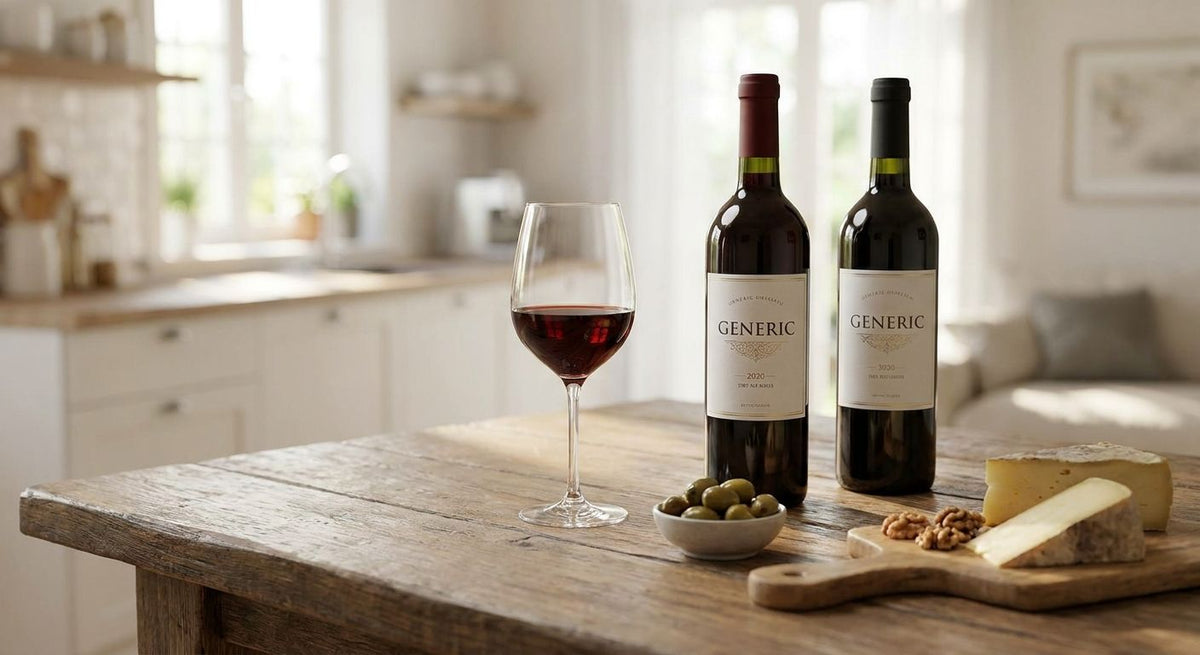
Keto friendly wine for low-carb dieters is wine chosen specifically for near-zero residual sugar, with the goal of keeping a standard 5-ounce pour under roughly 4 grams of carbs without giving up your evening glass. Low-carb drinkers track grape variety and dryness level the way other shoppers track price — a jammy red blend or an off-dry Riesling can burn a full day's carb budget in one glass.
- Keto friendly wine means bone-dry reds, whites, and Brut sparkling running roughly 3-4 grams of carbs per 5oz glass.
- Cabernet Sauvignon, Pinot Noir, and Sauvignon Blanc stay low-carb across nearly every producer in 2026.
- Skip Port, Moscato, and Demi-Sec sparkling wine — a single glass can carry 10-15 grams of carbs.
- Buy Wines Online's dry-style bottles and mixed tasting sets let you test keto-friendly picks before buying a full case.
Why Keto-Friendly Wine Matters for Low-Carb Dieters
Fermentation converts most grape sugar into alcohol, which is why a genuinely dry wine carries far fewer carbs than beer or a mixed cocktail. The problem for low-carb dieters is that "dry" gets used loosely in wine marketing — plenty of reds labeled dry still taste sweet because of ripe fruit character, not added sugar, while some whites and rosés really do carry residual sugar the label never mentions outright.
That gap matters more in 2026 than it did five years ago, because low-carb and keto-adjacent diets have pushed wine brands to slap "skinny" and "low-carb" callouts on bottles that are really just lower in alcohol, not lower in sugar. Reading grape variety and style — not the marketing sticker — is the only reliable way to keep a glass keto-friendly.
A quick look at buywinesonline.com shows the range this diet has to work with: dry Cabernet Sauvignon and Pinot Noir at one end, sweet dessert and fortified wines at the other. The steps below sort that catalog the way a low-carb shopper actually needs to.
Check the grape variety and dryness label before anything else
Most of the carb decision happens before you look at price or region. Start here every time:
- Dry reds — Cabernet Sauvignon, Pinot Noir, Merlot, Syrah — run low carb across nearly every producer
- Dry whites — Sauvignon Blanc, unoaked Chardonnay, Albariño — sit in the same low-carb range as dry reds
- Brut and Extra Brut on a sparkling wine label mean the driest style available
- "Off-dry" or "semi-sweet" on a label is code for noticeable added sugar
- Flavored wine blends, fruit-infused reds, and spiked wine seltzers stack carbs fast and rarely disclose sugar content clearly
Rule out the sweet categories entirely
A handful of categories are worth crossing off your list before you shop, not after you're standing at checkout:
- Port, cream Sherry, and other fortified dessert wines
- Moscato, sweet Riesling, and ice wine
- "Juicy" or beginner-marketed sweet red blends
- Sparkling wine labeled Demi-Sec or Doux
- Low-ABV fruit wines and pre-mixed wine coolers
Build your everyday list from bone-dry reds
Once the sweet categories are off the table, dry red wine becomes the easiest category to buy on autopilot for a low-carb diet. Cabernet Sauvignon and Pinot Noir are the two safest defaults — both are dry by style convention almost everywhere they're produced, from Napa Valley to Burgundy. Merlot and Syrah follow close behind, with fuller fruit but the same lack of added sugar.
- Cabernet Sauvignon — structured, dry, and consistent across regions and price points
- Pinot Noir — lighter body, still bone-dry, easy with lean proteins
- Merlot and Syrah — dry reds with riper fruit character, no added sugar
- Watch alcohol percentage if you're also counting calories, not just carbs — a 15% ABV Cabernet Sauvignon carries more calories per glass than a 13% ABV Pinot Noir even though the carb count is nearly identical
Add dry whites and true dry rosé for variety
Dry white wine gives keto and low-carb dieters some of the lowest-carb pours on the shelf, and it pairs better with lighter summer meals than red does. Sauvignon Blanc leads the category on crispness and consistency.
- Sauvignon Blanc — crisp, dry, among the lowest-carb whites you can buy; Cloudy Bay Sauvignon Blanc 2025 is a reliable bone-dry benchmark for this style
- Unoaked or lightly oaked Chardonnay — dry unless the label states otherwise
- Provençal-style dry rosé — pale, dry, distinct from sweetened blush wines
- For a broader rundown of the driest white styles and how they compare, see the guide on dry white wine for beginners


Choose sparkling wine by dryness level, not by price
Sparkling wine confuses more low-carb shoppers than any other category because the labeling system is its own language. Ranked from driest to sweetest:
- Brut Nature / Zero Dosage — no added sugar, the driest sparkling wine made
- Extra Brut — very low sugar, still firmly dry
- Brut — the common default on most shelves, still low-carb relative to sweeter styles
- Extra Dry — despite the name, this sits sweeter than Brut
- Sec, Demi-Sec, Doux — skip all three on a low-carb diet
Use a mixed tasting set to find your keto-friendly favorites
Buying a full case of a grape you've never tried is a bad bet, keto diet or not. A mixed tasting set solves the trial problem: you get several dry reds and whites in one order and narrow down which grape actually fits your palate before committing to six or twelve bottles of one style. The guide on wine tasting sets for beginners walks through how to pick a set built around dry styles specifically.
Keto Wine Styles Compared
| Style | Best For | Typical Carbs (5oz) | Key Limitation |
|---|---|---|---|
| Dry Cabernet Sauvignon | Everyday low-carb red drinkers | Roughly 3-4g | Higher ABV bottles add calories fast |
| Dry Sauvignon Blanc | Low-carb white wine drinkers | Roughly 3-4g | Some New World styles skew slightly riper |
| Brut Nature / Extra Brut sparkling | Special occasions, celebrations | Roughly 1-2g | Harder to find than standard Brut |
| Mixed dry tasting set | First-time keto wine buyers | Varies by bottle | Requires reading each bottle's style individually |
| Moscato, Port, sweet Riesling | Anyone not counting carbs | Roughly 10-15g | Not compatible with a keto or low-carb diet |
The bottom line: dry Cabernet Sauvignon, dry Sauvignon Blanc, and Brut sparkling wine are the three safest keto-friendly wine categories to buy on repeat in 2026 — everything labeled sweet, off-dry, or fortified goes on the skip list.
Common Mistakes Low-Carb Dieters Make With Wine
- Trusting the word "dry" alone. Some reds marketed as dry still read jammy or ripe-tasting because of fruit character, not sugar — check the grape and producer notes, not just the adjective on the shelf talker.
- Counting carbs but ignoring alcohol. A 15% ABV red carries meaningfully more calories per glass than a 12.5% ABV white with the same carb count — that matters if you're also watching total intake.
- Buying "skinny wine" branding at face value. Several low-calorie wine lines cut alcohol, not sugar — the carb count isn't automatically lower just because the calorie count is.
- Assuming all rosé is dry. Pale Provençal-style rosé usually is; many blush and "sweet rosé" bottles marketed to beginners are not.
- Stocking up on popular sweet reds for gifting without checking the label, because a bottle is a bestseller doesn't mean it fits a low-carb diet — Moscato-based blends are some of the most-gifted sweet wines on the market.
FAQ
What is the best keto friendly wine to buy in 2026?
Dry Cabernet Sauvignon, dry Sauvignon Blanc, and Brut sparkling wine are the most reliable keto friendly wine picks in 2026, each running roughly 3-4 grams of carbs per 5-ounce glass. Brut Nature sparkling wine runs even lower, closer to 1-2 grams per glass.
Is red or white wine better for a keto diet?
Neither wins outright — dry versions of both stay in the same 3-4 gram carb range per glass. Pick based on what you're eating and drinking preference, not carb count, as long as you're choosing a genuinely dry style.
How many carbs are in a glass of dry wine?
A standard 5-ounce glass of dry red or white wine carries roughly 3-4 grams of carbs. Sweet or dessert wine can carry 10-15 grams in a smaller 3-ounce pour, which is why style matters more than serving size.
Is Champagne keto friendly?
Brut and Extra Brut Champagne are keto friendly, running roughly 1-2 grams of carbs per glass. Demi-Sec and Doux Champagne carry noticeably more sugar and should be skipped on a low-carb diet.
Is Moscato keto friendly?
No. Moscato is one of the sweetest widely sold wine styles, carrying well above the 3-4 gram carb range of a dry wine in a single glass. It's a category to skip entirely on a keto or low-carb diet.
Does alcohol content affect carbs in wine?
Not directly — alcohol itself has no carbs. Higher ABV usually signals riper grapes fermented longer, which can mean more sugar was converted to alcohol rather than left as residual sugar, but the label's dryness style still matters more than the ABV number.
What wine should I avoid on a low-carb diet?
Skip Port, cream Sherry, Moscato, sweet Riesling, ice wine, and any sparkling wine labeled Demi-Sec or Doux. These categories can carry 10-15 grams of carbs in a single glass, several times more than a dry red or white.
Can I drink wine every day on keto?
Sticking to dry reds, dry whites, or Brut sparkling at roughly 3-4 grams of carbs per glass fits most daily keto carb budgets, but check your own macro targets before making it a habit — one glass adds up differently depending on your total daily carb allowance.
One Last Thing
The carb gap between a dry red and a fortified dessert wine isn't small — it's the difference between 3-4 grams and 10-15 grams in a single glass, roughly a 3x to 5x jump for the same pour size. If you only change one buying habit for 2026, make it this: read the style descriptor (Brut, dry, off-dry, Demi-Sec) before you read the grape name, because the style word is what actually predicts the carb count.
Related Guides
- Best sweet wines for beginners — useful as a reference for the styles a low-carb diet needs to skip
- Sauvignon Blanc wine for oyster pairing — more on the driest white wine category for keto-friendly pairing ideas