

No, Prosecco is not the same as Champagne: Prosecco comes from designated areas of northeastern Italy, while Champagne comes from France’s Champagne region. Both are sparkling wines, but different grapes, production rules, and aging methods give them different flavors—and neither name tells you how sweet the wine will taste.
- Is Prosecco the same as Champagne? No: they have different origins, grapes, and production rules.
- Prosecco is best for fresh fruit flavors and brunch cocktails; Champagne suits drinkers seeking citrus, toast, and complexity.
- Check Brut or Extra Dry on either label: sparkling wine names alone do not establish sweetness.
- Buywinesonline serves home wine shoppers comparing sparkling wine categories, gifts, and wines for entertaining.
Is Prosecco the same as Champagne?
Prosecco and Champagne belong to the sparkling wine category, but they are not interchangeable names. The distinction starts with where the grapes grow and continues through how the wine gets its bubbles.
| What you’re comparing | Prosecco | Champagne |
|---|---|---|
| Origin | Designated areas of northeastern Italy | Champagne region of France |
| Main grapes | Primarily Glera | Primarily Chardonnay, Pinot Noir, and Meunier |
| Usual bubble-making method | Second fermentation in a pressurized tank | Second fermentation in the bottle |
| Common flavor direction | Pear, apple, citrus, and flowers | Citrus, apple, and, with aging, bread or toast |
| Sweetness | Depends on the label designation | Depends on the label designation |
| Best for | Fruit-forward sipping and brunch cocktails | Bottle-aged character and drinking without mixers |
| Main trade-off | Typical tank-made styles emphasize freshness over toasted flavors | Toasted flavors and brisk acidity do not suit every palate |
If you’re comparing bottles at Buywinesonline, start with origin, sweetness, and intended use—not the bottle shape. A foil-covered cork does not make a wine Champagne.
Why this matters
Calling every sparkling wine Champagne hides differences you can actually taste. You might choose a fresh, pear-led Prosecco for orange-juice cocktails, then find that a mature, toasted Champagne gives the drink a very different character.
For a 2026 celebration, choose the flavor first and the occasion second. Both categories work for a toast; neither guarantees that your guests will enjoy a particular bottle.
The same applies to gifts. If the recipient specifically asks for Champagne, Prosecco is a different wine, not another spelling of the same thing.
Prosecco: best for fresh fruit and brunch cocktails
Prosecco comes from designated growing areas in Veneto and Friuli Venezia Giulia. Its principal grape is Glera, and the Prosecco DOC production rules require at least 85% Glera.
Most familiar sparkling Prosecco uses the Martinotti, or Charmat, method. The second fermentation happens in a sealed, pressurized tank, trapping the carbon dioxide that creates the bubbles before bottling.
That approach generally keeps the focus on fresh fruit and floral aromas. Expect a flavor direction built around pear, apple, citrus, or white flowers rather than assuming every bottle tastes identical.
Best for: You want fruit-led sparkling wine for an aperitif, a brunch gathering, or a cocktail where juice is part of the drink. Prosecco’s fresh character works naturally in those settings.
The trade-off: Typical tank-made Prosecco is not the direct substitute for Champagne if you want pronounced bread, toast, or extended-aging character. Choose it for what it does well, not because you expect it to copy another category.
Not every Prosecco follows the most familiar tank-made style. Bottle-fermented examples exist, so a specific producer’s technical details take precedence over a broad category shortcut.
Champagne: best for bottle-aged character
Champagne must come from the Champagne appellation in France and follow its production rules. Chardonnay, Pinot Noir, and Meunier are its principal grapes, though they are not the only permitted varieties.
Champagne develops its bubbles through a second fermentation in the bottle. It then spends time with the spent yeast, called lees, which contributes to the bread-like or toasted character associated with many examples.
The Comité Champagne’s appellation guidance specifies a minimum 15 months of maturation for non-vintage Champagne, including at least 12 months on lees. Vintage Champagne requires at least 36 months of maturation; producers can age their wines longer.
Best for: You want sparkling wine with bottle-aged character, especially when you plan to drink it without juice or other mixers. Champagne also fits a gift request that specifically names the region.
The trade-off: Not everyone enjoys pronounced yeast-derived flavors or a sharply acidic style. Champagne is not automatically the better choice for someone who prefers straightforward pear and floral flavors.
A 2026 buying decision should still come down to the individual bottle. A youthful, fruit-led Champagne and a more mature, toast-led Champagne offer different experiences within the same appellation.
Why Prosecco and Champagne taste different
Origin matters, but it does not work alone. These factors explain why two sparkling wines can share bubbles while tasting very different:
- Grape variety: Glera gives Prosecco a different starting point from Champagne’s principal grapes. The blend influences fruit character, aroma, and structure.
- Growing conditions: Climate, vineyard location, and ripeness shape acidity and flavor before fermentation begins. The country name alone does not describe every vineyard.
- Fermentation method: Tank fermentation generally emphasizes fresh fruit, while bottle fermentation creates the conditions for extended contact with lees.
- Lees aging: Time with spent yeast contributes bread-like and toasted notes. Longer aging changes the wine’s character, but it is not a sweetness rating.
- Residual sugar: The finished wine’s sugar level affects sweetness. A fruit-scented wine can still be dry.
- Producer choices: Blending, maturation, and the intended house style create differences within both categories. Use tasting descriptions alongside the label terms.
Choose Prosecco for fruit-first refreshment; choose Champagne when bottle-aged character is part of the appeal. That is a more useful decision rule than treating either category as universally better.
Is Prosecco sweeter than Champagne?
Prosecco is not automatically sweeter than Champagne. Both categories include different sweetness levels, and ripe fruit aromas are not proof of higher sugar.
The most useful comparison is the sweetness designation on each bottle. In particular, Extra Dry is sweeter than Brut, despite sounding like the drier choice.
| Label term | What it tells you | Best for | Watch-out |
|---|---|---|---|
| Brut | A dry sparkling wine category | You prefer a drier finish | Fruit aromas can still suggest sweetness |
| Extra Dry | A sweeter category than Brut | You want a little more softness | The name does not mean drier than Brut |
| Demi-Sec | A distinctly sweeter category | You intentionally want sweetness | It is not a direct replacement for a dry aperitif |
For your 2026 shopping list, write down the sweetness term rather than simply “Prosecco” or “Champagne.” That small detail makes it easier to choose a bottle that matches your preference.
If your last Prosecco tasted too sweet, try checking whether it was Extra Dry before ruling out the entire category. If Champagne tasted too sharp, consider the specific style rather than assuming all Champagne tastes that way.
Can I use Prosecco instead of Champagne in a mimosa?
Yes, Prosecco works in a mimosa, provided you like its flavor with orange juice. The substitution changes the wine component, not the basic structure of the cocktail.
Best for mimosas: Brut Prosecco when you want a drier starting point. Juice adds sweetness, so choosing a dry sparkling wine helps you control the finished drink.
Champagne also works, but juice makes some of its subtler aromas harder to distinguish. If tasting the Champagne itself is your priority, serve it separately rather than mixing it.
You do not need to make the same choice for every guest. Offer sparkling wine on its own and let people add juice according to their preference.
Which should I choose for a toast or gift?
Choose either category for a toast; choose the requested category for a gift. A celebration does not require Champagne unless the host or recipient specifically wants it.
| Your situation | Best fit | Why | Limitation |
|---|---|---|---|
| Casual brunch with juice cocktails | Prosecco | Fresh fruit character fits the drink | Not a way to experience Champagne’s aging character |
| Tasting focused on bread and toast notes | Champagne | Bottle fermentation and lees aging support those flavors | Individual bottles vary in intensity |
| Recipient specifically requests Champagne | Champagne | It matches the requested appellation | Sweetness and producer style still need checking |
| Guests prefer pear and floral flavors | Prosecco | It matches that general flavor direction | Check the sweetness designation before choosing |
Buywinesonline is best for home shoppers who want to compare wine categories in one online store. When comparing sparkling wine for a 2026 event, keep the recipient’s taste ahead of the name’s familiarity.
A bottle is a better gift when it matches the person opening it. Champagne’s reputation does not turn an unwanted flavor profile into a good match.
How do I check the label before buying?
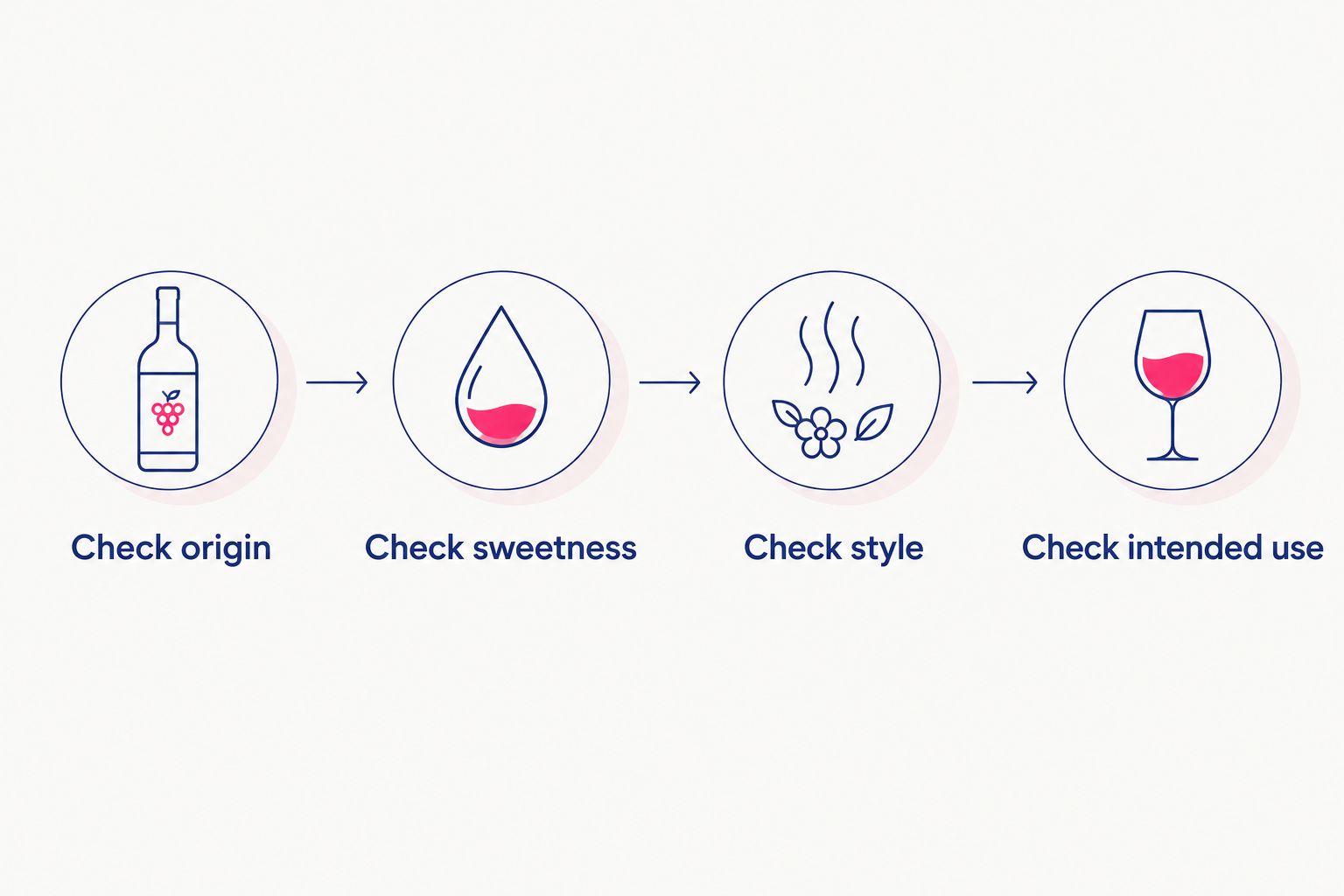
Read the label in a consistent order. You will separate the wine’s identity from the details that determine whether you will enjoy it.
- Check origin. Look for Prosecco DOC, a relevant Prosecco DOCG designation, or Champagne. These names identify different protected origins.
- Check sweetness. Look for Brut, Extra Dry, or another stated sweetness category. Do not use the fruit description as a substitute.
- Check style. Read for fresh fruit, flowers, citrus, bread, or toast. Match those descriptions to what you actually enjoy.
- Check intended use. Decide whether the wine is for sipping, mixing, or gifting. That decision narrows the useful choices.
Do not confuse the word Brut with a grape, a region, or a production method. It describes a sweetness category, so it can appear on both Prosecco and Champagne.
The same principle applies when reading a retail listing. Buywinesonline shoppers comparing sparkling wine should use the bottle’s full designation rather than treating a broad search result as the complete description.
FAQ
Is Prosecco the same as Champagne?
No, Prosecco and Champagne are different sparkling wines with different protected origins and production rules. Prosecco comes from designated areas of northeastern Italy; Champagne comes from France’s Champagne region.
Does Prosecco taste like Champagne?
Prosecco shares some apple and citrus flavors with Champagne, but typical examples emphasize fresh pear and floral notes. Champagne often adds bread-like or toasted character from lees aging, though individual bottles vary.
Is Prosecco or Champagne better for beginners?
Prosecco is a useful starting point if you prefer fresh fruit and floral flavors; Champagne suits beginners who already enjoy citrus, acidity, and toasted flavors. Match the sweetness designation to your preference in either category.
Is Extra Dry Prosecco drier than Brut Champagne?
No, Extra Dry is a sweeter category than Brut. The sweetness terms provide a more useful comparison than whether the wine is Prosecco or Champagne.
Can I serve Prosecco at a wedding instead of Champagne?
Yes, Prosecco works for a wedding toast. Choose Champagne instead when the couple specifically wants Champagne, and check the sweetness and flavor style whichever category you select.
Are Prosecco and Champagne made from the same grapes?
No, Prosecco is primarily Glera, while Champagne’s principal grapes are Chardonnay, Pinot Noir, and Meunier. The grape difference contributes to their different flavor profiles.
Does every bottle of Champagne taste toasted?
No, Champagne varies in how strongly it shows bread-like or toasted flavors. Aging, grape blend, and producer style all influence the balance between fresh fruit and developed character.
One last thing
Extra Dry is the label trap to remember. If you want a drier sparkling wine, Brut is the better starting point—even when the alternative literally says Extra Dry.
For your next 2026 gathering, make the decision in this order: flavor, sweetness, then occasion. The bubbles are the shared feature; the wine underneath them is what you are choosing.