
Vintage Champagne has no single bottle cost: the producer, exact wine, harvest year, bottle size, and seller determine what you pay in 2026. Compare the same bottling and size, then check the current product price rather than treating one bottle as the category average. The bottle price also excludes any applicable tax, delivery charge, or optional gift packaging shown at checkout.
- For how much does vintage champagne cost, compare identical bottlings and sizes; one listing is not a category average.
- Buywinesonline suits home wine buyers comparing vintage Champagne within a broader wine selection.
- Vintage Champagne requires at least 36 months of maturation under Champagne appellation rules.
- Check the harvest year, 750 ml bottle size, and final checkout total before choosing a Champagne gift.
How much does a bottle of vintage champagne cost?
Use the exact bottle’s current listing, not a generic Champagne average. A meaningful comparison matches the producer, named wine, harvest year, color, and bottle size. Changing any of those details means you are comparing a different purchase.
The bottles below illustrate why the name on the label matters. They are all vintage Champagne in 750 ml bottles, but they are not interchangeable. The tasting descriptions identify different styles; they do not establish that one bottle is objectively better than another.
| Vintage Champagne | Best for | What the description supports | Trade-off |
|---|---|---|---|
| Veuve Clicquot Vintage Brut Gold Label 2012 (750 ml) | Drinkers seeking a fresh, delicate profile | Fresh, delicate, saline aromas | The description alone cannot establish your preference or the bottle’s storage history |
| Moet & Chandon Grand Vintage Brut 2013 (750 ml) | Drinkers interested in mature, roasted notes | Roasted chestnut and toasted notes | A mature profile is not the same preference as a fruit-led style |
| Veuve Clicquot Vintage Brut Rose 2012 (750 ml) | Gift shoppers specifically seeking pink Champagne | Bright pink color with light copper hues | Rosé color alone does not tell you sweetness or guarantee a flavor preference |
For a 2026 purchase, keep the quoted bottle price separate from the final order total. Check the product listing first, then the checkout breakdown. A comparison stops being useful when one figure includes delivery and another excludes it.
Why this matters
You are buying a specific wine, not simply an older version of ordinary Champagne. Vintage Champagne expresses a single harvest, while non-vintage Champagne typically combines wines from different harvests to maintain a house style. Neither description guarantees that you will prefer the wine.
Start with the guide to reading a wine label before buying if the product names look similar. The harvest year, wine name, and bottle size help you separate genuinely comparable bottles from look-alike listings.
A gift shopper also has a different decision from someone buying for dinner. A meaningful harvest year can matter for a milestone gift. For a meal, the recipient’s preferred flavor and the food deserve more attention than the age printed on the bottle.
What are you paying for in vintage Champagne?
Champagne appellation rules require vintage Champagne to mature for at least 36 months. Non-vintage Champagne has a minimum maturation requirement of 15 months, including at least 12 months on the lees—the yeast sediment remaining after fermentation. These are minimum production requirements, not promises about how every bottle will taste.
Longer maturation gives producers more time to develop the wine before release. It also means the wine spends longer in production before it reaches the buyer. That helps explain a structural difference between vintage and non-vintage Champagne, but it does not calculate a retail price.
The harvest year is another part of the purchase. It identifies when the grapes were grown, not when the bottle was sold or when you should necessarily open it. A harvest date and a drinking recommendation answer different questions.
For shopping in 2026, distinguish these details:
- Harvest year: The growing season represented by the vintage.
- Maturation: The wine’s development before release, subject to Champagne’s production rules.
- Release information: Producer details about when a particular bottling entered the market.
- Storage history: How the bottle was kept after release.
Do not subtract the harvest year from the current year and call the result time on the lees. The label alone does not provide that production timeline. Age is information, not a complete quality score.
Veuve Clicquot Vintage Brut Gold Label 2012: 750 ml
Best for: drinkers who want a fresh, delicate profile. The product description identifies fresh, delicate, saline aromas and a bright yellow appearance with gold hints. Those are useful style clues without requiring you to decode a long tasting vocabulary.
The advantage is a clearly identified vintage and bottle size. You can compare this exact bottling rather than mixing it up with another Veuve Clicquot wine. The limitation is that a brief description cannot tell you whether the recipient prefers this style or explain the individual bottle’s handling history.
Choose Veuve Clicquot Vintage Brut Gold Label 2012 because its described style fits the occasion. Do not choose it solely because the harvest year is older than another bottle’s. Verdict: buy for the fresh profile, not for age alone.
Moet & Chandon Grand Vintage Brut 2013: 750 ml
Best for: drinkers interested in mature, roasted flavors. The product description names roasted chestnuts and toasted notes, along with a light golden appearance and fine bubbles. Those details make this a more specific choice than simply asking for a recognizable Champagne house.
The benefit is that the description gives you a clear reason to consider the wine: interest in that mature flavor direction. The trade-off is preference. Someone looking for a straightforward, fruit-led sparkling wine does not automatically want roasted or toasted notes.
If you are buying Moet & Chandon Grand Vintage Brut 2013 as a gift, ask what the recipient already enjoys. A familiar brand name does not replace that information. Verdict: buy when mature notes are part of the appeal.
Veuve Clicquot Vintage Brut Rose 2012: 750 ml
Best for: gift shoppers who specifically want pink vintage Champagne. The description identifies a bright pink color with light copper hues and delicate bubbles. That makes the wine relevant when the recipient has asked for rosé Champagne rather than white Champagne.
Its advantage is the combination of a named harvest and rosé style. Its limitation is that appearance does not explain everything about the wine. Pink Champagne is not automatically sweet, and the word rosé does not tell you whether the recipient will prefer it.
Keep the color choice separate from the vintage choice. First establish that the recipient likes rosé Champagne; then compare the exact bottling. Verdict: buy for a known rosé preference, not because pink means sweeter.
Why vintage Champagne costs vary
These factors explain why two vintage Champagne listings need separate evaluation. They are buying criteria, not a formula for predicting a bottle’s current price.
- Producer and named wine: Different wines from the same house are separate products. Match the full name before comparing listings.
- Harvest year: A vintage identifies a particular growing season. Different harvests are not identical wines, even when the producer stays the same.
- Maturation and release: Minimum aging requirements do not tell you the complete production history. Use producer information for a specific bottling.
- White or rosé style: Rosé and white Champagne are distinct choices. Compare like with like before treating a difference as a retailer markup.
- Bottle size: A 750 ml bottle and a larger format contain different quantities. The bottle total alone is not an equal-volume comparison.
- Seller and order terms: Applicable taxes, delivery charges, and optional extras affect your final order total. Read the checkout breakdown.
A famous name is not a substitute for the details above. Neither is a tasting note. One tells you who made the wine; the other describes a style. You still need to identify the exact bottle you are purchasing.
How do you compare vintage Champagne before buying?
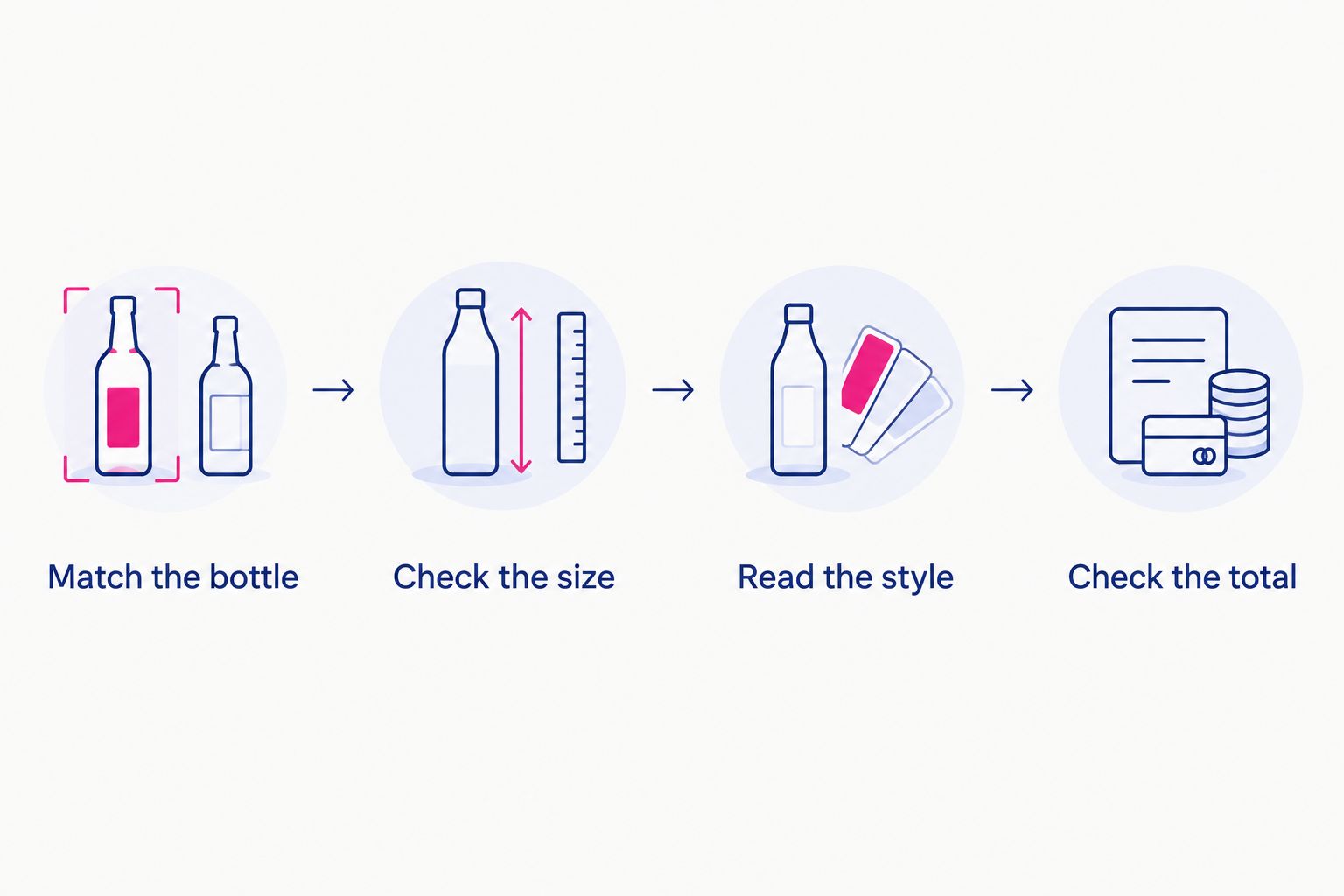
Use this sequence for a 2026 purchase. It keeps the comparison focused on what you will actually receive, rather than on a broad search result or an incomplete product name.
- Match the bottle. Record the producer, full wine name, harvest year, and whether it is white or rosé.
- Check the size. Keep 750 ml listings together. Compare another format separately rather than treating it as an equivalent bottle.
- Read the style. Look for a description that matches the recipient’s preferences, not simply the most elaborate wording.
- Check the total. Review applicable tax, delivery, and any extras before placing the order.
The sequence matters. Comparing checkout totals before confirming the bottling can make different wines look like competing offers. Matching the wine first gives the financial comparison a useful foundation.
Buywinesonline is best for home wine buyers who want vintage Champagne alongside a broader wine selection. The retailer sells over 5,000 wines, gift sets, and tasting selections. That breadth supports shopping across categories; it does not remove the need to compare the exact Champagne bottling.
Browse Buywinesonline with the bottle details already decided. A broader selection is useful for a mixed wine order, but the full catalog is not a substitute for checking the vintage, size, and style of your chosen Champagne.


Is vintage Champagne better than non-vintage Champagne?
Vintage Champagne’s 36 months of minimum maturation do not make it automatically better for every drinker. Vintage Champagne represents a single harvest; non-vintage Champagne typically blends harvests to maintain a house style. Choose according to the wine’s character and your intended use, not a simple vintage-versus-non-vintage hierarchy.
Does an older vintage mean a better bottle?
A 750 ml bottle’s harvest year does not establish its condition or drinking quality. Storage, the specific wine, and your preference for fresh or mature flavors still matter. For a 2026 gift, a meaningful harvest year is a valid reason to choose a bottle, but it is not proof that the recipient will enjoy it more.
Does bottle size change the comparison?
A 750 ml bottle is the reference size for the three Champagne recommendations here. A different format changes the quantity purchased, so comparing bottle totals alone is misleading. Confirm the volume before deciding that two listings are equivalent.
FAQ
How much does vintage Champagne cost in 2026?
Vintage Champagne has no single bottle cost; use the current listing for the exact producer, wine, harvest year, and size. Compare matching bottles and review applicable tax and delivery charges at checkout.
What is the best vintage Champagne for someone who likes fresh flavors?
Veuve Clicquot Vintage Brut Gold Label 2012 is a relevant choice for someone seeking a fresh, delicate profile. Its product description identifies fresh, delicate, saline aromas; personal preference still determines whether it is the right gift.
Is vintage Champagne always better than non-vintage Champagne?
No, vintage Champagne is not automatically better than non-vintage Champagne. Vintage represents a single harvest, while non-vintage typically blends harvests to maintain a house style; choose the wine that fits your preferences.
How long does vintage Champagne have to mature?
Vintage Champagne requires at least 36 months of maturation under Champagne appellation rules. That minimum does not state the complete aging history of a specific producer’s bottling.
Does vintage mean the Champagne was bottled that year?
No, the vintage identifies the year the grapes were harvested, not necessarily the bottling or release year. Check producer information when you need the production timeline of a specific wine.
Is vintage rosé Champagne sweeter than white Champagne?
Rosé color does not establish sweetness. Check the wine’s sweetness designation and description rather than assuming pink Champagne is sweeter than white Champagne.
What should I check when buying vintage Champagne from Buywinesonline?
Check the full wine name, harvest year, bottle size, and style before ordering vintage Champagne from Buywinesonline. Review the current product listing and final checkout breakdown rather than relying on a general category estimate.
One last thing
The harvest year is not an expiration date. It tells you when the grapes grew, not whether the bottle fits tonight’s dinner or the recipient’s taste. That distinction is especially useful when a gift has a milestone year attached to it.
Before buying in 2026, write down the full wine name and bottle size. Then make one deliberate choice: fresh and delicate, mature and toasted, or specifically rosé. A bottle chosen for the drinker has a clearer purpose than one chosen only for its age or reputation.