
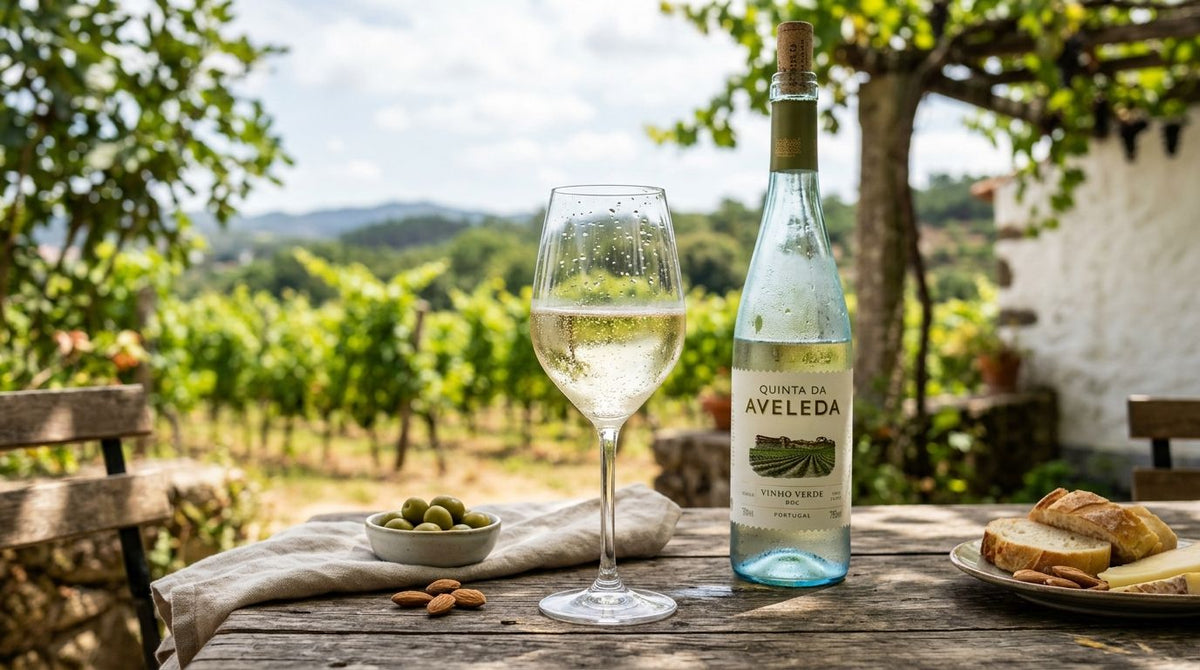
Vinho Verde wine for summer sipping is a light-bodied Portuguese white built around one job: refresh you fast at low alcohol, usually 9-11% ABV, with a light natural spritz that makes it drink more like a patio pour than a cellar wine. It isn't one wine — it's a whole category from the Minho region in northern Portugal, made mostly from Alvarinho, Loureiro, Arinto, and Trajadura grapes. If your summer 2026 fridge door needs something cold, cheap-tasting-in-a-good-way, and gone by August, Vinho Verde solves a narrower problem than a standard Sauvignon Blanc: it's meant to be drunk young, not aged.
- Vinho Verde wine runs 9-11% ABV with a light spritz, built to drink young and cold in 2026.
- Vinho Verde is a Portuguese region, not a grape — Alvarinho and Loureiro dominate most blends.
- Best for backyard sipping, seafood, and anyone who wants a low-commitment glass on a hot night.
- If a store doesn't stock true Vinho Verde, Albariño and Assyrtiko are the closest crisp-white matches.
Why Vinho Verde Wine Matters for Summer Sipping
Most reds and full-bodied whites fight the heat instead of working with it. Vinho Verde wine is built for the opposite job: low alcohol means it doesn't hit as hard on a 90-degree afternoon, and its light carbonation gives it a lift that flat whites can't match straight out of the fridge.
Vinho Verde wine is the lowest-commitment pour of summer — 9-11% ABV, ready to drink the year it's bottled, gone before your ice bucket melts. That's the sentence to remember when you're standing in a wine aisle deciding between a $12 Vinho Verde and a $22 oaked Chardonnay for a pool party: the Vinho Verde is doing a different job, not a cheaper version of the same job.
The region also keeps prices low relative to other crisp European whites, because Vinho Verde is produced in volume and consumed young — there's no long aging cost baked into the bottle. That's part of why it shows up so often on summer-drinking lists in 2026: it's an easy, low-stakes bottle to try without much financial risk.
How to Buy and Serve Vinho Verde Wine This Summer
Understand what Vinho Verde actually is
The name translates to "green wine," but it refers to youth, not color — these wines are meant to be consumed within a year or two of harvest, not cellared.
- Confirm the label says DOC Vinho Verde, the official Portuguese designation
- Check the vintage — 2024 or 2025 bottles are what you want walking into summer 2026
- Look for Alvarinho or Loureiro on the label if you want more aromatic lift
- Skip anything without a vintage year printed — that's often a sign of bulk blending
Check the ABV before you buy
Vinho Verde's whole appeal is low alcohol. Anything creeping past 12% ABV has drifted from the traditional style toward something closer to a standard still white.
- Look for 9-11% ABV on the label — that's the traditional range
- Treat anything at 12.5% or higher as a modern, riper-style outlier
- Lower ABV means you can pour a full glass without the afternoon getting away from you
- Remember lower ABV also means it won't hold up as long once opened — plan to finish the bottle same-day or next-day
Match Vinho Verde's crispness to your food
The acidity and light fizz are made for food that would otherwise fight a heavier white.
- Grilled shrimp, oysters, and other shellfish
- Ceviche and other citrus-forward raw preparations
- Salty snacks — chips, olives, cured meats
- Fresh goat cheese or feta rather than aged, funky cheeses
- Light pasta with lemon or herb sauces, not cream-based dishes
Serve it at the right temperature
Vinho Verde loses its charm fast if it's not properly cold — the spritz flattens and the acidity turns sharp instead of refreshing.
- Chill to 45-50°F, colder than a typical still white
- Use an ice pack or a wine bucket if you're serving outdoors and the bottle keeps creeping warm
- Pour smaller glasses more often rather than one big pour that warms up mid-conversation
- Keep a second bottle in the fridge before you open the first — Vinho Verde disappears fast at a summer gathering
Find the closest match when Vinho Verde isn't on the shelf
True Vinho Verde can be hit-or-miss on US retail shelves outside major cities, and it isn't currently part of the catalog at Buy Wines Online. If you can't find a bottle labeled DOC Vinho Verde, look for a wine with a similar profile: high acid, low-to-moderate alcohol, citrus-driven fruit.
- Albariño — same Iberian grape family, nearly identical acidity and salinity; see the Albariño pairing guide for details
- Grüner Veltliner — similar light body with a white-pepper edge instead of citrus
- Assyrtiko — Greek white with comparable minerality, though usually a touch more alcohol
- Dry, unoaked Sauvignon Blanc — the most widely available substitute, just expect more citrus punch and higher ABV
Store and rotate your summer whites properly
Vinho Verde and its stand-ins aren't built for long-term storage, so buy in small batches through the season instead of stocking a case in April.
- Buy 2-3 bottles at a time rather than a full case
- Keep unopened bottles in a dark, cool spot — not on a sunny counter
- Drink within 12-18 months of the vintage date for the freshest fruit
- Rotate stock so nothing sits past one summer into the next
Vinho Verde Alternatives: How the Options Compare
| Style | Best For | Key Limitation | Verdict |
|---|---|---|---|
| Vinho Verde (Portugal) | Authentic low-ABV spritz | Inconsistent US retail availability | Buy if you find it |
| Albariño | Seafood and shellfish nights | Runs slightly higher in alcohol than Vinho Verde | Buy |
| Grüner Veltliner | Herbal, white-pepper drinkers | Less citrus-forward than Vinho Verde | Try |
| Silver Oak Sauvignon Blanc 2025 | Bold citrus, widely available | Higher ABV than traditional Vinho Verde | Buy |
| Domaine Sigalas Assyrtiko Santorini 2025 | Mineral, saline-driven whites | Different flavor profile — saline, not green-apple | Try |
Common Mistakes Summer Wine Shoppers Make with Vinho Verde
- Buying an old vintage. Vinho Verde loses its spritz and freshness fast — a bottle from 2021 sitting on a shelf in 2026 is already past its intended window.
- Serving it at room temperature. This wine's whole identity depends on being cold; warm Vinho Verde tastes thin and sour instead of bright.
- Assuming "green wine" means sweet. Most Vinho Verde is bone dry — the name refers to youth, not sugar level.
- Pairing it with heavy, rich dishes. A cream sauce or a fatty steak will flatten Vinho Verde's acidity instead of complementing it.
- Overpaying for an imported bottle when a domestic substitute does the same job. If a store's Vinho Verde selection is thin, an Albariño or dry Sauvignon Blanc gets you 90% of the way there for less searching.
FAQ
What is Vinho Verde wine exactly?
Vinho Verde is a wine region in northern Portugal, not a grape variety — it produces light, low-alcohol whites (and some reds) meant to be drunk young. Most bottles run 9-11% ABV with a slight natural spritz.
Is Vinho Verde sweet or dry?
The large majority of Vinho Verde sold in the US is dry, despite the name suggesting otherwise. Sweetness comes from residual sugar, not the 'green' in the name, which refers to the wine's youth.
What ABV should I look for in Vinho Verde?
Look for 9-11% ABV on the label — that's the traditional range for the style. Anything above 12.5% has drifted toward a riper, more modern interpretation.
Does Buy Wines Online sell Vinho Verde?
Vinho Verde isn't currently part of the Buy Wines Online catalog. The closest matches in style and acidity are Albariño, Grüner Veltliner, and dry Sauvignon Blanc, all of which share Vinho Verde's crisp, citrus-driven profile.
How should Vinho Verde be served?
Serve Vinho Verde at 45-50°F, colder than a standard still white, so the natural spritz stays lively. Pour smaller glasses more frequently rather than one large pour that warms up.
What food pairs best with Vinho Verde?
Shellfish, ceviche, salty snacks, and fresh soft cheeses pair best with Vinho Verde's high acidity. Avoid cream-based dishes or aged, funky cheeses that overpower its light body.
How long does Vinho Verde last after opening?
Plan to finish an opened bottle within a day or two — the low ABV and light effervescence fade faster than a standard still white once exposed to air.
One Last Thing
The detail most people miss: Vinho Verde's spritz isn't always from a secondary fermentation like Champagne — many producers simply inject a small amount of CO2 before bottling, the same way a soft drink gets carbonated. That's part of why it's priced so accessibly and why it's built to drink fast rather than age; it's a wine designed around freshness, not complexity. Buy it young in 2026, drink it cold, and don't expect the bottle to teach you anything new on day three.