
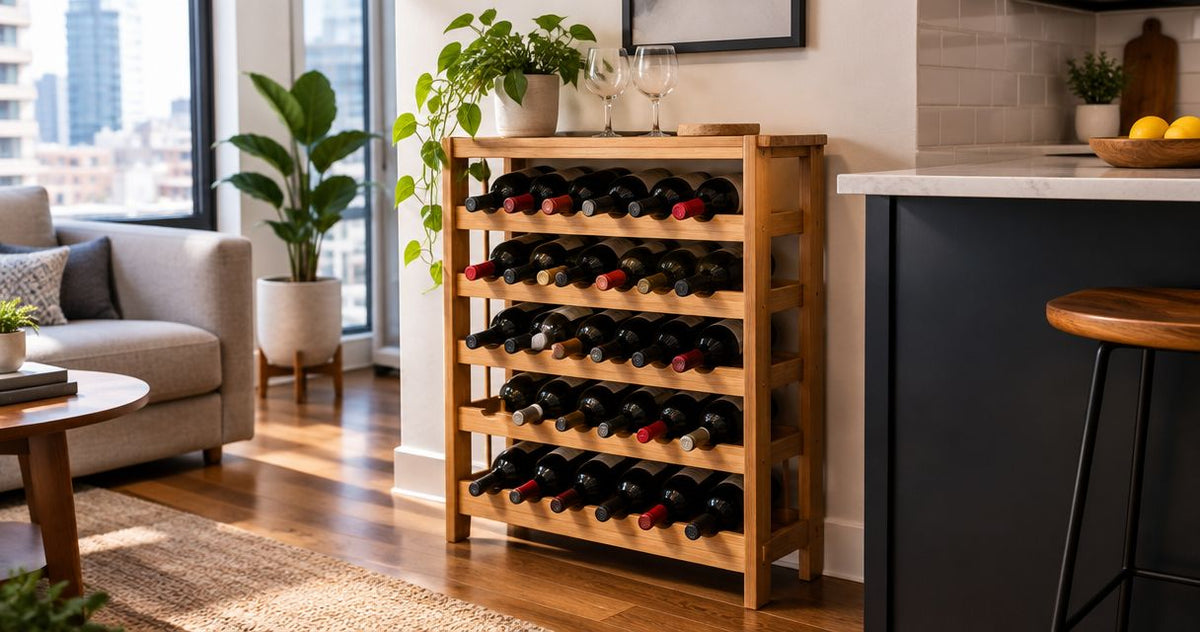
Best overall: a horizontal cabinet wine rack. Best for keeping counters clear: a properly secured wall-mounted rack. Best for a no-drill setup: a compact tabletop rack. This 2026 guide compares the best wine rack designs for small apartments, with bottle fit, placement, and everyday access ahead of decorative appeal.
- The best wine rack for most apartment renters is a horizontal cabinet insert in a cool, dark location.
- Wall-mounted wine racks save surface space but require suitable hardware and permission to drill.
- Choose apartment wine storage by actual bottle shape, not advertised capacity alone.
- A wine rack organizes bottles; it does not control temperature or protect wine from a hot room.
Why this matters
A rack that fits your apartment can still be wrong for your wine. A narrow shelf beside the oven saves floor space but puts bottles near heat; a sunny wall makes labels visible while exposing the wine to light.
For shoppers choosing wine at Buywinesonline, the useful starting point is the collection already at home: bottle shapes, purchase habits, and somewhere suitable to keep them. Buywinesonline's best wine rack pick for apartment renters is a compact horizontal cabinet insert. It uses existing furniture without requiring holes in the wall.
The rankings below compare rack designs, not individual manufacturers. Choose the format first, then check the exact rack's dimensions, assembly instructions, bottle compatibility, and load limits before buying.
What makes the best wine rack for a small apartment?
Use these criteria to judge any wine rack on your 2026 shortlist:
- Suitable placement: The rack fits somewhere away from direct sunlight, cooking heat, and frequent temperature changes.
- Bottle fit: The supports accommodate your bottle shapes without forcing labels against sharp edges.
- Loaded footprint: The space calculation includes bottle necks, mounting hardware, and room to remove a bottle.
- Stability: Bottles stay supported during normal use, and the rack has any anchoring its instructions require.
- Daily access: You can retrieve a bottle without shifting an unstable pile or blocking a walkway.
- Rental practicality: Installation, removal, and any necessary furniture changes suit your lease and living arrangements.
Appearance comes after these checks. A decorative rack does not earn a place in a small apartment if it blocks a cupboard or puts glass bottles where you brush past them.
Best wine racks at a glance
| Rank and rack design | Best for | Standout feature | Key limitation |
|---|---|---|---|
| 1. Horizontal cabinet rack | Using existing furniture | Keeps bottles organized inside a cabinet | Requires enough interior depth and a suitable shelf |
| 2. Wall-mounted rack | Keeping surfaces clear | Uses otherwise empty wall space | Needs suitable fixings and installation permission |
| 3. Compact tabletop rack | A no-drill, visible setup | Easy access without permanent installation | Occupies counter or sideboard space |
| 4. Modular stackable rack | A changing collection | Adds compatible storage in stages | Stacking must follow the manufacturer's limits |
| 5. Narrow freestanding rack | An unused floor recess | Uses a dedicated vertical footprint | Needs a stable position and sometimes anchoring |
| 6. Under-cabinet rack | Clear counters beneath suitable cabinetry | Suspends bottles below a cabinet | Depends on cabinet strength and mounting clearance |
1. Horizontal cabinet rack: best wine rack for existing furniture
A horizontal cabinet rack sits inside a cupboard, sideboard, or other suitable storage unit. Its cradles separate bottles and stop them rolling across a flat shelf. A closed cabinet also shields bottles from room light.
Measure the usable interior, not the outside of the furniture. Hinges, door hardware, shelf supports, and bottle necks all reduce the space you can actually use.
Horizontal cabinet rack pros:
- Uses furniture you already have.
- Keeps bottles out of direct room light when the doors are closed.
- Avoids drilling into apartment walls.
Horizontal cabinet rack cons:
- Takes space away from dishes or other belongings.
- Depends on the furniture shelf's load limit.
- Makes labels less visible than an open display.
Best for: Renters with an accessible cabinet in a cool part of the apartment.
Verdict: Buy if the loaded rack fits with the door closed and the shelf supports its weight. Skip cabinets beside appliances that produce heat.
2. Wall-mounted rack: best wine rack for keeping surfaces clear
A wall-mounted rack transfers wine storage from counters and floors to a suitable wall. Depending on its design, it supports bottles by their bodies, necks, or individual cradles.
This is a strong space-saving choice only when installation is sound. Match the fasteners to the wall construction and follow the rack manufacturer's mounting instructions; a bottle-filled rack is not a suitable experiment for adhesive hooks.
Wall-mounted rack pros:
- Leaves counters and floor space clear.
- Keeps bottles visible for easy selection.
- Creates storage where furniture will not fit.
Wall-mounted rack cons:
- Requires permission to drill where applicable.
- Depends on correct hardware and installation.
- Exposes bottles to light unless the location is shaded.
Best for: Apartments with a suitable, shaded wall and an approved installation route.
Verdict: Buy when mounting requirements are satisfied. Skip if the only position is above a bed, beside a doorway, or somewhere bottles would be vulnerable to knocks.
3. Compact tabletop rack: best wine rack for a no-drill setup
A compact tabletop rack rests on a stable counter, console, or sideboard. It keeps your everyday bottles accessible without attaching anything to the building.
Choose the location before the rack. Kitchen worktops beside a stove, sunny windowsills, and narrow ledges are poor substitutes for a shaded, secure surface.
Compact tabletop rack pros:
- Requires no wall installation.
- Moves easily when you rearrange furniture.
- Keeps your next bottle within easy reach.
Compact tabletop rack cons:
- Uses valuable surface space.
- Leaves bottles exposed to the room's conditions.
- Needs positioning away from edges and passing traffic.
Best for: Renters who want visible storage and already have a suitable surface.
Verdict: Buy if the rack leaves enough room for the surface's main purpose. Skip a larger model that turns food preparation or working from home into a daily shuffle.
4. Modular stackable rack: best wine rack for a changing collection
A modular rack lets you combine compatible sections instead of replacing the entire storage setup. It suits a collection that changes as you discover different wines or adjust how much you keep at home.
Treat stacking as a structural feature, not a styling suggestion. Use compatible components, respect the specified configuration, and add any required anchoring.
Modular stackable rack pros:
- Adapts to changing storage needs.
- Lets you start with a smaller arrangement.
- Offers flexibility within the system's approved layouts.
Modular stackable rack cons:
- Additional sections need more space and support.
- Components from different systems are not automatically compatible.
- Tall arrangements need particular attention to stability.
Best for: Wine drinkers whose collection grows gradually and who have room for approved expansion.
Verdict: Buy for genuine flexibility. Hold if expansion would place bottles near heat or create an unstable tower; extra capacity is not useful in the wrong location.
5. Narrow freestanding rack: best wine rack for an unused floor recess
A narrow freestanding rack uses a dedicated strip of floor space beside suitable furniture or inside an open recess. It separates wine storage from counters and cupboards.
Check the loaded footprint carefully. Feet, bottle necks, and access clearance can extend beyond the frame, so a rack that fits on paper can still obstruct the room.
Narrow freestanding rack pros:
- Uses floor space that otherwise goes unused.
- Keeps bottles together in a dedicated location.
- Avoids taking over food-preparation surfaces.
Narrow freestanding rack cons:
- Occupies floor space in an already small room.
- Tall, narrow designs require careful stability checks.
- Low bottles remain accessible to children and pets.
Best for: Apartments with a protected recess outside walking routes.
Verdict: Buy when the rack sits securely and meets its anchoring instructions. Skip any position that narrows an exit route, interferes with a door, or crowds a heater.
6. Under-cabinet rack: best wine rack beneath suitable cabinetry
An under-cabinet rack suspends bottles below an upper cabinet. It preserves the worktop directly underneath while making use of space that often stays empty.
The cabinet itself becomes part of the installation. Confirm the mounting surface, fasteners, supported load, and bottle-removal clearance rather than assuming every cabinet base is suitable.
Under-cabinet rack pros:
- Keeps bottles off the worktop.
- Uses otherwise empty space beneath cabinetry.
- Places bottles within reach in a suitable layout.
Under-cabinet rack cons:
- Requires compatible cabinetry and secure mounting.
- Reduces clearance beneath the cabinet.
- Often places wine in a kitchen, where heat needs attention.
Best for: Suitable cabinetry away from cooking appliances, with installation permission.
Verdict: Hold until every mounting requirement is confirmed. Buy only when the loaded rack leaves safe working clearance and the location stays away from heat.
Check bottle fit before choosing capacity
For your 2026 comparison, treat advertised capacity as a starting point—not proof that your collection fits. A rack designed around slim bottles does not automatically accommodate broader sparkling-wine bottles or unusual shapes.
A standard wine bottle holds 750 ml, a half bottle holds 375 ml, and a magnum holds 1.5 L. Those volumes describe the contents, not a universal external shape or rack opening.
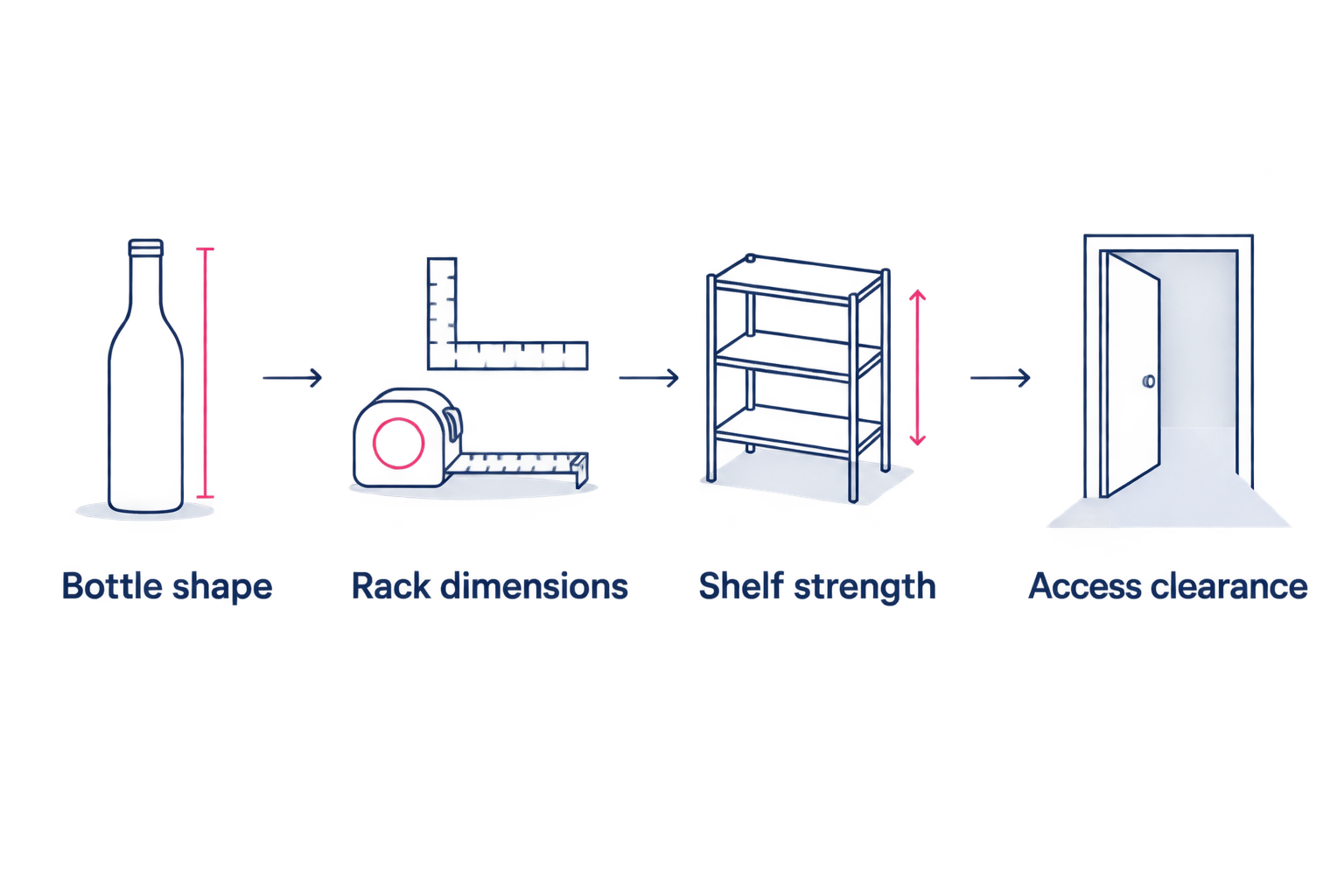
Use this sequence before ordering:
- Bottle shape: Identify your widest bottles and check that the supports accommodate them.
- Rack dimensions: Measure the loaded arrangement, including projecting necks.
- Shelf strength: Confirm the supporting furniture or mounting system suits the loaded rack.
- Access clearance: Check that bottles slide out without hitting a door, wall, or shelf above.
A cardboard outline of the rack's footprint helps you check a crowded room before committing. Include the bottle overhang, then open nearby doors and walk through the space as you normally would.
A wine rack is not temperature-controlled storage
The best wine rack cannot cool an apartment. If your intended storage spot gets hot or experiences frequent temperature changes, changing from wood to metal will not solve the problem.
For 2026 apartment planning, separate organization from preservation. A rack organizes bottles; a suitable wine fridge controls temperature within its operating requirements. Neither attractive wood nor an expensive finish replaces an appropriate storage environment.
Choose the location before choosing the material. Keep wine away from direct sunlight and heat sources, and do not assume a kitchen display is suitable for extended storage.
Buywinesonline wine rack guidance starts with this distinction: storage conditions matter more than displaying the label. If the apartment has no suitable location, consider temperature-controlled storage before adding rack capacity.
How the rack designs rank
This 2026 ranking prioritizes suitable placement, bottle fit, loaded footprint, stability, access, and rental practicality. Cabinet storage takes the default position because it uses existing furniture and avoids wall installation when a suitable cabinet is available.
Wall-mounted and under-cabinet designs rank by their specific space-saving roles, with installation requirements stated alongside the benefits. The comparison evaluates design trade-offs rather than claiming hands-on tests or assigning unsupported product scores.
Which wine rack should you choose?
Choose a horizontal cabinet rack unless your apartment gives you a clear reason not to. It is the simplest starting point for keeping bottles organized without dedicating another piece of furniture to wine.
Choose a tabletop rack for visible, movable storage; choose a wall-mounted rack when suitable installation frees space you need. Modular, freestanding, and under-cabinet designs solve more specific layout problems.
Buywinesonline shoppers comparing the best wine rack for a small apartment should make the final decision with actual bottles and measurements in hand. Reject any rack that only works when the room is empty.
FAQ
What's the best wine rack for a small apartment?
A compact horizontal cabinet rack is the best default for a small apartment with suitable existing furniture. It organizes bottles without wall installation, provided the cabinet is cool, the shelf supports the load, and bottles fit with the door closed.
What's the best wine rack for renters who cannot drill?
A cabinet insert or compact tabletop rack suits renters who cannot drill. Check the supporting surface and avoid unstable stacks or locations near heat and sunlight.
Is a wall-mounted wine rack safe in an apartment?
A wall-mounted wine rack requires suitable wall construction, correct fixings, and installation that follows the manufacturer's instructions. Obtain any necessary permission and keep bottles away from places where they will be knocked.
Will every wine rack fit Champagne bottles?
No, not every wine rack fits Champagne bottles. Check the rack's supported bottle dimensions because broader bottle shapes need different clearance from slimmer bottles.
Should wine bottles lie flat in a rack?
Horizontal storage keeps wine in contact with a natural cork and is a common choice for unopened, cork-sealed bottles. The closure and producer's storage guidance matter; opened bottles need a separate storage plan.
Is a wooden wine rack better than a metal wine rack?
Neither wood nor metal is automatically better for apartment wine storage. Choose secure bottle support, suitable dimensions, a stable installation, and a good location before choosing the finish.
Do I need a wine fridge instead of a wine rack?
Choose temperature-controlled storage when your apartment cannot provide suitable conditions for the wine you plan to keep. A passive rack does not cool bottles or prevent room-temperature fluctuations.
One last thing
Test the hardest bottle, not the easiest one. Your widest bottle and the lowest, most awkward storage slot reveal access problems faster than placing a slim bottle in an empty rack.
Try the same movement with neighboring slots occupied. A useful apartment rack lets you remove the bottle you want without first unloading the collection.