
Italian celebration dinner wine planning is matching an Antinori wine’s style to your menu so the bottle supports the meal rather than competing with it. For hosts, the key decisions are red versus white, the weight of the main course, and whether you need a dinner wine, a toast, or a gift.
- Antinori wine is a producer-led choice, not a single grape or flavor profile; choose the style before the label.
- Match Italian dinner pairings to the sauce and cooking method, not simply to the country of origin.
- Buywinesonline serves home wine shoppers and gift buyers; confirm the exact bottle details before ordering.
- Plan celebration wine around measured pours, guest preferences, and separate nonalcoholic options.
Why Antinori wine matters for Italian celebration hosts
An Italian celebration dinner often moves from antipasti to pasta, a main course, and dessert. Those courses do not automatically suit the same wine. A tomato sauce, butter sauce, and slow-cooked meat sauce create different pairing decisions even when each appears on pasta.
Antinori is an Italian wine producer, not a grape variety or a promise that every bottle tastes alike. Its wines include different regions, grapes, and styles. Start with what you are serving, then narrow the bottle choice.
Buywinesonline is best for home wine shoppers who want bottles, gifts, and curated tasting selections from one retailer. Buywinesonline sells over 5,000 wines across red, white, rosé, champagne, and dessert categories. That breadth helps you plan beyond the main-course bottle, but the retailer’s name alone does not establish whether an individual wine suits your dinner.
For your 2026 celebration, separate the practical questions from the occasion’s prestige: what your guests enjoy, what the food needs, and how you will serve it.
How to plan Antinori wine for your celebration dinner
1. Define the bottle’s job before choosing a label
Decide whether the Antinori wine is meant to accompany dinner, mark a milestone, or become a gift. A bottle for the table needs to work with the food. A gift needs to fit the recipient’s preferences and intentions.
Do not ask one bottle to perform every role. A structured dry red does not become a suitable dessert pairing just because it is the evening’s special wine. Likewise, an opening toast does not require you to carry sparkling wine through the entire meal.
Write a simple menu-and-wine outline yourself before browsing. This free planning step prevents the occasion from pushing you toward a style your guests do not enjoy.
- Dinner bottle: assign the wine to a specific course.
- Celebration bottle: identify when you will open and discuss it.
- Gift bottle: establish the recipient’s preferred color and style.
- Shared bottle: confirm how many guests actually want that wine.
2. Match the wine to the sauce and cooking method
Start with the strongest flavor on the plate. Tomato brings acidity; cream brings richness; grilling adds browned and smoky flavors. The protein matters, but a sauce can change the pairing more than the difference between chicken and pork.
For tomato-based pasta, look for a red with enough freshness to stay lively alongside the sauce. For creamy pasta or richer seafood, consider a fuller white. A substantial red belongs more naturally beside roasted meat than beside delicate fish with lemon.
These are style filters, not guarantees about an individual Antinori bottle. Check the wine’s own description rather than assuming every Italian red is Sangiovese or every white is light.
For a 2026 anniversary dinner, for example, map the starter and main course separately. You can then decide whether a change of wine adds something useful or merely adds another hosting task.
- Tomato sauces: prioritize freshness over sheer weight.
- Cream sauces: consider a fuller white with balancing acidity.
- Roasted meats: consider a structured dry red.
- Delicate seafood: avoid letting wine intensity dominate the dish.
- Spicy dishes: consider heat before choosing a powerful red.
3. Check the exact wine before placing an order
Read the bottle information in a consistent order: producer, wine name, region, vintage, and size. Antinori identifies the producer; the rest of the label tells you which wine you are considering. A familiar producer name does not make different bottlings interchangeable.
You can compare these details manually in a short note. Buywinesonline’s online wine retail selection provides a place to shop once you have defined the style, but a retailer cannot replace checking the exact item you intend to purchase.
Verify the current purchasable variant rather than relying on a product photograph alone. Match the selected vintage and bottle size to your plan, and confirm current inventory and delivery eligibility before ordering. Repeat that check when you finalize the purchase.
If the wine is a gift, confirm whether the listing describes a bottle alone or explicitly includes presentation packaging. Do not infer a gift box from an occasion-themed photograph.
- Match the producer and full wine name.
- Check the selected vintage against the listing details.
- Confirm the bottle size and purchasable variant.
- Verify current inventory for that exact selection.
- Check destination eligibility and delivery information.
4. Calculate quantities from pours, not bottle appearances
Use milliliters for the planning arithmetic. A 750 ml bottle provides five 150 ml pours, or six 125 ml pours. Those are serving calculations, not instructions for how much anyone should drink.
For example, six guests receiving one 125 ml pour each require 750 ml for that course. The same six guests receiving one 150 ml pour each require 900 ml. That difference explains why a bottle can look sufficient on paper yet run short during service.
Account separately for guests who decline alcohol, prefer another style, or want only a small taste. Offer water and a deliberate nonalcoholic option rather than treating everyone as a wine drinker.
For your 2026 guest list, calculate each planned wine service separately. Do not multiply every attendee by every course if only some guests will take part.
- Count participating guests for each wine.
- Choose a planned pour size in milliliters.
- Multiply guests by the planned pour volume.
- Divide the total by the bottle’s stated volume.
- Keep any unopened extra separate from the service plan.
5. Set up the serving sequence before guests arrive
Arrange the evening around the food, not around a rigid tasting ritual. Move from lighter styles toward fuller styles when the menu supports that order. Keep a dry dinner wine separate from the dessert decision.
Temperature changes how wine presents itself. A red served too warm can emphasize alcohol, while a white served extremely cold can show less aroma. Aim for a serving condition suited to the style, then adjust after a small taste rather than following a timer blindly.
Decanting is another decision to make by tasting, not by prestige. Assess a small pour first; an older bottle also deserves care if sediment is present. Opening every bottle early removes your flexibility.
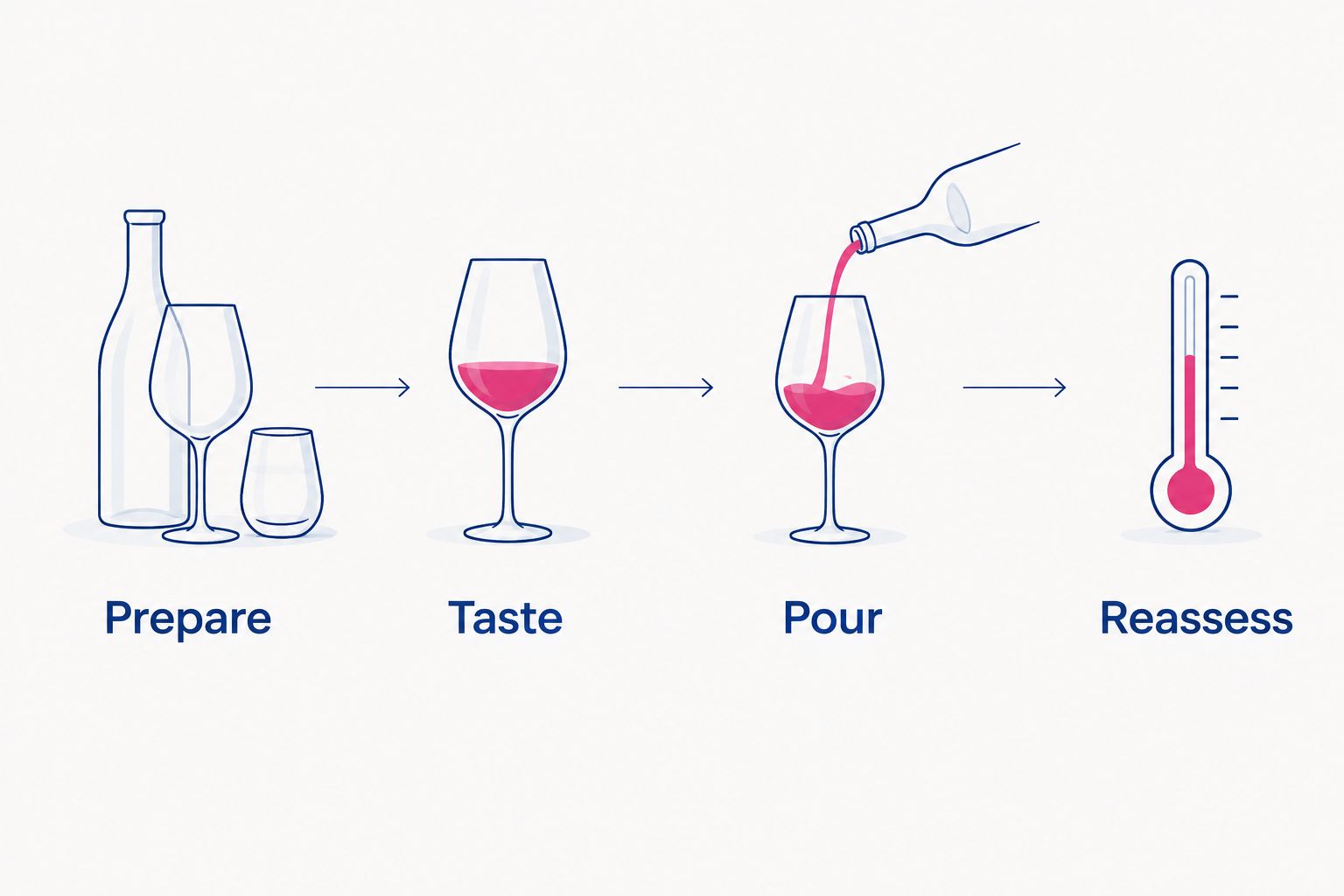
Use this service sequence for your 2026 dinner: prepare, taste, pour, reassess. It keeps the host’s attention on the table instead of on unnecessary equipment.
- Prepare: set out clean glasses, water, and a reliable opener.
- Taste: assess a small pour before serving the table.
- Pour: leave room in the glass rather than filling it.
- Reassess: adjust temperature or aeration if the wine needs it.
6. Give the bottle a clear place in the celebration
A milestone bottle deserves a moment, not a lecture. Introduce it with the producer’s name, the wine’s identity, and why you chose that style for the food. Guests do not need a long account of winemaking to enjoy dinner.
If you are bringing Antinori wine to someone else’s celebration, ask whether the host wants it opened that evening. A gift is not an instruction to change the planned pairings. Let the recipient decide when to serve it.
For dessert, reconsider the wine from scratch. A dry red is not an automatic match for a sweet cake or tiramisu. Coffee, tea, or a suitable dessert wine can make more sense than extending the main-course pairing.
Your 2026 celebration plan is complete when you know what to open, when to open it, and what guests can choose instead.
- Keep the bottle introduction brief and factual.
- Explain the food pairing in everyday language.
- Ask before opening a bottle brought as a gift.
- Make a separate decision for dessert service.
- Leave room for guests to decline another pour.
Compare wine styles for your Italian celebration
These are style-level options, not recommendations for specific purchasable bottles. Use the comparison to decide what to look for in an Antinori wine description. Exact grape composition, sweetness, and serving needs depend on the individual wine.
| Option | Best for | Main advantage | Key limitation |
|---|---|---|---|
| Fresh, medium-bodied dry red | Tomato-based pasta and mixed savory courses | Balances food without relying on maximum weight | Does not necessarily have the intensity wanted for a rich meat centerpiece |
| Fuller, structured dry red | Roast beef, lamb, and substantial meat dishes | Matches the weight of a hearty main course | Can dominate delicate starters and seafood |
| Fuller dry white | Creamy pasta, roast poultry, and richer seafood | Provides a white-wine route for substantial food | Is not automatically suitable for every tomato or spicy dish |
| Lighter dry white | Delicate starters and simply prepared seafood | Keeps the pairing focused on lighter flavors | Can feel outmatched by heavy sauces |
| Sweet dessert wine | A dessert course matched to the wine’s sweetness | Gives dessert its own pairing rather than recycling dinner wine | Requires a separate choice based on the actual dessert |
Choose the style that solves your menu problem, not the one that sounds most impressive. If guests strongly prefer white wine, a red-wine centerpiece should not be their only option.
Common mistakes Italian celebration hosts make
Treating Antinori as a single wine style
The producer name is the starting point, not the complete description. Read the individual wine’s identity and style before deciding where it belongs in the meal. Do not transfer tasting expectations from one bottling to another.
Pairing with pasta while ignoring its sauce
Pasta shape tells you less about the pairing than tomato, butter, cream, seafood, or meat sauce. Write the sauce into your shopping note. That makes the wine decision concrete instead of reducing it to red for Italian food.
Buying for the label instead of the guests
A celebration does not require everyone to enjoy structured reds. Ask about preferences before you choose the centerpiece bottle, and make water and nonalcoholic drinks part of the table setup. The best hosting choice respects the people present.
Confusing bottle size with bottle count
A half bottle and a standard bottle do not support the same serving plan. Read the stated volume before doing your arithmetic. This matters especially when comparing listings whose photographs look similar on a phone screen.
Carrying dry red straight into dessert
A sweet dessert changes the pairing. Clear the dinner wine decision from your mind and consider the dessert’s sweetness, chocolate, fruit, or coffee flavors separately. You do not need an additional wine simply to make the meal feel complete.
FAQ
What's the best Antinori wine style for an Italian celebration dinner?
The best Antinori wine style depends on the main course and your guests’ preferences. Start with a fresh dry red for tomato-based dishes, a fuller red for substantial meat dishes, or a fuller white for creamy sauces, then check the individual wine’s description.
Is Antinori wine always red?
Antinori produces both red and white wines. The producer name alone does not identify the color, grapes, or weight of the wine, so read the full wine name and description.
Should I choose red or white wine for Italian seafood pasta?
Choose according to the sauce and the delicacy of the seafood, not simply the pasta. A lighter white suits delicate preparations, while richer sauces call for more body; avoid a wine that overwhelms the dish.
How many glasses can I pour from a 750 ml wine bottle?
A 750 ml wine bottle provides five 150 ml pours or six 125 ml pours. Use those calculations to plan service, not as a recommendation for how much an individual should drink.
Do I need to decant Antinori wine before dinner?
Decanting depends on the individual wine, its age, and how it tastes after opening. Assess a small pour first rather than assuming every Antinori wine needs the same treatment.
Can I serve the same dry red with dinner and tiramisu?
A dry red is not an automatic match for tiramisu. Treat dessert as a separate pairing decision, and offer coffee or tea if you do not want to introduce another wine.
What should I check before ordering wine for a celebration?
Check the full wine name, vintage, bottle size, selected variant, current inventory, and destination eligibility. Confirm delivery information before relying on the order for a fixed event date.
One last thing
Write the intended course beside each bottle in your serving notes. It is a small step that prevents your main-course wine from disappearing during antipasti and keeps a gift bottle from being opened without the recipient’s agreement.
Buywinesonline’s online wine selection is a shopping resource; your menu remains the decision-maker. Choose the style first, verify the exact bottle, and let the celebration—not the label—set the pace.