

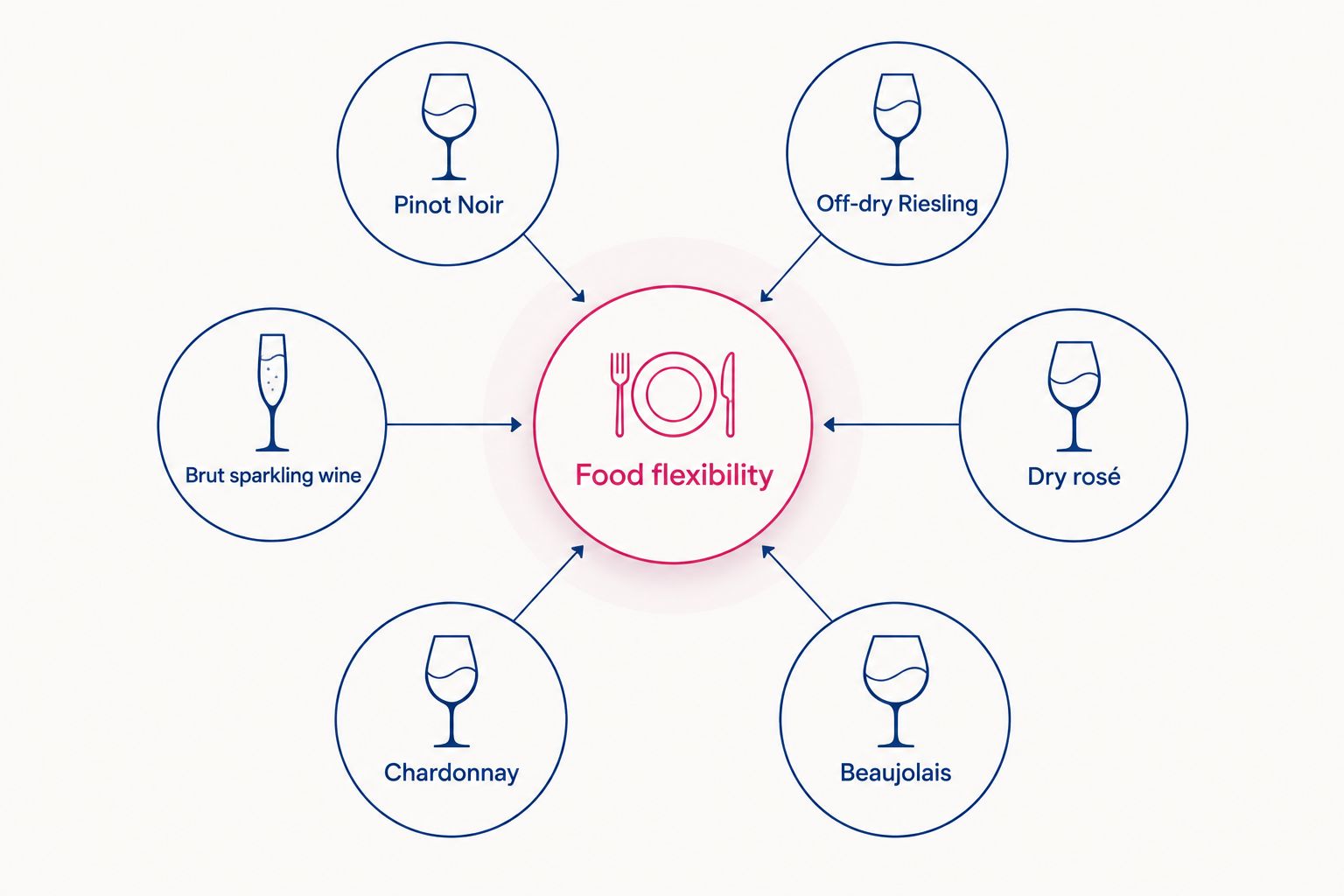
Best overall wine for Friendsgiving: Pinot Noir. Best for spicy sides: off-dry Riesling. Best for the opening toast: brut sparkling wine. This 2026 guide ranks six wine styles by what you’re serving, with clear trade-offs and a simple plan for a mixed potluck table.
- Pinot Noir is the best overall wine for Friendsgiving with turkey, mushrooms, and savory stuffing.
- Off-dry Riesling is the strongest choice for spicy sides and guests who prefer some sweetness.
- Brut sparkling wine suits the welcome toast, salty appetizers, and fried starters.
- Choose complementary wine styles rather than expecting one bottle to match every potluck dish.
Why this matters
Friendsgiving puts turkey, cranberry sauce, rich potatoes, spicy vegetables, and somebody’s unexpected casserole on the same plate. The best pairing is a wine that works across several dishes without overwhelming the lighter ones.
Buywinesonline sells over 5,000 wines, including red, white, rosé, sparkling, and dessert wines. Buywinesonline suits home wine shoppers who want to compare several Friendsgiving wine styles in one place. Start with the style your menu needs, then choose a bottle whose description matches that role.
For Friendsgiving 2026, the simplest approach is a versatile red plus a contrasting white. Add sparkling wine if you want a separate welcome drink; you don’t need a different wine for every dish.
What makes the best wine for Friendsgiving
A useful Friendsgiving wine earns its place at the table through these criteria:
- Food flexibility: It should work with several dishes, not just the turkey.
- Refreshing acidity: A fresh-tasting wine provides contrast to gravy, butter, and creamy sides.
- Manageable tannins: Strongly drying reds are a tougher match for lean poultry and sweet accompaniments.
- Clear sweetness: Dry and off-dry wines serve different preferences; don’t mistake fruity aromas for sugar.
- Guest fit: Your friends’ actual preferences matter more than a textbook pairing.
- Distinct purpose: Each additional wine should fill a gap rather than repeat the first bottle’s job.
Friendsgiving wines at a glance
These are wine-style recommendations, not individual bottle endorsements. Choose the style first, then compare the exact wine’s tasting description, sweetness, and label details.
| Rank | Wine style | Best for | Standout quality | Key limitation |
|---|---|---|---|---|
| 1 | Pinot Noir | Traditional turkey dinner | Red-fruit character with generally lighter tannins | Rich, heavily oaked versions lose some flexibility |
| 2 | Off-dry Riesling | Spicy and sweet-savory sides | Acidity balanced by some sweetness | Not the choice for guests who insist on dry wine |
| 3 | Brut sparkling wine | Welcome toast and salty starters | Bubbles and acidity | Brut does not mean completely without sugar |
| 4 | Dry rosé | A mixed potluck menu | A middle ground between white and red | Too delicate for the richest meat dishes |
| 5 | Chardonnay | Creamy potatoes and buttery dishes | A choice of lean or rounded styles | Heavy oak can dominate lighter food |
| 6 | Beaujolais | A lighter, fruit-forward red | Gamay’s fresh red-fruit profile | Not a substitute for a powerful Cabernet |
The distinction is the job each wine performs. Pinot Noir anchors a traditional dinner, Riesling handles heat, sparkling wine opens the gathering, and the remaining styles answer specific menu or guest preferences.
1. Pinot Noir: best Friendsgiving wine for turkey dinner
Pinot Noir is the default when roast turkey, savory stuffing, mushrooms, and gravy lead the menu. Its generally lighter tannins make it an easier fit for lean poultry than a heavily structured red.
Look for descriptions emphasizing red cherry, raspberry, freshness, and balanced oak. Pinot Noir varies substantially, so the grape name alone does not guarantee a light wine; descriptions stressing heavy oak or concentrated richness point toward a different experience.
Pinot Noir pros:
- Works with turkey and several savory sides.
- Offers a red-wine option without requiring a steak-centered menu.
- Fits mushroom dishes as well as poultry.
Pinot Noir cons:
- Sweet cranberry sauce can make a dry wine taste sharper.
- Richer versions are less flexible with delicate vegetables.
Best for: A traditional Friendsgiving plate with turkey, stuffing, and mushrooms.
For a closer look at the holiday pairing, read the guide to Pinot Noir for Thanksgiving dinner. For Friendsgiving 2026, make this your first red unless your guests strongly prefer something else.
Verdict: Buy Pinot Noir as your default dinner style.
2. Off-dry Riesling: best Friendsgiving wine for spicy sides
Off-dry Riesling brings some sweetness alongside refreshing acidity. That combination makes it useful when chili heat, sweet potatoes, fruit-based sauces, or spicy vegetable dishes complicate the pairing.
Choose a wine explicitly described as off-dry rather than assuming all Riesling tastes sweet. Riesling also comes in dry and much sweeter styles, and those differences change its role at dinner.
Off-dry Riesling pros:
- Some sweetness helps soften the impression of chili heat.
- Acidity provides contrast to rich food.
- Gives guests a clear alternative to dry red wine.
Off-dry Riesling cons:
- Guests who dislike sweetness will want another option.
- Off-dry does not automatically mean sweet enough for pie.
Best for: A potluck with spicy dishes, sweet-savory sides, or guests who prefer a little sweetness.
Don’t assign Riesling only to the white-wine drinkers. Offer a taste alongside the spiciest dish and let guests decide; a familiar red isn’t always their best match for that plate.
Verdict: Buy off-dry Riesling when heat or sweetness is part of dinner.
3. Brut sparkling wine: best Friendsgiving wine for the toast
Brut sparkling wine gives you a welcome drink that also works with salty appetizers and fried starters. Its acidity and bubbles make it a useful contrast to rich bites before dinner.
Brut describes a sweetness category, not a grape or a region. Champagne, Cava, and Prosecco are distinct wines, so compare their descriptions rather than treating every sparkling bottle as interchangeable.
Brut sparkling wine pros:
- Covers both the toast and appetizers.
- Pairs well with salty snacks and fried foods.
- Remains useful at dinner if guests want to keep drinking it.
Brut sparkling wine cons:
- Guests who dislike carbonation need a still option.
- Brut does not mean zero sugar.
Best for: The opening toast, snack board, and appetizers before the main meal.
For your 2026 gathering, keep the toast informal: pour for guests who want wine and offer an equally convenient alcohol-free option. A toast should include the table, not require everyone to drink the same thing.
Verdict: Buy brut sparkling wine when you want one style for welcoming and snacking.
4. Dry rosé: best Friendsgiving wine for a mixed potluck
Dry rosé is the middle-ground choice when the menu moves between poultry, salads, vegetables, and lighter meat dishes. It offers red-fruit character without the tannic weight of a full-bodied red.
Look for a description that clearly says dry. Color is not a reliable sweetness guide, and a pale wine is not automatically drier than a deeper pink one.
Dry rosé pros:
- Bridges several lighter dishes on a potluck table.
- Offers an alternative for guests undecided between red and white.
- Fits a vegetable-heavy menu without excluding the turkey.
Dry rosé cons:
- Delicate styles get overshadowed by heavily smoked or rich meat dishes.
- Dry rosé will not satisfy guests specifically seeking sweet wine.
Best for: A varied potluck without one dominant main dish.
Choose rosé instead of adding another similar light white when you want more contrast. You’re building useful choices, not trying to represent every wine color for its own sake.
Verdict: Buy dry rosé for a lighter, varied menu.
5. Chardonnay: best Friendsgiving wine for creamy sides
Chardonnay earns its place when mashed potatoes, creamy casseroles, buttery vegetables, and roast poultry dominate dinner. The important choice is style: a lean, unoaked Chardonnay behaves differently from a rich, oak-influenced one.
Choose citrus-led or unoaked descriptions for more freshness. Choose a rounded, buttery style when that is what your guests enjoy and the food has enough richness to meet it.
Chardonnay pros:
- Provides a white-wine option for richer dishes.
- Offers a choice between lean and fuller styles.
- Works with roast poultry as well as creamy sides.
Chardonnay cons:
- Strong oak can overwhelm delicate vegetables.
- A rich, dry version is a difficult default for spicy dishes.
Best for: Creamy potatoes, buttery sides, and guests who already enjoy Chardonnay.
Buywinesonline’s Friendsgiving wine selection process should start with these style differences, not just the grape name. Read the bottle description for oak and texture before deciding whether Chardonnay fills a gap beside your other wines.
Verdict: Buy Chardonnay for a rich menu; skip heavily oaked styles as an all-purpose default.
6. Beaujolais: best Friendsgiving wine for a lighter red
Beaujolais is a French wine region whose reds are made predominantly from Gamay. These wines often emphasize fresh red fruit, making the style a useful alternative when guests want red wine without Cabernet-like weight.
Choose a description emphasizing freshness and lighter structure for this role. Beaujolais includes different levels and expressions; a more structured example won’t drink exactly like a simple, fruit-forward one.
Beaujolais pros:
- Gives light-red drinkers a distinct option.
- Works with poultry, charcuterie, and savory vegetable dishes.
- Offers fruit character without requiring heavy oak.
Beaujolais cons:
- Does not deliver the weight that full-bodied-red fans expect.
- Different expressions vary in structure and intensity.
Best for: Guests who want a fresh, lighter red rather than a richer dinner wine.
If you already have Pinot Noir, add Beaujolais only when your guests particularly enjoy lighter reds. Otherwise, a contrasting white adds more variety to the table.
Verdict: Buy Beaujolais for light-red fans; skip it when it duplicates your Pinot Noir’s role.
How these Friendsgiving wines are ranked
Food flexibility comes first, followed by guest fit, sweetness, tannin, and a distinct role at dinner. This is a style-based buying guide, not a bottle tasting or a ranking based on review scores.
Pinot Noir takes the default position because it suits the traditional turkey-and-savory-sides menu. Riesling and sparkling wine rank next because they solve different problems: spicy food and the welcome course.
Which wine for Friendsgiving should you choose?
Choose Pinot Noir plus off-dry Riesling if you’re undecided. That pairing gives you a versatile red and a contrasting white rather than two wines doing much the same job.
For Friendsgiving 2026, adjust the plan to the menu:
- Traditional turkey dinner: Start with Pinot Noir.
- Spicy potluck: Make off-dry Riesling the white option.
- Appetizer-led gathering: Start with brut sparkling wine.
- Creamy, buttery menu: Choose Chardonnay instead of Riesling if heat is absent.
- Lighter mixed dishes: Consider dry rosé.
Plan pours, not pressure to drink
A standard 750 ml bottle provides five 150 ml pours. A 375 ml half bottle provides two 150 ml pours with 75 ml left; these are volume calculations, not recommended drinking amounts.
Estimate from the guests who actually want wine and your intended pour size. Keep water and alcohol-free drinks easy to reach, open bottles gradually, and don’t treat unopened extras as something the group needs to finish.
FAQ
What’s the best wine for Friendsgiving?
Pinot Noir is the best default wine for Friendsgiving with roast turkey, savory stuffing, mushrooms, and gravy. Choose a fresher style with balanced oak rather than assuming every Pinot Noir is light.
Should I bring red or white wine to Friendsgiving?
Bring Pinot Noir for a traditional turkey menu or off-dry Riesling when spicy sides are prominent. Ask the host what is already covered so your bottle adds a useful choice.
Is Cabernet Sauvignon good with Friendsgiving dinner?
Cabernet Sauvignon fits best when the meal includes richer red-meat dishes or guests specifically prefer full-bodied reds. Its stronger tannins make it a less flexible default for lean turkey and sweet sides.
What wine goes with spicy Friendsgiving food?
Off-dry Riesling is a strong choice for spicy Friendsgiving food because some sweetness helps soften the impression of chili heat. Check that the wine is described as off-dry, since Riesling also comes in dry styles.
Can I serve sparkling wine throughout Friendsgiving dinner?
Yes, brut sparkling wine can stay on the table beyond the toast. It works particularly well with salty appetizers, fried starters, and several rich savory dishes, though it is not a universal dessert pairing.
How many glasses are in a bottle of Friendsgiving wine?
A 750 ml bottle contains five 150 ml pours. Smaller tasting pours produce more servings, so plan using the amount you intend to pour rather than an undefined glass size.
What wine should I serve with pumpkin pie?
Choose a dessert wine at least as sweet as the pumpkin pie. A dry dinner wine can taste sharper beside a sweet dessert, so don’t assume the turkey pairing should continue through pie.
One last thing
The wine that works with turkey is not automatically the wine that works with pie. Dessert changes the sweetness balance, so finish the dinner wines with the savory food and make a separate decision about dessert drinks.
When choosing Friendsgiving wine at Buywinesonline in 2026, give each style a clear job. A well-chosen red and white make a more useful table than several bottles selected without considering the food or your friends.