
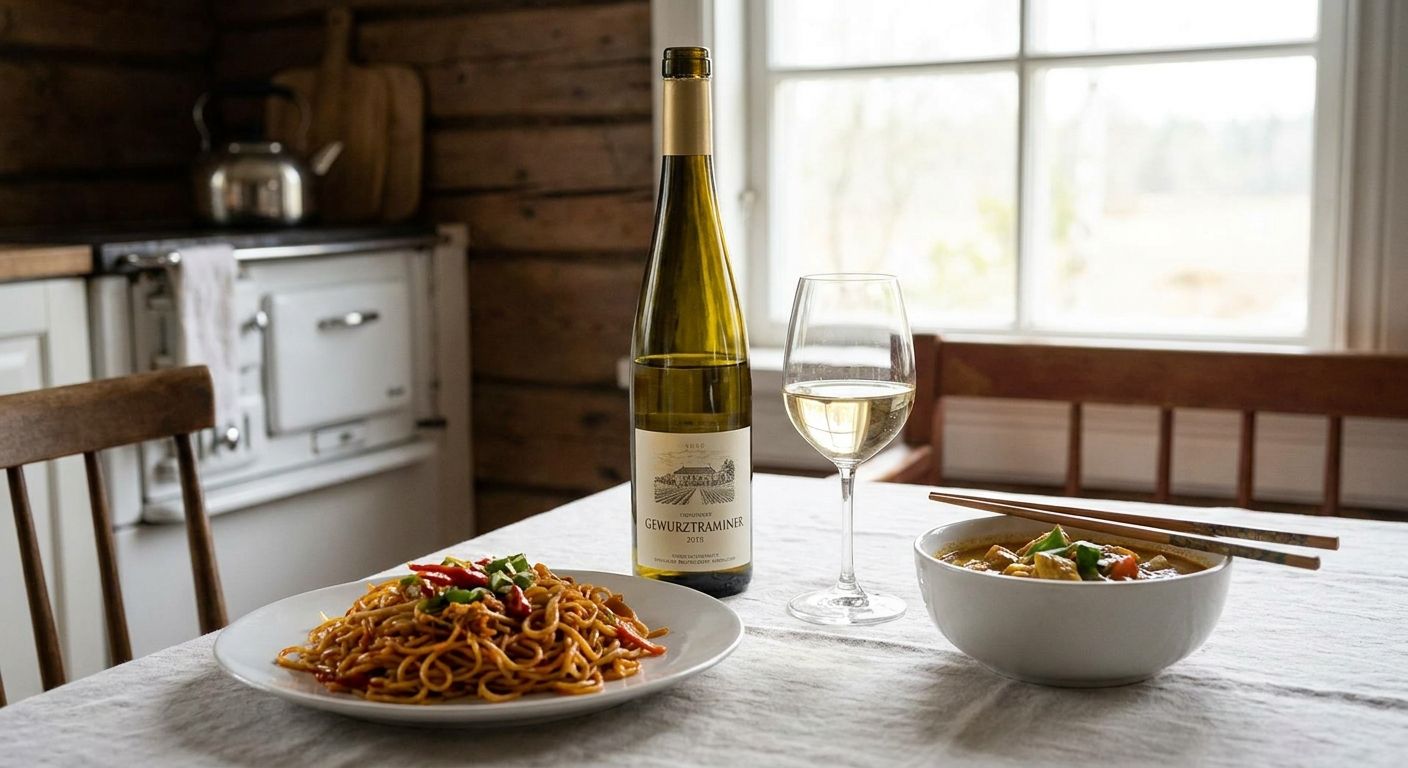
Gewurztraminer wine for spicy Asian cuisine works because its low tannin, high aromatics, and touch of residual sugar cool chili heat instead of fighting it, the opposite of what a big red does at the table. Home cooks pairing Thai curries, Vietnamese noodle bowls, Sichuan stir-fries, or Indian dishes need a wine that survives lemongrass, fish sauce, and capsaicin without turning bitter or flat, and that's a narrower job than matching wine to a mild roast chicken.
- Off-dry Alsace gewurztraminer wine beats bone-dry styles against Thai and Sichuan heat in 2026.
- Serve gewurztraminer wine at 45-50°F, colder than a standard white, to blunt the capsaicin burn.
- Skip tannic reds entirely with anything past medium heat — tannin reads as bitter and metallic.
- Riesling is the closest substitute when gewurztraminer wine isn't on the shelf.
- A multi-bottle tasting set lets you test three sweetness levels before buying a full case.
Why gewurztraminer wine matters for spicy Asian cuisine
Capsaicin, the compound behind chili heat, binds to pain receptors on the tongue, not taste receptors, and alcohol makes that burn sharper, not softer. A dry, high-alcohol white or a tannic red intensifies the sensation. A lower-alcohol wine with a gram or two of residual sugar quiets it down instead.
Gewurztraminer wine typically finishes around 12-13% ABV, and Alsace's off-dry bottlings carry enough natural sugar to counter the burn without tasting like a dessert wine. Its lychee, rose, and ginger aromatics also line up with the lemongrass, Thai basil, and five-spice that show up across the cuisine, which is the mechanical reason this pairing keeps landing on Thai and Vietnamese restaurant wine lists in 2026 rather than being a wine-snob talking point.
Browse the full range of aromatic whites at Buy Wines Online before you commit to a case, since Alsace, German, and New World gewurztraminer wine all taste different enough to change the pairing.
Match the sweetness level to the heat
Not every "spicy Asian dish" carries the same heat load, and the sweetness in your glass has to track the heat on the plate.
- Mild dishes (pad see ew, Vietnamese pho, spring rolls): dry to off-dry gewurztraminer wine
- Medium heat (Thai green curry, banh xeo with nuoc cham): off-dry, roughly 1-2% residual sugar
- High heat (drunken noodles, Sichuan mapo tofu, Indian vindaloo): off-dry to semi-sweet, 3%+ residual sugar
- Ghost pepper or extreme heat: skip wine altogether, a lager or a lassi does the job better
Serve it colder than a standard white
Gewurztraminer wine gets served too warm more often than any other pairing mistake on this list.
- Chill to 45-50°F, colder than the 50-55°F standard for most whites
- Keep the bottle in an ice bucket through the first 15 minutes of a spicy meal
- Re-chill mid-meal if dinner runs past 45 minutes
- Warmer wine reads sweeter and flatter against chili heat, which throws off the whole pairing
Pick the right style before you shop
"Gewurztraminer" covers more ground than the label suggests, and the region on the bottle changes how it handles heat.
- Alsace, France: the reference point, usually off-dry, 12.5-13.5% ABV, most reliable against real heat
- German Gewürztraminer: often drier and lighter, less reliable against heavy Sichuan or Indian spice
- New World (California, Washington): rounder fruit, works fine with milder Thai and Vietnamese dishes
- Late-harvest or vendange tardive: too sweet for savory heat, save it for the dessert course instead
Riesling is the closest substitute when gewurztraminer wine isn't in stock, since it shares the low-tannin, off-dry profile, though its higher acidity can read tart against very sweet sauces like Thai peanut or sweet chili glaze. Buy Wines Online stocks Alsace, German, and New World gewurztraminer wine side by side, so compare regions before adding one to cart.
Pair by dish, not just by cuisine
Two dishes from the same country can need two different bottles.
- Thai green curry and mild noodle dishes: off-dry Alsace-style gewurztraminer wine
- Vietnamese pho, banh mi, fresh spring rolls: dry to off-dry, lighter body
- Sichuan mapo tofu and dan dan noodles: semi-sweet, more residual sugar to handle numbing Sichuan peppercorn
- Indian curries with cream or coconut milk: off-dry works, vindaloo-level heat needs semi-sweet
The calibration is the same regardless of where the heat comes from: match sugar to burn, not to the country of origin on the menu.
Build a flight to test heat levels before buying a case
Guessing which sweetness level fits your household's spice tolerance wastes money on full cases.
- Start with three bottles spanning dry, off-dry, and semi-sweet
- Taste each against the same dish so sweetness is the only variable
- A 20-bottle international wine tasting set from Buy Wines Online is one way to sample several whites side by side before committing to six or twelve bottles of one style
- Note which pairing worked before the next grocery run — heat tolerance varies from one household to the next
Avoid the tannin trap
“If the wine has real tannin, chili turns it bitter and metallic — save the reds for after the spice fades.”
- Skip Cabernet Sauvignon, Malbec, and other tannic reds with anything past medium heat
- Tannin binds to the same receptors capsaicin activates, which amplifies bitterness instead of masking it
- If the meal includes red meat alongside the spice, a light-bodied Pinot Noir handles it better than a big red, though gewurztraminer wine straight through the meal is still the safer call
Stock the right glass and pour size
- Use a standard white wine glass, not a wide Burgundy bowl — the aromatics get lost in too much surface area
- Pour 4-5 oz servings so the wine stays cold through the course
- Gewurztraminer wine oxidizes faster than most whites once opened, so plan to finish the bottle the same night or use a vacuum stopper
Gewurztraminer wine options for spicy Asian cuisine, compared
| Option | Best for | Key limitation |
|---|---|---|
| Alsace off-dry Gewurztraminer | Medium-heat Thai and Vietnamese dishes | Harder to find under $20 a bottle |
| New World Gewurztraminer | Milder curries, everyday weeknight pairing | Less aromatic intensity than Alsace |
| Riesling | Backup when gewurztraminer wine is sold out | Higher acid can read tart against very sweet sauces |
| Late-harvest Gewurztraminer | Dessert course only | Too sweet for savory chili heat |
| Multi-bottle tasting set | First-time buyers testing sweetness levels | Not curated specifically around one grape |
Common mistakes with gewurztraminer wine and spicy Asian cuisine
The same sweetness math applies far beyond Thai and Vietnamese menus. Pairing gewurztraminer wine with fiery Andhra pickles at an Indian dinner table needs the same semi-sweet, well-chilled approach as a bowl of Sichuan mapo tofu.
- Buying the driest Alsace bottling because "dry" sounds more premium, then watching it collapse against a vindaloo
- Serving it at standard white wine temperature (around 55°F) instead of the colder 45-50°F range spice needs
- Reaching for a heavy red with a red-meat curry when a light-bodied option, or gewurztraminer wine itself, actually works better
- Assuming any wine labeled "spicy" or "aromatic" automatically pairs with any spicy dish, regardless of heat level
- Opening the bottle too far ahead of the meal and losing the aromatic lift that makes the whole pairing work in the first place
FAQ
What is gewurztraminer wine best paired with in 2026?
Gewurztraminer wine pairs best with off-dry to medium-heat spicy Asian dishes like Thai green curry, Vietnamese noodle bowls, and mild Indian curries in 2026. Its low tannin and touch of residual sugar counter chili heat instead of intensifying it.
Is gewurztraminer sweet or dry?
Gewurztraminer ranges from bone-dry to late-harvest sweet depending on region and producer. Alsace, France produces the most common off-dry style, which is the version that works best against spicy Asian cuisine.
Does gewurztraminer wine pair with Thai food?
Yes, gewurztraminer wine pairs well with Thai food, especially green curry, pad see ew, and noodle dishes with moderate chili heat. Its lychee and rose aromatics echo the lemongrass and Thai basil common in the cuisine.
What temperature should you serve gewurztraminer wine?
Serve gewurztraminer wine at 45-50°F, colder than the 50-55°F standard for most whites. The extra chill keeps the wine from tasting flat or overly sweet against chili heat.
Is Riesling or gewurztraminer better with spicy food?
Both work, but gewurztraminer wine has lower acidity and rounder fruit, which suits richer curries better, while Riesling's higher acid suits lighter, citrus-forward dishes. Keep both on hand if you cook a range of spicy Asian cuisine.
Does gewurztraminer wine work with Indian food?
Gewurztraminer wine works with Indian food, particularly curries with cream or coconut milk and dishes with chili-forward condiments. Semi-sweet styles handle vindaloo-level heat better than dry styles.
Can you pair red wine with spicy Asian food instead?
Tannic reds generally fight chili heat and turn bitter, so they're not a strong match for spicy Asian cuisine. A light-bodied, low-tannin red like Pinot Noir is a workable exception if the table insists on red.
One last thing
Gewurztraminer translates roughly to "spiced traminer" in German, and the grape carries baking-spice aromatics, clove, ginger, allspice, before it ever meets a curry. That built-in spice character is why gewurztraminer wine keeps showing up as the by-the-glass white on Thai and Vietnamese restaurant menus in 2026, not a coincidence of marketing. Check the current gewurztraminer wine selection at Buy Wines Online before your next spicy dinner, since regional styles rotate through the catalog.